Stop Using Matching Dumbbells for Muscle Strength Exercises
I spent years obsessing over perfectly matched pairs of dumbbells. If my left hand had 50 pounds, my right hand had 50 pounds. It felt right, it looked good on Instagram, and it’s how most of us are taught to perform muscle strength exercises. But then I hit a wall with my overhead press that no amount of 'linear progression' could fix.
I started experimenting with asymmetrical loading—holding a 45-lb kettlebell in one hand and a 35-lb dumbbell in the other. It felt awkward, my core screamed, and I realized my 'strength' was mostly just a talent for staying balanced in a controlled environment. Real-world strength is messy, and your training should be too.
- Core on Fire: Your obliques and spinal stabilizers work double time to keep you upright.
- Plateau Buster: Forcing your nervous system to adapt to uneven loads can jumpstart stalled progress.
- Fixes Imbalances: You quickly find out which side of your body has been coasting.
- Budget Friendly: You don't need to buy a full set of matching pairs to get a brutal workout.
Why Your Perfectly Balanced Dumbbells Are Holding You Back
Lifting perfectly symmetrical weights is a luxury of the gym, not a reality of life. When you haul a 50-lb bag of salt from your trunk or carry a sleeping toddler, the load is rarely centered. By sticking strictly to matched pairs, you’re essentially training in a vacuum.
Standard muscular strength workouts often mask compensations. Your dominant side takes over just enough to get the rep done, and you never notice the leak. When you intentionally use an example of muscular strengthening that is lopsided, those leaks become floodgates. You’re forced to tighten your brace and root your feet into the floor just to stay from tipping over.
What Actually Happens During Uneven Lifting?
When you hold a heavier weight on one side, your body wants to collapse toward the heavy load or overcompensate by leaning away. To stay upright, your internal and external obliques have to fire like crazy. This is 'anti-rotational' training, and it’s one of the most effective activities for muscular strength you can do for your spine.
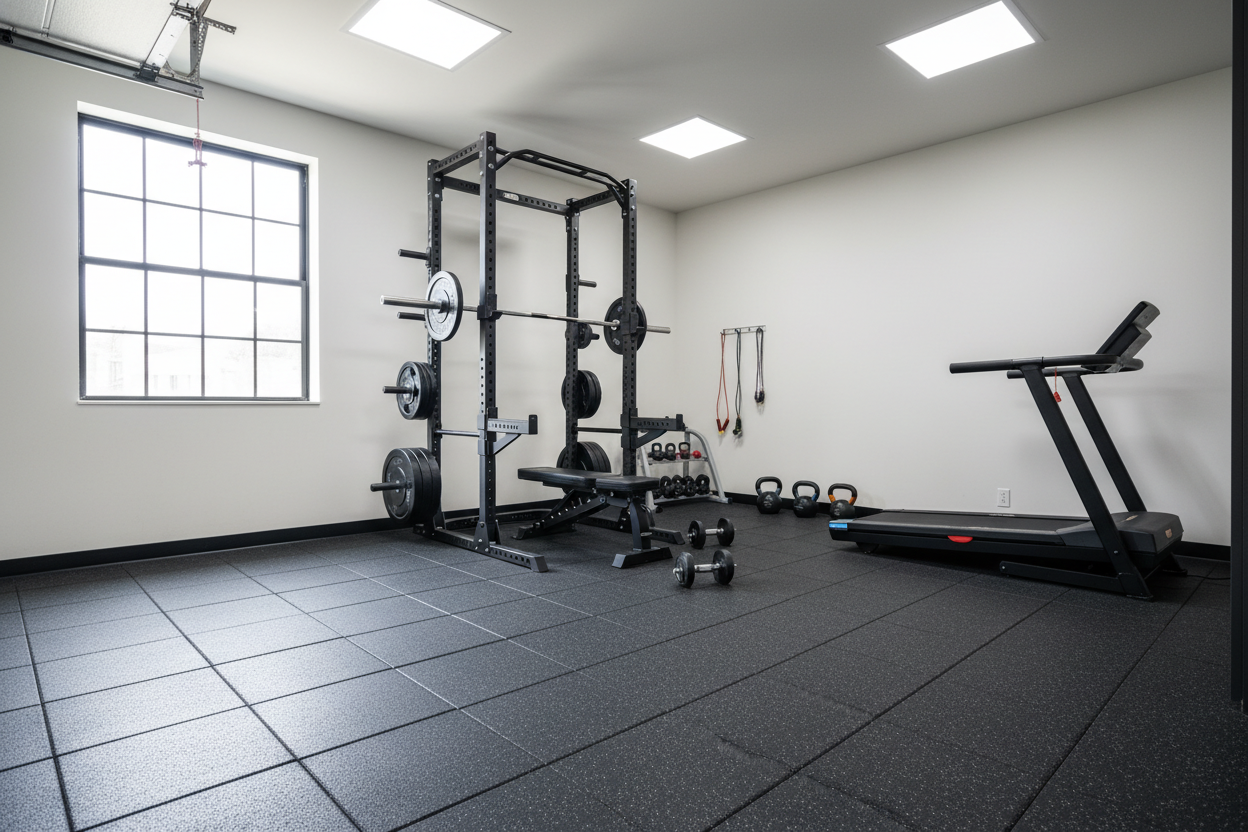
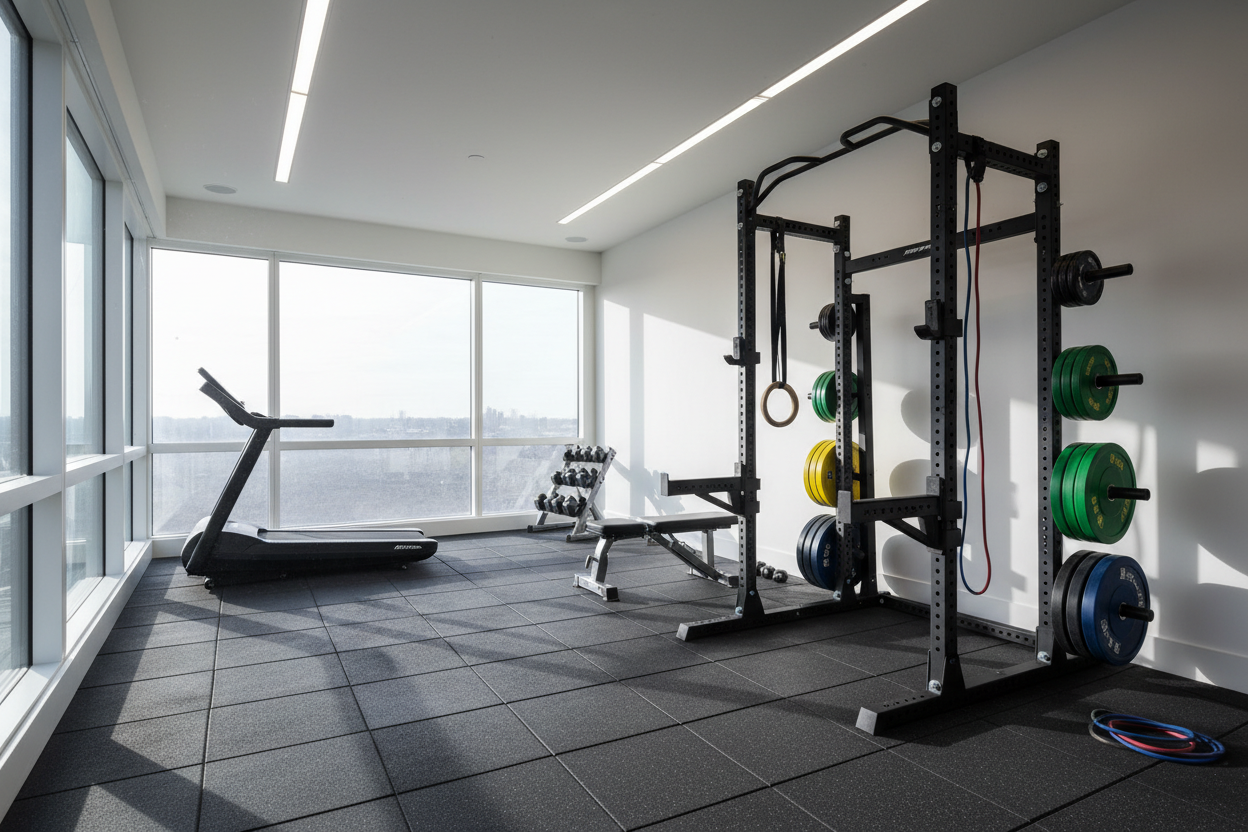
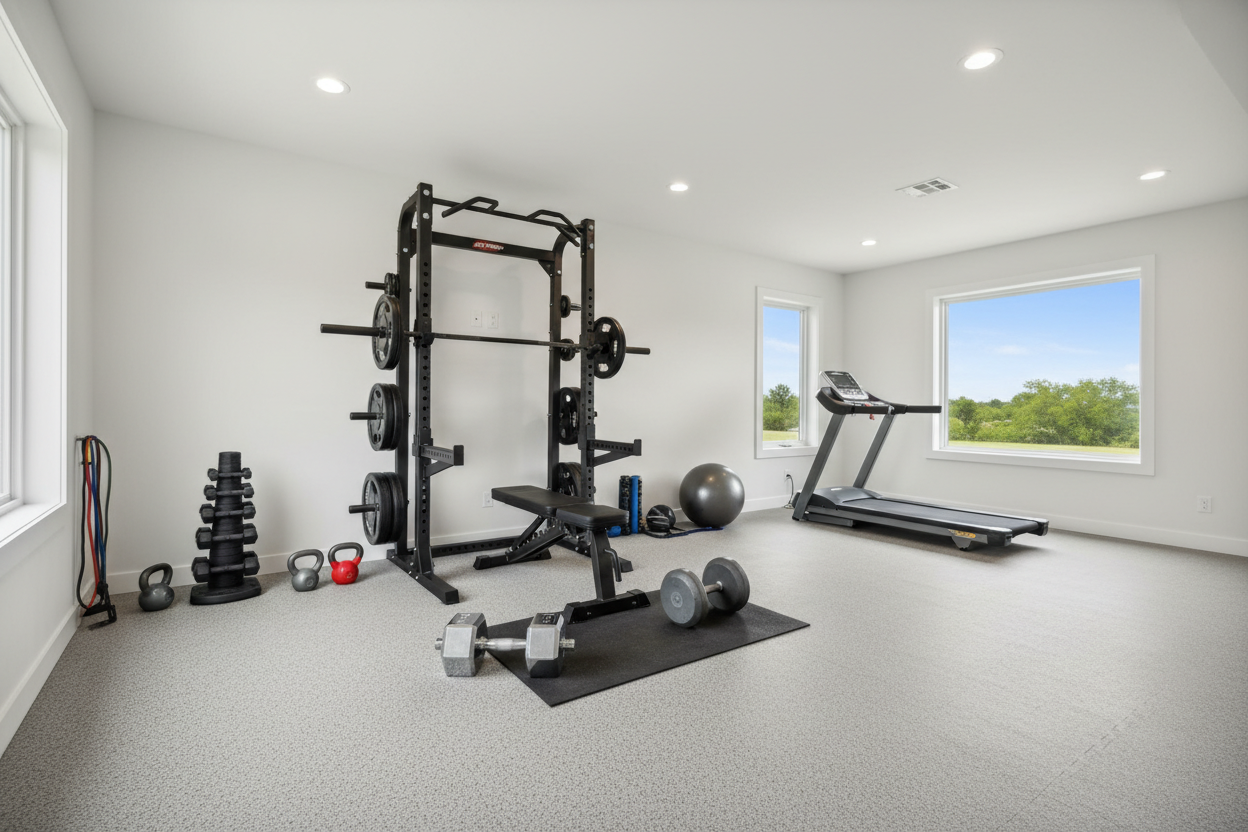
I’ve found that doing these moves barefoot or in thin-soled shoes helps me feel the weight shift. You’ll want thick gym flooring for home workout sessions to protect your subfloor if you have to bail on a heavy suitcase deadlift. A solid 7mm or 10mm mat provides the grip you need when your center of gravity is being aggressively challenged by offset weights.
4 Examples of Muscular Strengthening Moves With Uneven Weight
1. The Offset Goblet Squat: Hold a heavy kettlebell in one hand at shoulder height (the rack position) and nothing in the other. As you descend, the weight will try to pull your torso into a crunch. Fight it. This is a top-tier home exercise for lower body development because it turns a basic squat into a full-body stability test.
2. The Suitcase Deadlift: Place one heavy dumbbell on the floor next to your pinky toe. Hinge down, grab it, and stand up straight without leaning. This is a classic exercise to improve muscular strength because it targets the lateral chain—the muscles that keep you from folding like a lawn chair when life gets heavy.
3. Single-Arm Floor Press: Lie on your back and press a single dumbbell. Without the counterweight of a second bell, your opposite shoulder will want to lift off the mat. Pin it down. This is one of my favorite muscle strength exercise examples for building a stable, bulletproof shoulder girdle.
4. Uneven Farmer's Walk: Grab a 50-lb weight in your left hand and a 20-lb weight in your right. Walk for 30 seconds. Switch hands and repeat. It’s a simple muscle strength activity that feels like someone is trying to tackle you while you’re just trying to walk.
How to Program Offset Lifts Without Getting Injured
Don't just grab a 100-lb dumbbell and a 5-lb plate and hope for the best. Start by keeping the weight difference small—about 10 to 15 pounds. If you can't maintain a neutral spine, the load is too heavy. Treat these as muscular strength workout examples where form is the primary metric of success, not just moving the weight.
I usually program these at the end of a session or as a standalone 'stability' day. Aim for 3 sets of 8-10 reps per side. Always start with your weaker or more unstable side first, then match that performance with your stronger side. This ensures you aren't widening the gap between your left and right halves.
Building Your Unilateral Setup at Home
The beauty of asymmetrical loading is that it makes a small home gym feel much larger. You don't need a massive commercial rack of dumbbells. A single heavy kettlebell, a pair of adjustable dumbbells, and some basic strength training accessories like resistance bands are enough to create hundreds of variations.
If you're tight on space, focus on quality over quantity. One solid 35-lb bell and one 50-lb bell can provide more 'strength' utility than a perfectly matched set of 40s if you know how to use the offset to your advantage. Stop trying to be perfectly balanced; start being strong enough to handle the imbalance.
My Personal Experience with Offset Loading
A few years ago, I thought my deadlift was solid at 405 lbs. Then I tried a suitcase deadlift with a 70-lb kettlebell. I nearly tipped over on the first rep. It was embarrassing. My 'big' muscles were strong, but my stabilizers were pathetic. I spent three months focusing on uneven carries and offset squats. When I went back to my standard barbell deadlift, it felt lighter and more locked-in than ever. The 'weak links' were finally gone.
FAQ
What is the best weight difference for asymmetrical loading?
Start with a 10-15 lb gap. If you’re using a 40-lb dumbbell, use a 25 or 30-lb weight in the other hand. The goal is to feel the pull without losing your posture.
Can I do this with a barbell?
Technically yes (offsetting plates), but I don't recommend it for home lifters. It puts a weird torque on the bar and your wrists. Stick to dumbbells, kettlebells, or sandbags for these types of muscular exercise.
Is this safe for people with back pain?
If you have an active injury, talk to a pro first. However, for a healthy back, these exercises are great for building the 'internal weight belt' of muscle that protects the spine. Just start light.