Stop Turning Your Heavy Leg Day Workout Into a Cardio Session
I remember the day I finished a 'leg circuit' and felt like a champion because I was gasping for air on the floor of my garage. My heart rate monitor said I burned 600 calories, but my squat max hadn't budged in six months. I was chasing a sweat, not a stimulus. If you want legs that actually fill out a pair of jeans, you need a dedicated leg day workout that prioritizes mechanical tension over metabolic fatigue.
Quick Takeaways
- Rest periods of 2-3 minutes are mandatory for strength, not optional.
- Mixing HIIT with heavy lifting creates 'interference' that kills hypertrophy.
- Focus on high-quality movements like RDLs and Goblet Squats over high-rep fluff.
- Conditioning belongs on its own day or at the very end of the session.
Stop Confusing Being Out of Breath With Building Muscle
We’ve been sold a lie that a workout isn't effective unless you’re crawling to your car afterward. This 'sweat-equity' mindset is the fastest way to plateau your leg growth. When you turn your lower body session into a high-intensity interval session, your heart becomes the limiting factor, not your quads or hamstrings. You stop because your lungs are on fire, not because your muscle fibers have been sufficiently challenged.
Building real size requires heavy loads and enough recovery between sets to move those loads again. If you're huffing and puffing through a set of lunges because you only rested 30 seconds after squats, you aren't training for power; you're just doing expensive cardio. True hypertrophy comes from mechanical tension. You can't generate that tension when your central nervous system is fried from a lack of oxygen. If your goal is to get stronger, stop treats your lifting like a spin class.
The Real Reason Your Current Leg Day Workout Routine Fails
The 'interference effect' is a real physiological hurdle. When you try to train for explosive strength and aerobic endurance simultaneously, your body gets mixed signals. It doesn't know whether to optimize for oxidative capacity or muscle fiber recruitment. For a solid leg day workout routine, this means those box jumps and burpees you’re supersetting with your squats are actually telling your muscles to stay small and efficient rather than big and powerful.
Think about the mechanics of a heavy lift. To move a 300-lb barbell, your brain needs to recruit every motor unit available. If you just finished a 60-second mountain climber interval, those motor units are fatigued. You end up lifting 20% less weight than you’re capable of. Over a year, that’s thousands of pounds of missed volume. You aren't failing the lift because you're weak; you're failing because you're tired. Separate your goals. If it’s leg day, your only metric of success should be the weight on the bar and the quality of the contraction, not the puddle of sweat on the floor.
A Full Leg Day Workout Built for Strength, Not Sweat
A full leg day workout doesn't need twenty different exercises. It needs four or five done with absolute intensity and proper recovery. Start with your heaviest compound movement—usually a squat variation. Take 3 minutes between sets. I don't care if you feel 'ready' after 60 seconds; your nervous system needs the full window to recharge the ATP in your cells. If you want to see how this fits into a broader program, I’ve detailed several templates in our Workout Hub that prioritize these recovery windows.
Following your primary lift, move to a hinge like a Romanian Deadlift. Focus on the stretch. This isn't a race. You should be moving the weight under control, feeling every inch of the eccentric phase. A typical leg day workout plan that works: 3x5 Squats, 3x10 RDLs, 3x12 Split Squats, and 3x15 Calf Raises. That’s it. If you do those with enough weight to actually struggle on the last rep, you won't feel the need to add a 20-minute AMRAP at the end. You’ll be too busy trying to stand up straight.
Selecting the Best Leg Day Movements for Your Garage
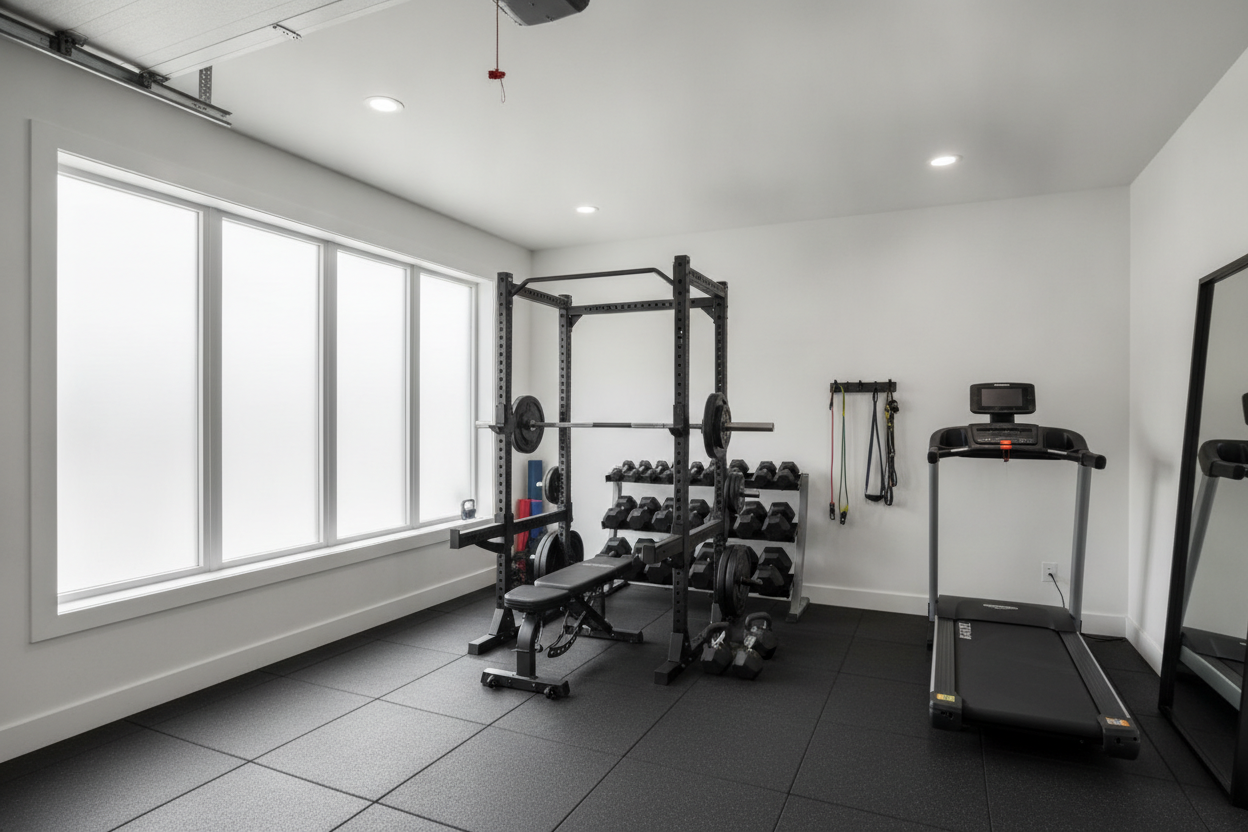
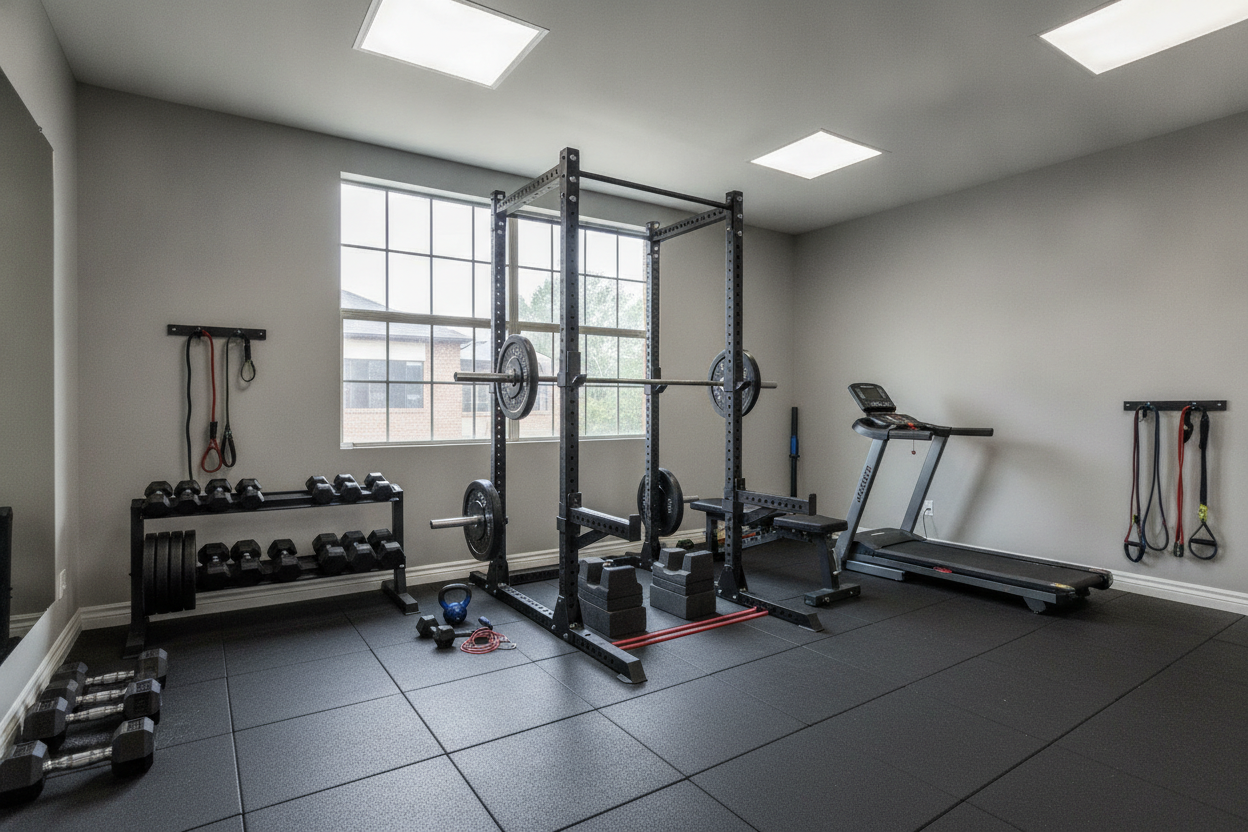
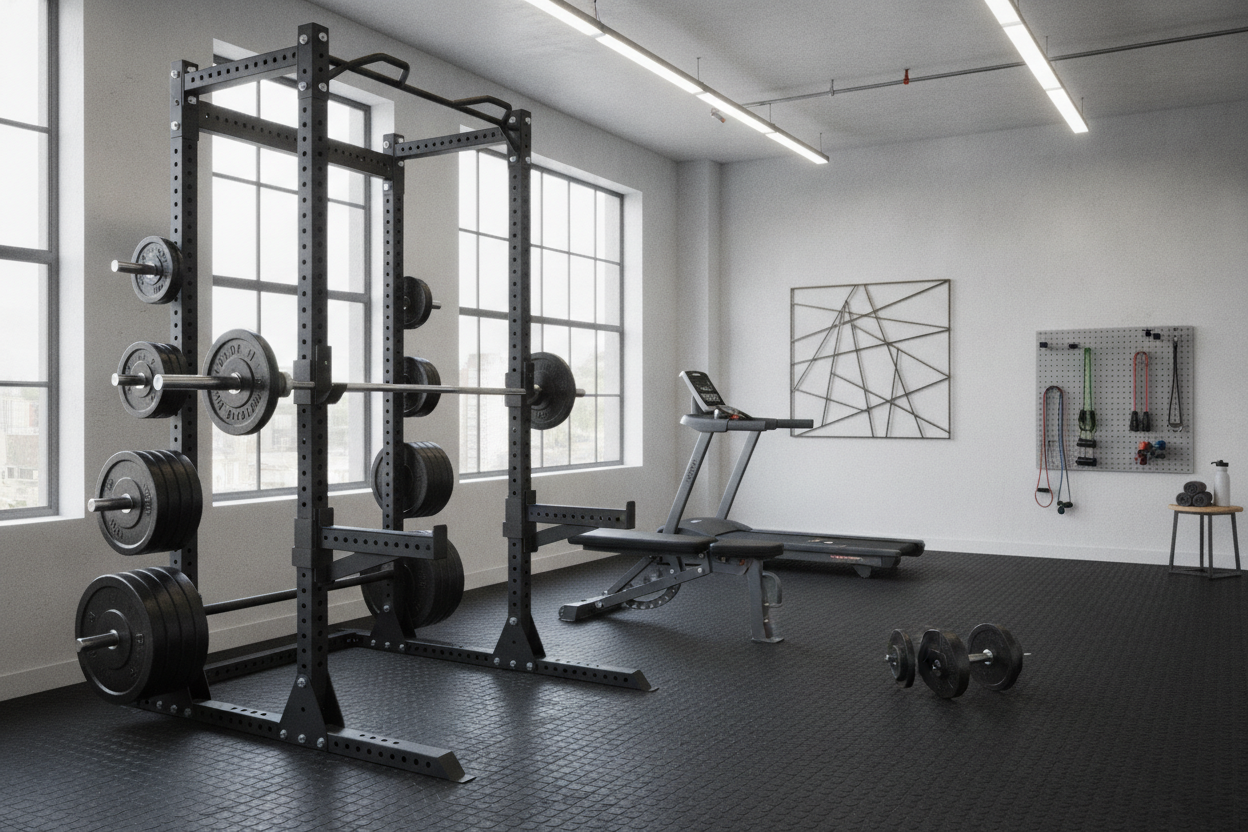
You don't need a $5,000 leg press machine to build wheels. The best leg day movements for a home gym are the ones that demand stability. Goblet squats with a heavy 50-lb or 70-lb dumbbell can be just as effective as a rack of weights if your form is dialed in. However, the one thing people overlook is their foundation. I’ve seen guys try to squat heavy on squishy carpet or bare concrete, and it’s a recipe for an ankle roll.
I highly recommend investing in high-density gym flooring for home workout spaces. You need a surface that doesn't compress under a 200-lb load. When you’re doing RDLs, you want your feet 'rooting' into the ground. If your floor is slippery or uneven, your brain will subconsciously limit the force you can produce to keep you from falling. A solid 6x8 ft mat gives you enough room to lung and squat without worrying about your stance shifting mid-rep.
When You Should Actually Do Your Cardio
I’m not saying you shouldn't do cardio. I’m saying you shouldn't do it during your leg day. If you want to maintain your engine while building size, keep your conditioning sessions at least 24 hours away from your heavy lifting. If you must do them on the same day, lift in the morning and do low-intensity steady-state cardio in the evening. This keeps the 'interference' to a minimum.
For a long-term leg day workout plan, consistency beats intensity. If you blow yourself out with a 'metcon' leg day on Monday, you’ll be too sore to do anything else for the rest of the week. By spreading your work out and following a dedicated cardio and muscle building workout plan, you ensure that your legs are fresh enough to actually handle the heavy iron. Save the gasping for air for your hill sprints on Thursday.
My Personal Experience: The 315-lb Wake Up Call
Two years ago, I was obsessed with 'functional fitness' circuits. I’d do 10 kettlebell swings between every set of back squats. I thought I was a beast. Then, I tried to hit a 315-lb squat—a weight I’d done for triples a year prior. I got pinned in the hole. My legs had the strength, but my heart was beating at 170 BPM and I couldn't stabilize my core. I realized I was becoming a 'jack of all trades, master of none.' I cut the fluff, started resting 3 minutes between sets, and my squat jumped 40 lbs in two months. The lesson? If you want to lift heavy, you have to actually let yourself recover.
FAQ
How long should a leg day workout take?
If you're resting properly, expect to be in the gym for 60 to 75 minutes. A huge chunk of that is just sitting on a bench between sets. If you're done in 30 minutes, you didn't lift heavy enough or you didn't rest long enough.
Can I do legs twice a week?
Absolutely, but don't go 'max effort' both times. Try one day focused on heavy compounds (squats) and a second day focused on accessories and hinges (RDLs, lunges). This prevents you from overtaxing your lower back.
What if I don't have a squat rack?
Heavy Bulgarian split squats and goblet squats are your best friends. You can build incredible legs with just a pair of heavy dumbbells and a sturdy bench. You just have to be willing to embrace the 'burn' of high-rep unilateral work.