I Ditched Machines for This Brutal Exercise Routine for Legs
I remember standing in line for the leg press at a big-box gym, watching a guy do 1/8th reps with every plate in the building while my heart rate dropped and my motivation cratered. I used to think a exercise routine for legs needed six different machines, three types of cables, and two hours of floor time to be 'complete.' I was wrong. I was just tired and inefficient.
- Compound movements drive 90% of your actual growth.
- Machines often mask weaknesses in your core and stabilizers.
- Three high-intensity lifts beat six 'pump' exercises every time.
- Stability and floor traction are non-negotiable for heavy lifting.
Why I Walk Right Past the Leg Extension Machine
Commercial gyms are designed to keep you moving from station to station. It feels like progress, but usually, it's just junk volume. You sit on the leg extension, feel a localized burn in your quads, and think you're killing it. In reality, you're missing the systemic stimulus that comes from supporting a heavy load on your back or in your hands.
When I stopped chasing the 'burn' and started chasing mechanical tension, my legs actually grew. Machines isolate, but life and sport require integration. If you aren't bracing your spine and engaging your glutes to move a weight, you aren't building a resilient body.
The Anatomy of a Squat-Focused Leg Day
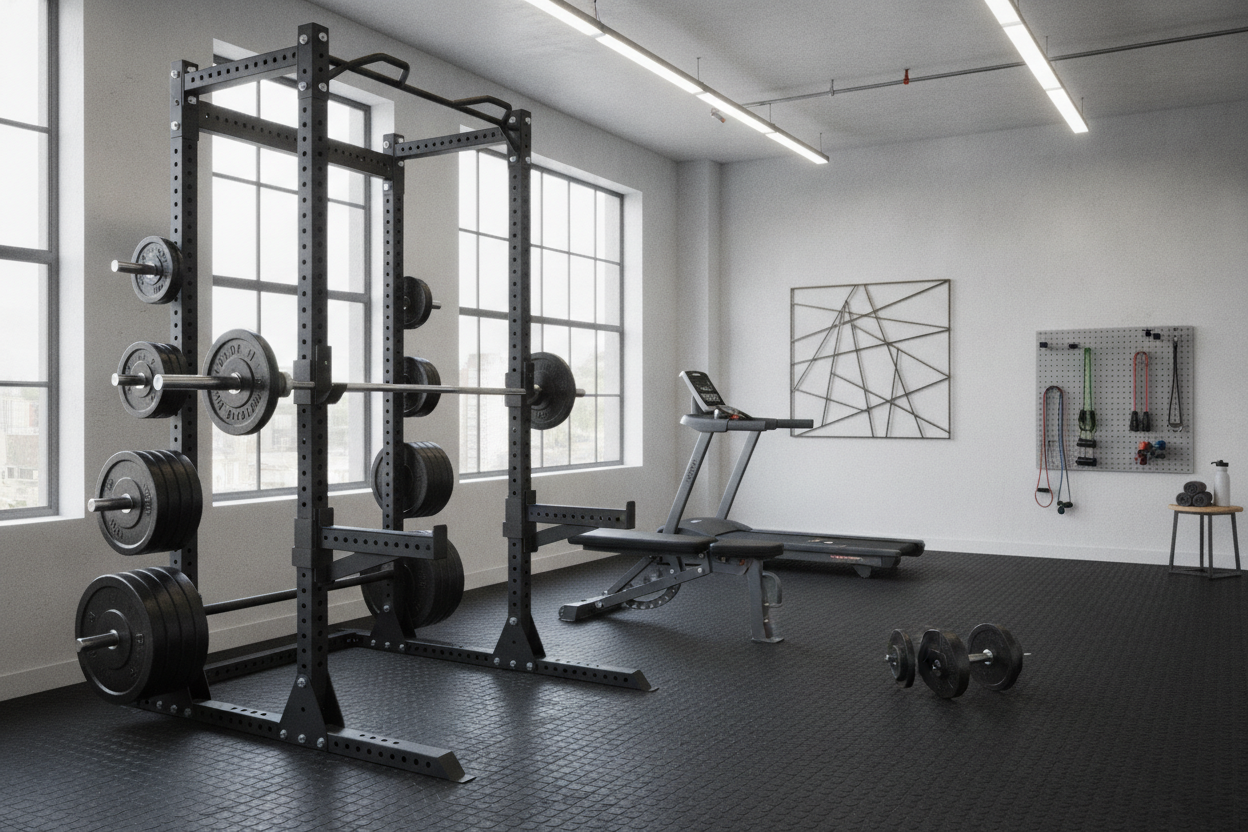
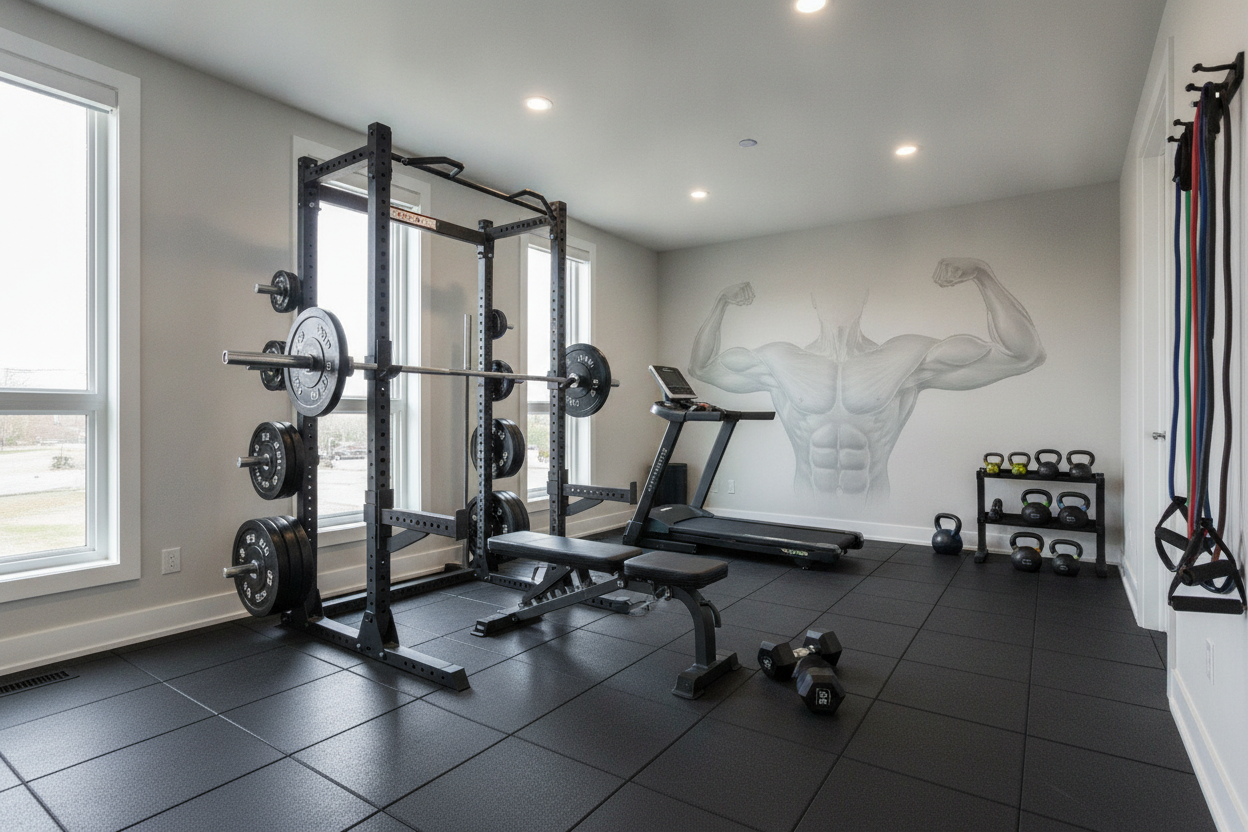
The philosophy here is simple: minimal equipment, maximal effort. You don't need a $3,000 hack squat machine to get tree-trunk thighs. I've found that a solid rack and some iron are all you need. I even adapted this for smaller spaces when I built a hybrid leg workout for home gym spaces that focuses on high-utility movements.
Movement 1: The Main Squat Pattern
The barbell back squat is the king for a reason. I aim for 3 to 5 sets in the 5-8 rep range. This isn't about cardio; it's about moving enough weight that your central nervous system takes notice. I prefer a high-bar position for quad development, but low-bar is fine if you want to move more weight. Rest three full minutes between sets. If you can talk comfortably after a set, you didn't go heavy enough.
Movement 2: A Hinge That Actually Hurts (In a Good Way)
You can't build a real physique while ignoring half your legs. Romanian Deadlifts (RDLs) are my go-to hinge. The goal isn't to touch the floor; it's to push your hips back until your hamstrings scream. Keep the bar close to your shins. If you feel this in your lower back, you're reaching with your arms instead of hinging at the hips. Three sets of 8-12 reps will change your life.
Movement 3: Single-Leg Work (The Humbler)
Bulgarian Split Squats are the ultimate 'humbler.' Even with a pair of 50-lb dumbbells, these will have you questioning your life choices by rep eight. They fix the imbalances that bilateral squats hide and force your stabilizers to work overtime. I do these last to ensure every fiber in my quads and glutes is fully fatigued.
Protecting Your Joints When the Weight Gets Heavy
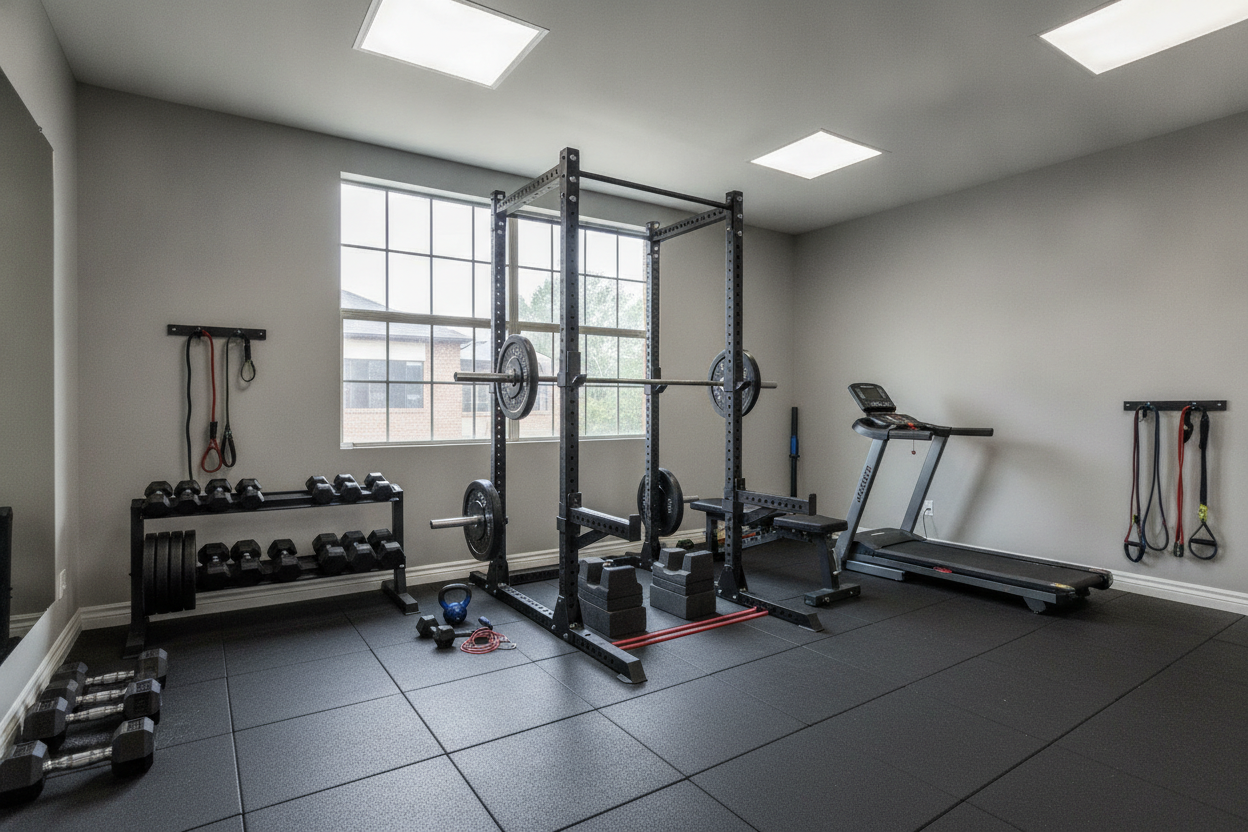
When you're moving hundreds of pounds, your feet shouldn't be shifting. Squatting on plush carpet or in squishy running shoes is a recipe for a snapped ankle or a missed lift. I made the switch to a large exercise mat for home gym setups because it provides that firm, high-traction surface required for heavy bracing. You need to feel the floor to drive through it.
Scaling This Up When You Get Stronger
Don't add more exercises to your routine just because you're getting stronger. Instead, increase the intensity. Slow down the eccentric (the way down) to a four-second count. Add a two-second pause at the bottom of your squats. Or, simply add 2.5 to 5 lbs to the bar every week. Simple works until you're too strong for simple to be easy.
Personal Experience: My Biggest Mistake
Early on, I tried to max out my squat every single week. I thought 'going heavy' meant hitting a 1-rep max every Monday. Within two months, my hips felt like they were filled with crushed glass. I learned the hard way that sub-maximal training—staying 1 or 2 reps away from total failure—is how you actually stay in the game long enough to see results.
FAQ
How many times a week should I do this?
Twice a week is the sweet spot for most. If you're hitting it hard, you'll need at least 72 hours of recovery between sessions.
Can I do this without a squat rack?
You can substitute with heavy Goblet Squats or Bulgarian Split Squats using dumbbells, but eventually, you'll need a way to load the spine heavily.
What about calves?
If you care about calves, throw in 3 sets of standing raises at the end. But don't let a 15-minute calf routine take away from the energy you need for heavy squats.