Stop Trying to Weight Train on a Flimsy Garage Sale Bench
I remember scrolling through Craigslist at midnight, trying to save fifty bucks on a used bench that looked 'good enough.' It wasn't. If you want to weight train without ending up in physical therapy, you need a foundation that doesn't creak when you unrack the bar.
Quick Takeaways
- Stability is a prerequisite for strength; a wobbly bench kills your power output.
- 11-gauge steel is the non-negotiable standard for home gym safety.
- Pad width (12 inches) is critical for proper scapular support.
- Matched equipment packages prevent dangerous geometry mismatches.
The Day My Budget Setup Almost Cost Me a Rotator Cuff
I was midway through a heavy set of 85-pound dumbbell presses when the right leg of my 'budget' bench decided it didn't like the floor anymore. It shifted three inches mid-rep. My right shoulder took the entire brunt of the correction, and I spent the next six weeks icing my rotator cuff instead of hitting PRs.
That cheap, hand-me-down bench was a liability I didn't recognize until it was too late. When you are moving heavy iron, the equipment is the only thing standing between a successful set and a trip to the ER. If you can move the bench with your pinky finger, it has no business being under your spine.
Why You Can't Out-Lift a Bad Environment
Your central nervous system (CNS) has a built-in 'governor' that throttles your power output. If your brain senses that the surface beneath you is unstable, it will not let you fire your motor units at 100%. It is a survival mechanism.
This is why good weight training requires a rock-solid platform. Every home gym needs a weight training bench that acts like an extension of the floor. If the bench wobbles, your strength vanishes before you even start the lift. You aren't just fighting the weight; you're fighting the furniture.
The Only Two Pieces of Gear You Actually Need First
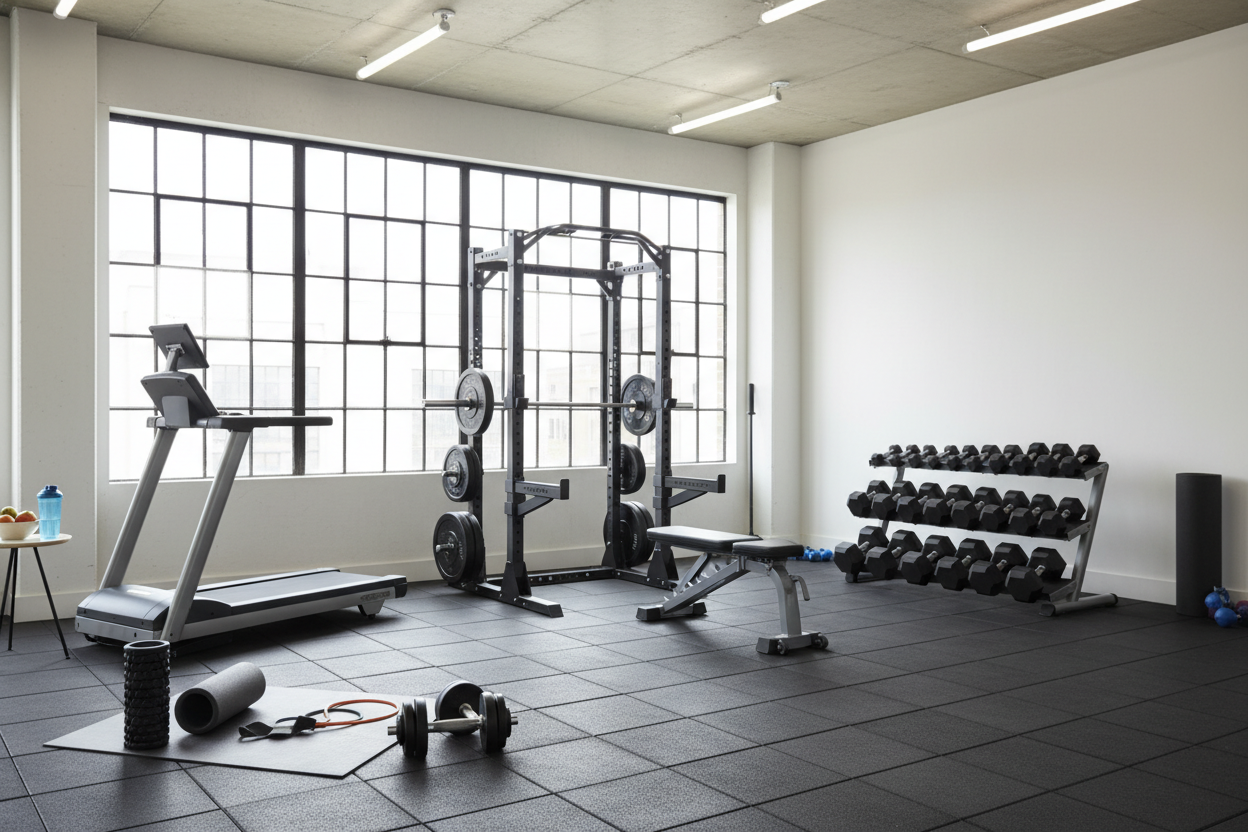
Forget the flashy cable attachments and the neon-colored kettlebells for now. If you're building a garage gym, you need a rack and a bench. That is the core of everything. I always recommend buying a matched power rack weight bench package from the start.
Buying a matched ecosystem ensures the bench geometry fits the rack's safety bars perfectly. You don't want to find out your bench is two inches too tall for your rack's lowest J-cup setting when you have 315 pounds over your throat. Stick to 11-gauge steel with 3x3 inch uprights; anything less feels like a toy once you start moving real weight.
What to Look For in a Proper Bench
Look for a pad that is at least 12 inches wide. Narrow pads are common on cheap benches, but they don't support your shoulder blades, which leads to unstable joints during a press. A 1,000-lb weight capacity is the standard you should look for—not because you're lifting 1,000 lbs today, but because it indicates the structural integrity of the welds.
Getting an adjustable weight bench is the best way to hit different muscle bellies safely. Having the ability to click into a 30-degree or 45-degree incline allows you to target the upper chest without the awkwardness of stacking plates under a flat bench's legs.
When Do Machines Actually Make Sense at Home?
Free weights are king for building stabilizer muscles, but machines have a place in a mature home gym. If you're training solo in a garage, pushing to absolute failure on a barbell bench press is risky. There is no one to save you from the 'Roll of Shame.'
Transitioning some of your high-volume work to weight lifting machines lets you hit that failure point safely. You can torch your quads or chest without worrying about a bar pinning you to the floor. It’s about longevity. I'd rather use a machine for my final sets than risk a month-long injury because I didn't have a spotter.
Building a Routine You Won't Quit in a Month
Consistency is the only thing that actually builds muscle. Once you have a stable environment, stop worrying about the gear and start focusing on the load. Stick to the big compound movements and track your progress in a notebook, not just an app. If the equipment is solid, the only variable left is your effort.
FAQ
Is a 1,000-lb capacity bench overkill?
No. That rating includes your body weight plus the weight on the bar. If you weigh 220 lbs and are pressing 250, you're already putting nearly 500 lbs of dynamic force on those welds. You want that overhead safety margin.
What is the ideal bench height?
Look for 17 to 17.5 inches from the floor to the top of the pad. This is the IPF standard and allows most lifters to get proper leg drive by keeping their feet flat on the floor.
Can I use a 14-gauge steel bench?
You can, but I wouldn't. 14-gauge is thinner and prone to flexing under heavy loads. If you plan on lifting for more than a year, just buy 11-gauge steel once and never worry about it again.