
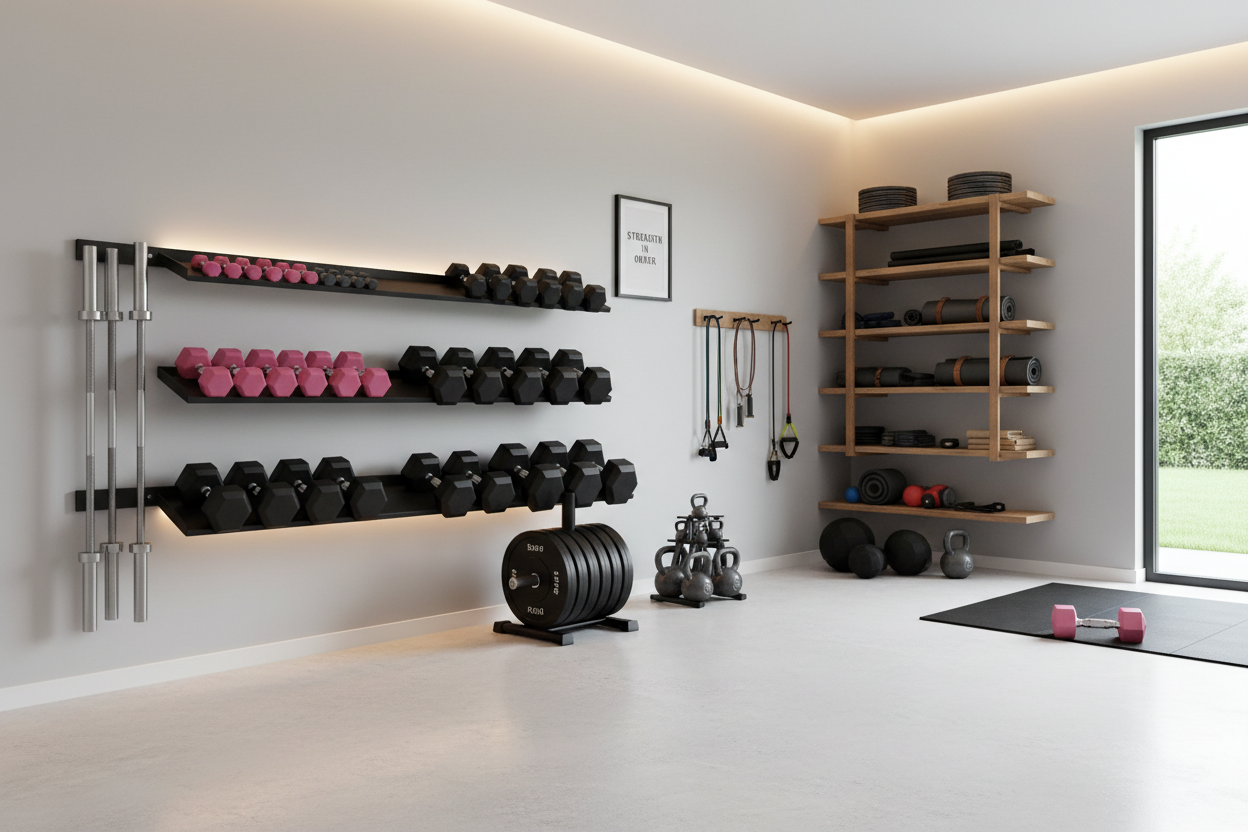
Stop Tripping Over Your Weights: The Ultimate Guide to Compact Gym Storage
Building a home gym usually starts with a burst of enthusiasm, a few dumbbells, and a lot of empty floor space. But as you get stronger and your collection of iron grows, that floor space disappears rapidly. Before you know it, your workout area becomes a minefield of cast iron and rubber. The most effective way to reclaim your square footage and keep your equipment safe is by utilizing vertical storage, specifically an A-frame design. These racks minimize the footprint while maximizing load capacity, making them the gold standard for garage gyms and spare bedroom setups alike.
Why Vertical Storage Wins in Small Spaces
If you have ever tried to navigate a small room cluttered with weights, you understand the frustration. Horizontal racks, while sturdy, often take up four to five feet of wall space. For most of us, that is simply too much real estate to sacrifice. This is where the a-frame dumbbell rack shines. By stacking weights vertically in a pyramid structure, you can store five to ten pairs of dumbbells in a footprint scarcely larger than a single floor tile.
Stability is the primary concern most people have when switching from a long, low rack to a tall, vertical one. Physics is actually on your side here. The triangular geometry of a cap weight rack creates a low center of gravity. Even when fully loaded with heavy hex dumbbells, the weight distribution pushes downward and outward through the legs, locking the unit in place. It is a smarter engineering approach for tight quarters.
My Experience with the CAP Barbell A-Frame
I spent the first two years of my home training journey leaving my weights in a pile in the corner. It was messy, but I told myself I didn't need "fancy" organization. That changed the day I dropped a 45-pound dumbbell on my toe because I was trying to dig it out from the bottom of the stack. I realized that organization is actually a safety feature. I picked up a cap barbell a-frame dumbbell rack shortly after. The assembly took maybe twenty minutes with a wrench and a socket set. The immediate difference in my workflow was massive. I wasn't wasting energy moving weights around just to find the pair I needed. The rack held my 5s through my 35s easily, and the plastic inserts protected the knurling on the handles, which kept the equipment looking newer for longer.
Breaking Down the CAP Collection
CAP Barbell has dominated the entry-to-mid-level home gym market for a long time, largely because their storage solutions are accessible and reliable. The standard cap barbell dumbbell rack is usually constructed from steel with a durable powder coat finish. This finish is crucial because it prevents rust, which is a common enemy in garage environments where humidity fluctuates.
The Classic A-Frame Design
The flagship of their line is undoubtedly the cap barbell "a" frame dumbbell rack. It typically comes in a few variations, holding anywhere from 5 pairs to 10 pairs of weights. The spacing between the cradles is designed to accommodate standard hex dumbbells (iron or rubber-coated). If you are using neoprene weights or adjustable dumbbells, you need to check the dimensions, but for traditional hex heads, the fit is usually snug and secure.
A specific model that garners a lot of attention is the cap barbell a-frame dumbbell weight rack. It is built to handle significant loads, often rated for several hundred pounds. When loading these, you always want to place the heaviest weights at the bottom and the lightest at the top. This lowers the center of gravity further and ensures the barbell frame remains stable during loading and unloading.
Adding Some Personality
Gym equipment is notoriously drab—usually black, grey, or silver. However, aesthetics play a role in motivation. If you like your space to look curated, you might look into the cap barbell a-frame dumbbell weight rack color series. These racks offer the same structural integrity as the standard black models but come in various colors to match your other equipment or room decor. A white or red rack can pop against a dark gym mat, making the space feel less industrial and more personal.
Versatility: More Than Just Dumbbells
Sometimes you have more than just hand weights. You might have plates, a barbell, and kettlebells. Buying separate racks for all of these is expensive and space-consuming. This is where a cap combo weight storage rack becomes a vital piece of equipment. These hybrid units often combine the vertical storage of an a frame weight rack with horizontal pegs for plates and sometimes a slot for a barbell.
Choosing a combo rack means you can centralize your lifting station. Imagine having your plates, your bar, and your dumbbells all within arm's reach without taking a single step. It streamlines the workout significantly. The cap a frame dumbbell rack element handles the hand weights, while the base is reinforced to handle the heavier load of 45lb plates.
What to Look for Before Buying
Before you commit to a cap barbell a-frame dumbbell weight rack, measure your heaviest dumbbells. Some older style "pro-style" dumbbells (the ones with round plates and end caps) are very bulky. You need to ensure the vertical clearance between the rack cradles is sufficient. If the dumbbells are too large, they will hit each other, and you won't be able to rack them properly.
Additionally, check the floor surface. While these racks are stable, an uneven garage floor can cause a wobble. Using rubber gym mats underneath the rack not only protects the floor but also helps level out minor imperfections in the concrete, ensuring your cap barbell a-frame dumbbell rack sits flush.
Final Thoughts on Organization
Investing in a proper storage solution like an a frame weight rack is not just about tidiness; it is about respecting your training environment. A clean gym is a safe gym, and having your equipment organized allows you to focus entirely on the lift rather than the logistics of where to put your weights. Whether you choose a simple 5-tier rack or a comprehensive combo unit, getting your gear off the floor is the best upgrade you can make for your home setup.
Frequently Asked Questions
Can the CAP A-frame rack hold neoprene dumbbells?
Yes, it can hold neoprene dumbbells, but the fit might be loose compared to hex dumbbells. The cradles are generally sized for standard dumbbell handles, so while the neoprene weights will sit on the rack, they may not fill the space as snugly as cast iron or rubber hex weights.
Is it safe to put the heaviest weights on the top of the rack?
No, you should always load the heaviest weights at the bottom of the rack. Placing heavy weights at the top raises the center of gravity, which can make the unit unstable and prone to tipping over if bumped.
Does the rack come pre-assembled?
Most CAP racks require assembly upon arrival. They typically ship flat-packed with the necessary bolts and instructions, and assembly is generally straightforward, usually requiring just a wrench and a screwdriver.


