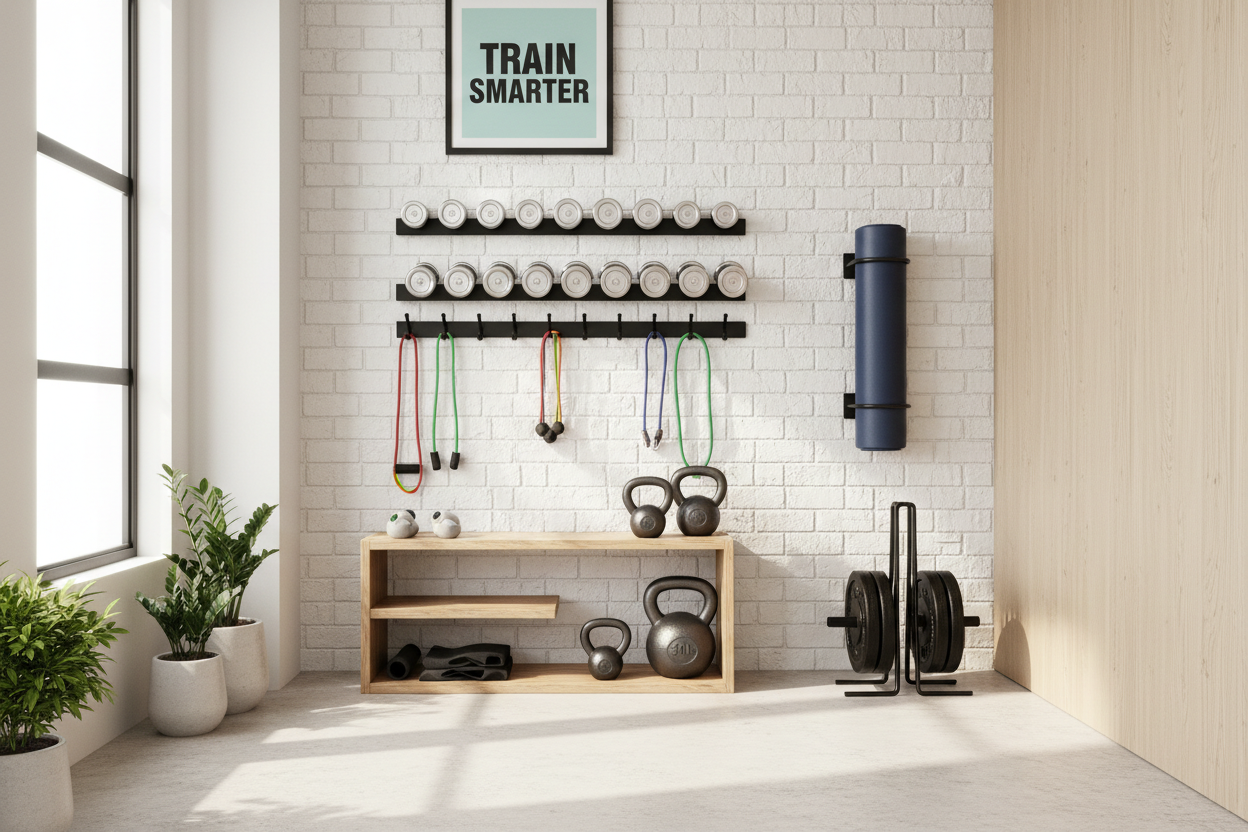
Stop Tripping Over Your Weights: Organizing a Tiny Home Gym Without Losing Your Mind
Leaving heavy iron scattered across your living room floor isn't just an aesthetic crime; it is a safety hazard waiting to happen. If you have ever stubbed your toe on a 24kg cast iron ball in the middle of the night, you know exactly why proper storage matters. For those training in apartments, spare bedrooms, or tight garage corners, the solution isn't a massive commercial shelving unit. You need organization that respects your limited square footage while handling significant loads.
Kettlebells present a unique storage challenge compared to dumbbells or plates. Their uneven center of gravity and round shape mean they don't stack, and they take up a surprising amount of floor real estate when lined up in a row. The immediate fix is verticality. Getting your weights off the ground protects your flooring from scratches and dents, but more importantly, it declutters your mental space. A clean training environment usually leads to a more focused workout.
The Realities of Training in Small Spaces
Space efficiency is the holy grail of the modern home gym. When you are working with a 6x6 foot area, every inch counts. Large, tiered racks designed for commercial gyms are often too deep and too wide for residential use. They dominate the room and often hold more weight than a single person actually owns. This is where specialized, compact storage shines. You want a footprint that is minimal—something that tucks away rather than taking center stage.
I learned this lesson the hard way a few years ago. My "gym" was a designated corner of my home office. I had accumulated a collection of five kettlebells ranging from 12kg to 32kg. Initially, I just lined them up against the baseboard. It seemed fine until I noticed the permanent indentations forming in the carpet and the scuff marks on the wall paint. Cleaning around them was a nightmare; I had to move 100kg of iron just to vacuum. The breaking point came when I tripped over the handle of my 16kg bell while pacing during a conference call. That afternoon, I started hunting for a vertical storage solution. I didn't need a massive rig, just something sturdy and compact. Once I moved those bells onto a proper stand, the room felt twice as big, and the transition from "office mode" to "workout mode" became seamless.
Choosing the Right Storage for Your Bell Collection
Not all racks are created equal, especially when dealing with the unique shape of kettlebells. Dumbbell racks usually feature angled rails that are useless for flat-bottomed kettlebells. You need flat trays or specific shelving. When looking for a kettlebell rack small enough to fit a tight space, pay close attention to the shelf depth and the lip height. If the shelf is too shallow, larger bells (like competition style or heavy cast iron) might hang over the edge, creating a drop risk. If the lip is too high, racking the weight after a heavy set becomes a wrist-breaking maneuver.
Weight Capacity and Structural Integrity
Never underestimate the density of your collection. A compact rack might look cute, but it needs to support hundreds of pounds. Look for welded steel construction rather than flimsy bolt-together units with thin sheet metal. The gauge of the steel determines whether the rack will stand firm or wobble every time you set a weight down. A 2-tier rack that is only 30 inches wide can easily carry 300+ pounds if constructed correctly. Always check the manufacturer's maximum load rating. It is better to have a rack that is over-engineered than one that buckles under the pressure of your 32kg snatch test bells.
The Two-Tier vs. Tree Design
You generally have two form factors to choose from when saving space. The first is the mini two-tier shelf. These are excellent because they are low profile. They can often slide under a window or sit unobtrusively beneath a mounted TV. They offer easy access because you aren't reaching high up for a heavy weight.
The second option is a vertical "tree" or A-frame rack. These have the absolute smallest footprint, often taking up less than two square feet of floor space. However, they can be tricky with kettlebells. Unless the spacing between tiers is generous, the handle of a bell on the bottom row might be obstructed by the bell above it. This makes un-racking awkward and potentially dangerous for your fingers. If you choose a vertical tree, ensure it is specifically designed for kettlebells, not just a generic weight tree.
Protecting Your Equipment and Floors
Beyond organization, a rack serves as a protective barrier. Most quality storage units come with rubber liners on the shelves. This prevents metal-on-metal contact. If you use powder-coated kettlebells, grinding them against a bare steel shelf will eventually chip the finish, leading to rust on the handle—the last thing you want tearing up your hands during high-rep swings. If your rack doesn't come with liners, you can easily cut a strip of stall mat or heavy-duty rubber to fit.
Furthermore, consider the feet of the rack. A heavy rack loaded with iron concentrates a massive amount of force into four small points on the floor. If you are on hardwood or tile, this can cause cracking or denting. Always place the rack on top of a protective rubber mat or ensure it has wide, rubber-capped feet to distribute the load.
The Mental Benefit of Organization
There is a psychological component to having a designated place for your gear. When equipment is scattered, it feels like clutter. Clutter creates low-level anxiety and resistance to starting a workout. When your kettlebells are racked neatly, they look like tools ready for use. It shifts the atmosphere from "messy room" to "training sanctuary." This is particularly vital in multi-use spaces like living rooms or bedrooms. Being able to organize your gear quickly means you can switch roles mentally, leaving the workout behind when you are done.
Investing in proper storage is rarely the most exciting purchase compared to buying a new barbell or a heavier kettlebell. However, it is usually the purchase that makes the biggest difference in the longevity and enjoyment of your home gym. By getting the iron off the floor, you protect your home, your toes, and your equipment, all while reclaiming valuable square footage.
Frequently Asked Questions
Can I store dumbbells on a kettlebell rack?
Yes, but it depends on the shelf design. If the rack uses flat trays (which most kettlebell racks do), you can easily place dumbbells on them. However, standard dumbbell racks with angled rails usually cannot hold kettlebells safely because the bells will slide through or sit unstably.
How much clearance do I need around the rack?
You should keep at least two to three feet of clear space in front of the rack. You need enough room to safely hinge at the hips to pick up the weight without your backside hitting a wall or furniture. Never place a rack where you have to twist your spine to un-rack a heavy weight.
Is a wall-mounted shelf safe for kettlebells?
Wall-mounted storage can work, but it requires professional installation into structural studs using heavy-duty lag bolts. Because kettlebells are dense and heavy, the shear force on the wall is significant. For most home setups, a floor-standing rack is safer and offers more flexibility if you decide to rearrange the room.