Stop Tripping Over Your Gear: The Ultimate Guide to Barbell Organization
Walking into a home gym should feel like entering a sanctuary of focus, not an obstacle course. If you are stepping over plates and dodging rolling bars just to get to your bench, your workout is already suffering. Proper organization isn't just about aesthetics; it is about protecting your equipment and your safety. Leaving a high-quality barbell on the floor exposes it to moisture, dust, and accidental kicks that can damage the sleeves or bearings. The solution lies in selecting the right storage method for your specific space, whether that means a heavy-duty floor stand or a space-saving wall mount.
I learned this lesson the hard way a few years ago. I had just upgraded to a decent needle-bearing bar for Olympic lifting. Because I didn't want to drill into my garage walls, I just leaned it in the corner. One humid July morning, I went to move it, and the bar slid, crashing down against a dumbbell rack. The fall put a nasty gouge in the knurling and seized up one of the sleeves. That single moment of negligence cost me a lot of money and frustration. Since then, I’ve treated every piece of steel I own with respect, ensuring every workout bar holder is secure and appropriate for the equipment it holds.
Vertical vs. Horizontal: Making the Choice
The first decision you need to make is orientation. Your available floor space usually dictates this. A vertical barbell stand is often the go-to for garage gyms with limited wall space but decent ceiling height. These stands, often called "9-bar holders" or similar, sit on the floor and allow you to drop the bar sleeves directly into tubes. They are incredibly efficient, turning a two-square-foot area into a home for your entire collection.
However, you need to be mindful of your ceiling clearance. If you have low ceilings, pulling a 7-foot bar out of a vertical olympic bar holder can be impossible without tilting it dangerously. In those cases, horizontal storage is superior. Horizontal racks for barbells distribute the weight across the shaft rather than the sleeve. This is often preferred for high-end bars with sensitive needle bearings, as it prevents oil from pooling at one end of the sleeve assembly, though modern bars are generally resilient enough for either method.
Wall-Mounted Solutions for Space Efficiency
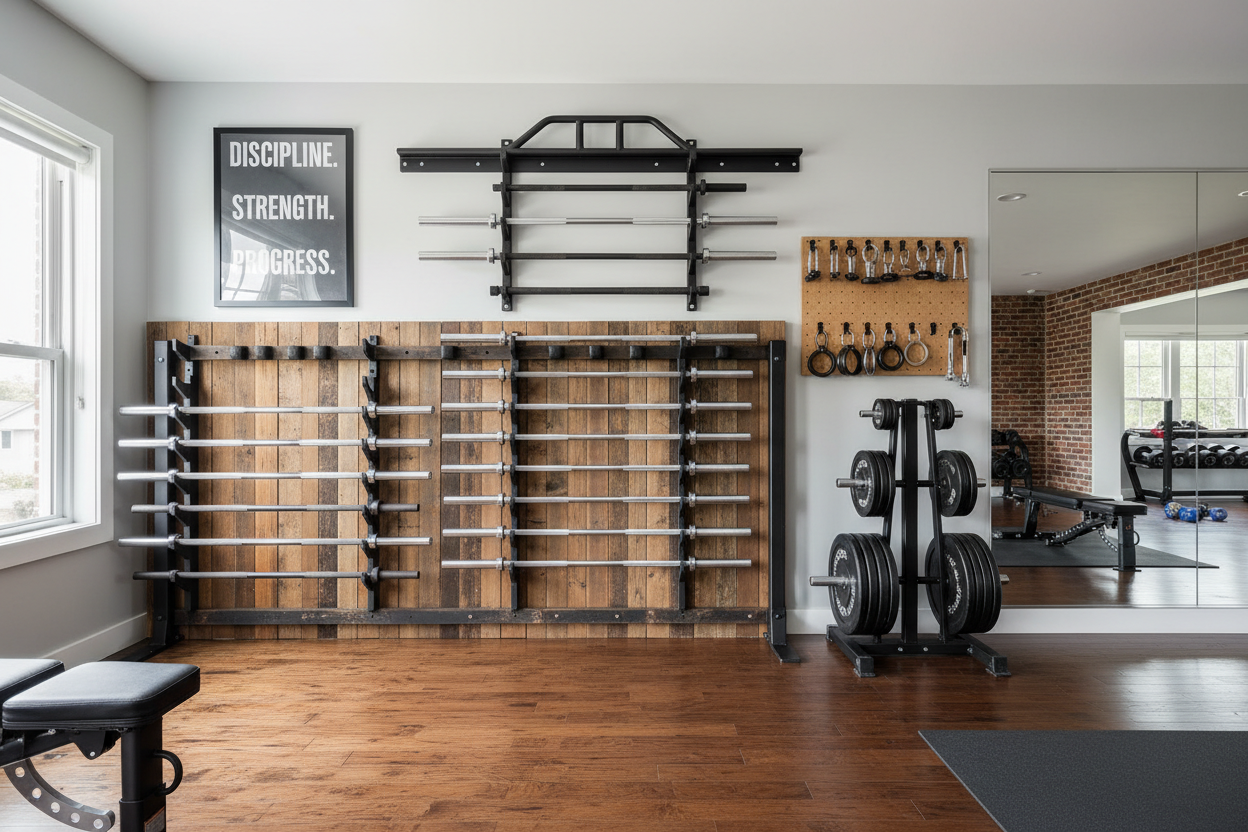
If you have open studs or sturdy concrete walls, getting your gear off the floor is a game-changer. A barbell rack wall mount system, often referred to as a "gun rack," displays your bars horizontally. This not only looks professional but keeps the floor clear for deadlifts and other movements. When installing an olympic bar holder wall unit, you must anchor it into studs. Drywall anchors will not suffice for the dynamic load of 45-pound steel bars.
For those who prefer vertical storage but want to keep the floor clear, a wall-mounted weight lifting bar holder that grips the shaft or hangs the bar by the sleeve is a viable hybrid option. These units are generally cheaper than full gun racks and take up less visual space. Just ensure the olympic weight bar holder you choose has protective plastic or UHMW lining to prevent metal-on-metal contact that could dull your knurling.
Handling Specialty Bars: Hex and Trap Bars
Standard Olympic bars are easy to manage, but specialty bars introduce a geometry problem. If you own a trap bar, you know they are awkward, wide, and heavy. Figuring out how to store trap bar equipment efficiently is a common headache. They rarely fit in standard vertical tubes because the handles hit each other, and they are too deep for standard gun racks.
The best solution is often a dedicated trap bar wall storage hook. These are large, heavy-duty prongs that mount directly to a wall strip or rig. You hang the bar by one of its handles or the main frame. If you prefer a floor solution, some manufacturers now make a specialized hex bar storage rack designed to slot the bar in vertically. If you are looking for a cheaper DIY approach on how to store hex bar equipment, a heavy-duty utility hook screwed into a stud works wonders, acting as a simple trap bar hanger. Just ensure the hook is rated for at least 75 pounds, as these bars are heavier than standard ones.
Similarly, hex bar wall storage requires planning for the width. Unlike a straight bar, the hex bar sticks out significantly from the wall. Place these in low-traffic corners where you won't bump your head or shoulder into the protruding frame.
Floor Stands and Multi-Bar Organization
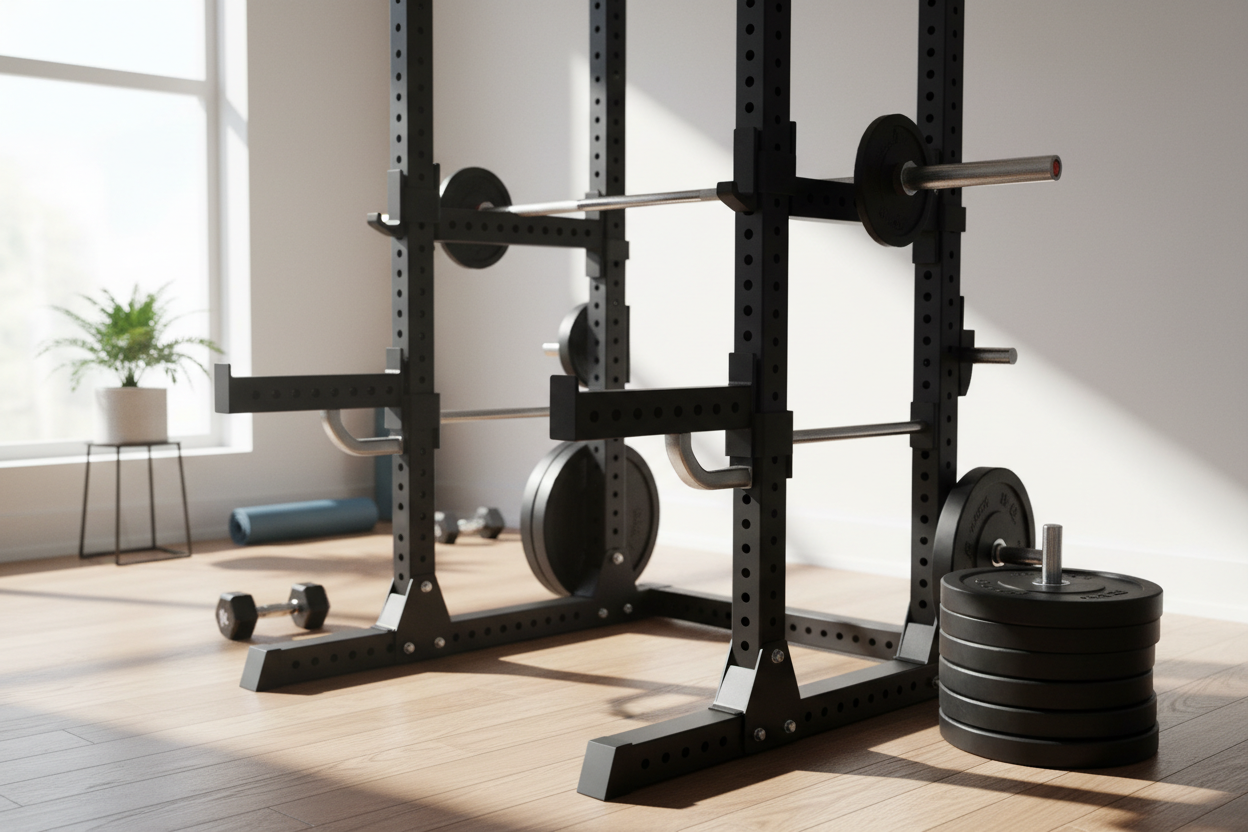
If you have a growing collection of specialty bars, curl bars, and power bars, a single barbell storage stand might be your best investment. These floor units are stable and don't require drilling into your home’s foundation. A high-quality bar holder stand will feature weighted bases to prevent tipping when you remove a bar from one side.
When shopping for an olympic bar storage rack, look for spacing. Cheaper racks crowd the tubes together. If you have a safety squat bar or a swiss bar, they might block adjacent holes, rendering a 9-bar holder into a 4-bar holder effectively. A well-designed rack for weight bar collections will account for the diameter of the collars and the odd shapes of specialty equipment.
Installation and Maintenance Tips
Regardless of whether you choose a barbell bar holder for the wall or floor, maintenance is key. Check the screws and bolts periodically. The vibration from racking and unracking heavy steel can loosen hardware over time. If you are using a barbell stand holder that sits on the floor, place a rubber mat underneath it to prevent it from sliding or scratching your flooring.
Taking the time to install a proper workout bar holder system transforms a chaotic garage into a professional training environment. It extends the life of your equipment and streamlines your workout process, letting you focus on the lift rather than where to set the bar down.
Frequently Asked Questions
Does storing a barbell vertically damage the bearings?
Generally, no. Modern bushings and bearings are designed to withstand significant force. However, for very expensive needle-bearing bars, some lifters prefer horizontal storage to ensure lubricant stays evenly distributed along the shaft, though the difference in longevity is minimal for most users.
How high should I mount a horizontal wall rack?
Mount the rack at a height where the heaviest bar is easiest to reach, typically around chest or shoulder height. Avoid placing heavy bars too high where you have to reach up, or too low where you have to bend awkwardly to retrieve them.
Can I store a standard 1-inch bar in an Olympic 2-inch holder?
It is not recommended. A standard bar will lean significantly in a 2-inch vertical olympic bar holder, putting stress on the holder and potentially causing the bar to fall out. Use a rack specifically designed for standard bars or a horizontal gun rack which accommodates both types.