Stop Treating Your upper body and back workout Like a Chest Day
I remember looking at my old training logs from three years ago. I had four different pressing movements listed for Monday and exactly one row variation. At the time, my shoulders felt like they were filled with ground glass every time I touched the bar. I was obsessed with the mirror muscles, scrolling through equipment sites at 2 a.m. comparing the knurling on power bars while my posterior chain was basically a ghost town. If you are struggling with nagging aches or a bench press that hasn't budged since the Obama administration, your upper body and back workout is likely the culprit.
Quick Takeaways
- Adopt a 2:1 pull-to-push volume ratio to save your rotator cuffs.
- Lead your sessions with a heavy pulling movement while your CNS is fresh.
- Invest in a solid floor setup to allow for aggressive, dead-stop rows.
- Stop using momentum; if your torso is swinging, the weight is too heavy.
The Mirror Muscle Trap in Most Garage Gyms
Most lifters fall into the same trap: we train what we can see. We spend forty-five minutes on the flat bench, incline, and flies, then toss in three sets of lazy cable rows at the end as an afterthought. This creates a massive structural imbalance. When your chest and front delts are overdeveloped compared to your lats and rhomboids, your shoulders are pulled forward into a permanent slouch. It looks bad, but it performs even worse.
In my own gym, I see guys loading up 225 on the bench but struggling to row 135 with decent form. They wonder why their progress has stalled. The truth is, your body won't let you push what you can't pull. It’s a built-in safety mechanism. If your back isn't strong enough to stabilize the load, your brain will literally shut down your strength output on the press to prevent you from snapping something. A weak back and upper body workout routine isn't just a missed aesthetic opportunity; it is a physical ceiling on your potential.
Why You Need to Pull Twice as Much as You Push
To fix the damage, you need to flip the script. For every set of pressing you do, you should be doing two sets of pulling. This 2:1 ratio is the gold standard for shoulder longevity. When you prioritize the posterior chain, you’re building the 'shelf' that your body relies on during heavy presses. Think of your back as the foundation of a house. You wouldn't try to build a skyscraper on a sheet of plywood, yet that’s exactly what you’re doing when you bench heavy with a neglected back.
A thick, stable back provides the necessary tension to keep your scapula retracted and depressed. Without that stability, you lose force. In fact, a weak, neglected back is destroying your ab and upper body workout because it creates massive instability. If you can't brace your lats and upper back, your core cannot transfer power effectively from the ground through your arms. You end up with 'energy leaks' where the weight feels heavier than it actually is because your body is busy trying to stay balanced instead of moving the load.
The 3 Non-Negotiable Back Builders for Home Lifters
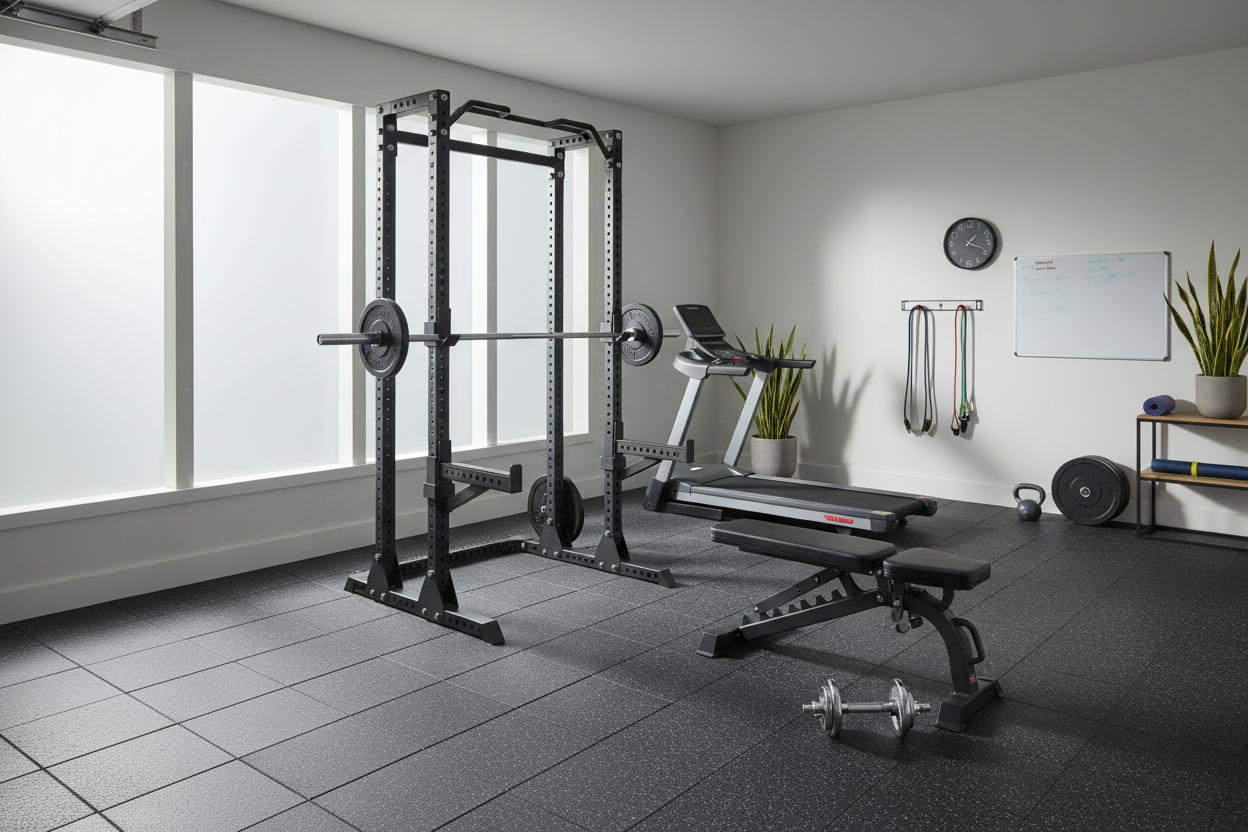
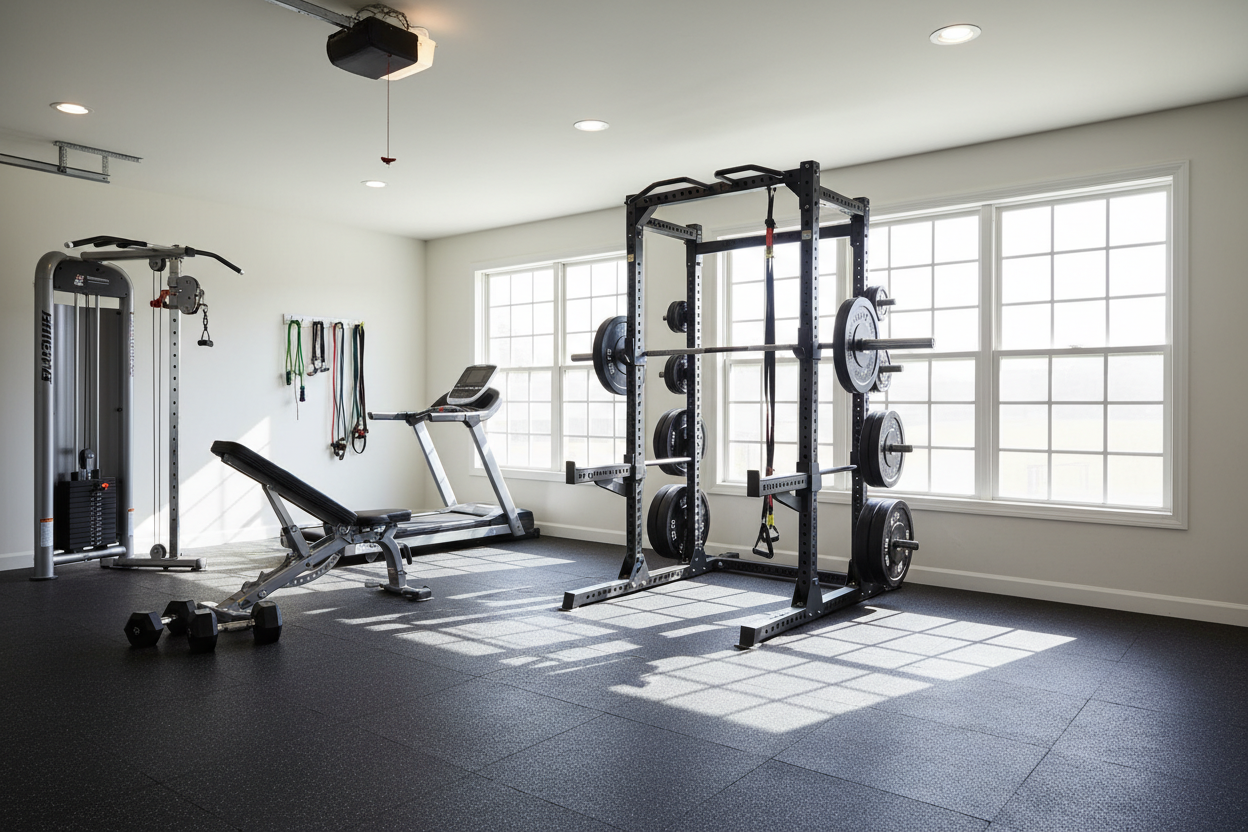
You don't need a $3,000 functional trainer to build a massive back. You need a barbell, a pull-up bar, and some heavy-duty floor protection. The first non-negotiable is the Pendlay Row. Unlike a standard bent-over row, the Pendlay starts from a dead stop on the floor for every rep. This builds explosive power and forces your lats to do the work without using leg drive. Because you’re pulling from the floor, I always recommend a 6x8ft exercise mat for home workouts. It protects your concrete from the impact of heavy iron plates and dampens the noise so you aren't waking up the neighbors during 6 a.m. sessions.
Second is the weighted pull-up. If you can do 10 clean bodyweight reps, it is time to start hanging plates from a belt. This is the ultimate vertical pull for lat width. Finally, you need strict rear delt work. I prefer face pulls with a heavy resistance band or rear delt flies with 15-lb or 20-lb dumbbells. These don't need to be heavy; they need to be precise. You’re targeting the small muscles that keep your humerus seated correctly in the socket. Skip these, and you’re asking for an impingement.
Putting It Together: The Posterior-First Blueprint
The biggest mistake people make is putting their back work at the end of the session. By then, your grip is shot and your focus is gone. If you want to see real change, lead with the pull. A sample structure should look like this: start with 5 sets of weighted pull-ups, move into 4 sets of heavy Pendlay rows, and only then move to your primary press. By the time you get to the bench, your upper back will be 'awake' and acting as a solid, stable base for the bar.
Once the heavy compound movements are done, you can move into your accessory work. This is where you can add the 'show' muscles. If you want to finish the session with some high-volume isolation, check out this ultimate arm and shoulder workout at home. The goal is to spend the first 60% of your time on the posterior chain and the final 40% on the anterior and isolation movements. This shift in priority will do more for your physique than any 'chest day' ever could.
Stop Sacrificing Form for Ego
I’ve seen too many guys loading 225 on a barbell row only to perform what looks like a standing seizure. If your torso is moving more than 15 degrees from the starting position, you aren't training your back—you're training your ego and your lower back's ability to tolerate abuse. To get the most out of a back and upper body workout, you need to feel the stretch at the bottom and the squeeze at the top. Use a thumb-less grip if you find your biceps are taking over the movement.
Consistency is the only thing that beats a bad program, but a good program with consistency is unstoppable. If you are serious about fixing your posture and hitting new PRs, you have to stop treating your back like an accessory. If you need more specific routines to address other weak points in your home gym setup, explore our comprehensive workout hub. We've broken down everything from deadlift mechanics to mobility drills designed specifically for the garage gym environment.
My Personal Take: The Mistake That Cost Me Six Months
I once spent an entire winter trying to push my bench from 275 to 315. I added more sets, more tricep work, and more specialized bars. My bench actually went down. Why? Because I was so tight in the front and so weak in the back that my shoulders were constantly inflamed. I finally took a step back and spent three months doing nothing but rowing and pull-ups. I didn't touch a bench press for 12 weeks. When I came back to it, 275 felt like a warmup. My back was finally strong enough to handle the weight I was trying to move. Don't be the guy who has to learn that the hard way.
FAQ
Do I need a cable machine for an effective back workout?
No. While lat pulldowns are great, you can build an elite back with just a barbell and pull-up bar. Use heavy resistance bands to mimic cable movements like face pulls or straight-arm pulldowns if you're on a budget.
How many times a week should I train my back?
For most lifters, twice a week is the sweet spot. One day focused on heavy horizontal pulling (rows) and one day focused on vertical pulling (pull-ups). This allows for enough recovery while maintaining the 2:1 pull-to-push ratio.
What if I can't do a single pull-up yet?
Start with negatives. Jump to the top of the bar and lower yourself as slowly as possible. You can also use heavy resistance bands for assistance. Don't swap them for pulldowns exclusively; the pull-up is a foundational movement you need to master.