I Halved My Exercises Per Body Part and Finally Saw Gains
I remember the night I realized my training was broken. I was ninety minutes into a 'chest day,' staring at a pair of 35-pound dumbbells, wondering why I felt like a zombie but looked exactly the same as I did six months ago. I had followed the classic bodybuilding scripts to the letter, religiously tracking exercises per body part until my notebook was a mess of junk volume and mediocre reps.
The truth is, most of us are overtraining the wrong things. We spend two hours chasing a 'pump' that vanishes by the time we hit the shower, while our actual strength plateaus. I decided to slash my volume in half, focusing on intensity over variety, and that is when the scale finally started moving again.
Quick Takeaways
- More variety usually leads to 'junk volume'—sets that create fatigue without stimulating growth.
- The Stimulus-to-Fatigue Ratio (SFR) is the only metric that actually matters for long-term progress.
- A complex back needs more angles than simple biceps; don't treat every muscle the same.
- Fewer exercises force you to master the ones that actually move the needle.
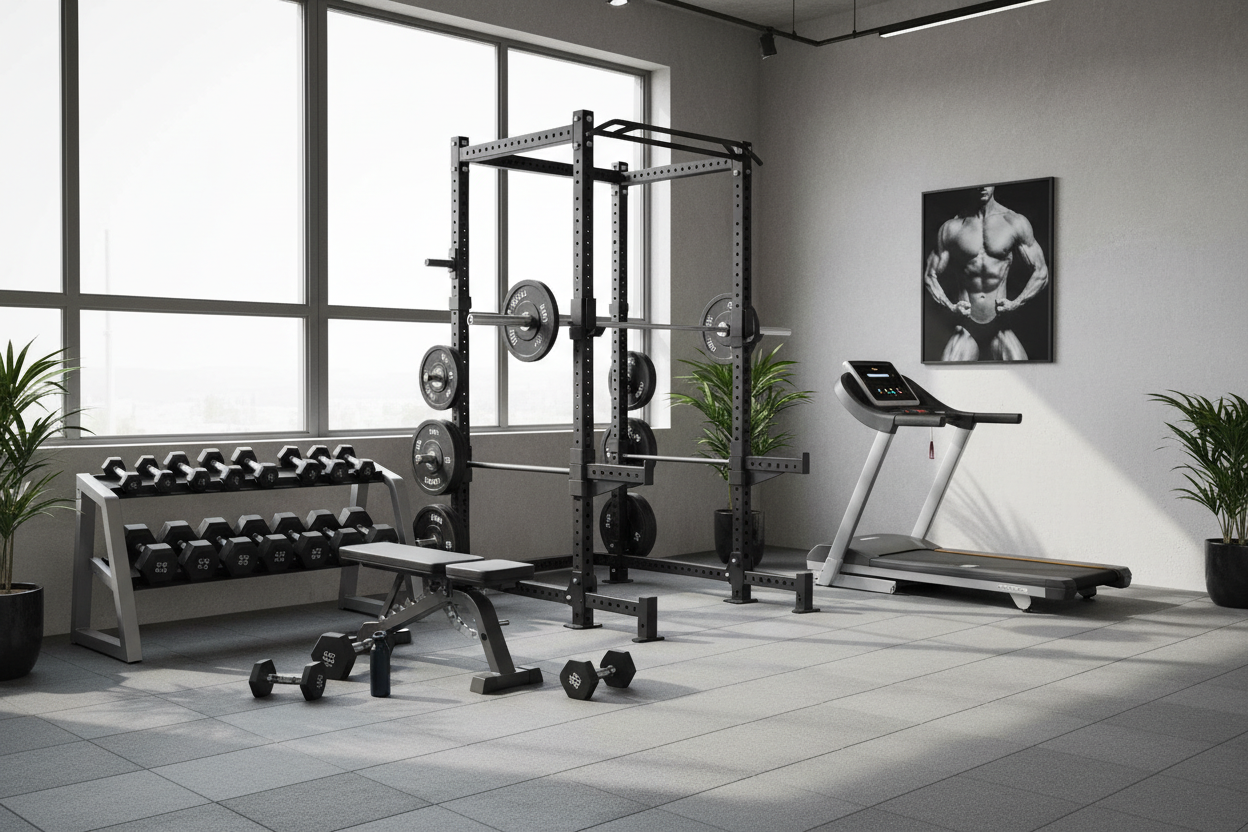
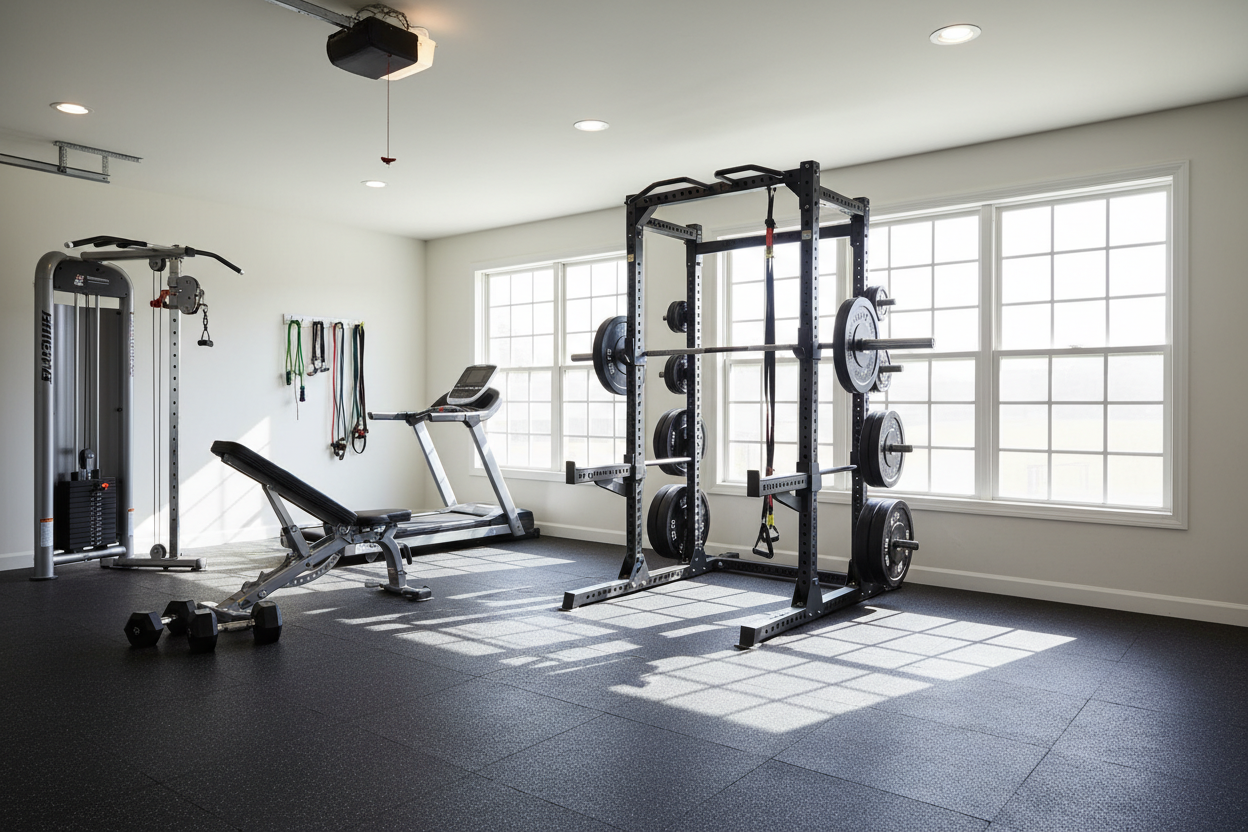
- High-quality floor traction and stable equipment are non-negotiable when you're pushing max intensity on fewer movements.
The Magazine Bro-Split Trap in a Garage Gym
We grew up on muscle magazines that told us we needed five different exercises per muscle group to 'fully develop' the fibers. They had us doing flat bench, incline bench, decline bench, cable flyes, and pec deck all in one session. In a commercial gym with endless machines, it’s easy to get sucked into that trap. In a garage gym, it’s just exhausting.
When you’re working with a power rack and a barbell, trying to replicate a 20-set workout per muscle group usually results in sloppy reps. You start 'pacing' yourself because you know you have four more exercises to go. You stop three reps short of failure on your main lift just to make sure you have energy for the fluff. That is the fastest way to stay small and weak. Your muscles don't need variety; they need a reason to adapt.
Why Stripping It Back Actually Works Better
This comes down to the Stimulus-to-Fatigue Ratio (SFR). Every set you do creates a stimulus (muscle growth signal) and fatigue (central nervous system drain and tissue damage). The first two hard sets of a heavy compound movement provide about 80% of the stimulus. Every set after that provides diminishing returns while the fatigue continues to skyrocket.
If you push a heavy set of squats or overhead presses close to failure, doing just one exercise per muscle group is often enough to trigger maximum hypertrophy. I’ve reached a point where Why My Workout for Build Muscle Only Has One Exercise per Day isn't just a minimalist experiment—it's a legitimate strategy for guys who actually have a life outside the gym but still want to look like they lift.
When you cut the fluff, you can put 100% of your mental and physical energy into the movements that matter. You stop 'exercising' and start training.
How to Find Your Ideal Exercises Per Body Part
So, how many movements do you actually need? It isn't a guessing game. You have to look at the anatomy. A muscle like the triceps has three heads, but they all generally perform the same function: extending the elbow. You don't need four different extensions to see growth. You need one heavy compound (like a close-grip bench) and maybe one isolation (like an overhead extension) to hit the long head.
For most lifters, 1-2 exercises for small groups and 2-3 for large, complex groups is the sweet spot. If you find yourself needing a fourth exercise just to 'feel' the muscle, you probably didn't work hard enough on the first two.
Complex Backs vs. Simple Biceps
The back is the exception to the minimalist rule because it’s a massive collection of muscles. To get that '3D' look, you generally need a horizontal pull (rows) and a vertical pull (pull-ups or lat pulldowns). That covers the lats, rhomboids, and traps. Throwing in a third movement like a face pull for rear delts makes sense here.
Compare that to the biceps. I see guys doing barbell curls, then hammer curls, then concentration curls, then preacher curls. It's redundant. Your biceps are tiny. If you’ve already done heavy weighted pull-ups and rows, your arms are already screaming. One hard, heavy set of curls is usually plenty to finish them off. Anything more is just burning calories and wasting time.
Less Fluff Forces You to Work Harder
Minimalism creates accountability. When your program says you only have two exercises for legs today, you better make them count. You can't hide behind a leg press or an extension machine. You have to get under the bar and fight. This approach forces you to focus on stability and execution.
To train this way safely, you need a solid foundation. I used to try and squat heavy on bare concrete or those cheap foam puzzle mats that slide around like ice. It was a disaster. Investing in a 6X8Ft Exercise Mat Yoga Mat Gym Flooring For Home Workout gave me the grip I needed. When you aren't worried about your feet slipping during a heavy set of RDLs, you can actually reach the level of intensity required to make low-volume training work.
A Sample Low-Volume Routine You Can Try Today
If you want to test this, try a simple Upper/Lower split. For the Upper day: one heavy press (bench or OHP), one heavy row, and one vertical pull. That’s it. Three exercises. If you do 3-4 sets of each with total focus and 1-2 reps left in the tank, you will be more wiped out than you were doing eight exercises at 70% effort.
For the Lower day: one squat variation, one hinge variation (like a Romanian Deadlift), and maybe some calf work if you're feeling masochistic. This style of one exercise per muscle group per session allows you to recover faster and hit the weights again sooner. Give it a shot for four weeks. Track your weights. I bet you'll see your numbers jump for the first time in months.
I’d love to hear how your body handles the shift. Join Our Facebook Group and let us know if cutting your volume helped you break through your latest plateau.
FAQ
Is one exercise per muscle group enough for experts?
Yes, provided the intensity is high. Advanced lifters often need more recovery time because they are moving significantly more weight, which places a higher tax on the nervous system. Quality always beats quantity.
How many sets should I do per exercise?
Aim for 2-4 working sets. If you can do five sets with the same weight and no drop in reps, you aren't training close enough to failure. The goal is to make the second or third set feel significantly harder than the first.
Will I lose muscle if I stop doing 5 exercises per part?
Unlikely. Most people actually see a 'rebound' in growth because their bodies finally have the resources to repair the tissue damage they've been inflicting. You'll likely look fuller and feel stronger within two weeks.