Stop Treating the Face Pull for Shoulders Like a Heavy Row
I have spent the last decade watching guys in garage gyms and commercial boxes turn the face pull for shoulders into a bastardized version of a seated row. They pile on the plates, lean back at a 45-degree angle, and yank the rope toward their chest with enough momentum to launch a satellite. It is painful to watch, mostly because I used to be that guy until my rotator cuffs started screaming for mercy. If your goal is to actually fix your posture and build those elusive rear delts, you have to leave your ego at the rack.
Quick Takeaways
- Focus on external rotation, not just pulling back toward your face.
- Keep the weight light enough to hold the contraction for a full second.
- A staggered stance prevents you from leaning back and using momentum.
- Pull the rope apart, not just toward you, to engage the rear delts.
Why You Are Probably Wasting Your Time on Face Pulls
The biggest mistake with the shoulder face pull is treating it like a primary mover. People load up the weight stack and start using their hips and lower back to move the weight. When you do that, you are essentially performing a sloppy upper back row. You are using your lats and traps to do the heavy lifting, which completely bypasses the small muscles we are actually trying to hit.
The rear deltoids and the rotator cuff muscles—specifically the infraspinatus and teres minor—are not designed to move massive loads. They are stabilizers. When you turn rope face pulls for shoulders into a momentum-based exercise, you are missing the entire point of the movement: shoulder health and posterior development. If you cannot hold the rope at your face for a two-count without shaking or falling forward, the weight is too heavy.
How to Actually Execute a Face Pull for Shoulders
Executing a proper cable face pull for shoulders requires a shift in mindset. You need to stop thinking about pulling and start thinking about rotating. The movement should be smooth and controlled. As the rope approaches your forehead, your hands should be moving faster than your elbows. This ensures that you are getting that crucial external rotation that makes the face pull shoulder exercise so effective.
The Setup: Fixing Your Grip and Stance
I prefer an overhand grip where my thumbs are facing me, though some lifters swear by a neutral, thumbs-up grip. The key is what happens with your feet. If you stand with your feet parallel, the cable will eventually pull you off balance, forcing you to lean back. I always recommend a staggered stance. If you are training in a slick garage, standing on a large exercise mat for home gym setups is a smart move. It provides the grip you need so your lead foot doesn't slide when you start getting into the higher-rep sets.
The Pull: It Is About Rotation, Not Just Pulling
As you initiate the shoulder cable face pull, think about pulling the ends of the rope away from each other. Your goal is to end the rep in a 'double biceps' pose. Your knuckles should be facing the wall behind you, and your elbows should be out to the sides, not tucked down. If you just pull the rope to your chin, you are doing a row. If you pull the rope to your ears and rotate your thumbs back, you are doing a face pull. This is the difference between a generic cable back exercises face pull and a targeted shoulder-builder.
Garage Gym Workarounds When You Lack a Cable Tower
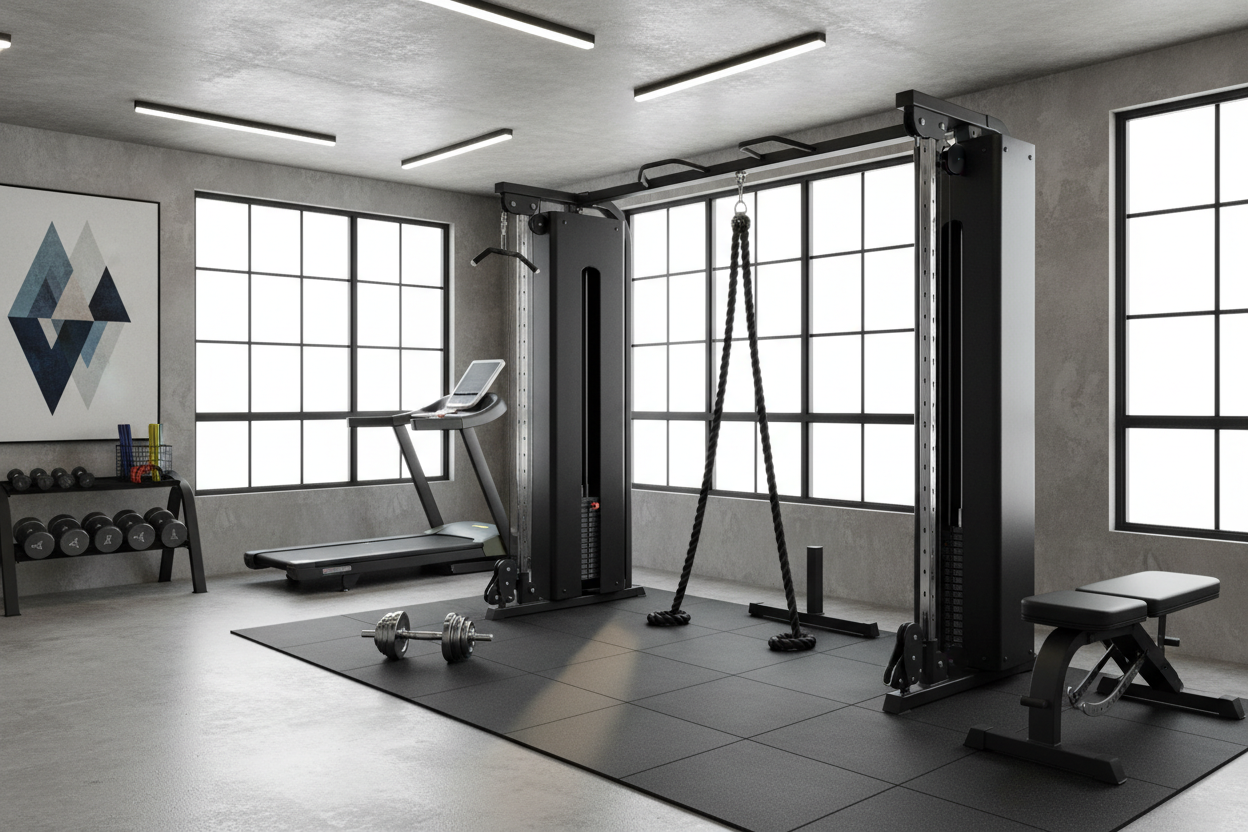
Not everyone has a dedicated cable crossover in their garage. If you are working with a basic rack, resistance bands are your best friend. In fact, bands are often better for a shoulder rope pull because the resistance increases as the band stretches, which matches the strength curve of the rear delt. Simply loop a medium-weight band around your rack upright at eye level and perform the same 'pull apart and rotate' motion.
If you only have dumbbells, you can mimic the tension by doing rear delt flies with an emphasis on the 'pinkies up' rotation. While it is not exactly the same, you can get creative with positioning, much like how some people adapt a Cable Pull Through With Dumbbell The Ultimate Home Gym Hack to replicate cable movements. The goal remains the same: constant tension and controlled rotation.
How to Program This Into Your Current Split
I do not care how strong you are; nobody needs to be doing sets of 5 on face pulls. This is a high-volume, mind-muscle connection exercise. I program a face pull shoulder workout at the end of every push day. It acts as a perfect counterbalance to the heavy internal rotation of the bench press.
Aim for 3 to 4 sets of 15 to 20 reps. Focus on the 'burn' in the back of the shoulder. If you feel it in your neck or your mid-back, you are likely shrugging the weight up. Drop the weight, depress your shoulders, and try again. Your rotator cuffs will thank you in five years.
My Personal Lesson in Humility
A few years back, I was obsessed with 'maxing out' the cable stack on face pulls. I thought I was a beast because I could pull the whole 150-lb stack. Meanwhile, my shoulders were constantly clicking, and my posture looked like a caveman's. I finally listened to a physical therapist who told me to drop the weight to 30 lbs and focus on the rotation. It was embarrassing to use the tiny pin at the top of the stack, but my shoulder pain vanished in three weeks, and my rear delts actually started to pop for the first time.
FAQ
How high should the cable be set?
Set the pulley at eye level or slightly above. Pulling from a slightly high-to-low angle helps naturally engage the rear delts without over-taxing the upper traps.
What is the best grip for face pulls?
An overhand grip (palms down) usually allows for more external rotation at the end of the movement, which is the primary goal for shoulder health.
Can I do face pulls every workout?
Yes. Because the recovery demand is low and the postural benefits are high, many lifters perform 2-3 sets of face pulls as part of their daily warm-up or cool-down.