Stop Trashing Your Front Delts: A Better Chest and Shoulders Workout
I remember the night I sat in my garage, staring at a pair of 80-pound dumbbells, wondering why my right shoulder felt like it was being poked with a hot needle. I’d been following the same 'push day' logic for years: heavy bench, heavy overhead press, and a bunch of junk volume. It’s a classic mistake. Most people think a chest and shoulders workout needs to be a marathon of heavy pressing, but that’s usually just a fast track to physical therapy.
- Stop pairing heavy barbell bench with heavy barbell overhead press.
- The 30-degree incline is the sweet spot for upper pec growth.
- Floor presses are the ultimate 'shoulder saver' for home lifters.
- Rear delt work isn't optional; it's the 'tax' you pay for heavy pressing.
The Problem With Smashing Chest and Delts Together
The standard bro-split treats the chest and shoulders like two separate islands. Here is the reality: your anterior (front) deltoids are heavily involved in every single chest press you do. If you hammer out five sets of heavy flat bench and then immediately transition to heavy standing overhead presses, you aren't just 'working hard.' You're redlining a small muscle group that's already fatigued.
This is where the biomechanical wheels fall off. When your front delts are fried from benching, your form on the shoulder press goes to trash. You start arching your back, your elbows flare, and your rotator cuffs start screaming for mercy. This chest shoulder exercise overlap creates chronic inflammation that stalls your strength gains. You aren't growing because you're too busy recovering from joint stress instead of muscle damage.
How to Sequence Lifts So You Actually Grow
The fix is simple: press heavy, then isolate smart. You need to prioritize horizontal and incline pressing to build the meat of the chest, then shift your shoulder and chest exercise focus to the lateral and rear heads of the delt. These areas don't get hit during your bench press, so they're fresh and ready for load.
I’ve spent a decade testing different splits in my own gym, and I’ve found that sequencing is everything. I talk about this a lot in my Workout Hub, where we break down how to structure a week without burning out. By the time you finish your primary chest work, your front delts have done enough. Use the rest of your session to build the 'width' of your shoulders with lateral raises and the 'thickness' of your back with rear delt work. This creates a balanced, 3D look without the nagging impingement pain.
The Joint-Friendly Chest and Shoulders Workout
This chest and shoulders workout routine is designed for the home gym owner who has a solid bench and some dumbbells. We are moving away from ego lifting and toward maximum tension. If you're used to throwing weights around, prepare for a reality check—this is about control.
A1. Incline Dumbbell Press (The Heavy Hitter)
Forget the 45-degree angle. Most adjustable benches have a setting that’s way too steep, turning this into a crappy shoulder press. Set your bench to a 30-degree incline. This specifically targets the clavicular head of the pec. By using dumbbells instead of a barbell, you get a deeper stretch and a more natural path for your shoulder joints. Keep your shoulder blades tucked into the bench and drive the weight up without clinking the bells at the top.
B1. Flat Floor Press (Saving the Shoulders)
The floor press is a good chest and shoulder workout staple for anyone with cranky joints. Since you’re lying on the floor, your elbows can’t drop below your torso. This physically prevents the shoulder from entering that vulnerable, over-extended position at the bottom of the rep. It’s also a massive triceps builder. Since you can't use leg drive, your chest and arms have to do 100% of the work. It's a humbling lift.
C1. Seated Lateral Raises (Strict Isolation)
Most people do lateral raises like they’re trying to fly away. Sit down on the end of your bench. This removes your ability to use 'body English' or leg drive. Grab a pair of dumbbells that are about 5 to 10 pounds lighter than what you normally use. Keep a slight bend in the elbows and lead with the side of your hand. This is the best exercise for chest and shoulders width because it isolates the medial delt without involving the traps.
D1. Banded Face Pulls (The Posture Tax)
If you don't do these, you're going to end up with the 'caveman' posture—shoulders rolled forward and a permanent slouch. Attach a band to your rack at eye level. Pull the band toward your forehead while pulling the ends apart. Think about showing off your double-biceps pose at the finish. This targets the rear delts and external rotators, balancing out all the heavy pressing you just did.
Adapting This for Commercial Gyms and Female Lifters
If you have access to a full facility, you can swap the floor press for a machine chest workout routine. Machines provide a stable environment that allows you to push to absolute failure without worrying about a bar crushing your neck. It’s a great way to add volume without the neurological fatigue of free weights.
For women, the focus is often on building the foundation for upper body strength. If you're struggling with push-ups or pull-ups, this chest shoulder workout can be modified. I recommend checking out this chest and shoulder workout for women for specific tips on how to scale the volume. The goal is the same: build a strong, stable upper body without trashing the joints.
Don't Drop the Dumbbells: Protecting Your Space
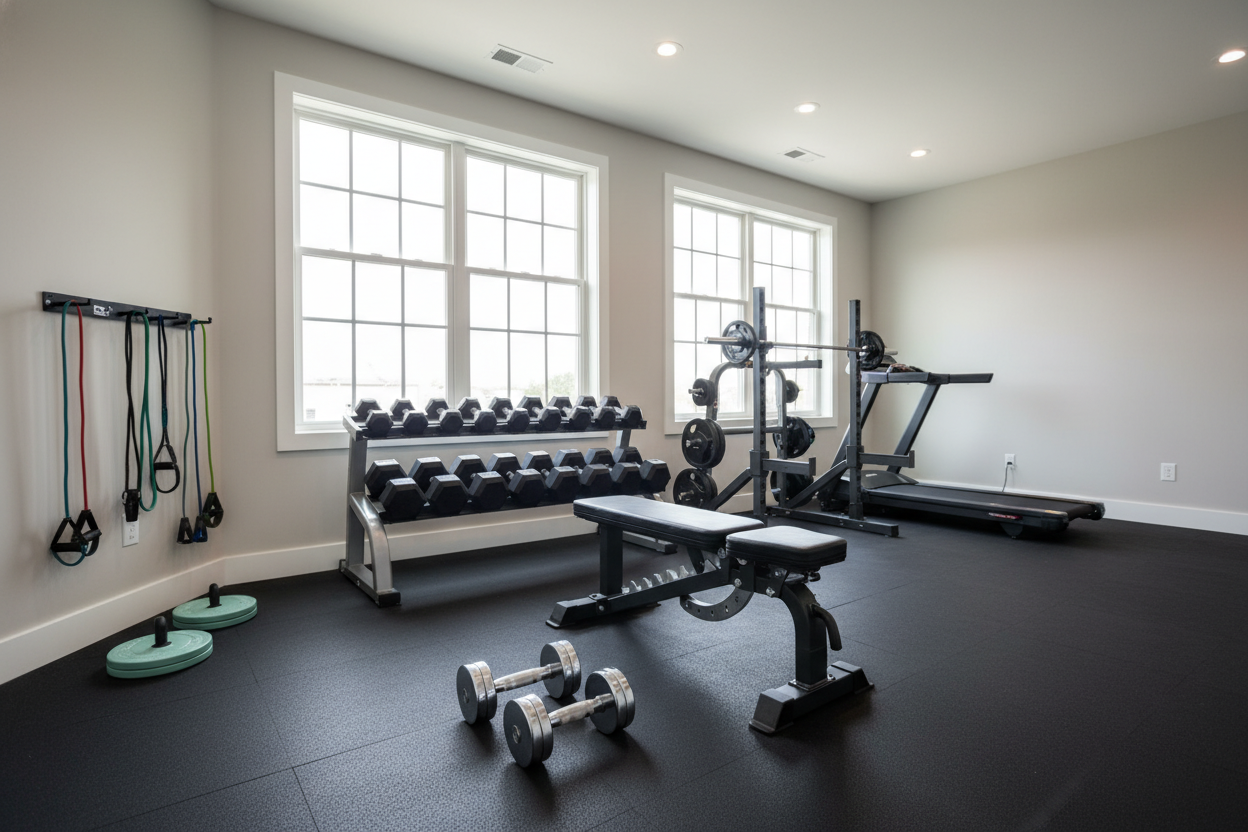
When you're training alone in a garage, you're going to hit failure eventually. If you're pushing heavy best shoulder and chest exercises, you need a safe place to bail. Don't be the guy who cracks his foundation because he dropped a 90-pounder on bare concrete. Invest in some high-quality gym flooring for home workout spaces. A good 3/4-inch mat will save your floor, your weights, and your neighbor's sanity when you have to dump a set of dumbbells after a heavy set of floor presses.
FAQ
Can I do this workout every day?
Absolutely not. Your muscles grow while you sleep, not while you're lifting. Give yourself at least 48 to 72 hours between sessions that involve heavy pressing. Your rotator cuffs will thank you.
What if I only have a barbell?
You can still do this. Use a closer grip on the bench to save your shoulders, and try 'Landmine' presses for your incline work. It’s a more natural movement pattern than a fixed barbell incline press.
Should I do cardio before or after?
Do it after. You want 100% of your glycogen and focus to go into the heavy lifts. Walking for 20 minutes after a great chest and shoulder workout is a solid way to cool down and start the recovery process.