Stop Swapping Your Strengthening Training Exercises Every Week
I remember scrolling through Instagram at 2 AM, watching a guy with 4% body fat do a handstand push-up onto a BOSU ball while holding a kettlebell between his teeth. It looked cool, sure. But I spent six months chasing those flashy 'new' moves, and my bench press didn't move an inch. The truth is, most of us get distracted by variety because strengthening training exercises are supposed to be boring.
- Progressive overload requires repeating the same movements for months, not days.
- Foundational lifts like the squat and deadlift offer the highest ROI for your time.
- Muscle confusion is a marketing myth designed to sell new programs.
- Consistency in your exercise selection is the only way to accurately track strength gains.
The 'Muscle Confusion' Lie You've Been Sold
Fitness influencers are in the business of attention, not results. If they posted the same video of a heavy barbell row every week for three years, you'd unfollow them. So, they invent 'innovative' new strength training moves just to keep the algorithm happy. They want you to believe your muscles need to be 'surprised' to grow.
Your muscles aren't sentient. They don't get bored; they respond to mechanical tension and metabolic stress. When you treat your workout like a randomized circuit of 'strength workout exercises,' you're just getting tired, not stronger. Real strength training moves require mastery of the movement pattern before you can even begin to add significant weight.
Why Boring Routines Build the Most Muscle
If you do a different chest press variation every Monday, how do you know if you're actually getting stronger? You can't. Progressive overload is the king of hypertrophy, and it requires data. You need to know that last week you hit 225 lbs for five reps, so this week you can aim for six.
By sticking to the best exercises for a full body workout, you create a baseline. This consistency allows you to identify plateaus and adjust your intensity or volume. When you find the best exercises for fitness and strength, you don't swap them out—you add a five-pound plate to the bar. That is how you build a strength training body that actually performs as good as it looks.
The Core Lifts You Actually Need to Master
You don't need fifty different machines. You need to master the squat, the hinge, the push, and the pull. These are the top exercises for strength because they involve the most muscle mass and allow for the greatest loading potential. If you aren't doing some version of these four, you aren't really doing a strength workout.
I’m a huge fan of free weights, but I’ve also learned that my lower back has a shelf life. Sometimes, using a lower body strength machine like a high-quality leg press or hack squat is the best strength building exercise for your quads because it removes the stability bottleneck. It lets you push your legs to absolute failure without your spine giving out first. That’s how you get the best strength workouts without the injury risk.
How to Add Variety Without Ruining Your Progress
I get it—doing the exact same thing forever is a mental grind. That’s where the 80/20 rule comes in. Keep your primary lifts (the 'best strength lifts') identical every week. These are your heavy hitters. For the remaining 20% of your session, you can play around with strength training accessories.
Swap your standard tricep pushdown for a rope attachment, or use some resistance bands to change the resistance curve on your curls. These small tweaks satisfy the need for variety without sabotaging your strength training exercise plan. It keeps the 'best strength training workout' from feeling like a chore while ensuring you're still hitting those best strength gaining exercises that move the needle.
Setting Up Your Space for Repetitive Success
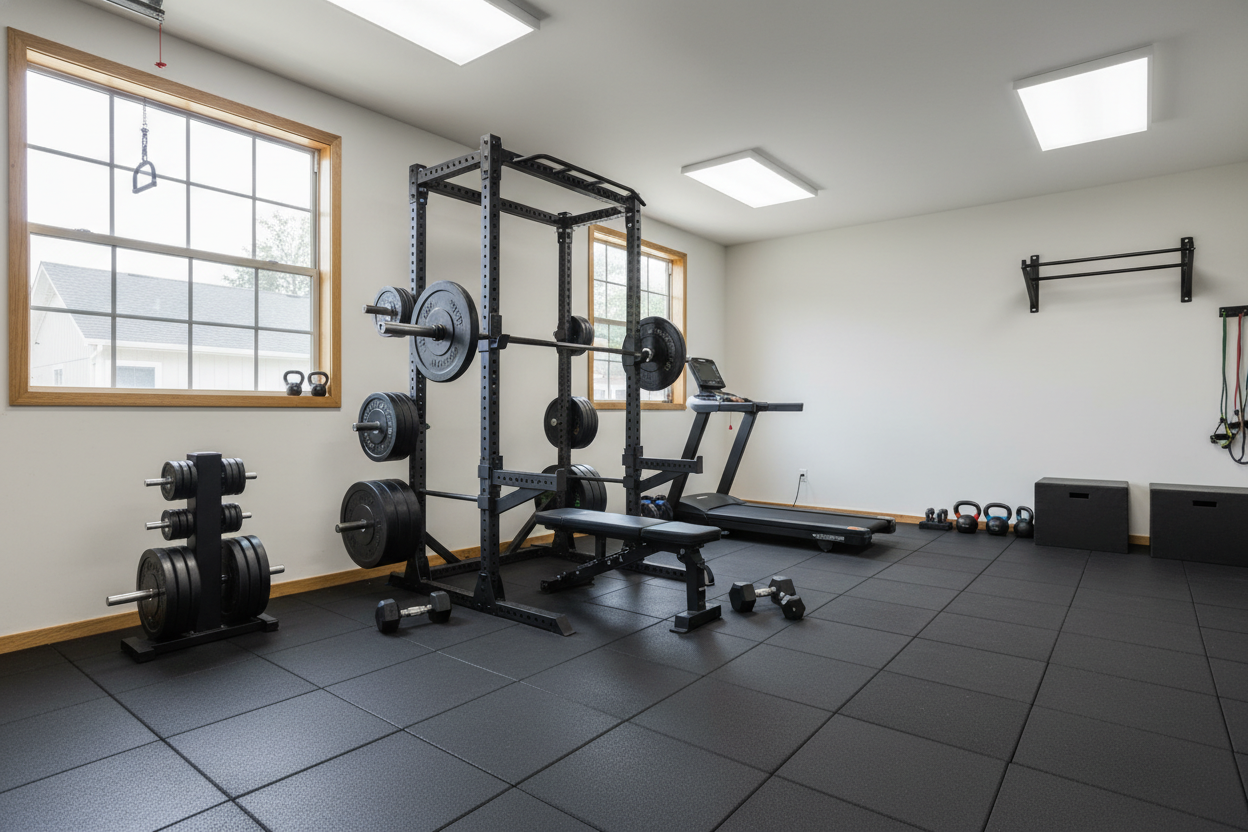
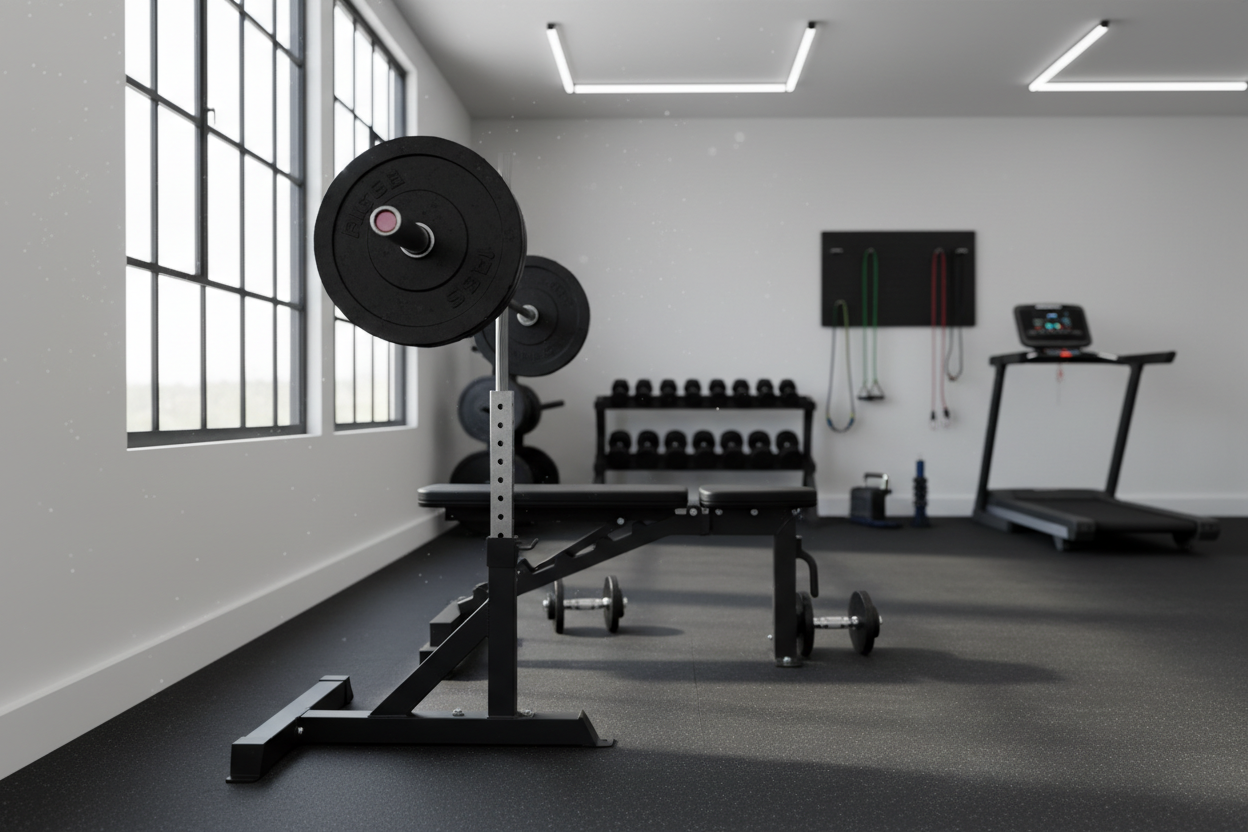
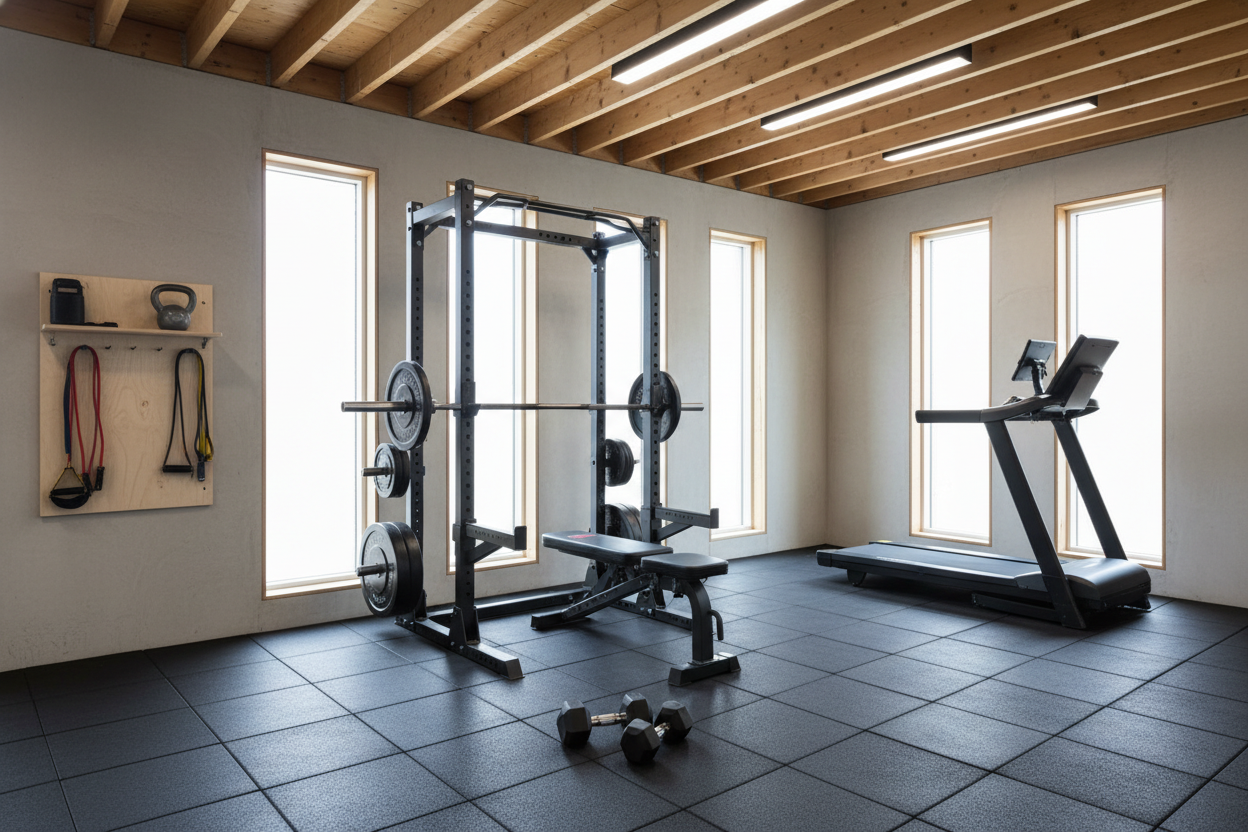
The biggest hurdle to a consistent strength training workout is a crowded gym. Waiting twenty minutes for a rack kills your momentum and your soul. Building a home setup ensures you can hit your best exercises to get strong whenever you want. You don't need a 5,000-square-foot facility; you just need the essentials and a stable base.
Don't overlook your floor. I once tried to deadlift 400 lbs on cheap foam tiles I bought at a big-box store. They compressed and shifted, nearly blowing out my ankle. Investing in proper gym flooring for home workout setups is non-negotiable for heavy lifting. You need a non-slip, high-density surface that can handle the impact when you're grinding through the best workouts to get stronger.
My Biggest Mistake: The Program Hopper Phase
I spent my first two years of lifting jumping from Powerlifting to Crossfit to 'Bodybuilding Splits' every three weeks. I was 'working hard,' but I looked exactly the same. It wasn't until I committed to a boring, basic 5x5 program for an entire year—doing the same five lifts every week—that I finally put on 15 lbs of actual muscle. It taught me that the best strength trainer isn't the one with the newest moves; it's the one who can tolerate the most repetition.
FAQs
What is the absolute best exercise for strength?
The barbell back squat is generally considered the king. It recruits the most muscle fibers and has the highest carryover to daily life and other sports. If you can't squat, the deadlift is a close second.
How often should I change my strength workout?
Change your 'big' lifts every 12-16 weeks at the earliest. Even then, you should only change them if you've truly plateaued. For your accessory moves, you can rotate them every 4-6 weeks to keep things fresh.
Can I build strength with just bodyweight exercises?
You can, but it's harder to measure. To get truly strong, you need external resistance. Adding weight to a bar is much easier to track than trying to figure out if your 'one-arm pushup' form was slightly better than last week.