Stop Squatting Wrong: The Real Exercise to Tighten Buttocks
You have likely been told that if you want a firmer rear, you need to live in the squat rack. While squats are fundamental, they aren't actually the most efficient tool for glute isolation. If your goal is specifically aesthetics and firmness, you need a different approach.
Many gym-goers spin their wheels for months because they rely on movements that recruit more quad (thigh) than glute. To see real changes, you must prioritize the right exercise to tighten buttocks based on biomechanics, not just popularity.
Key Takeaways
- Volume over Intensity: Tightening requires hypertrophy (muscle growth), which responds best to moderate weights and higher repetition ranges (10-15 reps).
- The Vector Matters: Horizontal loading exercises (like hip thrusts) activate the glutes significantly more than vertical loading exercises (like squats).
- Mind-Muscle Connection: You must learn to "squeeze" at the top of the movement; simply moving the weight from A to B won't work for tightening buttocks muscles.
- Progressive Overload: You cannot tighten glutes using the same 5lb dumbbells forever; you must gradually increase resistance.
The Physiology: How to Tighten Buttocks Effectively
Before we get to the specific movements, let's clarify what "tightening" actually means. You cannot physically tighten a muscle like a loose screw. What you are actually trying to do is build muscle density (hypertrophy) while maintaining or lowering body fat.
The gluteus maximus is the largest muscle in the body. To shape it, you need to subject it to mechanical tension. Many people searching for how to tighten buttocks fail because they treat these muscles delicately. The glutes are powerful; they need heavy resistance to change shape.
The King of Glute Exercises: The Hip Thrust
If you could only choose one exercise to tighten buttocks, it shouldn't be the squat. It should be the Hip Thrust.
Why? It comes down to the force vector. When you squat, tension is highest at the bottom (when muscles are stretched) and lowest at the top (when glutes contract). In a Hip Thrust, the tension is highest at the point of peak contraction. This is exactly what you need to tighten glutes effectively.
How to Execute the Perfect Thrust
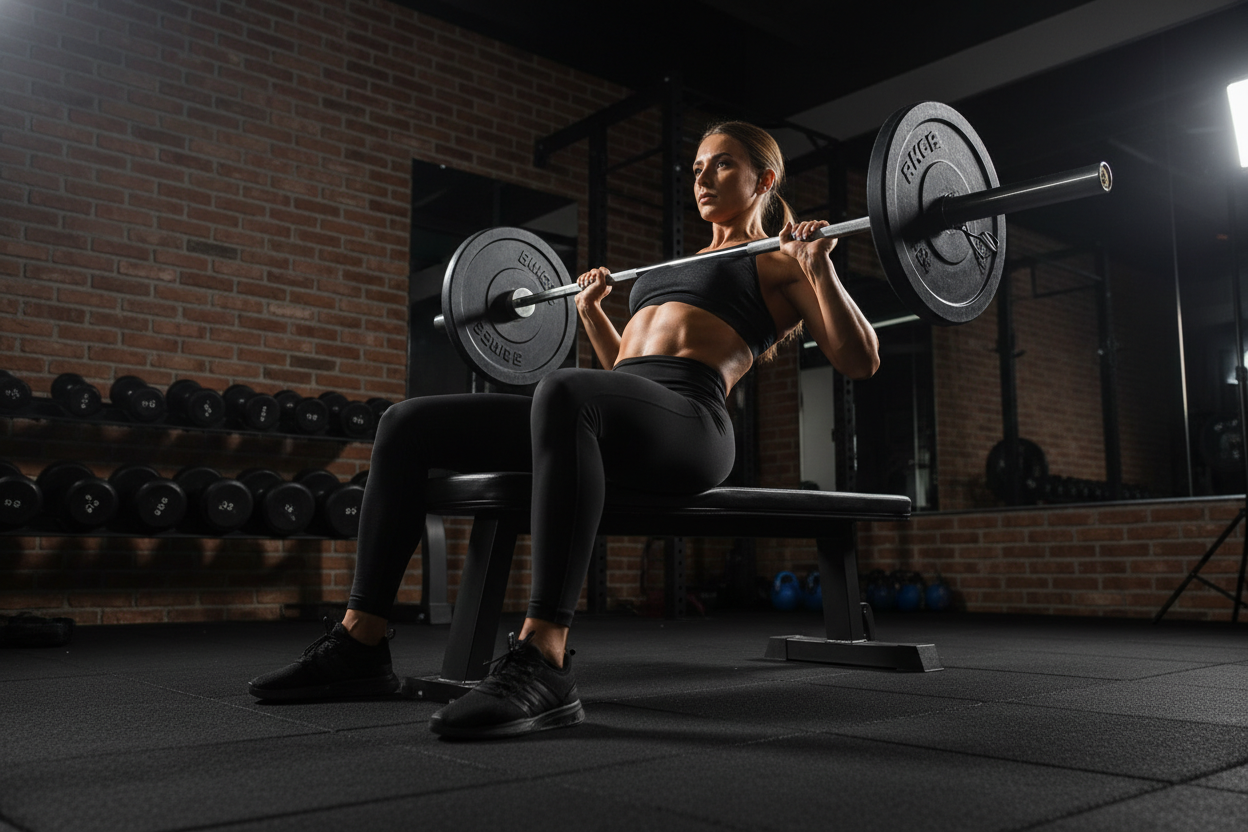
Set up a bench behind you. It should sit just below your shoulder blades. With a barbell (or dumbbell) across your hips, drive through your heels to lift your hips toward the ceiling.
At the top, your shins should be vertical. If your feet are too far forward, you will feel it in your hamstrings. Too close, and your quads take over. Finding that sweet spot is the secret to tightening buttocks muscles.
Supporting Exercises for Tighter Buttocks
While the thrust is king, you need variation to hit the gluteus medius and minimus (the side glutes) for a rounder look.
The Romanian Deadlift (RDL)
This targets the "glute-ham tie-in," the area where the butt meets the leg. Keep your legs slightly bent, push your hips back as far as possible, and feel a deep stretch. This stretch under load is incredible for hypertrophy.
Bulgarian Split Squats
This is a unilateral movement (one leg at a time). It fixes imbalances. If one side of your glutes is lazier than the other, this tighten buttocks exercise forces the weaker side to wake up.
Common Mistakes When Trying to Tighten Glutes
The biggest error is the "lower back arch." When performing kickbacks or thrusts, many people hyperextend their lower back to get the weight up.
This doesn't help how to tighten butt muscles; it just injures your spine. Keep your ribs tucked down and your chin tucked. The movement should come strictly from the hip hinge, not the lower back.
My Training Log: Real Talk
I want to be honest about the reality of committing to the hip thrust. The first time I started prioritizing this movement over squats, I ran into a specific, annoying problem: the bench height.
Most commercial gym benches are about 17 inches high, which is actually too tall for the average person's leverages. I remember struggling to lock out the weight without sliding backward. I spent weeks wondering why my lower back hurt until I started stacking two bumper plates under my butt to elevate my starting position.
Also, let's talk about the hip bones. Even with the thick foam pad, once I got past 225lbs on the bar, I developed permanent, small bruises on my hip flexors. It’s an unglamorous side effect that no one mentions on Instagram. But that specific discomfort—the pressure of the bar digging in—became my signal that I was actually moving enough weight to force adaptation. If the bar feels like a pillow, you probably aren't going heavy enough to see a change.
Conclusion
Building a stronger, tighter posterior chain isn't about doing endless bodyweight kickbacks. It requires mastering the hip hinge and getting comfortable with heavy weights.
Focus on the hip thrust for peak contraction and the RDL for the stretch. Be consistent with your nutrition, and remember that exercises for tighter buttocks take time to show results—usually 8 to 12 weeks of consistent loading.
Frequently Asked Questions
How long does it take to tighten buttocks with exercise?
With consistent training (3 times a week) and proper nutrition, you can expect to feel firmness within 4 weeks. Visible structural changes, such as a lifted appearance, typically require 12 to 16 weeks of progressive overload.
Can I tighten my buttocks at home without weights?
Yes, but it is slower. To tighten buttocks at home, you must increase the repetitions significantly (20-30 reps) or use single-leg variations (like single-leg hip thrusts) to create enough mechanical tension to stimulate muscle density.
Why do I feel leg exercises in my back instead of my glutes?
This is usually due to a weak core or poor pelvic alignment. If your pelvis tilts forward (anterior pelvic tilt), your lower back takes the load. Focus on "tucking" your pelvis and squeezing your abs before you start any how to tighten buttocks movement.