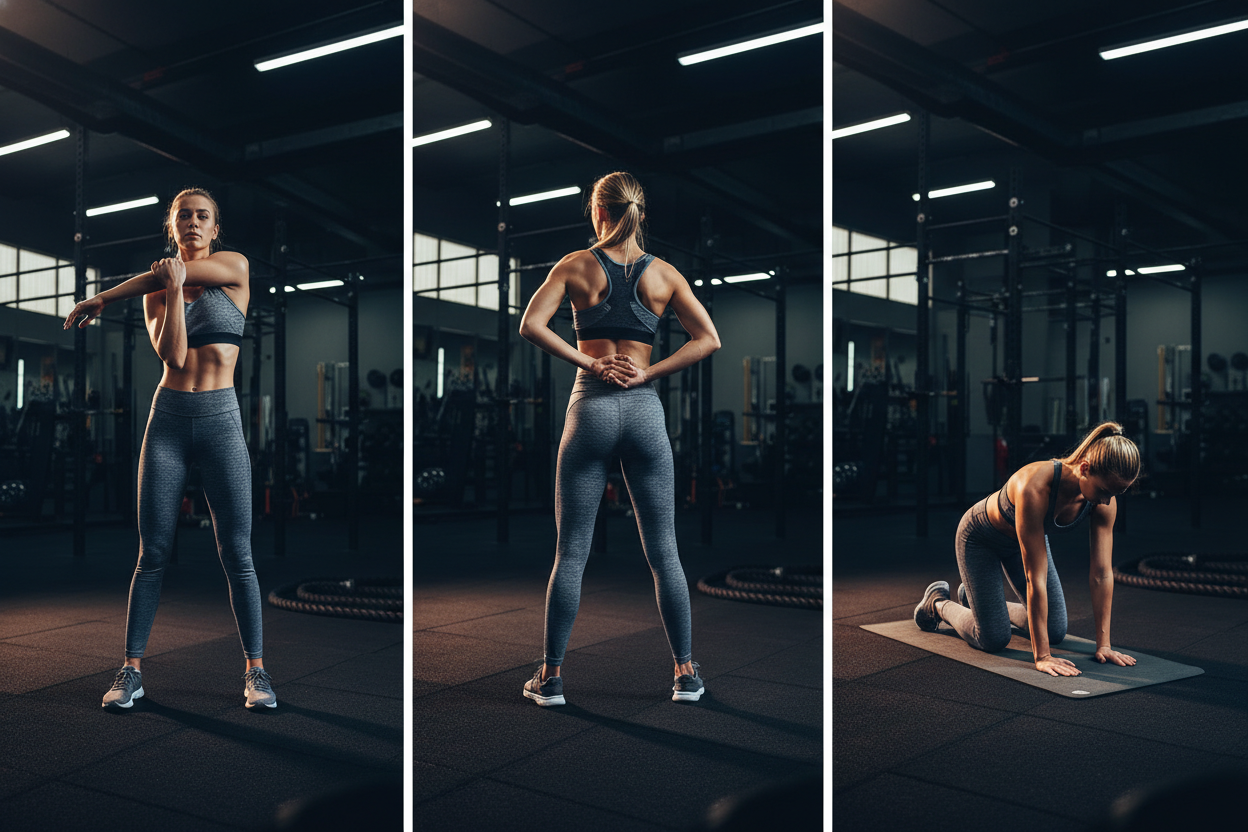
Exercise for Lower Legs: The Definitive Guide for 2025
Most lifters treat their calves as an afterthought. You finish a grueling squat session, look at the clock, and decide to skip the calf raises. This negligence is exactly why weak ankles and stalling squats are so common. Effective exercise for lower legs isn't just about aesthetics; it is the foundation of your entire kinetic chain.
Key Takeaways: The Lower Leg Blueprint
- Anatomy Matters: You must train both the Gastrocnemius (straight leg) and Soleus (bent knee) for complete development.
- Don't Forget the Front: Neglecting the Tibialis Anterior (shin muscle) leads to imbalances and shin splints.
- Tempo is King: Bouncing out of the bottom position destroys your gains. Use a controlled eccentric phase.
- Frequency: The lower legs can handle higher frequency; aim for 3-4 times per week.
Understanding Lower Leg Training Physiology
To get the most out of your lower leg workout, you have to understand what you are actually moving. The calf complex is primarily made of two muscles: the Gastrocnemius and the Soleus.
The Gastrocnemius crosses the knee joint. This means it is most active when your leg is straight. If you only do seated calf raises, you are barely stimulating this muscle.
Conversely, the Soleus lies underneath and does not cross the knee. It is primarily activated when the knee is bent. A comprehensive lower leg training plan requires both straight-leg and bent-leg movements.
The Tibialis: The Missing Link
If you have ever suffered from shin splints or knee pain, your workouts for lower legs might be lacking anterior work. The Tibialis Anterior runs down the front of your shin.
It acts as the shock absorber for every step you take. Strengthening this muscle through toe raises (dorsiflexion) creates a "bulletproof" lower leg structure that supports heavier compound lifts.
Executing the Perfect Rep
Stop the Bounce
The Achilles tendon is effectively a giant rubber band. It is designed to store and release energy efficiently. This is great for sprinting, but terrible for hypertrophy.
When you bounce at the bottom of a calf raise, the tendon does the work, not the muscle. To fix this, pause for a full two seconds at the bottom of every rep. Force the muscle to initiate the lift from a dead stop.
Full Range of Motion
Partial reps yield partial results. During your lower leg exercise routine, ensure your heel drops below the level of your toes for a deep stretch. At the top, drive through the ball of the big toe to maximize peak contraction.
My Training Log: Real Talk
Let's move away from the textbook for a second. I want to share my personal experience with exercise for lower legs, specifically regarding the "Tibialis Raise."
When I first added tibialis work to my routine using a wall lean, I thought it was a joke. It looked too easy. But around rep 15, a very specific, nasty burn set in right along the shin bone—a sensation totally different from a quad or hamstring pump.
The next morning, I experienced the "drop foot" feeling. I literally couldn't lift my toes toward my nose without my shins screaming. That specific soreness was the wake-up call I needed. It proved I had been neglecting the front side of my leg for a decade. If you aren't feeling that weird, localized fatigue in the front of your shin, you aren't training your lower legs completely.
Conclusion
Building impressive lower legs requires more than a few half-hearted sets at the end of a workout. It demands a strategic approach that targets the soleus, gastrocnemius, and tibialis anterior. Implement these principles, respect the tempo, and stop bouncing your reps. Your stability and strength will thank you.
Frequently Asked Questions
How often should I perform lower leg training?
Because the calves are used to carrying your body weight all day, they are resilient and recover quickly. You can perform a lower leg workout 3 to 4 times a week, alternating between high volume and heavy load days.
Is walking enough exercise for lower legs?
Generally, no. While walking activates the muscles, it doesn't provide enough mechanical tension to stimulate significant growth or strength gains. Dedicated resistance training is necessary for hypertrophy.
Why do my calves cramp during workouts for lower legs?
Cramping often occurs due to dehydration or electrolyte imbalances, but in calf training, it often happens when you shorten the muscle too aggressively without a proper warm-up. Ensure you are well-hydrated and ease into the peak contraction.