Stop Squatting in Vain: The Real Blueprint for Chiseled Legs
You have likely spent hours under the squat rack or pushing through the burn on the leg press, yet when you look in the mirror, the hard work remains hidden. The cuts, the separation, and that coveted teardrop shape just aren't popping. The reality is that building defined leg muscles requires a distinct approach that differs from training purely for strength or size. It is a game of illusion created by two very real physical factors: sufficient muscle mass and low enough body fat to let that muscle show through.
Achieving this look isn't about doing endless sets of low-weight leg extensions until you can't walk. Instead, it demands a strategic balance of heavy compound lifting to build the dense muscle tissue and a nutritional strategy that strips away the layer of adipose tissue covering your quads and hamstrings. If you want legs that look like they were carved out of stone, you have to stop training them like a powerlifter and start training them like a sculptor.
The Physiology of the Cut
Many gym-goers operate under the misconception that high repetitions "tone" the muscle while low repetitions build bulk. This is a myth that refuses to die. Muscle tissue does not get harder or softer; it either grows (hypertrophy) or shrinks (atrophy). What changes is the amount of fat sitting on top of it. To improve your leg muscle definition, you must force the muscle to grow large enough to press against the skin while simultaneously reducing your body fat percentage.
Think of your legs like a relief map. If the mountains (muscles) are small, they won't poke through the cloud cover (body fat). If the mountains are huge but the clouds are thick, you still won't see the peaks. You need big peaks and clear skies. This means your primary goal in the gym is still hypertrophy—growing the muscle fibers—while your kitchen habits handle the visibility of those fibers.
Structuring the Workout for Separation
To carve out deep separation between the quadriceps, hamstrings, and glutes, you need to target the legs from multiple angles. While the squat is king, it is not the only tool in the box. You need to incorporate exercises that stretch the fascia and maximize time under tension.
The Compound Foundation
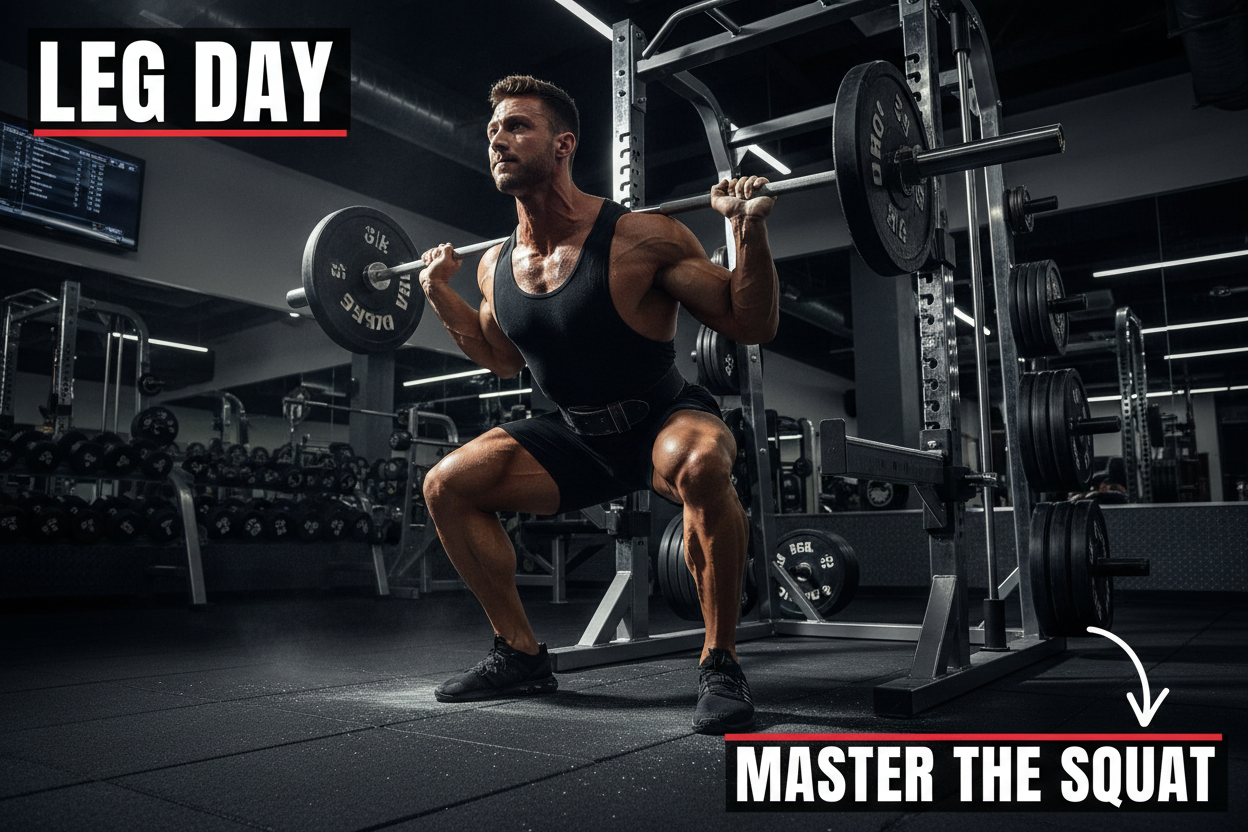
Start every session with a heavy compound movement. Squats, hack squats, or leg presses are non-negotiable. These movements recruit the maximum number of motor units and trigger the systemic hormonal response necessary for growth. However, foot placement matters here. A narrower stance on the leg press or squat tends to bias the outer sweep of the quad (vastus lateralis), which contributes significantly to the visual width of the leg. A wider stance engages more of the adductors and glutes.
Isolation and the "Pump"
Once the heavy lifting is done, move to isolation movements to target specific heads of the muscle. This is where you refine the look. Leg extensions are crucial for the rectus femoris and the vastus medialis (the teardrop muscle above the knee). When performing these, control the eccentric (lowering) phase. Don't just let the weight drop. Fighting the weight on the way down causes micro-tears in the muscle fiber that repair larger and more defined.
Hamstrings are often neglected, leading to an unbalanced look from the side. Stiff-legged deadlifts and seated leg curls should be staples. The seated curl, specifically, places the hip in flexion, which stretches the hamstring and allows for a more intense contraction than the lying variation.
A Personal Lesson in Volume
I spent the first three years of my training career obsessed with the idea that heavy singles and doubles were the only way to train. I got strong—I could squat nearly double my body weight—but my legs looked like tree trunks with zero detail. They were just big blocks. It wasn't until I checked my ego and dropped the weight to work in the 12-15 repetition range that things changed. I started focusing on the mind-muscle connection, specifically squeezing the quad at the top of every lunge and controlling the tempo. Within four months of shifting my focus from moving weight to working muscle, the vertical lines in my thighs finally started to appear. I wasn't lifting as heavy, but the tension on the muscle was far greater.
The Role of Body Fat and Nutrition
You cannot crunch your way to abs, and you cannot squat your way to striations if your diet is unchecked. Leg muscle definition is often the last thing to appear during a cutting phase. For many people, specifically women and some men, the lower body is a primary storage site for stubborn body fat. You might see veins in your arms and abs while your legs remain smooth.
To fix this, you need a sustained, moderate caloric deficit. Crash dieting will cause you to lose muscle mass, leaving you with smaller, undefined legs. Aim for a high-protein diet (around 1 gram per pound of body weight) to protect muscle tissue while you slowly chip away at fat stores. Carbohydrate cycling can also be effective here; consuming more carbs on leg days helps drive glycogen into the muscles, making them appear fuller and pushing them out against the skin, while lower carbs on rest days aids in fat loss.
Cardio: Friend or Foe?
Cardiovascular health is vital, but the wrong type of cardio can hinder your quest for defined leg muscles. Excessive steady-state running can lead to muscle catabolism (breakdown) and significant impact stress on the joints, which might compromise your heavy lifting sessions.
Walking on an incline or utilizing the stair master are superior choices for bodybuilders and physique athletes. The stair master, in particular, doubles as a resistance workout for the glutes and calves. High-Intensity Interval Training (HIIT) is another viable option, as short bursts of explosive power (like hill sprints or bike sprints) preserve type II muscle fibers better than long-distance jogging.
Anatomy of the Lower Leg
Ignoring the lower leg is a fatal error in aesthetics. High calves make the upper leg look larger by comparison, enhancing the overall sweep. The calves are stubborn and accustomed to a high workload from walking, so they require different stimuli. You need to attack the gastrocnemius (the heart-shaped muscle) with straight-leg calf raises and the soleus (the muscle underneath) with seated calf raises. High repetitions and painful, deep stretches at the bottom of the movement are usually required to spark growth in this area.
Consistency and Recovery
Legs are large muscle groups that require significant recovery resources. If you are training them with the intensity required for definition, you likely only need to train them directly once or twice a week. Overtraining leads to systemic inflammation, which can cause water retention. Water retention blurs definition, making you look "soft" even if your body fat is low.
Sleep, hydration, and stress management play massive roles here. High cortisol levels (stress hormone) are linked to abdominal and leg fat storage and muscle breakdown. Prioritize 7-9 hours of sleep to allow growth hormone to do its work. The definition you see in the mirror is the result of the recovery that happened while you were asleep, not just the reps you did while you were awake.
FAQ
Can I spot reduce fat from my inner thighs to get more definition?
No, spot reduction is a fitness myth. You cannot choose where your body burns fat from; you can only reduce your overall body fat percentage through a caloric deficit. Eventually, as you get leaner, the fat will leave your legs and inner thighs, revealing the muscle underneath.
Should I use light weights and high reps for definition?
Not exclusively. While higher reps (15-20 range) increase metabolic stress and blood flow, heavy lifting (6-10 range) is essential for maintaining muscle density. A combination of both is ideal: use heavy weights to build the base and higher reps to deplete glycogen and maximize the pump.
How long does it take to see leg definition?
This depends entirely on your starting body fat percentage and muscle mass. If you are already lean, you might see changes in 4-8 weeks of dedicated hypertrophy training. If you have higher body fat, it may take 12-16 weeks of a consistent caloric deficit to reveal the muscular structure.