Stop Squatting for a Second: Why the Bent-Over Hinge is Your Glute Growth Cheat Code
Most lifters obsess over squats and lunges when trying to build their backside. While those are fantastic compound movements, they often result in quad dominance or lower back fatigue before the glutes truly reach failure. If your goal is specifically hypertrophy in the gluteus maximus, you need to look at the mechanics of the hip hinge. The most effective way to isolate this muscle group involves placing the torso in a horizontal position. By manipulating your angle, specifically through a targeted bent over glute workout, you maximize hip flexion, which stretches the glute fibers under load and creates the potential for a significantly stronger contraction.
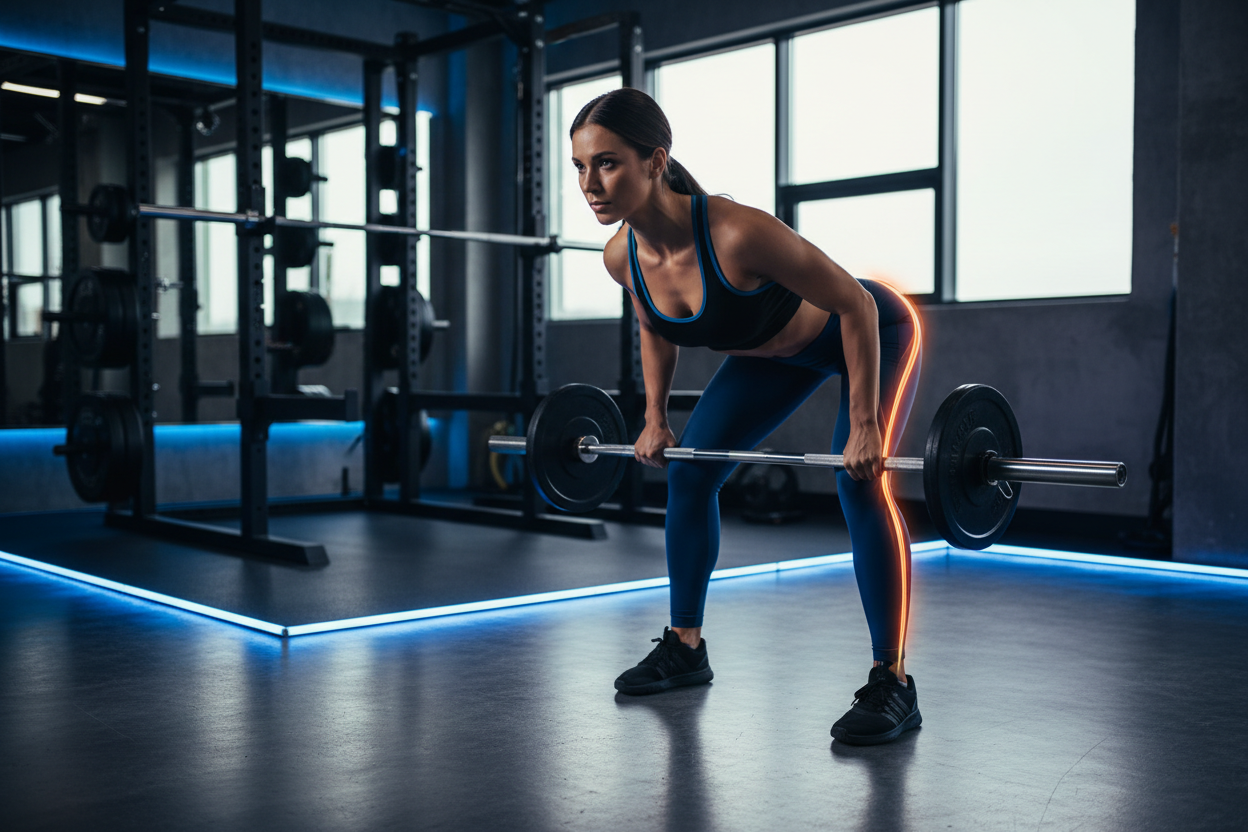
The science here is relatively simple but often ignored. The gluteus maximus is primarily a hip extensor. To extend the hip fully and forcefully, you must first flex it. When you bend over until your torso is roughly parallel to the floor, you place the hips in deep flexion while minimizing the involvement of the knees. This shifts the tension away from the quadriceps and places the burden almost entirely on the posterior chain. This position allows for a greater range of motion where the glute is strongest, provided you can maintain spinal stability.
My Real-World Wake-Up Call
I spent years thinking that heavy conventional deadlifts were enough for glute development. I was moving respectable weight, but my physique didn't match the numbers. My lower back was constantly pumped and stiff, yet my glutes rarely felt sore or fatigued. I eventually realized my erectors were taking over the movement because I wasn't effectively dissociating my hips from my spine.
I decided to drop the ego lifting and switched my accessory work to strictly horizontal movements. I incorporated the cable kickback with a flat back and heavy 45-degree hyperextensions. The difference was night and day. Within four weeks of focusing on the hinge pattern rather than just moving weight from A to B, the mind-muscle connection improved drastically. I wasn't just tired; the target muscle was actually doing the work. That shift in perspective changed how I program leg days forever.
The Mechanics of the Hinge
To master any bent over glute exercise, you have to master the brace. The biggest mistake people make when bending over is rounding the lumbar spine (the lower back). When the spine rounds, the tension leaves the glutes and shoots straight into the vertebrae and discs. This is why so many people complain of pain during rows or stiff-leg deadlifts.
Think of your torso as a rigid lever. Your hips are the fulcrum. You want to push your hips backward as if you are trying to close a car door with your glutes, while keeping your chest proud. Your shins should remain vertical. If your knees shoot forward, you are squatting, not hinging. The magic happens in that stretch at the bottom of the movement. If you can hold that stretch without your spine collapsing, you are in the perfect position for growth.
The Gold Standard: Bent-Over Cable Kickback
If there is one movement that defines isolation, it is the bent-over cable kickback. This isn't the upright, short-range kickback you see people doing while leaning casually on a machine. This variation requires you to hinge fully forward.
Set the cable pulley to the lowest setting. Attach an ankle strap. Step back far enough that there is tension on the cable even when your foot is next to the other. Now, hinge at the hips until your torso is parallel to the ground. You can hold onto the machine frame for stability. Keep your non-working leg slightly bent but rigid.
Drive your working leg straight back and slightly out (abducted about 30 degrees). The focus isn't on how high you lift the leg, but on fully shortening the glute. Squeeze hard at the top for a full second. Because your torso is horizontal, gravity and the cable angle work together to keep tension on the muscle through the entire range of motion. This specific bent over glute exercise prevents you from using momentum to swing the weight, which is a common cheat in upright variations.
The Compound Builder: Romanian Deadlift (RDL)
While the kickback is pure isolation, the Romanian Deadlift is the mass builder. It allows for heavier loading in the bent-over position. The cue here is "soft knees." You aren't locking your legs out straight, but you aren't bending them further as you descend either. The knee angle remains static.
As you lower the barbell or dumbbells, trace the line of your legs. Send your hips back until you feel a deep stretch in the hamstrings and glutes. Stop the moment your hips stop moving back. If you keep lowering the weight after your hips run out of room, you are just bending your spine. Drive your hips forward to return to the start, squeezing the glutes to lock out. Do not hyperextend your lower back at the top; just stand tall.
Structuring a Bent Over Glute Workout
You can combine these movements into a cohesive routine that targets the glutes from the lengthened position to the shortened position. Here is a sample session that prioritizes the hinge pattern:
1. The Heavy Hinge
Start with Barbell Romanian Deadlifts. Since this is the most taxing movement, do it while you are fresh. Aim for 3 to 4 sets of 8–10 reps. Focus on a 3-second negative (lowering phase). The controlled descent is where the muscle fibers tear and repair for growth.
2. The Stabilizer
Move to the Single-Leg Dumbbell RDL. This forces the glute medius to fire to stabilize the pelvis. If balance is an issue, keep one hand on a rack for support. The goal is load and stretch, not a balancing act. Perform 3 sets of 10–12 reps per leg.
3. The Isolation Finisher
Finish with the Bent-Over Cable Kickback described earlier. Since the heavy lifting is done, this is about metabolic stress and blood flow. Go for higher volume: 3 sets of 15–20 reps per leg. Keep rest periods short, around 60 seconds.
Common Pitfalls to Avoid
Neck position is often overlooked in bent-over movements. Many lifters try to look at themselves in the mirror while their torso is horizontal. This cranks the cervical spine into extension and disrupts the alignment of the rest of the back. Pick a spot on the floor about three feet in front of you and keep your gaze there. Your neck should follow the line of your spine.
Another issue is the "pelvic wink" or anterior pelvic tilt. This is when you arch your lower back excessively to create the illusion of a bigger glute contraction. While you want a neutral spine, hyperextending the lumbar region disengages the abs and puts pressure on the discs. Keep your ribs knit down towards your pelvis, even when bent over.
Incorporating these horizontal movements requires patience. You might need to lower the weight compared to your squat, but the targeted stimulus will pay dividends. By focusing on the stretch and the hinge, you unlock a level of muscular recruitment that upright exercises simply cannot match.
FAQ
Can I perform these exercises if I have lower back pain?
If you have existing acute back pain, consult a professional first. However, when done with perfect form, hinge movements actually strengthen the posterior chain and can alleviate back pain. The key is to start with very light weight (or bodyweight) to ensure the glutes, not the lower back, are moving the load.
Do I need gym equipment for a bent over glute workout?
Not necessarily. While cables and barbells are optimal for progressive overload, you can replicate the bent-over kickback using resistance bands anchored to a door or heavy furniture. Single-leg RDLs can also be very effective with just bodyweight or a gallon jug if you focus on the tempo and stretch.
How often should I train this movement pattern?
The glutes are a large, resilient muscle group that can handle significant volume. You can typically train them 2 to 3 times a week, provided you vary the intensity. If you go heavy on RDLs on Monday, consider doing lighter, higher-repetition kickbacks or hyperextensions on Thursday to allow for recovery.