Stop Speeding Through exercises for beginners at home without equipment
I’ve seen it a thousand times. Someone decides to save $60 a month on a gym membership, clears a 4x6 foot space in their living room, and starts flailing around like they’re trying to swat a swarm of bees. They think they’re doing an at home workout with no equipment, but they’re really just doing bad cardio. If you’re just chasing a sweat, go for a run.
If you actually want to build muscle and get strong, you have to stop treating exercises for beginners at home without equipment like a race. Gravity is the only weight you’ve got right now, and if you let momentum do the work, you’re essentially training for nothing. I’ve spent years testing everything from $5,000 power racks to $10 door-frame pull-up bars, and the biggest lesson is always the same: tension is king.
Quick Takeaways
- Slow down your reps to simulate the stress of heavy weights.
- Focus on a 3-second eccentric (lowering) phase for every movement.
- Stop counting reps and start counting time-under-tension.
- A stable, non-slip floor is non-negotiable for proper form.
- Master bodyweight mechanics before spending a dime on iron.
The Trap of the Living Room Cardio Session
Most novices approach a full body workout at home without equipment for beginners with a 'more is better' mentality. They do 50 air squats as fast as possible, their knees caving in and their heels lifting off the floor. They think the burning in their lungs means their legs are getting stronger. It doesn't.
When you rush, you bypass the mechanical tension required to actually trigger muscle growth. You’re using elastic energy from your tendons rather than forcing your muscle fibers to fire. This is why people 'work out' for months at home and see zero physical change. You aren't building a physique; you're just getting better at being tired.
Why Slower is Actually Heavier
Since you don't have a 45-lb barbell on your back, you have to find another way to make your muscles struggle. The easiest way to do that is to manipulate the eccentric phase—the part of the lift where the muscle lengthens. Think of the way down in a squat or the lowering phase of a push-up.
A full body workout for beginners without equipment becomes infinitely harder when you spend four seconds fighting gravity on the way down. This 'time under tension' creates micro-tears in the muscle fibers just like a heavy weight would. It forces your nervous system to stay 'on' for the entire duration of the set, rather than just the split second you’re pushing back up.
The 3-Second Rule for Every Single Rep
Here is the protocol I give to anyone starting out in a bare apartment: the 3-1-X cadence. You spend 3 seconds on the lowering phase, hold a 1-second dead-stop at the bottom (the most difficult part), and then explode (X) back to the start. If you do this correctly, 10 reps will feel harder than 30 'regular' reps.
This cadence forces deep motor unit recruitment. By pausing at the bottom, you kill all momentum. You can’t bounce out of the hole. You have to use raw muscle power to get moving again. It’s brutal, it’s boring, and it’s the only way to make bodyweight training actually work for long-term strength.
Mapping Out Your Unweighted Movement Space
You might think you can train on a rug or bare hardwood, but you’ll realize quickly that as soon as you sweat, your hands start sliding during push-ups. When you're trying to maintain a slow, controlled cadence, any slip can lead to a shoulder tweak or a lost rep. You need a dedicated zone where your feet feel glued to the floor.
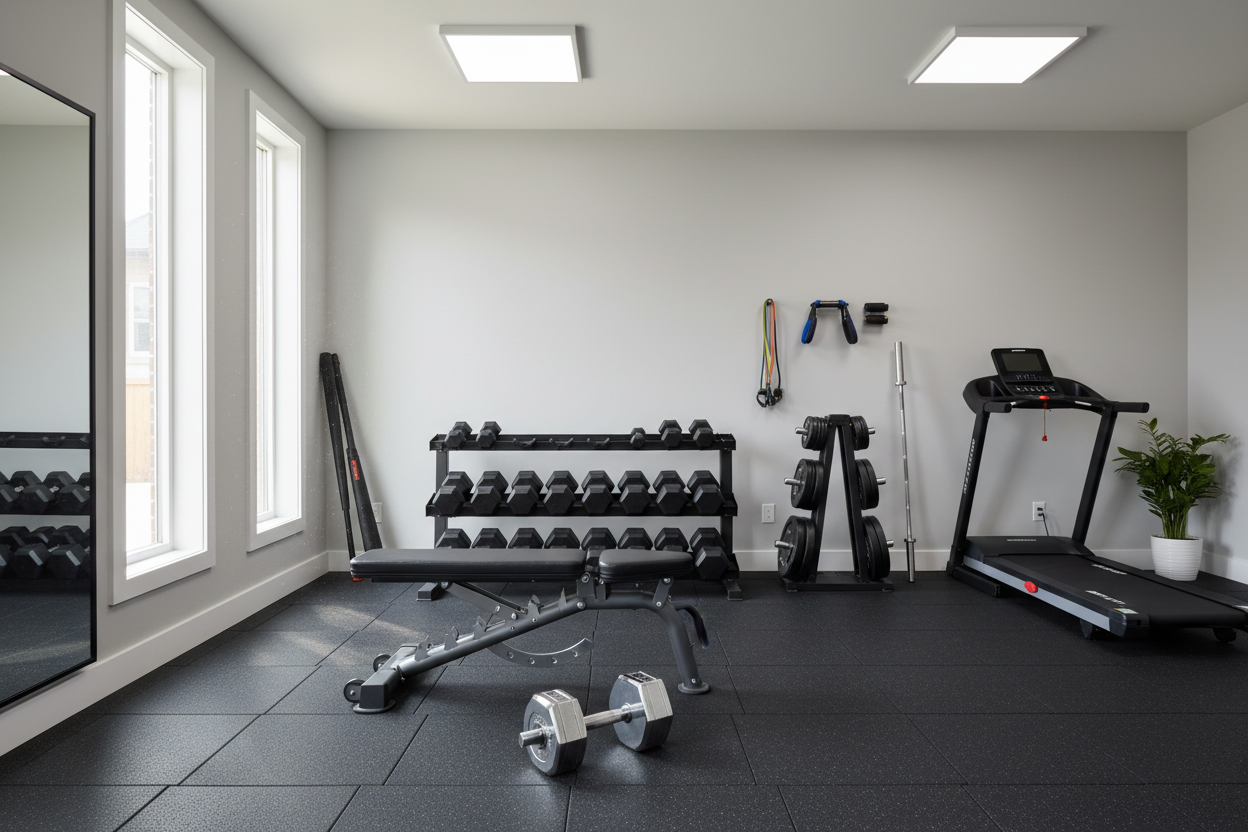
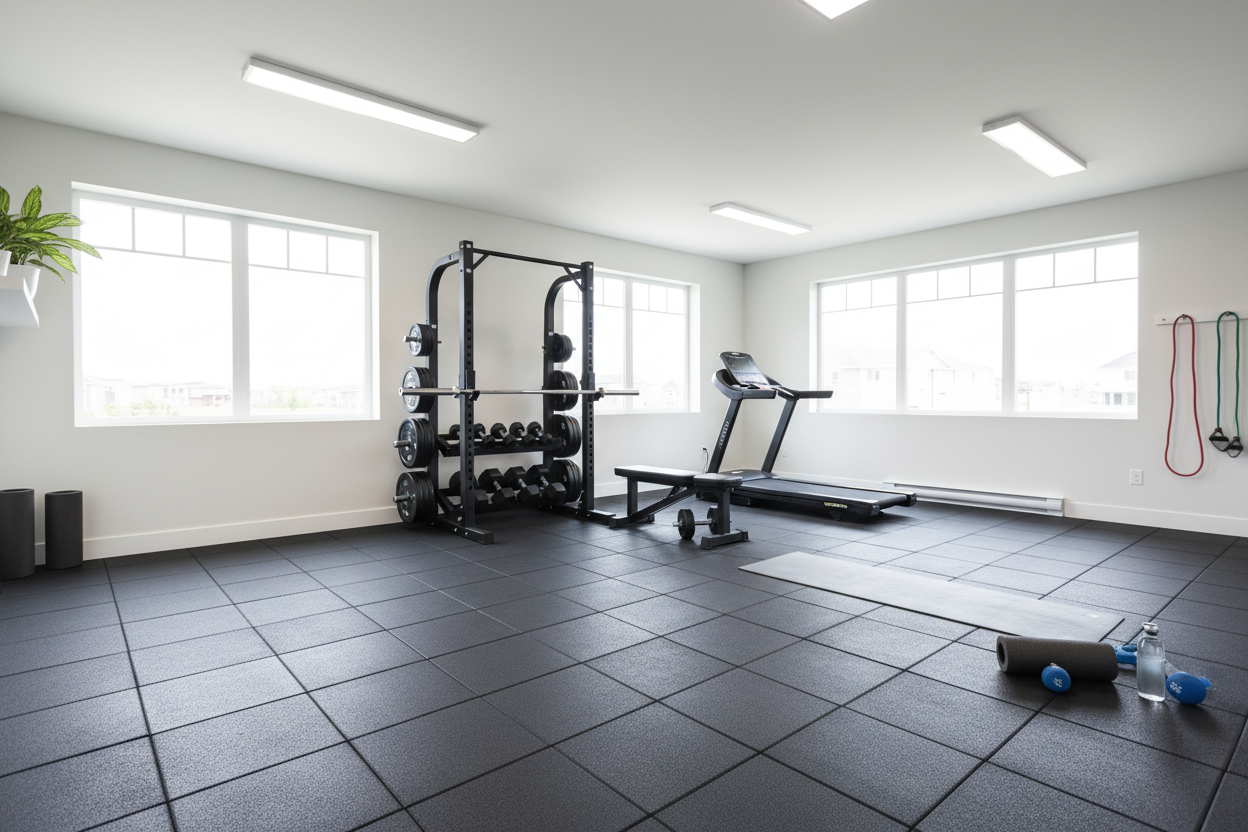
I personally recommend investing in thick gym flooring for home workout even if you don't own a single dumbbell yet. A high-grip surface allows you to push into the floor with 100% of your force. If you’re worried about sliding during an agonizingly slow isometric hold, you’ll subconsciously hold back. Don't let a slippery floor cap your gains.
4 Movements That Expose Your True Strength
Forget the fancy TikTok variations. Master these four with the 3-1-X cadence first. First, the Air Squat: chest up, hips back, 3 seconds down until your thighs are parallel. Second, the Glute Bridge: lie on your back, drive through your heels, and squeeze your glutes at the top like you’re trying to crack a walnut.
Third, the Push-up: if you can’t do them on the floor with perfect 3-second control, put your hands on a kitchen counter to change the angle. Finally, for your upper body, try the Pike Push-up. It’s essentially a zero equipment shoulder workout that mimics an overhead press. Keep your hips high, look at your toes, and lower the crown of your head toward the floor. It will humble you very quickly.
When You're Finally Ready to Add Iron
Bodyweight training is a bridge, not the final destination for most people. You’ll know you’ve outgrown it when you can perform 15 perfect, slow-cadence reps of every movement in your circuit without your form breaking down. If you can do 15 pike push-ups with a 3-second eccentric and not feel like your shoulders are on fire, you’ve earned the right to buy gear.
At that point, look into at home full body workout equipment like a pair of adjustable dumbbells or a heavy kettlebell. But don't rush there. Most people buy a set of 52.5-lb SelectTechs and realize they can't even do a proper bodyweight lunge without wobbling. Master your own mass first.
My Own Mistakes with Tempo
When I first started training in my garage, I was obsessed with the numbers on my whiteboard. I wanted to say I did 100 push-ups in five minutes. My chest didn't grow, but my elbows sure did hurt. It wasn't until I cut my reps in half and doubled the time it took to do them that I actually saw my shirts getting tighter in the right places. Rushing is just a way to hide weakness.
FAQ
Do I need a yoga mat for home workouts?
A thin yoga mat is better than nothing, but they often bunch up or slide. If you're serious, get a 6x4 or 8x6 rubberized mat that stays put. Your joints will thank you when you start doing high-impact movements later.
How many days a week should a beginner train?
Three days is the sweet spot. Monday, Wednesday, Friday. This gives your central nervous system time to recover from the new stimulus of controlled tension. Don't overcomplicate it.
Can you actually build muscle with zero equipment?
Yes, but only if you use the cadence-control method. If you just do fast reps, you're building endurance. To build muscle, you need to create enough tension to signal the body that it needs to grow larger fibers to handle the load.