I Filmed My Heavy Lifts for a Month and Found a Glaring Flaw
I used to think my form was dialed. I’ve spent years in my garage, sweating over a barbell and stacking plates until the floor joists groaned. But when I finally set up a tripod and recorded my heavy lifts, the playback was a humbling experience. I thought I was a technician; the footage told me I was a disaster waiting to happen.
Quick Takeaways
- Your 'feel' for a lift is often a lie; video evidence is the only objective truth.
- Most heavy weight lifters lose their sets in the first two seconds of the setup.
- Equipment stability directly impacts your central nervous system's willingness to push hard.
- Lowering the weight by 10% to fix a technical 'leak' usually leads to a 20% PR increase within months.
The Brutal Reality Check of Hitting Record
There is a massive disconnect between how lifting big weights feels in your head and how it looks on a 4K screen. In my mind, my squats were crisp, deep, and vertical. On video, I looked like a folding lawn chair. When you are lifting heavy weight, your brain is mostly occupied with survival. It doesn't have the bandwidth to notice that your left heel is lifting or that your upper back is rounding like a Halloween cat.
Watching myself struggle through a heavy lift workout revealed that my 'heavy' sets weren't actually limited by my leg strength. They were limited by my lack of coordination under pressure. The bar wasn't just moving up and down; it was dancing a jig because I wasn't tight enough. If you want to see where your strength is actually going, you have to hit record.
You Are Leaking Tension Before the Bar Even Moves
The biggest flaw I found was my unrack. Training with heavy weights demands that you are a statue before the bar leaves the hooks. I was treating the unrack like a casual suggestion. I’d walk up, grab the bar, and just... stand up. By the time I stepped back, my lats were soft and my core was half-braced. You cannot recover tension once the weight is already crushing you.
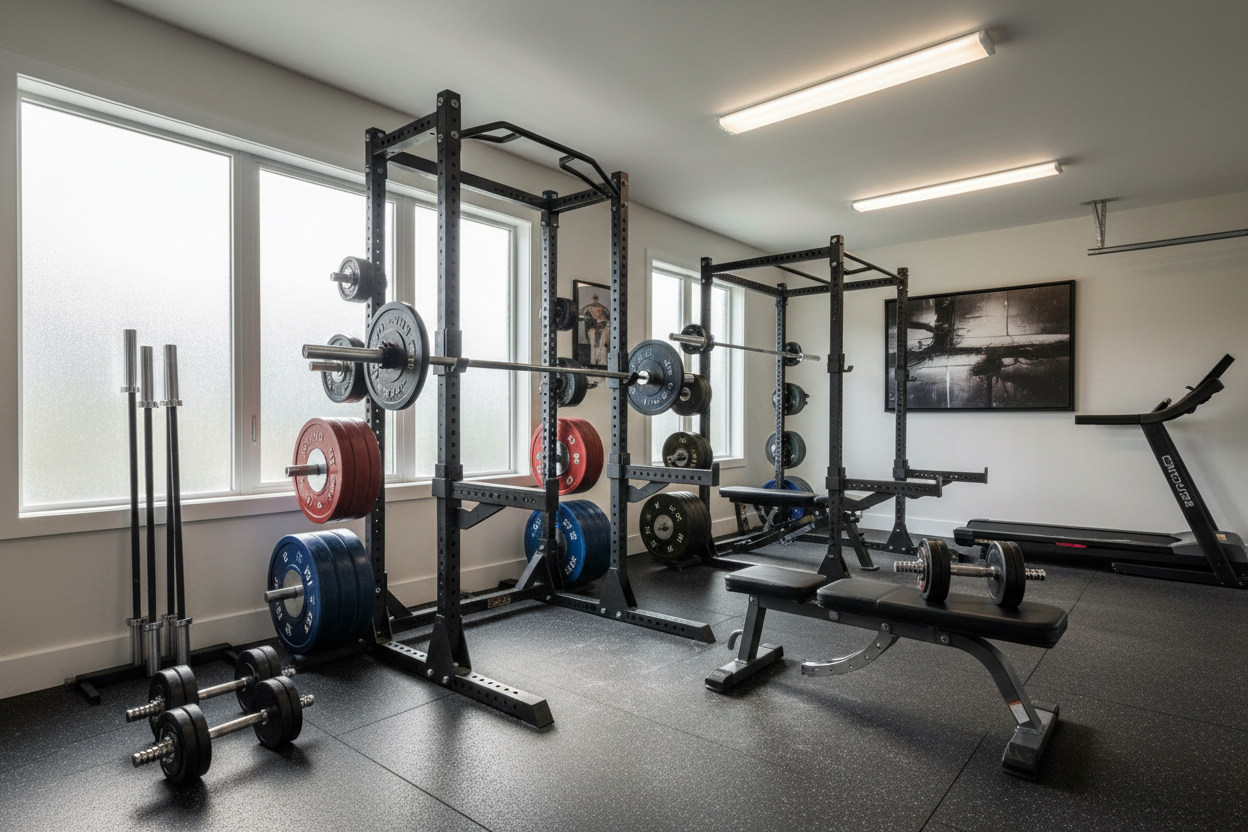
A rock-solid setup requires a rack that doesn't move when you do. I found that having a stable base like the Gxmmat X6 Power Rack Weight Bench Package is mandatory for a clean unrack. If your uprights are swaying while you're trying to set your shelf, you've already lost the battle. You need to be able to pull yourself into the bar, using it as an anchor to wedge your body into a rigid unit before that weight ever leaves the J-hooks.
Why I Had to Drop the Ego to Actually Get Stronger
After seeing my knees cave for the third time on a 400-pound attempt, I realized I was just 'gym heavy lifting' without any actual purpose. I was moving the weight, but I wasn't mastering the heavy lift exercise. I had to make the hard call to strip two plates off the bar and start over. It felt like a defeat, but it was actually the smartest thing I've done in years.
I shifted my focus from just surviving the set to neurological efficiency. I remembered reading how I Stopped Heavy Bodybuilding Weight Lifting and Finally Grew, and it clicked. Constant max-effort grinding with bad form just fries your nerves. By dropping the load, I could actually feel the muscles engaging and fix the 'leaks' I saw on camera. My plateau didn't just break; it shattered once my technique finally caught up to my ambition.
The 'Brace and Wedge' Technique That Fixed My Squat
For any heavy weight training involving the lower body, the 'wedge' is the secret sauce. Instead of just standing under the bar, I started pulling the bar down into my traps while simultaneously pushing my hips forward under the bar. This creates a sandwich of tension. When I breathe into my belt—a full 360-degree expansion—I become a solid pillar. This prevents the 'stripper squat' where the hips rise faster than the chest.
Pinning the Shoulders for a Bulletproof Bench
On the bench, my video showed my shoulders rolling forward at the bottom of the rep. That’s a one-way ticket to a rotator cuff tear. To fix this, you have to drive your shoulder blades into the pad and keep them there. This requires a bench that actually has some 'bite' to the material. Using the Gxmmat Adjustable Weight Bench helped because the pad is grippy enough to keep my scaps locked in place, even when I'm driving through my legs to finish a rep.
Stop Trusting Flimsy Gear With Your Biggest Sets
You can't commit to lifting big if you're subconsciously worried about your gear failing. I spent years on a cheap, wobbling bench that felt like a balance beam. Your brain knows when you're in danger, and it will literally shut down your strength output to protect you. It's called neural inhibition. If the rack shakes or the bench creaks, you won't hit that PR.
I learned this the hard way when a cheap J-hook bent during a re-rack. I've often wondered, Is Weight Lifting Walmart Gear Actually Safe for Heavy Sets? The answer is usually no if you're pushing past intermediate numbers. You need 11 or 14-gauge steel and high-density foam if you want your brain to give you the green light to go all out.
How to Audit Your Next Heavy Lifting Routine
If you want to fix your heavy lifting routine, stop guessing. Buy a cheap phone tripod and place it at a 45-degree angle about 6 feet away from you. This 'three-quarters' view is the gold standard because it shows you both your depth and your lateral stability. Watch for bar path—is it a straight line, or is it a zig-zag? Look at your feet—are they rooted, or is the weight shifting to your toes? Audit every set for a month, and I guarantee you'll find a flaw that's been holding back your progress for years.
FAQ
Where should I put the camera for deadlifts?
Side profile is best for checking back rounding, but a 45-degree front angle helps you see if your knees are caving or if you're pulling the slack out of the bar properly.
How often should I film my sets?
Film your top set of every major lift. You don't need to film every warm-up, but you need to see what happens when the weight actually gets challenging.
Is it okay if my form breaks down slightly on a PR?
A tiny bit of 'technical breakdown' is expected at 95%+, but if your back looks like a question mark or your feet are dancing, the lift doesn't count. Safety first, always.