Stop Skipping the Posterior: The Ultimate Guide to Building Powerful Glutes for Men
If you are looking for the single most effective move to pack mass onto your backside, the answer is the Barbell Hip Thrust. While squats and deadlifts are non-negotiable staples, the hip thrust isolates the gluteus maximus through full hip extension better than any other movement. However, building a powerful, athletic posterior chain requires more than just one exercise. It demands a strategic approach that combines heavy compound lifts with targeted isolation work.
For years, glute training was unfairly stigmatized as something only necessary for bikini competitors or aesthetic models. This mindset has left countless men with underdeveloped posterior chains, leading to stalled squat numbers, lower back pain, and a lack of explosive power in sports. Your glutes are the engine of your body. Whether you are sprinting, jumping, or pulling a heavy deadlift, the power comes from your hips. Neglecting them is arguably the biggest mistake you can make in the gym.
The Real Cost of Weak Glutes
I learned this lesson the hard way. Early in my lifting days, I focused entirely on quad-dominant movements like leg presses and hack squats. I thought I was training legs hard, but my lower back was constantly tight, and my barbell squat plateaued at 225 pounds for months. It wasn't until a powerlifting coach watched my form and bluntly told me my glutes were "asleep" that things changed. I couldn't even fire them properly during a lockout. Once I swallowed my pride and started incorporating specific hip extension work, my back pain vanished within weeks, and my squat numbers started climbing again. It wasn't magic; it was just biomechanics.
Functionally, the glutes are responsible for keeping your pelvis aligned and your spine safe. When they are weak, your lower back and hamstrings have to work overtime to compensate. This compensation pattern is a leading cause of injury in active men. To fix this, you need a routine that targets the muscle from different angles: the stretch, the contraction, and unilateral stability.
The Heavy Hitter: Barbell Hip Thrust
Many coaches agree that the best exercise for men's glutes is the barbell hip thrust. Unlike standing exercises where tension drops off at the top of the movement, the hip thrust places maximum tension on the glutes when they are fully shortened (contracted). This creates a unique stimulus for growth that squats simply cannot match.
To execute this properly, sit on the floor with your upper back against a bench. Roll a barbell over your hips (use a pad to avoid bruising). Drive through your heels to lift your hips until your body forms a straight line from shoulders to knees. The key here is not just moving weight A to B; it is about forcefully squeezing the glutes at the top. If you feel it mostly in your quads or lower back, adjust your foot placement. Bringing your heels closer to your butt usually engages the glutes more effectively. This movement should be the cornerstone of the best glute workout for men aiming for size and strength.
The Compound King: Deep Barbell Squats
While the hip thrust wins for isolation, the deep squat remains the king of overall leg development. For maximum glute engagement, depth is your friend. Stopping at parallel recruits mostly quads, but breaking parallel and sitting into the "hole" forces the glutes to work hard to extend the hips and get you back up.
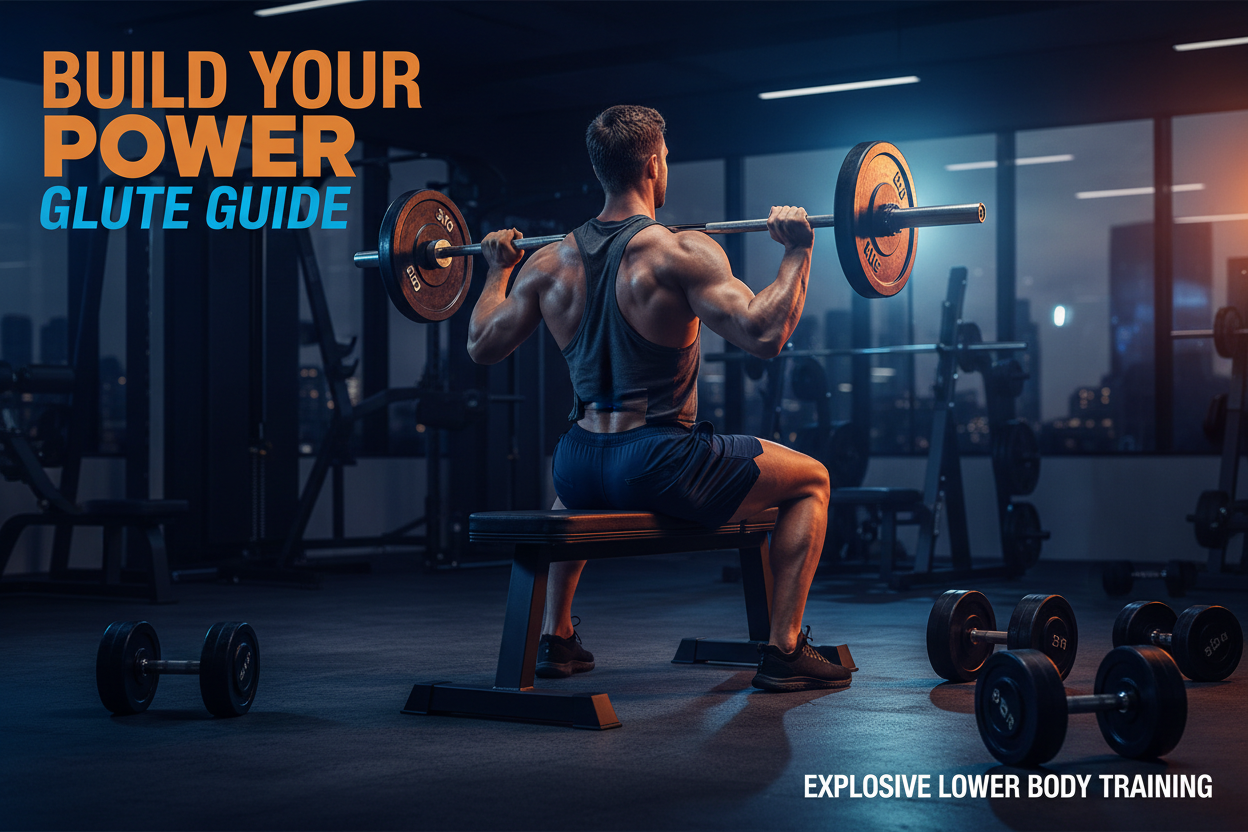
Low-bar squats are often cited as the best glute exercise men can utilize for heavy loading. By placing the bar lower on your rear delts, you are forced to lean your torso forward slightly, which stretches the posterior chain more than a high-bar Olympic squat. Focus on pushing your knees out and driving your hips upward. This compound lift triggers a massive hormonal response and builds density that is hard to replicate with machines.
The Stretch Focus: Romanian Deadlifts (RDLs)
Muscle growth is triggered by mechanical tension, and one of the best ways to apply that tension is while the muscle is stretched. The Romanian Deadlift is the best glute exercise for men who want to target the glute-ham tie-in and build the upper shelf of the muscle.
Start standing with the barbell. Unlock your knees slightly—do not bend them further than this initial unlock. Push your hips backward as if you are trying to close a car door with your butt. Keep the bar close to your shins. You should feel a deep, uncomfortable stretch in your hamstrings and glutes as you lower the weight. Only go as low as your flexibility allows without rounding your back. The drive back up should be powered entirely by thrusting your hips forward, not by pulling with your lower back.
Unilateral Stability: Bulgarian Split Squats
We cannot discuss the best male glute workout without addressing imbalances. Most people have one leg stronger than the other. The Bulgarian Split Squat ruthlessly exposes and corrects these weaknesses. By elevating your rear foot on a bench and holding dumbbells, you force the front glute to stabilize the knee and drive the movement.
To make this glute-dominant rather than quad-dominant, take a slightly longer stance and lean your torso forward (hinge at the hips) while keeping your back straight. Drop your back knee toward the floor and drive up through the front heel. This exercise is grueling, but it is one of the best glutes exercises for men for athletic transfer and aesthetic balance.
Structuring the Routine
You do not need a separate "glute day." Instead, integrate these movements into your existing leg sessions. A solid approach for the best glute workout men can follow involves hitting the muscle twice a week with different intensities.
On your heavy day, start with squats (3-4 sets of 6 reps) followed by hip thrusts (3 sets of 8-10 reps). On your hypertrophy or volume day, lead with Romanian Deadlifts (3 sets of 8-12 reps) and finish with Bulgarian Split Squats. This frequency ensures you are hitting the posterior chain with sufficient volume to force adaptation without overtraining.
Consistency is the final variable. Glutes are large, resilient muscles that can handle a beating. Do not be afraid to load the bar heavy on hip thrusts and deadlifts. Progressive overload—adding weight or reps over time—is the only way to change your physique. If you stick to these movements and focus on the quality of the contraction, you will notice a significant difference in your power output and how your jeans fit within a few months.
Frequently Asked Questions
How often should men train their glutes?
Most men see the best results training glutes 2 to 3 times per week. Because the glutes are the largest muscle group in the body, they recover relatively quickly and respond well to higher frequency compared to smaller muscle groups like biceps.
Can I build glutes without heavy weights?
While you can improve muscle tone with bodyweight exercises, significant mass and strength usually require external resistance. Progressive overload is necessary for hypertrophy, so eventually, you will need to add dumbbells, bands, or barbells to continue seeing progress.
Will running or cycling build my glutes?
Cardio activities like running and cycling engage the glutes for endurance, but they generally do not provide enough mechanical tension to build significant muscle size. For growth and shape, resistance training exercises like squats and hip thrusts are far more effective.