Stop Sitting on Your Gains: The Real Way to Build Stronger Glutes (Even at a Desk Job)
If you are wondering how to workout glutes effectively, the answer lies in understanding that your backside is the powerhouse of your entire body, not just an aesthetic feature. To build muscle and strength here, you must target all three main muscles—the gluteus maximus, medius, and minimus—through a combination of heavy compound lifts that stretch the muscle under load and higher-repetition isolation movements that create metabolic stress. You cannot simply squat your way to a better posterior; you need hip extension, abduction, and rotation.
Most people struggle with this muscle group because of modern lifestyle habits. We sit on them all day, which causes the hip flexors to tighten and the glutes to essentially fall asleep. I remember a specific period in my own training where my squat numbers were going up, but my glutes remained flat, and my lower back was constantly aching. It turned out I wasn't actually using my hips; I was compensating with my lumbar spine. Once I learned to establish a mind-muscle connection and properly engage the hips before adding heavy weight, the back pain vanished, and the growth finally started.
Understanding the Anatomy Before You Lift
Before you jump into a routine, you need to know what you are actually targeting. The gluteus maximus is the large, meaty muscle responsible for the shape of your rear and the power in your stride. It primarily handles hip extension (moving your leg backward). The medius and minimus are smaller, located on the side of the hip, and are crucial for stability and hip abduction (moving your leg away from the centerline).
When you look for exercises to build muscle in buttocks, you need to select movements that hit these specific functions. If you only do forward movements like lunges or squats, you might neglect the side glutes, leading to imbalances or "hip dips" that many try to correct. A well-rounded routine hits the muscle from every angle.
The Heavy Hitters: Compound Movements
To really exercise your glutes for mass and strength, the hip thrust is non-negotiable. While the squat is king for legs, the hip thrust is the monarch of the backside. By bending the knees, you take the hamstrings largely out of the equation, forcing the glutes to do the heavy lifting.
Set up a bench so it sits just below your shoulder blades. Roll a barbell over your hips (use a pad to avoid bruising), tuck your chin, and drive through your heels. The goal is to fully extend the hips at the top without hyperextending your lower back. If you are asking yourself how to do glutes correctly, the visual cue is to keep your ribs down and your pelvis tucked under at the top of the movement.
Deadlifts, specifically Romanian Deadlifts (RDLs), are another staple. Unlike a standard deadlift where you bend your knees significantly, the RDL focuses on the hip hinge. Push your hips back as far as they can go while keeping the bar close to your shins. The stretch you feel at the bottom is where the muscle damage—and subsequent growth—occurs. This is exactly what exercise works your glutes and hamstrings in unison.
Fighting the Desk Job: Training at the Office
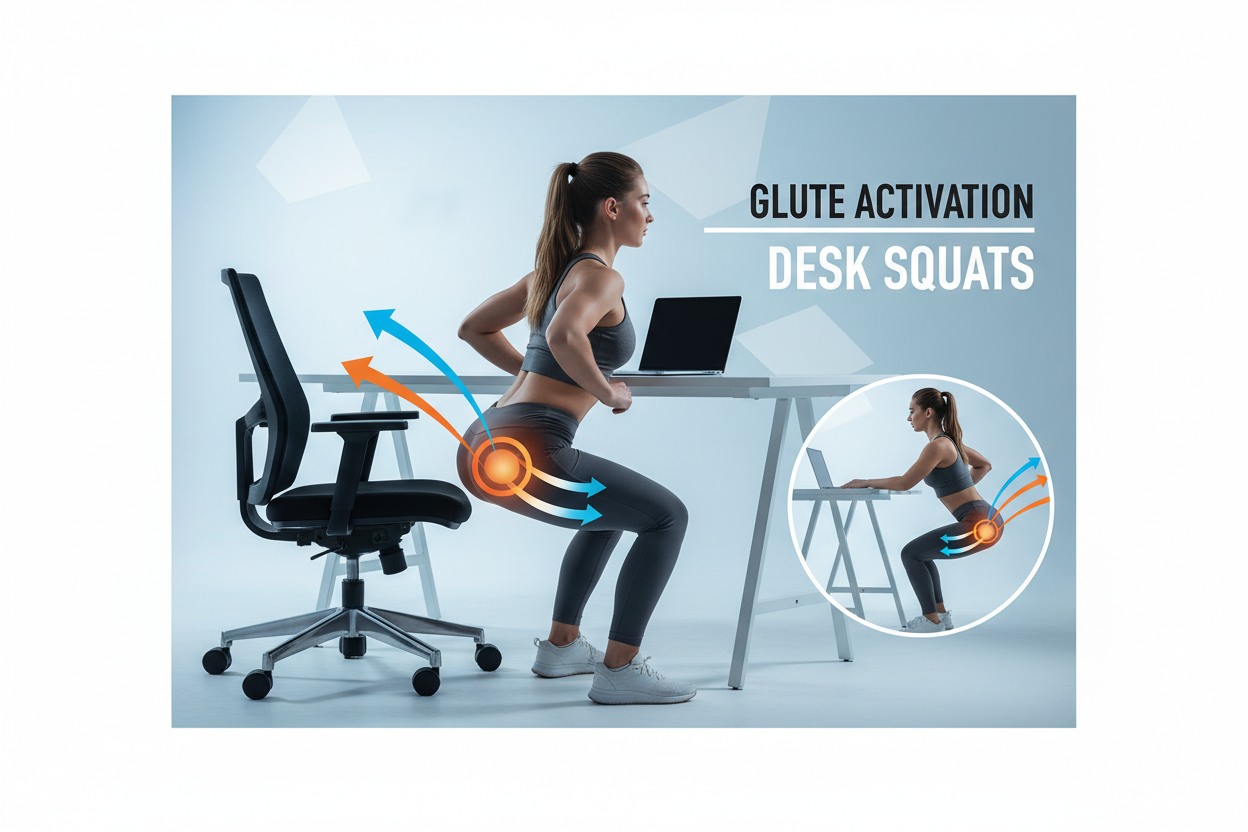
Consistency is often the biggest barrier. If you work a 9-to-5, you are spending roughly 40 hours a week actively compressing your glute muscles. This restricts blood flow and reinforces poor posture. Surprisingly, you can integrate glute exercises at work without looking ridiculous or breaking a massive sweat.
The seated glute clench is invisible but effective for waking up the muscles. While sitting in your chair, squeeze your glutes as hard as possible for 15 to 30 seconds, then release. Do this for several rounds throughout the day. It helps prevent glute amnesia, keeping the neural pathways active so that when you do get to the gym, your body remembers how to fire those muscles.
If you have a standing desk or a moment in the breakroom, try standing hip abductions. Stand on one leg and lift the other leg out to the side, keeping your toes pointed forward. You will feel a burn in the side of your hip (the glute medius). This simple motion helps counteract the hours spent sitting with hips in a neutral or closed position.
Isolation and The "Pump"
After you have performed your heavy compounds or managed to squeeze in some activity during the day, you need to finish working out your glutes with high-repetition isolation exercises. These are meant to drive blood into the muscle and fatigue the fibers completely.
Cable kickbacks are excellent for this. Attach an ankle strap to a low cable pulley. Lean forward slightly to increase the range of motion and kick your leg back. The trick here is to not swing your torso. Keep your upper body rigid and move only at the hip joint. If you don't have cables, 45-degree back extensions are a fantastic alternative. Turn your feet out 45 degrees and round your upper back slightly; this shifts the focus from the spinal erectors to the glutes.
Common Mistakes to Avoid
When you workout your glutes, momentum is your enemy. Many lifters swing the weight up, using their lower back to generate force. If you don't feel a distinct contraction in your rear, drop the weight. The glutes are lazy muscles; they will let the quads and lower back take over if you let them. Slow down the eccentric (lowering) phase of your lifts to ensure tension remains where it belongs.
Another issue is neglecting progressive overload. You cannot do the same 3 sets of 10 reps with the same weight for a year and expect changes. You must work your glutes harder over time by adding weight, reps, or slowing down the tempo. Track your lifts. If you hip thrusted 135 lbs last week, aim for 140 lbs or an extra rep this week.
Structuring Your Routine
If you are still unsure how to workout your glutes within a weekly schedule, aim for frequency. Because the glutes are a large muscle group with high endurance capabilities, they recover relatively quickly. Hitting them 2 to 3 times a week is generally more effective than one "glute day" that leaves you unable to walk for a week.
A sample split might look like this: Monday focuses on heavy squats and lunges (stretch focus). Wednesday focuses on hip thrusts and bridges (contraction focus). Friday focuses on abduction and lighter, high-rep accessory work (metabolic stress). This approach ensures you stimulate the muscle fibers through different mechanisms without overtraining.
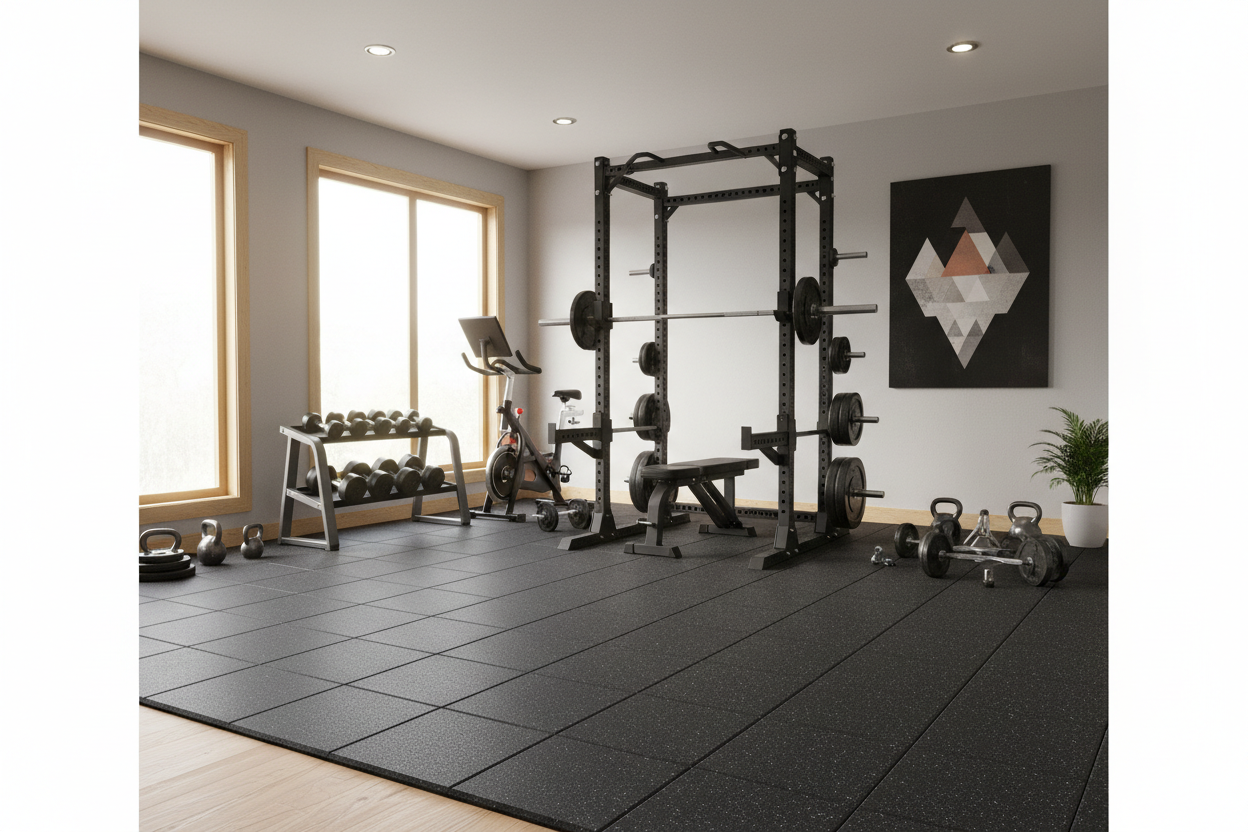
Building a strong posterior chain takes time and patience. Whether you are lifting heavy iron in a warehouse gym or squeezing in reps between conference calls, the key is intention. Don't just go through the motions. Squeeze, stretch, and challenge the muscle every single session.
Frequently Asked Questions
How long does it take to see results in your glutes?
With consistent training and proper nutrition, you can typically feel strength improvements within 4 weeks, but visible muscle growth usually takes 8 to 12 weeks. Genetics and diet play a significant role, so ensure you are eating enough protein to support muscle repair.
Can I build glutes without heavy weights?
Yes, but it requires much higher volume and intensity. You can use bodyweight movements, resistance bands, and single-leg variations to create enough tension to stimulate growth, though heavy weights generally produce faster results for raw size.
Why do I feel leg exercises in my lower back instead of my glutes?
This usually indicates a weak core or poor hip mobility, causing your lower back to compensate for the load. To fix this, lighten the weight, focus on bracing your abs, and practice activation exercises like glute bridges before your main workout to ensure the right muscles are firing.