Stop Sabotaging Your Lower Body Push Exercises (Read This First)
Most lifters walk into the gym, load up a bar, and squat until they can't walk. While the effort is commendable, the execution is often flawed. If you want to build massive quads and resilient knees, you need to understand the mechanics behind lower body push exercises rather than just moving weight from point A to point B.
The distinction between a "push" and a "pull" in the lower body isn't always intuitive. Unlike the upper body, where pushing is away from the chest and pulling is toward it, leg days are defined by joint dominance. If you get this wrong, you might be hammering your glutes when you meant to target your quads, or vice versa.
Quick Summary: The Essentials
- The Movement Pattern: Lower push exercises are primarily "knee-dominant," meaning the knee joint undergoes maximum flexion and extension.
- Primary Muscles Worked: Quadriceps (main driver), Glutes (assistive), Adductors, and Calves.
- Core Exercises: High-Bar Squats, Front Squats, Leg Press, Hack Squats, Lunges, and Bulgarian Split Squats.
- Main Benefit: Anterior chain development, explosive power, and knee stability.
- Common Mistake: Relying too much on hip hinging (bending over), which turns a push exercise into a lower back or glute movement.
Understanding the Anatomy: Lower Body Push Muscles
Before we look at the specific movements, you need to know what you are trying to stimulate. A "lower push" is effectively a squat pattern.
While a deadlift (pull) relies on the hips moving back and forth, a squat (push) relies on the knees traveling forward and the hips dropping down. This places the mechanical tension squarely on the quadriceps.
The Role of the Quads
Your quads are the engines of lower push exercises. They extend the knee. If you aren't feeling these movements in the front of your thigh, your form likely needs adjustment. You might be shifting the load to your hips to compensate for weak quads.
The Definitive Lower Body Push Exercises List
You don't need twenty variations. You need to master a few staples that provide the best stimulus for growth and strength.
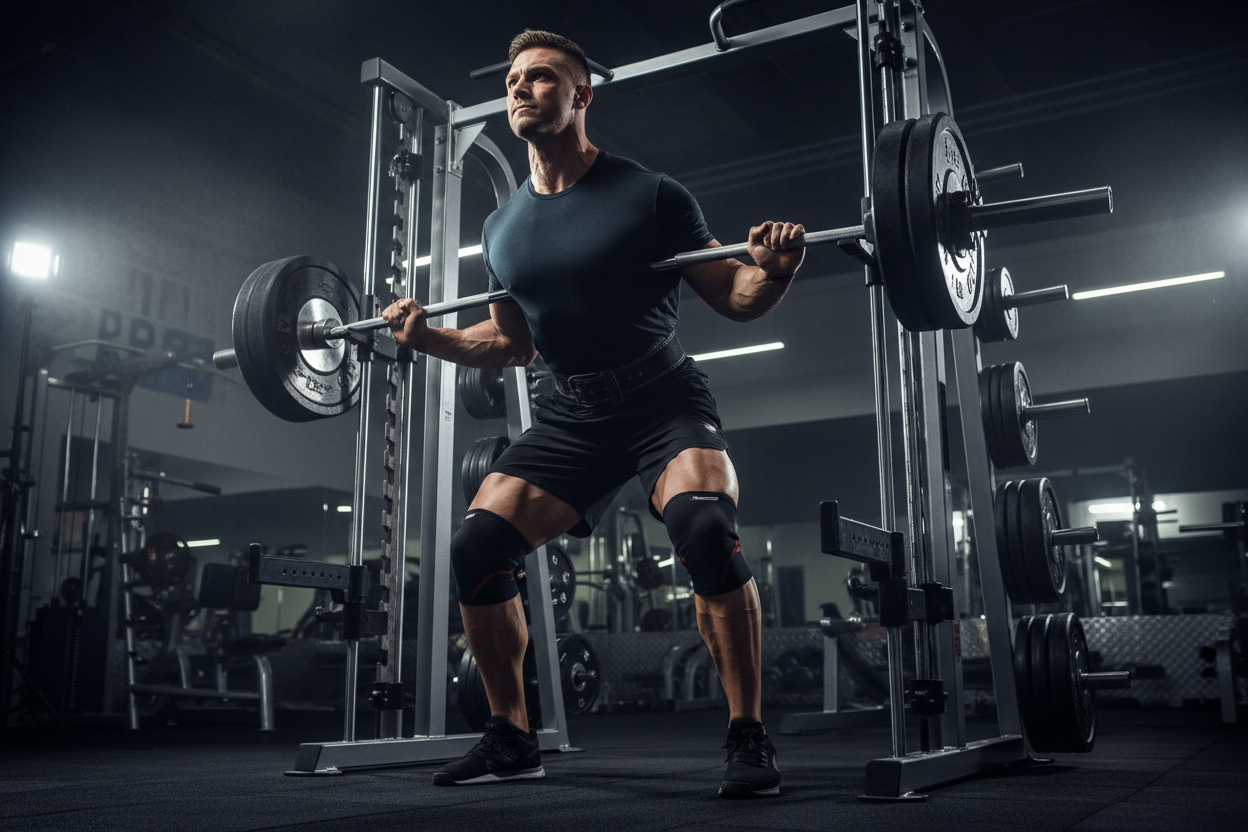
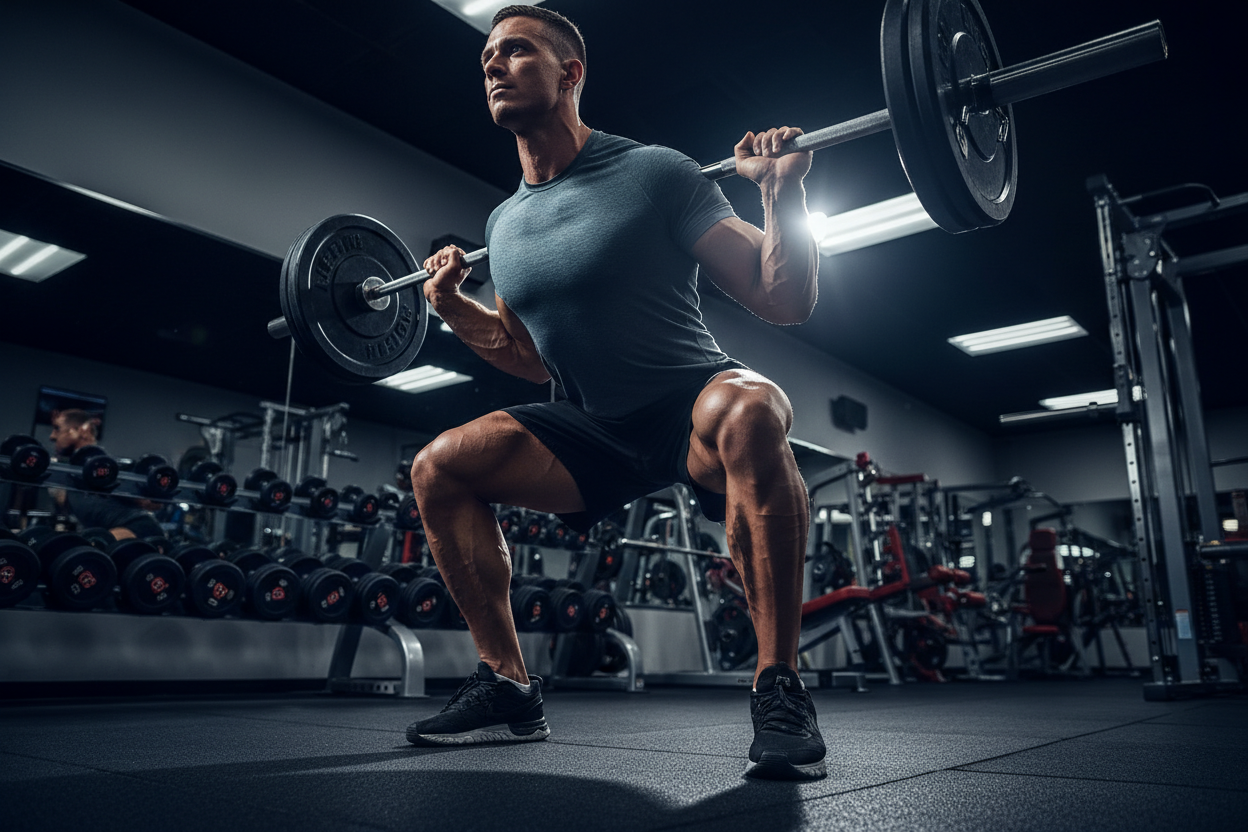
1. The High-Bar Back Squat
This is the gold standard. By placing the bar high on your traps, you force your torso to stay upright. An upright torso forces the knees to travel forward, maximizing quad recruitment.
Coach's Tip: Don't obsess over "sitting back" too much. Instead, think about sitting down between your heels. This keeps the tension on the quads rather than shifting it all to the glutes.
2. The Bulgarian Split Squat
This is arguably the most effective unilateral lower body push workout component. It fixes imbalances and places an immense stretch on the quads.
The setup is crucial. If your front foot is too far forward, it becomes a glute exercise. Bring the foot closer to the bench to increase knee flexion and target the quads.
3. The Leg Press
Don't let strength snobs tell you machines are useless. The leg press removes the stability requirement, allowing you to take the muscles to absolute failure safely.
Place your feet lower on the platform. A high foot placement recruits the hamstrings and glutes (mimicking a pull), whereas a low placement forces the knees to work harder (emphasizing the push).
Structuring Your Lower Body Push Workout
If you are running a Push/Pull/Legs split, your leg day will naturally combine both push and pull. However, if you are specializing or doing an upper/lower split, prioritization is key.
Start your session with your heaviest compound lift, usually the Squat or Hack Squat. This is where your nervous system is freshest. Follow this with unilateral work like lunges, and finish with isolation movements like leg extensions to fully exhaust the muscle fibers.
My Training Log: Real Talk
Let's drop the textbook talk for a minute. I want to share my personal experience with lower body push exercises, specifically the Hack Squat, because the "science" doesn't tell you how it actually feels.
I remember a specific training block where I decided to prioritize Hack Squats over free-weight barbell squats. The first thing I noticed wasn't the pump—it was the bruising. The shoulder pads on the specific machine at my gym had worn-out foam. After three heavy sets, I had these distinct red friction lines on my traps that stung every time I took a shower.
But the real reality check was the nausea. There is a specific point at the bottom of a Hack Squat—right when your calves smash against your hamstrings—where the pressure builds in your head. I found that if I didn't brace my core exactly right, or if I ate less than two hours before training, I'd end up dry-heaving in the locker room. That controlled, grindy movement on a sled creates a level of systemic fatigue that free weights rarely match for me. It’s miserable, but my quads grew more in those eight weeks than they had in the previous year of half-hearted barbell squats.
Conclusion
Mastering the lower body push is about respecting the knee joint and maintaining tension. Stop ego lifting with poor range of motion. Drop the weight, increase the depth, and force your quads to do the work. Your knees will be healthier, and your legs will finally fill out those jeans.
Frequently Asked Questions
What is the difference between a lower push and a lower pull?
The main difference lies in the dominant joint. Lower push exercises (squats, lunges) are knee-dominant and target the quads. Lower pull exercises (deadlifts, hamstring curls) are hip-dominant and target the hamstrings and glutes.
Can I do lower push exercises with bad knees?
Yes, but modification is key. Exercises like terminal knee extensions (TKEs) or box squats can limit shear force on the knee. Always control the eccentric (lowering) phase to reduce impact and build tendon strength.
How often should I perform a lower body push workout?
For most natural lifters, training legs twice a week is optimal. This allows for sufficient volume to stimulate growth while providing 48 to 72 hours of recovery time between sessions.