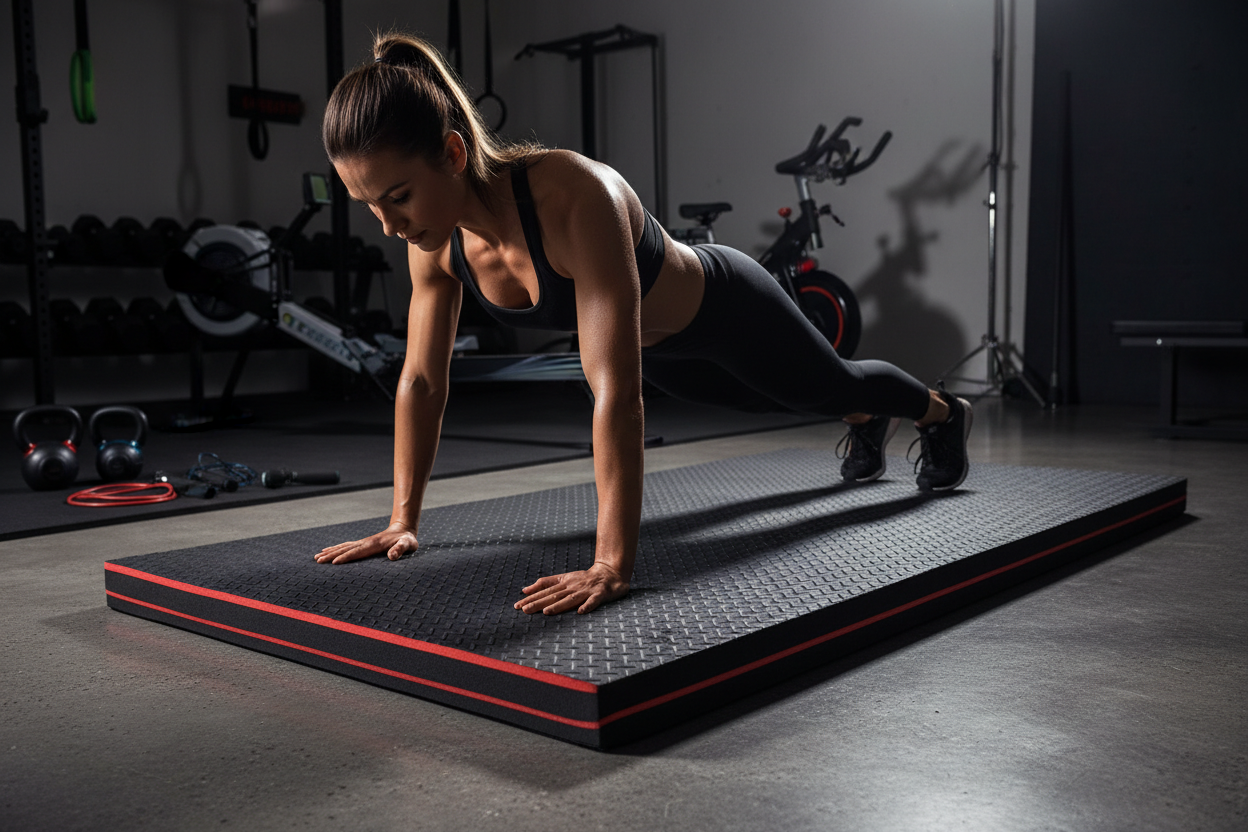
Stop Ruining Your Knees: The Real Cardio Exercise Mat Guide
If you have ever tried doing aggressive mountain climbers on a standard yoga mat, you know exactly what happens next. The material stretches, bunches up under your feet, and eventually starts shredding like grated cheese. That is because yoga gear isn't built for high-impact intensity.
To protect your joints and your floors, you need a dedicated cardio exercise mat. This isn't just about comfort; it is about physics. When you land a jump squat, you generate force up to three times your body weight. Without the right density underfoot, that energy goes straight into your ankles and knees, or it cracks your tile flooring.
Quick Summary: Key Takeaways
- Density over Thickness: Unlike yoga mats, cardio mats need high-density foam to absorb shock without destabilizing your balance.
- Surface Durability: Look for materials bonded to withstand friction from sneaker treads, not bare feet.
- Size Matters: A standard 6-foot mat is often too small for lateral movements like skaters; look for oversized options.
- Floor Protection: These mats act as a barrier against heavy equipment vibrations and sweat damage.
Why Your Yoga Mat Fails at Cardio
It is a common error to think a mat is just a mat. However, the mechanics of yoga and High-Intensity Interval Training (HIIT) are opposites. Yoga requires grip and cushioning for static holds. Cardio requires shock absorption and abrasion resistance.
When you use a soft, plush mat for jumping, the foam compresses too much. This creates instability. Your body has to work harder just to find balance, which increases the risk of rolling an ankle. An exercise mat for cardio is engineered to be firmer. It absorbs the initial shock of the landing but rebounds instantly so you can spring into your next movement.
The Anatomy of a Proper Cardio Mat
Material Density and Composition
The best mats for this purpose are usually made from high-density PVC or natural rubber composites. You want a material that feels heavy for its size. If you can pinch the mat and your fingers touch easily, it is too soft for plyometrics.
You need a surface that can handle the friction of rubber shoe soles. Soft foam tears immediately under the torque of a pivoting sneaker. A high-quality cardio mat will have a textured, tough top layer specifically designed to lock in with your shoe tread.
The "Raised" Advantage
For those with dedicated home gym spaces, you might consider a raised exercise mat or interlocking tile system. These sit slightly higher off the ground and often feature a waffle-grid design underneath.
This design allows for airflow, preventing mold growth if you are sweating heavily on a concrete garage floor. Furthermore, the raised structure provides a mechanical suspension system, offering superior joint protection compared to flat sheets of foam.
My Personal Experience with Cardio Exercise Mats
I learned this lesson the hard way back when I was obsessed with the Insanity workout program. I was trying to do the "Heisman" drill on a cheap, $15 foam roll-up mat I bought at a supermarket.
About ten minutes in, I planted my foot for a lateral hop, and the mat didn't just slide—it stretched out like bubblegum. My foot got caught in the fold, and I went down hard, nearly taking out my TV stand. But the thing I remember most wasn't the fall; it was the debris. After the workout, my living room floor was covered in tiny little blue crumbs of foam. That mat had literally disintegrated under my sneakers.
When I finally switched to a heavy-duty, 7mm high-density cardio mat, the difference was audible. No more squeaking or bunching. Just a solid thud when I landed. The main thing nobody tells you, though? The smell. Real, heavy-duty rubber mats have a strong "tire shop" scent for the first two weeks. It's annoying, but it's actually a sign of quality material rather than cheap synthetic fillers.
Conclusion
Don't treat your flooring as an afterthought. The right equipment changes how you move. It allows you to jump higher and move faster because you trust the surface beneath you. Invest in a proper mat, and your knees will thank you five years from now.
Frequently Asked Questions
Can I wear shoes on a cardio exercise mat?
Yes, absolutely. In fact, you should. A true cardio mat is designed specifically to withstand the abrasion of sneaker treads. If your mat tears when you wear shoes, it is likely a yoga or pilates mat, not a cardio mat.
How thick should an exercise mat for cardio be?
Aim for 6mm to 8mm (approx. 1/4 inch). Anything thinner than 6mm provides insufficient shock absorption for jumping. Anything thicker than 10mm often becomes too unstable, causing you to wobble during single-leg movements.
Does a cardio mat work on carpet?
It can, but you need to be careful. On plush carpet, a cardio mat might "walk" or shift as you move. For the best experience on carpet, look for a mat with a specialized non-slip bottom or oversized heavy-duty mats (6'x4' or larger) that are heavy enough to weigh themselves down.