Stop Program Hopping: The 5 Best Glute Exercises You Need
I spent years scrolling through social media trying every 'glute activation' kickback and band walk under the sun. My garage floor was a graveyard of cheap latex loops and ankle straps that snapped after three uses. It was exhausting, and my pants weren't fitting any differently. I finally realized that the 5 best glute exercises aren't found in a 15-minute circuit of air squats and donkey kicks.
If you're training in a home gym, you don't have space for twelve different machines. You need the meat-and-potatoes movements that actually put 45-lb plates on the bar. I've stripped my routine down to the essentials, and the results have been better than any high-rep 'burn' ever gave me.
Quick Takeaways
- Progression is more important than variety; pick 5 moves and get strong at them.
- Mechanical tension from heavy weight beats light-weight 'burn' every time.
- Unilateral work (single leg) is non-negotiable for fixing imbalances.
- You only need a barbell, a bench, and some floor space for world-class results.
Why Your Giant Lower Body Circuit is Killing Your Gains
We've all been there: doing 50 reps of three different types of lunges followed by banded side-steps until your hips scream. It feels like work because you're sweating and chasing a massive pump, but a pump isn't a proxy for growth. When you do too many movements, you can't possibly track your progress accurately. You're just getting tired, not getting stronger.
Real growth comes from progressive overload. When it comes to workouts to build glute muscles, variety is often the enemy. If you change your exercises every week, you never get past the 'learning' phase of the movement. Your nervous system is too busy figuring out the balance to actually recruit the muscle fibers you're trying to grow. Stick to the basics and add 5 lbs to the bar every week instead.
The Core Rule of Weightlifting Glutes: Heavy Tension
The gluteus maximus is the largest and most powerful muscle in your body. It isn't designed to move light bands; it's designed to move your entire body weight with explosive force. For real weightlifting glutes, you need to prioritize heavy loads and a deep stretch. This means putting down the 5-lb dumbbells and picking up a barbell.
I track every single set in a tattered notebook. If I did 225 lbs for 8 reps last week, I'm aiming for 9 reps or 230 lbs this week. That incremental stress is what forces the muscle to adapt. Light, high-rep work has its place as a finisher, but it should never be the foundation of your program.
The 5 Best Glute Exercises (And Why They Survived the Cut)
I've tested everything from cable pull-throughs to specialized machines. These five survived because they offer the best bang-for-your-buck. They allow for heavy loading, require minimal equipment, and target the glutes from different angles—both in the shortened and lengthened positions.
1. The Heavy Barbell Hip Thrust
This is the undisputed king of horizontal force. Unlike a squat where the tension drops off at the top, the hip thrust keeps the glutes under maximum tension where they are strongest. I use a 20kg power bar and a thick foam pad to keep the steel from digging into my hips.
The biggest mistake I see is people using a wobbly weight bench. You need a sturdy dedicated glute bench that won't slide across your gym floor when you're driving 300 lbs upward. Lock your ribs down, tuck your chin, and drive through your heels until your shins are vertical.
2. Bulgarian Split Squats
I hate these. You’ll hate them too. But they work. By elevating your rear foot on a bench, you force the front leg to handle nearly all the load. To make these one of the best glute targeted exercises, don't stay perfectly upright like a soldier.
Lean your torso forward at about a 30-degree angle. This slight hinge shifts the load away from your quads and puts the glutes in a deep stretch. I prefer using heavy dumbbells for these to keep my center of gravity lower and my balance more stable than a barbell would allow.
3. Romanian Deadlifts (RDLs)
The RDL is all about the 'stretch-mediated hypertrophy.' You’re essentially pulling the muscle apart under load. Keep the bar tight to your thighs—think about shaving your legs with the knurling. Push your hips back as far as possible until you feel a massive pull in your hamstrings and glutes.
The range of motion ends when your hips stop moving backward. If you go lower by rounding your back, you've lost the tension on the glutes and put it on your spine. I use straps for these so my grip strength doesn't give out before my posterior chain does.
4. Deficit Reverse Lunges
Standard lunges are fine, but deficit lunges are better. Stand on a 2-to-4 inch platform (a bumper plate works perfectly). By stepping back from an elevation, your front hip has to go into deeper flexion. That extra inch or two of depth makes a massive difference in glute recruitment.
It’s the difference between a 'good' workout and one that leaves you sore for three days. Focus on a slow, controlled eccentric (the way down) and an explosive drive back to the start. If you're wobbling, lower the weight until your foot stays glued to the platform.
5. 45-Degree Back Extensions
Most people use the back extension for their lower back, but with a few tweaks, it becomes a glute isolation powerhouse. Round your upper back like a 'scared cat' and tuck your chin to your chest. This takes the erectors out of the movement.
Turn your toes out at a 45-degree angle. Squeeze your glutes to pull your body up, rather than using your back to hinge. It’s the perfect finisher to get that final bit of volume without the systemic fatigue of a heavy barbell movement.
Programming the Best Glute Targeted Exercises Together
Don't try to do all five of these in one session. You'll be a puddle on the floor by exercise three. Instead, split them across two lower-body days. For example, Day A could be Hip Thrusts and Deficit Lunges. Day B could be RDLs and Bulgarian Split Squats, finishing with Back Extensions.
This allows you to hit the muscles with high frequency without burning out. While some people look for the best booty exercises at the gym involving complex cable setups, these five movements will build more mass in a garage than a dozen machines ever could. Keep your sets in the 6-12 rep range and focus on moving more weight over time.
The Minimalist Equipment You Actually Need
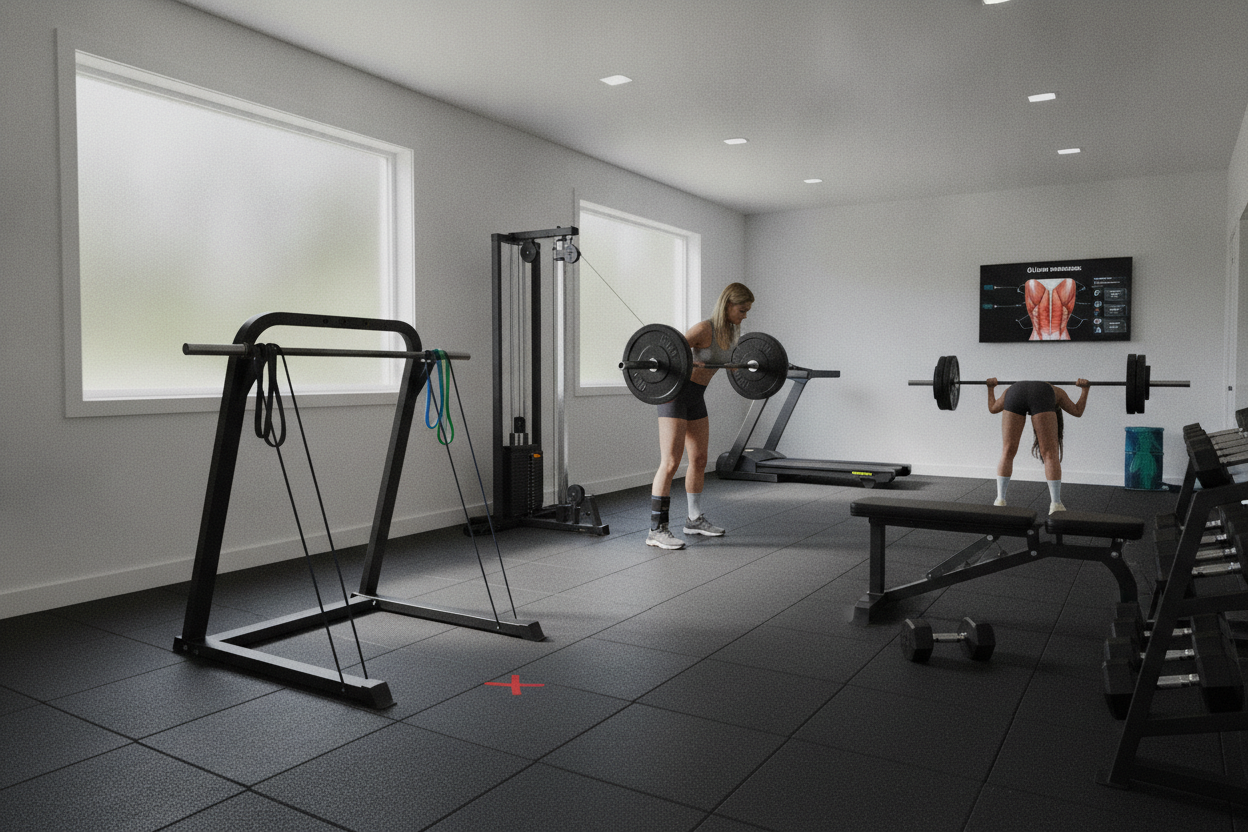
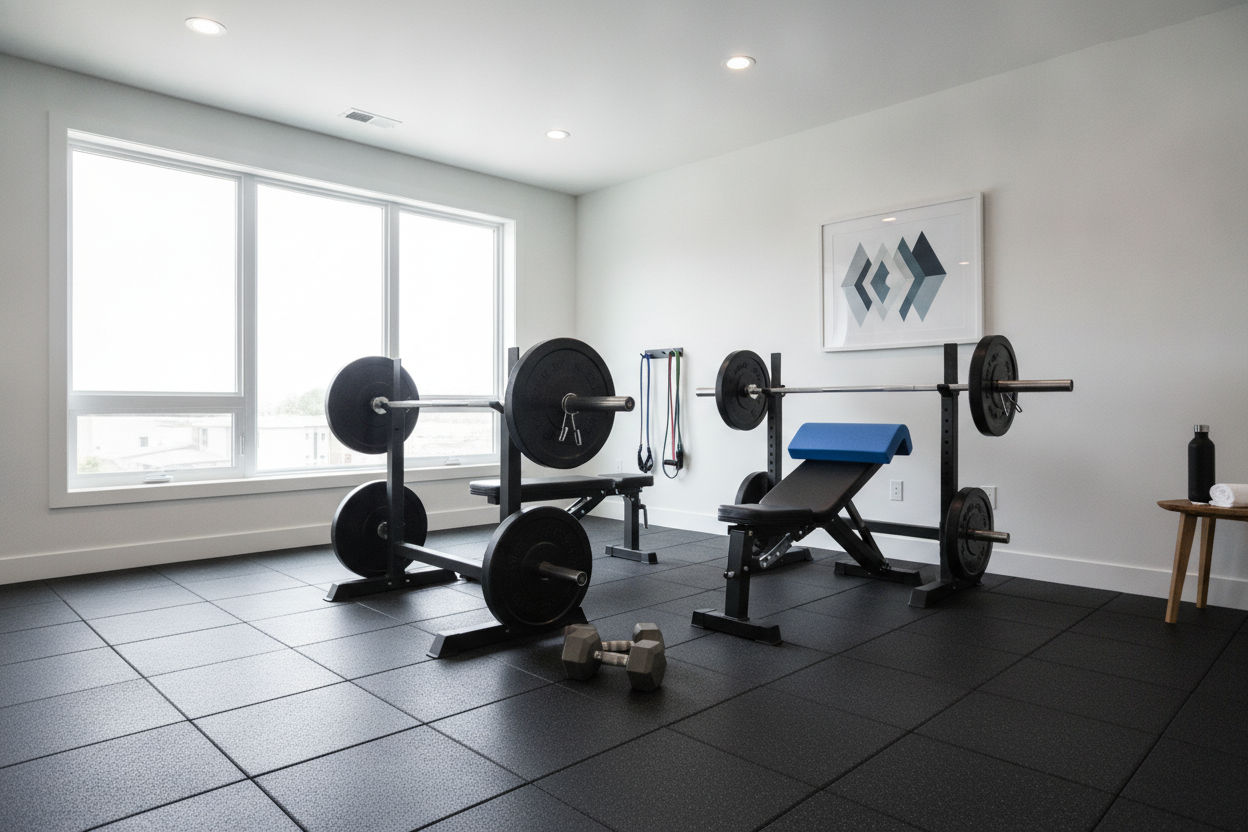
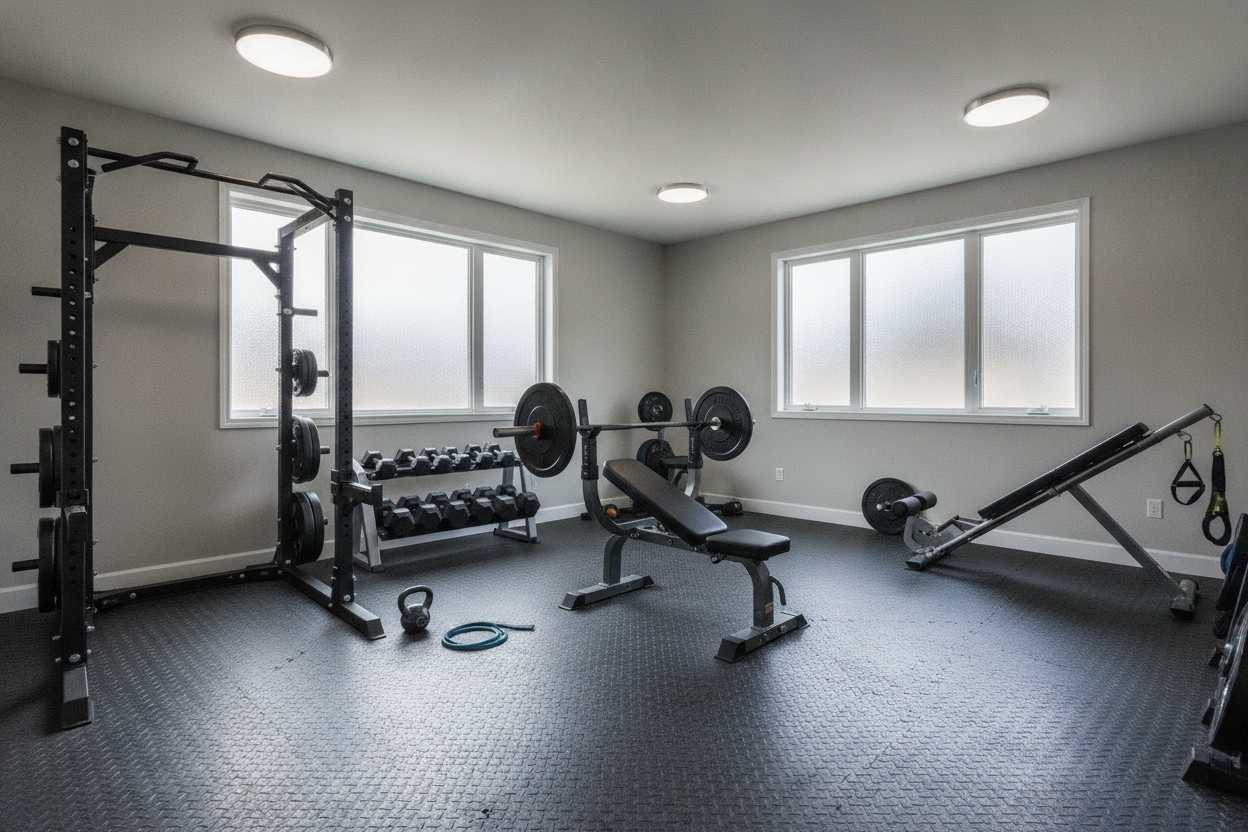
You don't need a 5,000-square-foot facility. I do all of this in a one-car garage. You need a solid barbell with decent knurling, a set of iron or bumper plates, and a pair of heavy dumbbells. Most importantly, you need a floor that can take a beating.
Dropping heavy RDLs or lunging on bare concrete is a recipe for joint pain and cracked slabs. I highly recommend a high-quality large exercise mat to dampen the noise and provide a stable, non-slip surface. It protects your equipment and your knees when you're grinding out those last few reps of lunges.
Personal Experience
I used to be a 'more is better' trainee. I’d spend two hours in the gym doing every variation of a glute bridge imaginable. My ego loved the variety, but my progress was stagnant. I finally cut the fluff and focused on just these five moves. The first month, I felt like I wasn't doing 'enough' because I wasn't doing ten exercises. But then my RDL went from 185 to 225, and my hip thrust hit 315. That’s when the growth actually happened. My biggest mistake was valuing the 'sweat' more than the 'steel.'
FAQ
Can I build glutes with just dumbbells?
Yes, but it's harder to overload. You'll eventually need 100-lb+ dumbbells for hip thrusts, which are awkward to handle. A barbell is much more efficient for long-term growth.
How many sets should I do per week?
Aim for 10-15 hard sets per week for the glutes. If you're doing 20+ sets and not growing, you're likely not training with enough intensity on the sets you are doing.
Do I need to do 'glute activation' first?
Usually, no. A few light sets of the actual exercise you're about to do is the best way to 'activate' the muscle for that specific movement pattern.