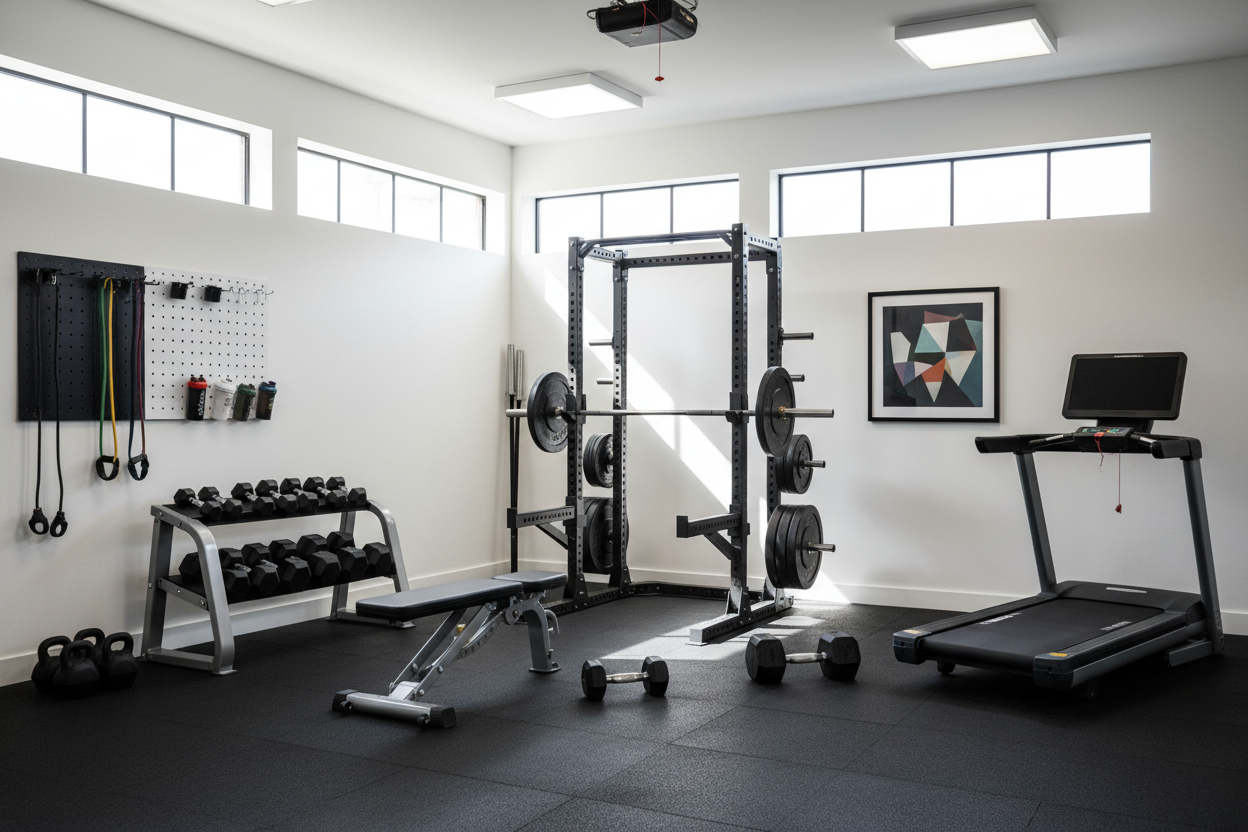
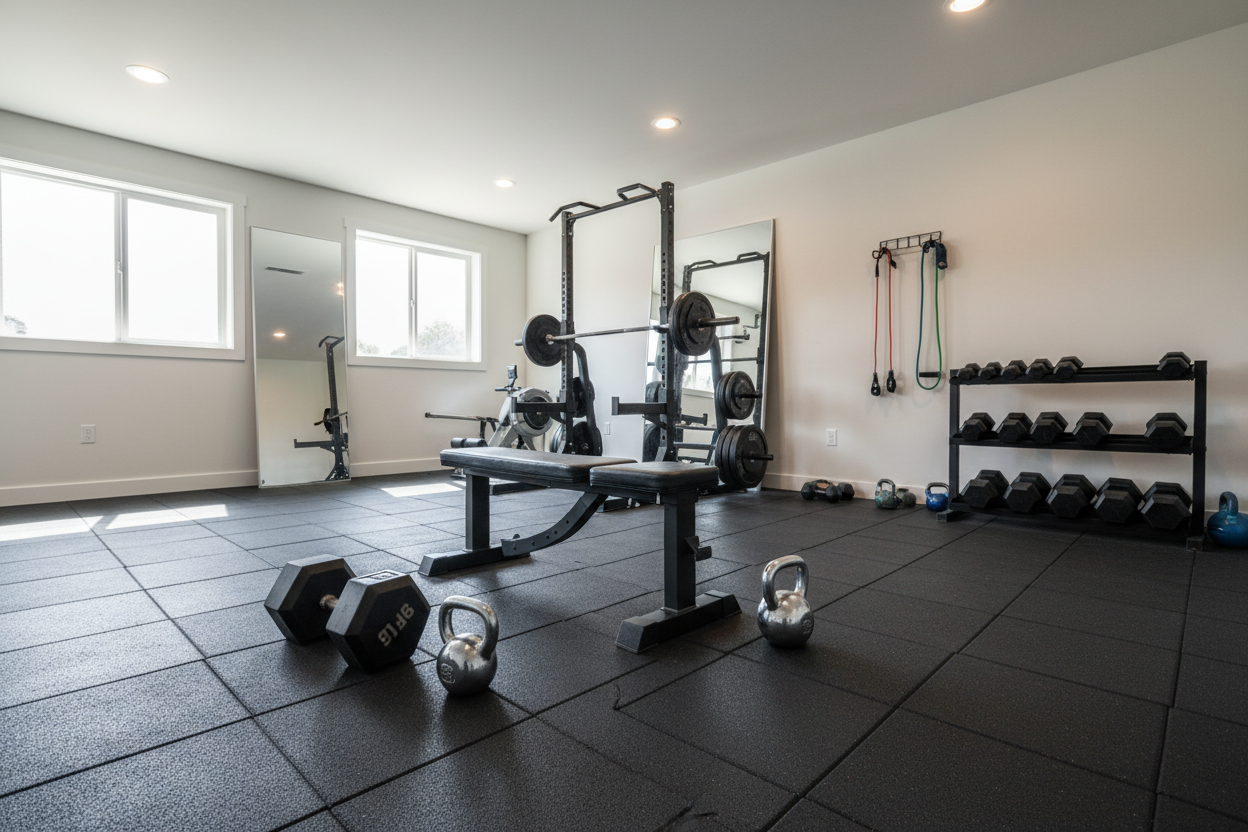
Stop Program Hopping: Just Master These 5 upper body exercises
I spent three years of my life chasing the 'perfect' split. My phone was a graveyard of PDFs from influencers, and my garage was cluttered with odd-shaped attachments I used once and then ignored. I was constantly looking for new 5 upper body workouts to fix a physique that just wasn't growing. The problem wasn't my effort; it was my lack of focus.
We have a tendency to overcomplicate things when we train at home. We think more variety equals more growth. In reality, the guy with a barbell, a rack, and a pair of rings usually ends up bigger and stronger than the guy with a $5,000 cable machine and zero focus. If you want to stop spinning your wheels, you need to master these 5 upper body exercises and ignore everything else for six months.
Quick Takeaways
- Mastery beats variety; stop switching exercises every three weeks.
- Compound movements allow for the heavy loading required for hypertrophy.
- Micro-loading is the only way to ensure consistent, long-term progress.
- High-quality basics like dips and pull-ups build more 'functional' mass than machines.
Why More Variations Equals Less Muscle
Decision fatigue is the silent killer of garage gym progress. When you walk into your gym and have twenty different ways to hit your chest, you end up doing a little bit of everything and a whole lot of nothing. You never truly reach the point of deep mechanical tension because you're too busy 'feeling' the muscle with light isolation moves. I've seen it a hundred times: a lifter spends thirty minutes on three different chest fly variations but can't dip their own bodyweight for ten reps. It's a waste of time.
The reality is that your brain only has so much 'intensity' to give in a session. If you spread that intensity across six different exercises, each one gets a diluted version of your effort. By narrowing your focus, you can pour 100% of your mental and physical energy into a few key lifts. This allows you to actually track progress. It’s easy to know if you’re getting stronger when you only have five metrics to care about. When you have twenty, the data is just noise.
In a home gym, space and time are your most valuable assets. Every minute you spend swapping out cable handles or adjusting bench angles is a minute you aren't under a heavy load. You don't need a 12-station jungle gym. You need a few movements that you can push to the absolute limit, week after week, without your form breaking down into a mess of ego-lifting.
The Core Movement Rules I Live By
Before an exercise makes it onto my 'essentials' list, it has to pass a rigorous sniff test. First, it must be highly scalable. If I can't easily add weight to it for the next two years, it’s useless to me. Second, it has to hit multiple muscle groups simultaneously. We're looking for the biggest bang for our buck here. I don't want to spend an hour hitting 'rear delts' and 'upper traps' separately when a heavy row hits them both at once.
Safety and incremental progression are the final hurdles. You need movements that allow you to fail safely in a rack or with dumbbells you can drop. This is where most people mess up—they try to add 10 pounds to their bench every week until their shoulders explode. Understanding how 5-pound jumps ruin every upper body weight exercise is crucial. You need to be using fractional plates or micro-loading to keep the progress curve moving upward without hitting a brick wall.
My rules are simple: if it doesn't allow for a clear, measurable path to getting stronger, it's junk volume. We aren't here to get a 'pump' that disappears by the time we finish our post-workout shake. We are here to build dense, permanent muscle tissue that only comes from handling increasingly heavy loads over time.
The Only 5 upper body exercises You Actually Need
Here is the list. No fluff, no 'toning' gimmicks, just the movements that have built more world-class physiques than anything else. If you can't build a massive upper body with these five, the problem is your diet or your effort, not your exercise selection.
1. Weighted Dips
Often called the 'upper body squat,' the dip is the king of chest and tricep builders. I prefer these over the flat bench press because they allow for a more natural shoulder path. Use a high-quality dip station with at least 1.5-inch diameter handles to save your wrists. When you start hanging two or three 45-lb plates from your waist, your chest, shoulders, and triceps have no choice but to grow. It's far more effective than those trendy chest toning exercises to sculpt and tighten your upper body that use 5-lb pink dumbbells.
2. Strict Pull-Ups
If you aren't doing pull-ups, you don't have a back. Forget the lat pulldown machine for a second. The act of moving your entire body through space requires a level of neuromuscular activation that a machine can't replicate. I use a standard 1.25-inch pull-up bar. Once you can do 12 perfect reps with your bodyweight, start adding weight. A wide, thick back is the foundation of a powerful silhouette.
3. Incline Dumbbell Press
The incline press (set at about 30 to 45 degrees) targets the upper chest and shoulders better than a flat press. Using dumbbells instead of a barbell allows for a greater range of motion and forces your stabilizer muscles to work overtime. I use a pair of adjustable dumbbells that go up to 120 lbs. This single move will do more for your 'shelf' than any cable crossover ever could.
4. Chest-Supported Rows
To build a thick mid-back without blowing out your lumbar spine, the chest-supported row is non-negotiable. By leaning your chest against an incline bench, you eliminate the momentum and 'body English' that ruins most barbell rows. This forces your lats, rhomboids, and traps to do 100% of the work. It’s a humbling movement, but the density it builds is unmatched.
5. Overhead Press (OHP)
The ultimate test of upper body strength. Standing with a barbell and pushing it over your head requires total body tension. It builds massive shoulders and reinforces your core. I use a 28.5mm multi-purpose bar for these. There is no feeling like locking out a heavy OHP; it tells the world you have real-world power, not just 'gym strength.'
How to Structure Your 5 upper body workouts
You don't need to do all five every day. In fact, you shouldn't. I recommend an A/B split. Day A: Weighted Dips, Pull-Ups, and Overhead Press. Day B: Incline Dumbbell Press, Chest-Supported Rows, and perhaps a light accessory if you have time. Hit these twice a week. That’s four sessions total, alternating between A and B.
Focus on the 5-10 rep range for the compound lifts. This is the 'sweet spot' for both strength and hypertrophy. If you can do 10 reps with a weight, it's time to add a tiny bit of weight—even just 1 or 2 pounds. This slow, steady drip of progression is what builds a physique that lasts. Don't worry about 'confusing' the muscle. The only thing the muscle needs to be confused by is why the weight keeps getting heavier every two weeks.
Balancing the Equation: Don't Forget the Legs
You can have the biggest chest and back in the world, but if you're walking around on toothpicks, you look like a lightbulb. While this guide focuses on the upper body, you must pair it with heavy squats and hinges. If you're short on space or have back issues, a dedicated lower body strength machine like a leg press or hack squat can be a lifesaver. It allows you to push your legs to absolute failure without the technical breakdown that often happens with high-rep barbell squats. Balance is key—not just for aesthetics, but for hormonal health and overall strength.
My Personal Experience
I learned the lesson of 'less is more' the hard way. About five years ago, I bought a fancy functional trainer with all the bells and whistles. I spent months doing every cable variation known to man. My 'pump' was great, but my actual muscle mass didn't change, and my strength actually went down. I felt soft. I eventually got frustrated, sold the machine on Craigslist, and went back to basics. I bought a heavy-duty dip belt and focused entirely on weighted dips and pull-ups. In three months, I added an inch to my arms and finally filled out the top of my t-shirts. My mistake was thinking that complexity was a substitute for intensity. It never is.
FAQ
Can I add arm isolation like curls?
Sure, if you have 10 minutes at the end of your workout. But if you're hitting heavy weighted pull-ups and rows, your biceps are already getting hammered. Don't let curls take away from your energy on the big five.
What if I can't do a single pull-up yet?
Start with negatives (jumping up and lowering yourself slowly) or use heavy resistance bands for assistance. Everyone starts somewhere. The key is to progress toward unassisted, then weighted reps.
How long should I stay on this minimalist program?
At least six months. Most people quit a program right when the 'newbie gains' end and the real work begins. Stay the course, keep a logbook, and don't change a thing until you've added significant weight to all five lifts.