Stop Picking the Hardest Exercises Using Weights to Look Tough
I remember scrolling through social media and seeing a guy doing overhead squats on a Bosu ball while a trainer threw medicine balls at him. I tried a 'functional' variation of that in my garage once and nearly put a barbell through my drywall. We have been lied to about what exercises using weights should actually look like. If you are training at home, you do not need a circus act; you need a heavy load and a stable base.
Quick Takeaways
- Stability is the foundation of strength—if you are wobbling, you aren't growing.
- Complexity is often a mask for low intensity; do not hide from heavy loads.
- Basic moves allow for more weight, which leads to faster progress.
- Invest in gear that lets you fail safely without destroying your house.
The Ego Trap: Why We Overcomplicate Lifting
Social media has convinced a generation of lifters that a weighted exercise is only effective if it looks like a Cirque du Soleil audition. I see people trying to do Bulgarian split squats while holding a kettlebell in one hand and a resistance band in the other. It is a mess. You are spending 90% of your mental energy just trying not to fall over instead of actually taxing your muscles.
Stripping your routine down to basic exercises with weights actually accelerates your progress. When you remove the steep learning curve of a complex movement, you can focus on progressive overload. I have found that sticking to the same five or six movements for months at a time is the fastest way to add 20 pounds of muscle without the 'functional' fluff.
Stability Always Beats Circus Tricks
You cannot fire a cannon from a canoe. This is a basic rule of biomechanics that most home gym owners ignore. If your stabilizer muscles are the limiting factor in a lift, you will never push your primary movers to actual failure. This is why I stopped doing standing overhead presses and went back to the basics.
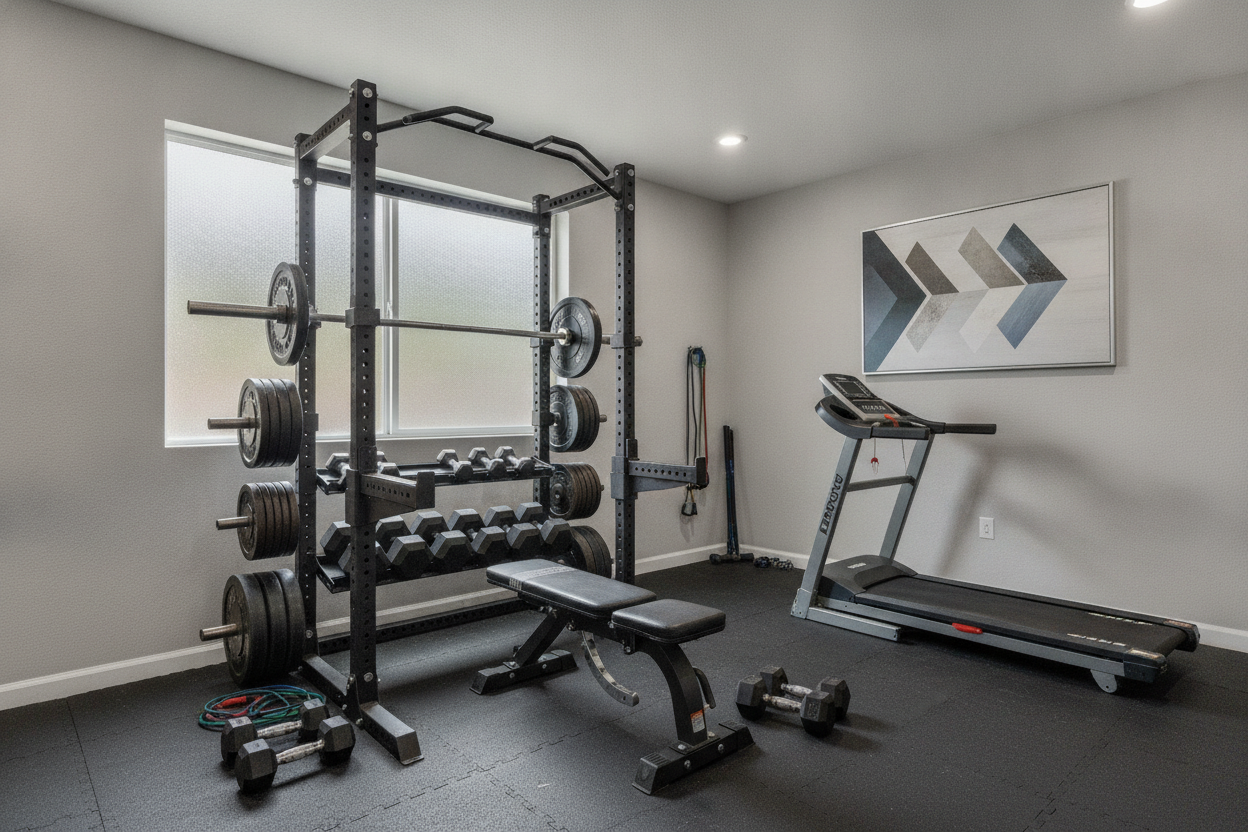
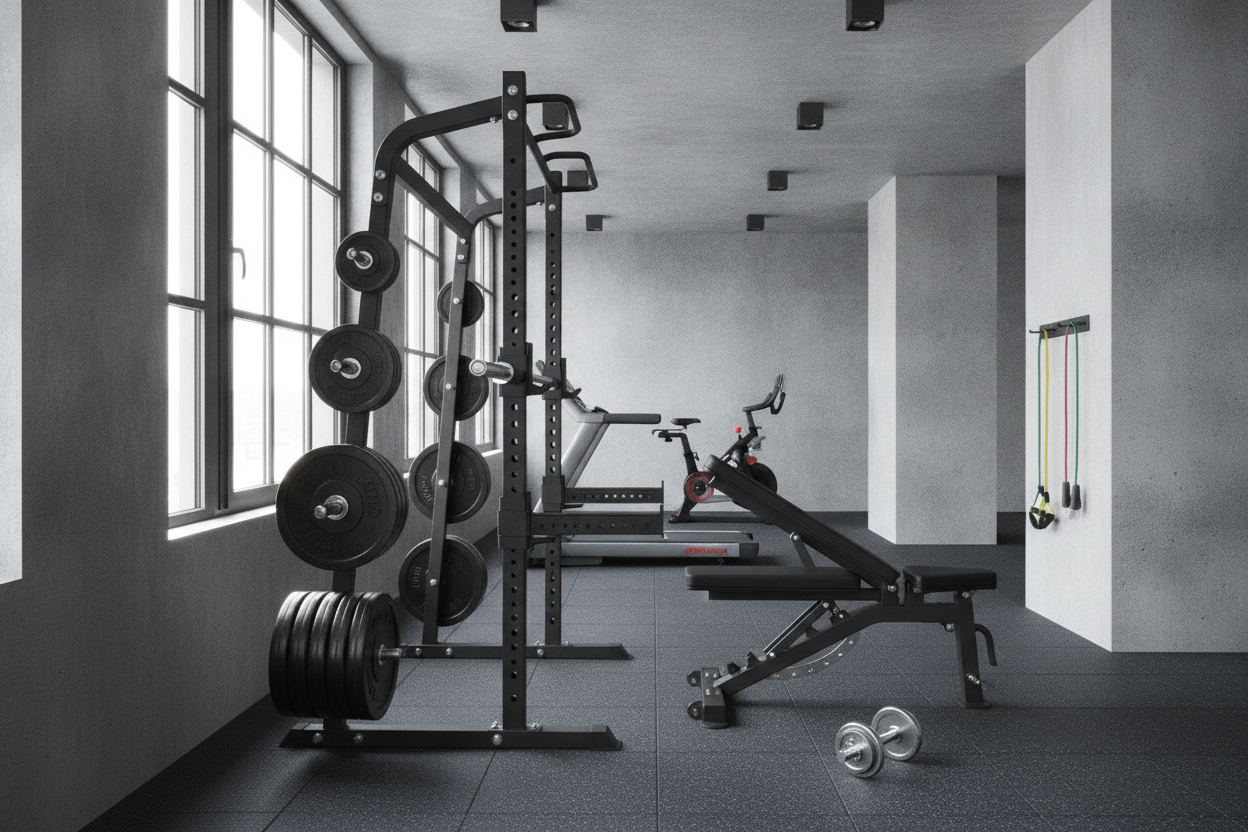
A solid base is non-negotiable. I use the Gxmmat Adjustable Weight Bench as the anchor for my upper body days. It has a 1000-lb capacity and zero wobble, which means when I am pressing 80-lb dumbbells, I am worried about my chest, not whether the bench is going to tip over. Removing instability allows you to actually move heavy iron.
Three Easy Exercises With Weights That Deliver 90% of the Results
If I had to gut my routine and only keep three movements, these would be them. They are low-skill but high-reward, meaning you can load them heavy without needing a PhD in kinesiology.
- The Goblet Squat: This is my go-to for leg day. Keeping the weight in front of you forces your torso to stay upright and saves your lower back. For those looking to transition into more advanced patterns, check out How To Build Real Power Using Squat Exercises With Weights.
- The Chest-Supported Row: By laying face-down on an incline bench, you eliminate the 'body English' that ruins most back workouts. You can't cheat these.
- The Floor Press: If you have shoulder issues or a low ceiling, this is the king of easy exercises with weights. The floor acts as a natural depth stop, protecting your rotators while letting you hammer your triceps.
Protecting Your Floors (And Your Joints)
If you are actually lifting heavy enough to see a change in the mirror, you are eventually going to drop something. It happens. In a garage gym, a dropped 45-lb iron plate is a death sentence for your concrete foundation. I have the cracks in my first house to prove it.
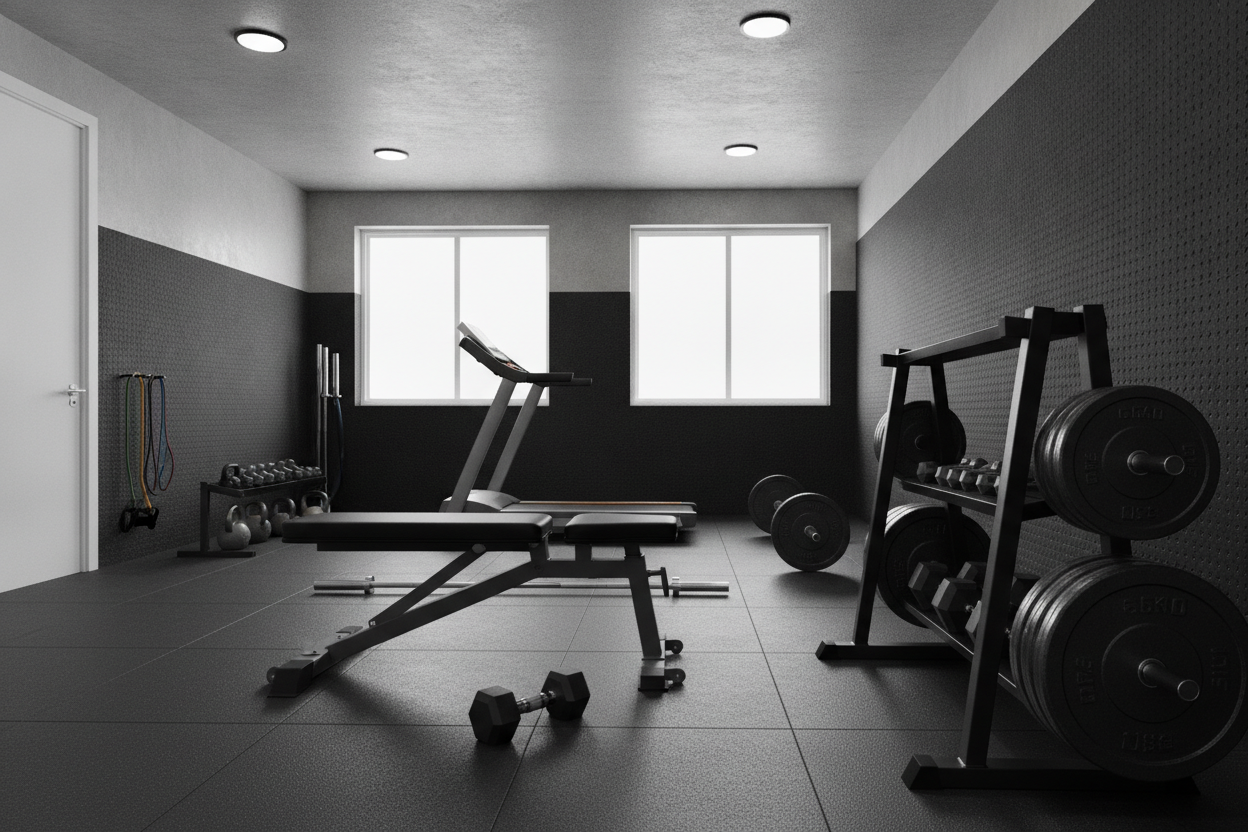
That is why I switched to Gxmmat Bumper Plate Sets. These have a consistent 450mm diameter and a Shore A durometer rating that gives them a predictable, dead bounce. They absorb the shock that would otherwise go into your floor or your wrists. If you are doing basic exercises using weights, you need equipment that allows you to train to failure without fearing a structural repair bill.
How to Audit Your Current Routine Today
Stop what you are doing and look at your logbook. If an exercise feels wobbly, causes nagging joint pain, or requires a 'rhythm' to get the weight moving, it is time to cut it. Ask yourself: Am I doing this because it works, or because it looks cool on a reel? Swap the fancy stuff for a simpler alternative and watch your numbers actually move for once.
Is it better to use dumbbells or barbells for home workouts?
Dumbbells are more versatile for small spaces and generally safer for solo training. However, barbells allow for much heavier loading on squats and deadlifts. If you have the space, get both; if you don't, a solid set of adjustable dumbbells is your best bet.
How do I know if I'm lifting heavy enough?
If you can finish your last set and immediately have a conversation without catching your breath, it is too light. You should be within 1-2 reps of technical failure—where your form starts to break down—on every working set.
Can I build muscle with just 'easy' exercises?
Absolutely. Muscle doesn't know the difference between a high-tech machine and a heavy rock. It only responds to tension and mechanical stress. The 'easier' the movement is to perform, the more focus you can put on creating that tension.