Stop Overspending on At Home CrossFit Equipment (Read This First)
You miss the community, but you definitely don't miss the commute, the wait for the squat rack, or the monthly dues that rival a car payment. The shift to a garage or basement setup is the natural evolution for many athletes, but it comes with a dangerous pitfall: Gear Acquisition Syndrome.
It is easy to blow your budget on shiny rigs and specialty bars you will rarely use. The truth is, building a functional space requires focusing on versatility and durability, not flashiness. Whether you are converting a two-car garage or a spare bedroom, selecting the right at home crossfit equipment is about ROI—getting the most fitness out of every square foot and dollar spent.
Quick Summary: The Essentials
If you are looking for the fast track to a functional WOD space, here is the core checklist for the best crossfit home gym setup:
- The Foundation: 3/4-inch Horse Stall Mats (essential for protecting slab and gear).
- The Centerpiece: A 20kg or 15kg Multi-purpose Barbell (28mm or 25mm shaft).
- The Resistance: Hi-Temp or Crumb Bumper Plates (quieter and more durable for home use).
- The Rig: Wall-mounted pull-up bar or a squat stand with a pull-up attachment.
- Conditioning: Kettlebell (16kg/24kg), Jump Rope, and a Plyo Box.
Establishing Your Zone: Flooring and Space
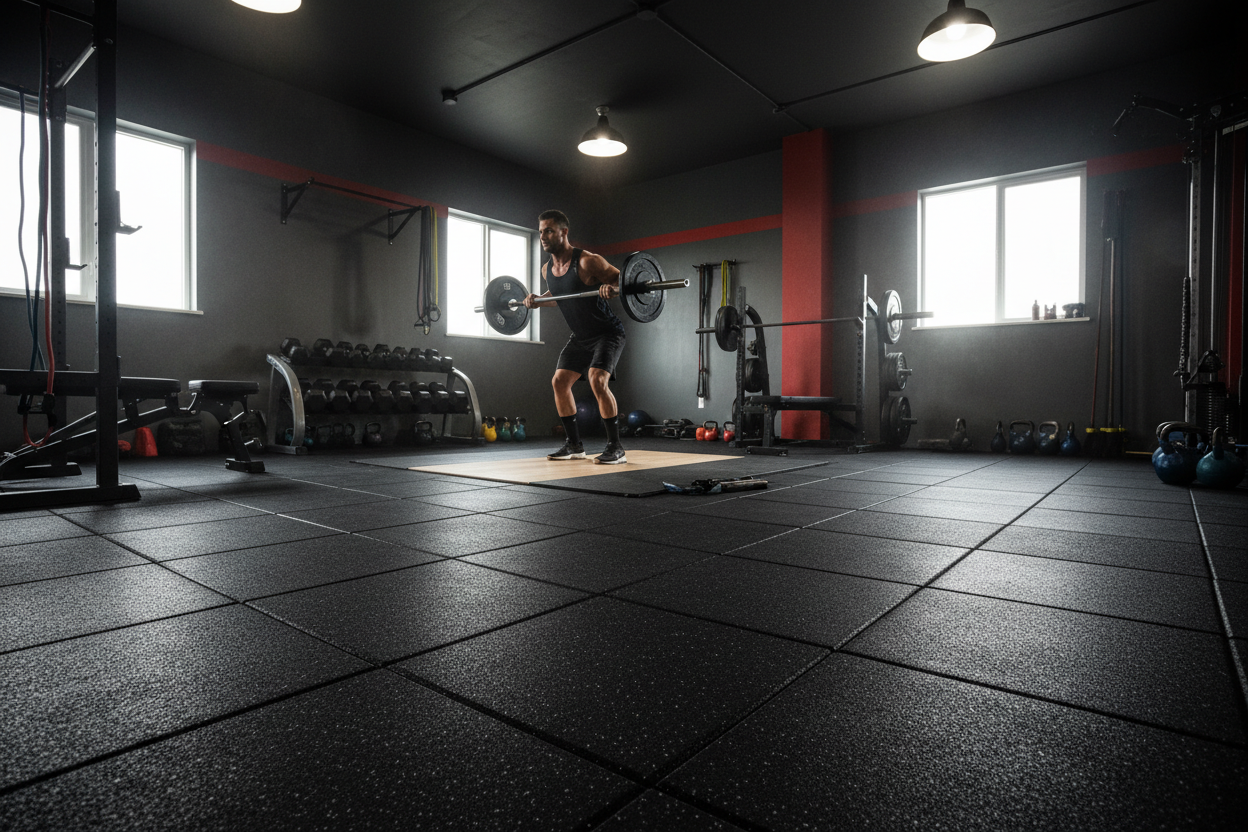
Before you buy a single weight, you need to address the floor. Do not perform Olympic lifts on bare concrete. It destroys your bumper plates and sends shockwaves through your home’s foundation.
For most garage gyms crossfit setups, puzzle mats are insufficient. They separate during burpees and compress too much under heavy squats. Go to a farm supply store and buy 4x6 rubber horse stall mats. They are heavy, smell like rubber for a week, but they are virtually indestructible and provide the necessary friction for heavy lifts.
The "Big Three" of Your Crossfit Setup
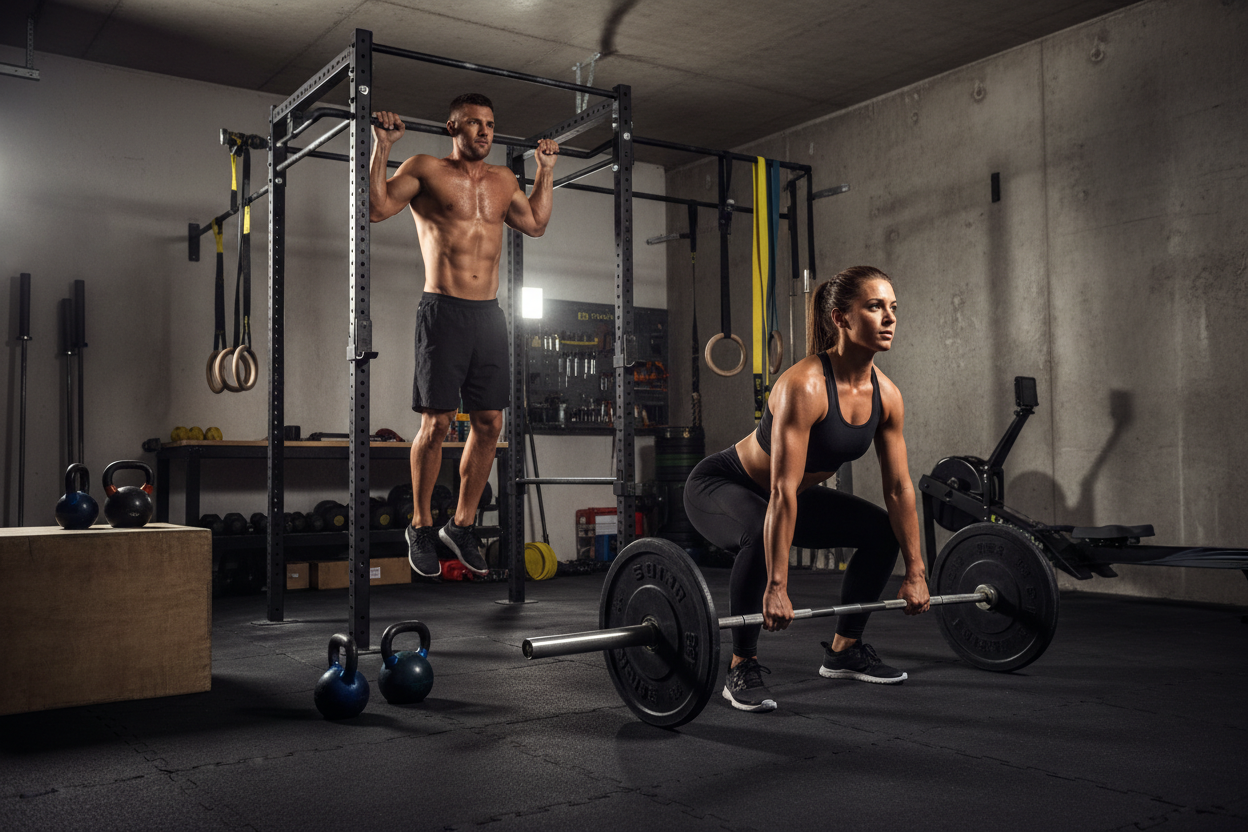
When you look at how to build a crossfit home gym, three items consume 80% of your budget but provide 95% of your training stimulus.
1. The Barbell
This is not the place to save money. Cheap bars bend, the knurling is passive (slippery), and the sleeves seize up during cleans. Look for a "multipurpose" bar with dual knurl marks and bushing rotation. You want a bar that has enough "whip" for cleans but remains stiff enough for heavy back squats.
2. Bumper Plates
For a crossfit gym setup, iron plates are a no-go. You will be dropping weights from overhead. Competition plates look nice, but for home use, "crumb" or recycled rubber bumpers are superior. They bounce more, which absorbs impact and saves your floor. Plus, they are significantly quieter—a major factor if you have neighbors.
3. The Rig or Stand
You do not need a massive 14-foot freestanding rig unless you are hosting competitions. For a basement crossfit gym or garage, a squat stand with a pull-up bar connector is ideal. It has a smaller footprint and allows for kipping movements. If ceilings are low, a wall-mounted folding rack is a brilliant space-saver.
Conditioning and Gymnastics Gear
Once the heavy metal is sorted, you need tools to spike your heart rate. The best equipment for crossfit conditioning is usually the simplest.
Start with a speed rope for double-unders and a pair of wood gymnastics rings. Rings are incredibly cheap and allow you to perform dips, rows, and muscle-up progressions. They can be hung from your pull-up bar or even a sturdy tree outside.
Packages vs. Piecemeal: Buying Strategy
You will often see crossfit garage gym packages sold by major manufacturers. These can offer savings on shipping, but be careful. Often, these packages include items you don't need (like a medicine ball you'll never use or a cheap bench) to inflate the value.
If you have the patience, build a crossfit gym piece by piece. Buy the barbell and plates new. Scour marketplaces for used dumbbells and kettlebells. Iron doesn't spoil, and a rusty kettlebell weighs the same as a shiny one.
The DIY Approach
If the budget is tight, diy crossfit gym projects can fill the gaps. You do not need to buy a $150 plyo box. A sheet of plywood and some screws can build a sturdy 3-in-1 box in an afternoon.
Similarly, crossfit homemade equipment like sandbags (made from military surplus duffels and pea gravel) offers incredible training value for pennies on the dollar. However, never DIY safety equipment like racks or barbells.
My Personal Experience with at home crossfit equipment
I have been training in my garage for over six years now, and I need to be real about the transition. The photos on Instagram look pristine, but the reality is grittier.
The first winter I trained at home, I learned a hard lesson about knurling and temperature. I grabbed my barbell for a heavy deadlift when it was 20 degrees outside. The steel was so cold it felt like it burned my hands, and the aggressive knurling tore a callus immediately because my skin was brittle from the cold. I now keep a small space heater directed at my barbell for 10 minutes before I start.
Another thing nobody tells you is the "dust management." When you use chalk in a commercial box, it disappears into the ether. In a garage, that chalk settles on everything—your lawnmower, your car windshield, and your storage bins. I eventually had to switch to liquid chalk just to keep the cleaning manageable. It’s not the same as plunging your hands into a bucket of magnesium carbonate, but it saves me from having to leaf-blow the garage out twice a week.
Final Reps
To build crossfit gym at home spaces that last, prioritize quality moving parts (barbells) and save on static weight (dumbbells/kettlebells). You don't need everything at once. Start with a bar and a floor, and earn the rest of your gear through consistency. The best gym is the one you actually use.
Frequently Asked Questions
How much space do I need for a CrossFit home gym?
Ideally, you need a 10x10 foot area. This accommodates a 7-foot barbell, allows room for burpees, and ensures you won't hit the walls during kettlebell swings. A single-car garage bay is usually sufficient.
Is it cheaper to build a CrossFit gym or pay a membership?
The upfront cost is higher, typically ranging from $1,000 to $2,500 for a quality setup. However, with average CrossFit memberships costing $150-$200 monthly, a home gym usually pays for itself in 12 to 18 months.
Can I do CrossFit at home without a rig?
Yes. While a rig is helpful for pull-ups and racking squats, you can modify workouts. You can clean the weight for front squats and do push-ups or bent-over rows instead of pull-ups until you can install a pull-up bar.