Flooring for Home Exercise Room: What to Know Before You Buy
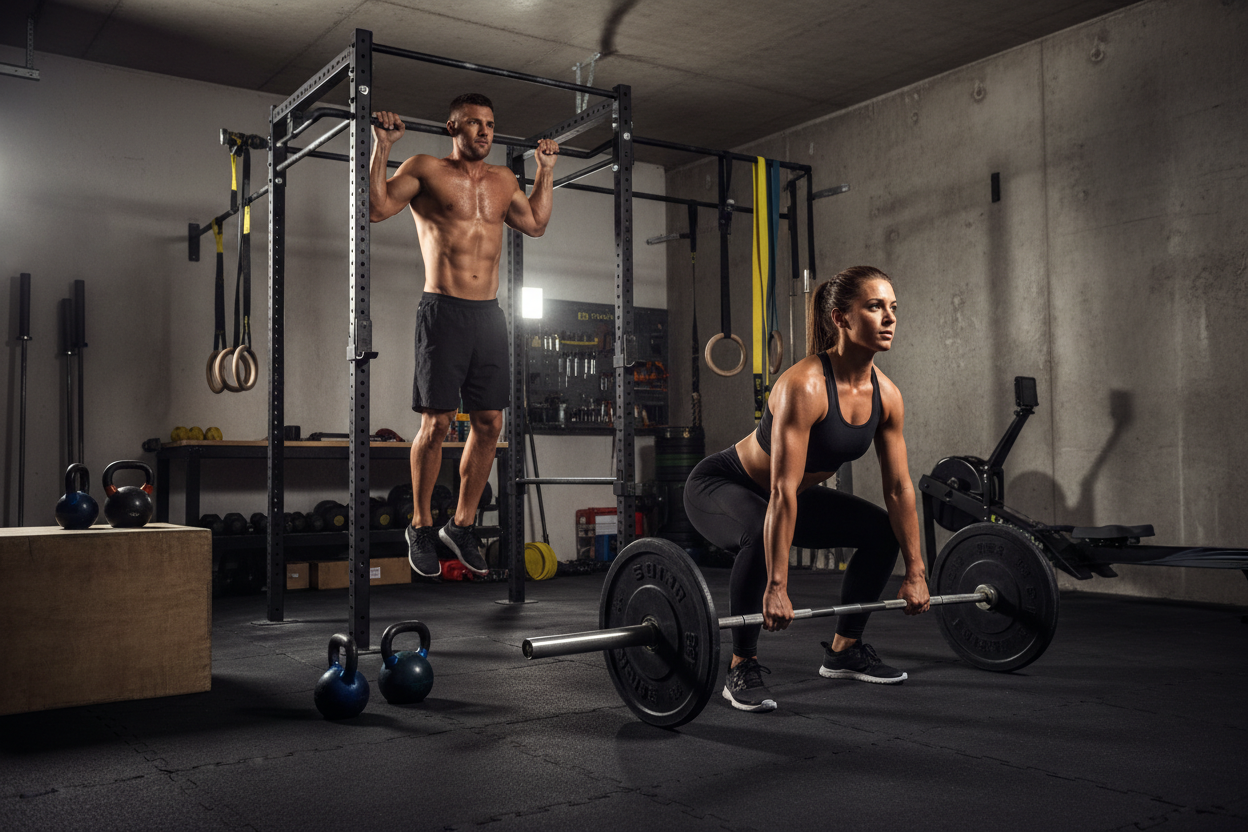
Building your dream workout space is exciting, until a dropped 45-pound plate cracks your concrete or sends shockwaves through the entire house. The foundation of any serious training space isn't the power rack—it's what sits underneath it. Choosing the right flooring for home exercise room setups is the most critical, yet often overlooked, step in protecting your property, your equipment, and your joints.
Whether you're converting a spare bedroom into a yoga studio or turning a two-car garage into a heavy-lifting sanctuary, the right floor covering for home gym use will make or break your experience. In this guide, we'll walk through the materials, thickness requirements, and installation tips you need to build a rock-solid foundation.
Key Takeaways
- Thickness matters: Aim for at least 3/8-inch (8mm) rubber for general fitness, and 1/2-inch to 3/4-inch for heavy weight room flooring.
- Material is king: Vulcanized rubber is the gold standard for durability, while EVA foam is strictly for light bodyweight work.
- Interlocking vs. Rolled: Floor tiles for home gym setups offer easier DIY installation, whereas rolled rubber provides a seamless, professional look.
- Protect your subfloor: Always use a protective barrier over hardwood or carpet before laying down exercise mat floor tiles.
Choosing the Right Gym Floor Material
Rubber vs. Foam vs. PVC
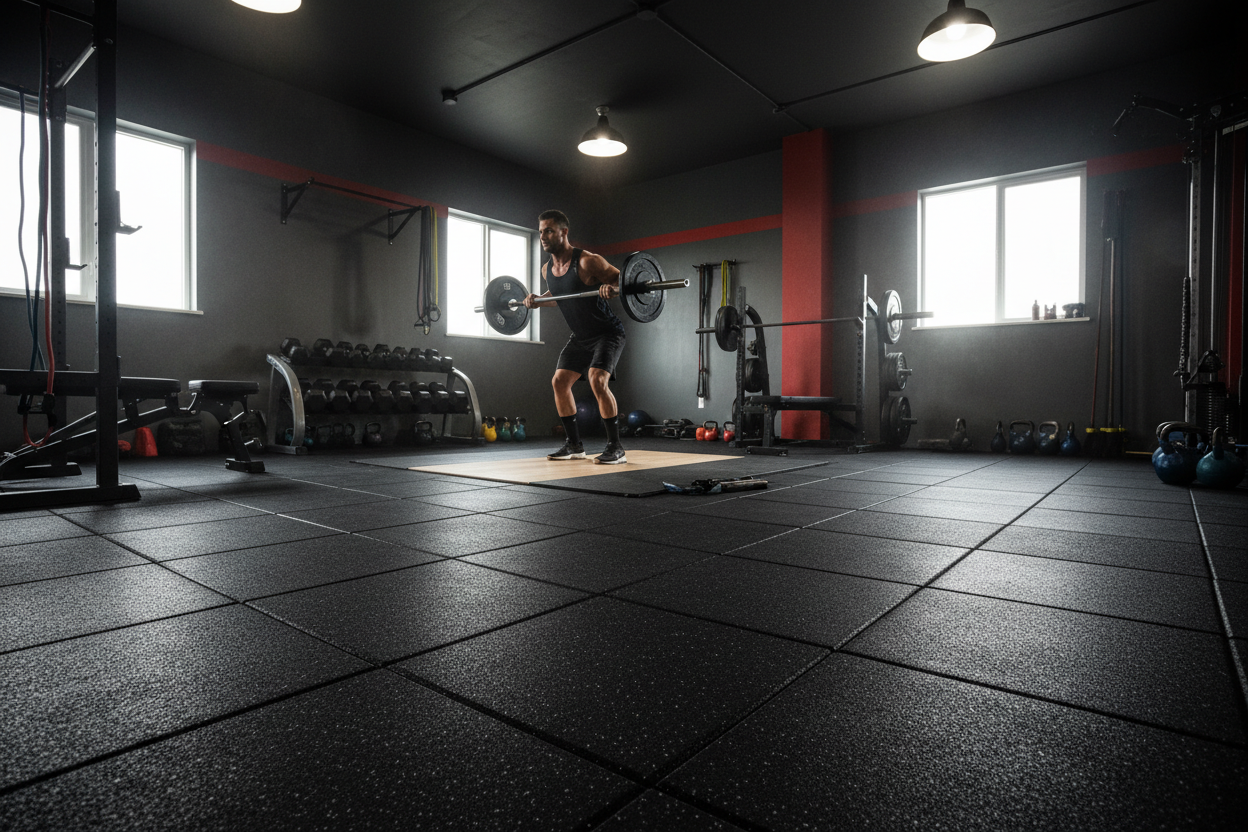
When comparing gym floor material options, rubber reigns supreme. The best rubber flooring for gym spaces absorbs impact, deadens sound, and provides excellent traction. If you are lifting heavy, rubber is non-negotiable. Conversely, EVA padded workout floor tiles are popular for cheap gym flooring, but they compress under heavy racks and tear easily. PVC gym flooring is a great middle-ground, offering durability and resistance to moisture, making it ideal for basement fitness room flooring.
Luxury Home Gym Flooring & Aesthetics
Your workout room flooring doesn't have to look like a dungeon. If you're designing a space inside your house, luxury home gym flooring options like wood-look rubber or light colored gym flooring can brighten the room. These premium floor tiles for workout room use blend seamlessly with residential aesthetics while still offering commercial-grade protection.
Space Planning & Installation
Garage and Basement Setups
Garages and basements usually have concrete subfloors, which are unforgiving. For these spaces, thick weight room flooring tiles or heavy-duty rolled rubber are ideal. If moisture is a concern in your basement, consider modular gym flooring with raised plastic bases to allow airflow beneath the surface, preventing mold.
Spare Bedrooms and Apartments
If your exercise room floor is on a second story, noise reduction is your primary goal. A high-density underlayment paired with thick home gym floor tiles will help dampen the thud of dropping dumbbells. Avoid laying home gym floor covering directly over plush home gym carpet, as the instability can make heavy lifting dangerous. Instead, use a firm plywood layer between the carpet and your residential gym flooring.
From Our Gym: Honest Take
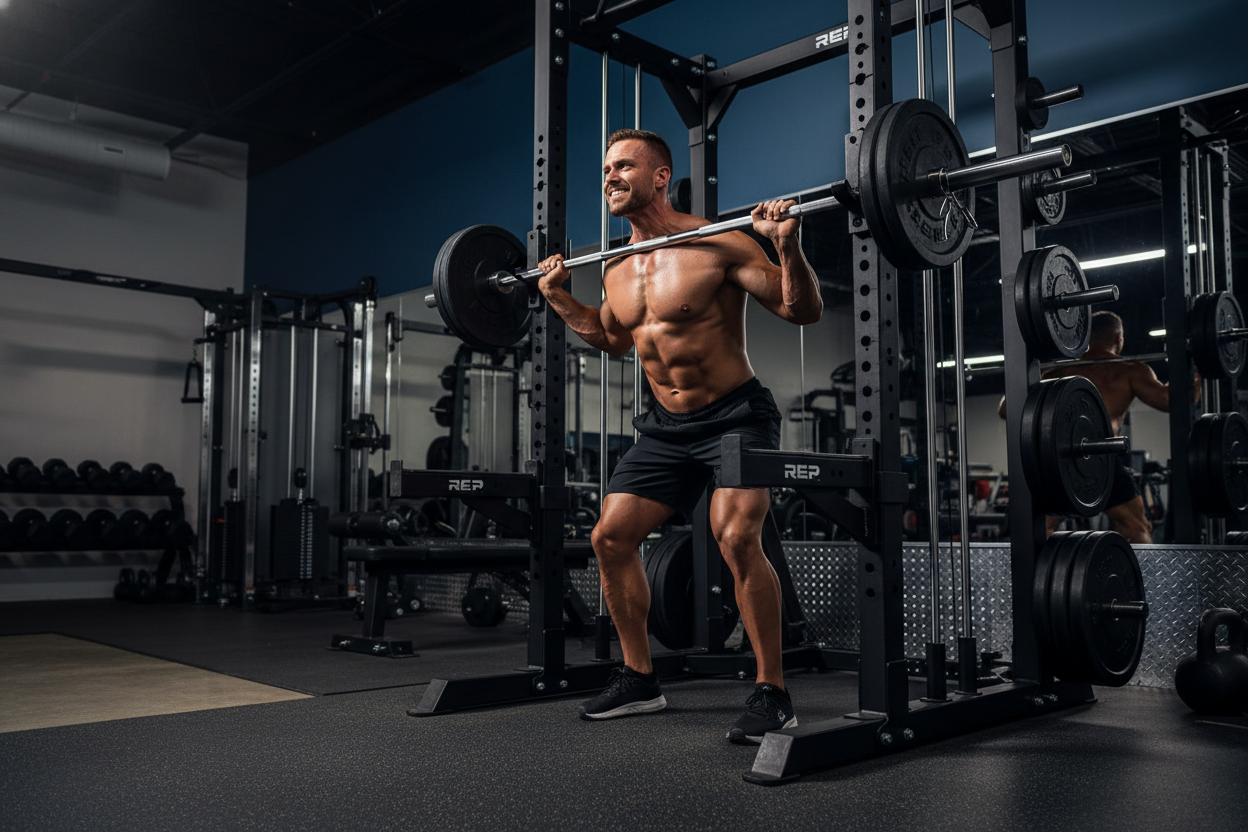
When I first built my garage gym, I tried to save money by using cheap interlocking foam mats. Within three months, my squat rack had permanently compressed the foam, and the tiles were separating during lateral lunges. I eventually upgraded to 3/4-inch vulcanized rubber weight room flooring. The difference was night and day. My chalked feet felt planted during heavy deadlifts, and the noise reduction was immediate. One caveat: commercial-grade rubber has a strong 'tire smell' out of the box. I recommend mopping it with a mild degreaser and leaving the garage door open for a few days to let the in home gym flooring off-gas.
Frequently Asked Questions
How thick should my exercise room flooring be?
For general cardio and light dumbbells, 1/4-inch to 3/8-inch (8mm) workout gym flooring is sufficient. If you are dropping barbells or using heavy Olympic weights, you need at least 1/2-inch to 3/4-inch thick rubber flooring for an exercise room.
Can I use home gym carpet for my workout space?
Standard residential carpet is too plush for safe lifting and traps sweat and odors. If you prefer a carpeted feel, opt for commercial-grade, low-pile carpet tiles designed specifically as flooring for indoor gym use.
Where to buy gym flooring?
You can find basic exercise room floor tiles at major big-box hardware stores, but for high-quality, durable flooring gym enthusiasts trust, it is best to buy from specialized fitness equipment retailers or commercial flooring suppliers.