Stop Overcomplicating Muscle Mass Strength Training in Your Garage
I remember staring at a $3,000 functional trainer online, convinced it was the 'missing piece' for my chest growth. My local gym had just hiked its prices again, and I was desperate to justify a home setup that looked like a commercial showroom. The truth is, I didn't need a pulley system or a dozen different attachments; I needed more iron on the bar. Real muscle mass strength training isn't about fancy cables or 'muscle confusion'—it is about moving heavy things and eating enough to recover.
Quick Takeaways
- Compound lifts (squats, presses, pulls) are the fastest way to build size and power.
- Mechanical tension is more important for growth than the 'pump' from high-rep isolation.
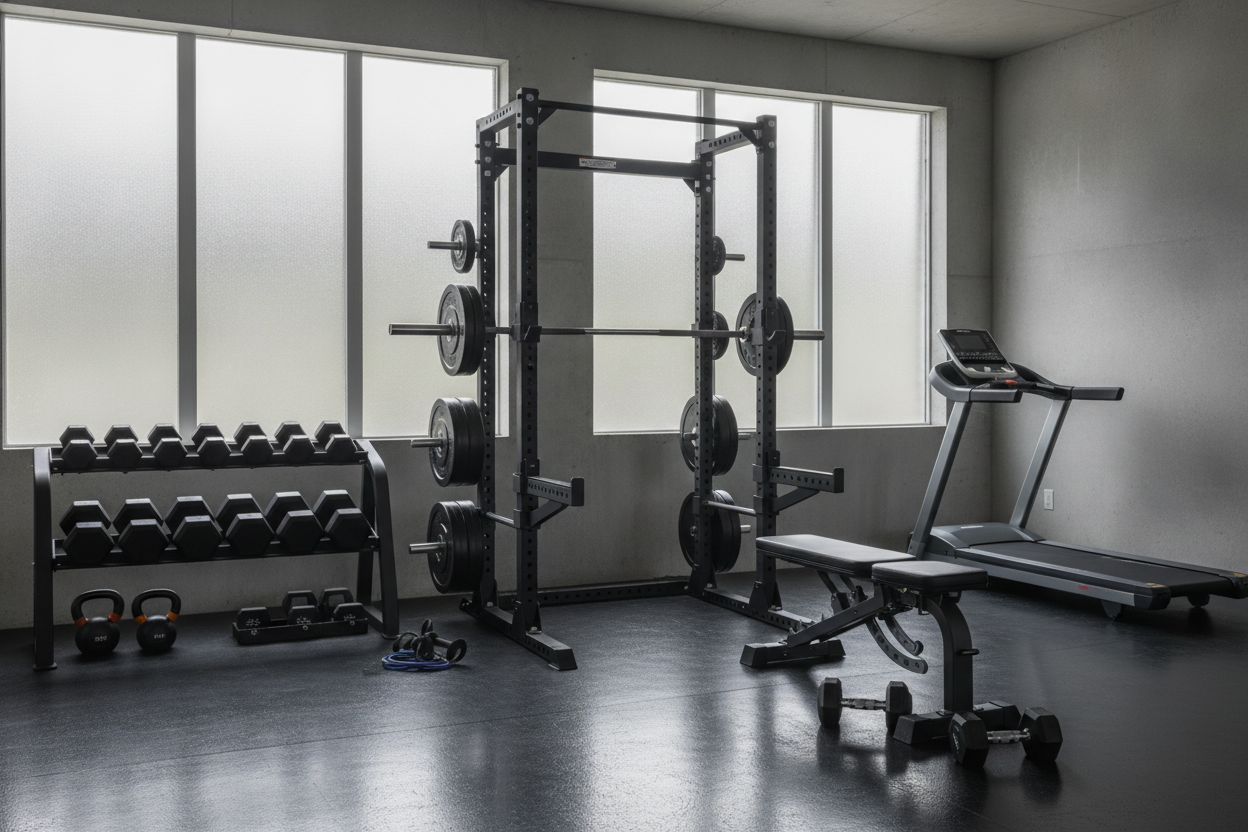
- A power rack with safety pins is safer and more effective than a spotter.
- Heavy lifting requires floor protection like thick mats to save your foundation.
The Hypertrophy Lie They Sell Home Gym Owners
Marketing departments want you to believe muscle growth requires a dozen different angles and 'shaping' exercises. It is total nonsense. If you aren't getting stronger in the 5-10 rep range, you aren't growing. Progressive overload is the only metric that actually matters when you are training in a garage. I have seen guys spend hours on lateral raises while their overhead press stays stuck at 95 pounds. Guess who has the bigger shoulders? The guy pressing the heavy iron.
You do not need a warehouse full of single-use machines to trigger growth. In fact, those machines often force your joints into fixed paths that do not suit your specific anatomy. A barbell allows for a natural range of motion that builds functional, dense muscle. Stop worrying about 'hitting the muscle from every angle' and start worrying about adding five pounds to your working sets every two weeks.
Why I Finally Ditched the Cables for Heavy Iron
I spent $400 on a bolt-on cable attachment for my rack three years ago. It was a nightmare. The plastic pulleys felt like sandpaper, and the weight stack swayed like a drunk sailor every time I tried to do a fly. I eventually stopped chasing the pump with flimsy high-rep cable work and went back to the basics. My chest grew more in four months of heavy benching than it did in two years of cable crossovers.
Strength training build muscle because it recruits the maximum amount of motor units. When you are fighting a 225-pound bar, your entire body is screaming to adapt. That systemic stress is what forces strength training muscle gain. Cables have their place for accessory work, but they should never be the meat of your program if you want to look like you actually lift.
The Problem with 'Feeling the Burn'
That burning sensation in your quads after 20 reps of leg extensions is just metabolic stress. While it feels like you are working hard, it is a poor primary driver for gaining muscle strength. Mechanical tension—loading the muscle through a full range of motion with significant weight—is what triggers the actual repair and growth cycle. If you want to know how to build muscle and get stronger, stop chasing the burn and start chasing the weight.
The Only 4 Movements You Actually Need for Size
You can build a world-class physique with just four movements: the squat, the hinge, the push, and the pull. These are the foundational pillars to build muscle and strength simultaneously. Squats build the legs and core; deadlifts build the entire posterior chain; presses build the chest, shoulders, and triceps; and rows build a thick back. Everything else is just 'extra credit.'
I usually add a few strength training accessories like a 10mm leather belt or some figure-8 lifting straps for my heavy deadlift days. These aren't crutches; they are tools that allow you to push your muscles to the limit without your grip or core stability being the weak link. Keep it simple and keep it heavy.
Setting Up Your Garage Floor for Heavy Lifting
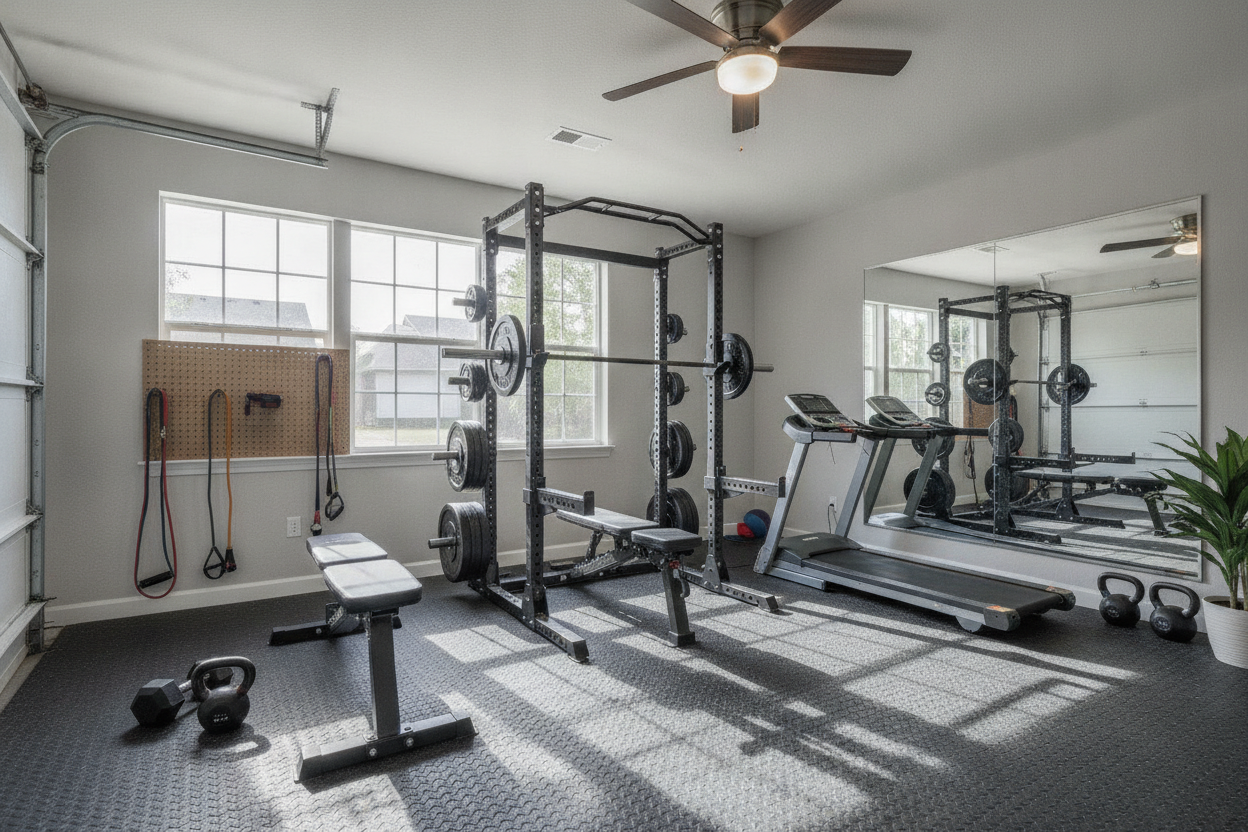
Do not be the person who cracks their garage slab because they tried to pull 405 on bare concrete. I learned that the hard way with a nasty chip right near my water heater. Investing in extra wide 7 feet exercise mats is the first thing you should do before you even buy a barbell. It dampens the noise and protects your equipment from the cold, hard floor.
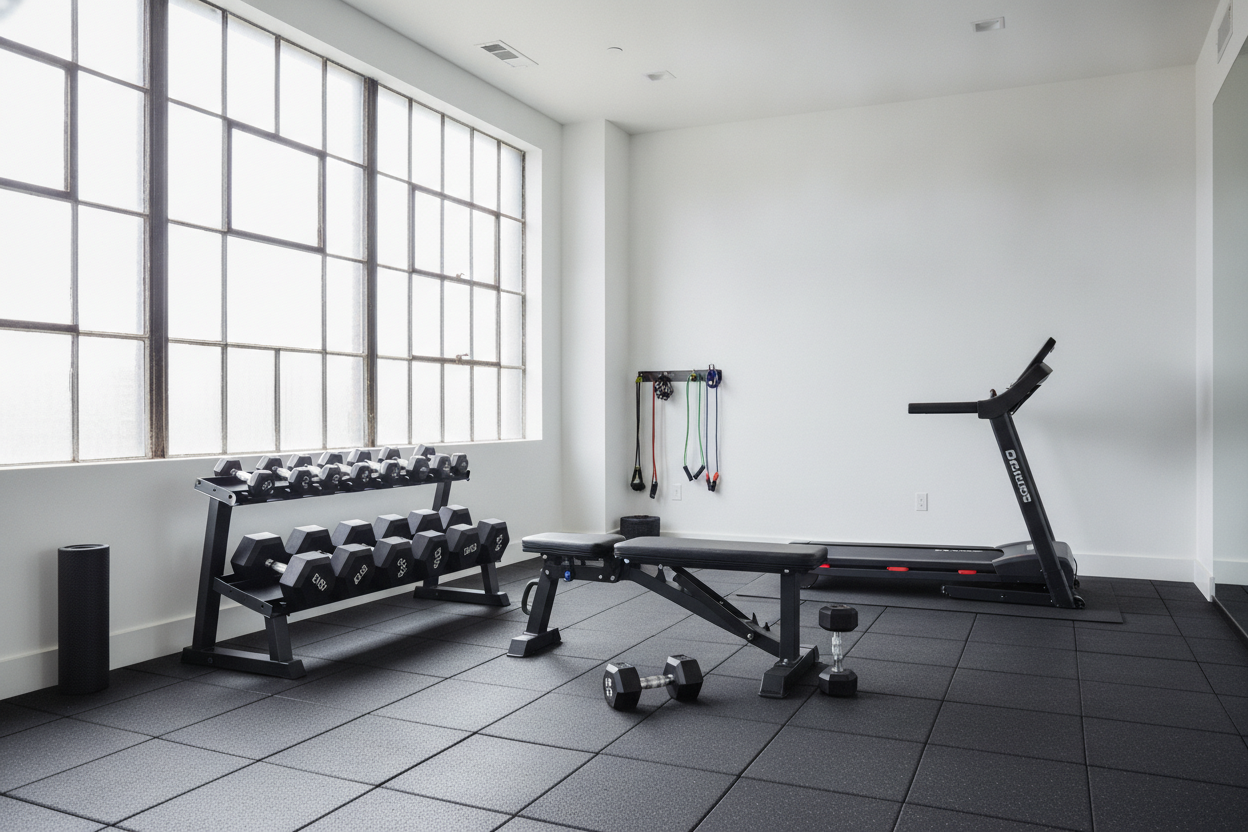
Readers often ask me if basic home equipment for strength training is enough to see real results. It absolutely is. You don't need a commercial budget; you just need a rack that won't tip over and a floor that can handle a dropped plate. A 7x8 foot space is plenty of room to build a legendary physique if you use it correctly.
A Zero-BS Blueprint for Gaining Muscle Strength
Here is the secret: stick to the 5-8 rep range for your main lifts. It is the 'sweet spot' where you are moving enough weight to get stronger while accumulating enough volume for hypertrophy. Perform 3 to 5 sets of a main lift, then move on to one or two accessories. If you can hit 8 reps with perfect form, add 5 pounds to the bar next time. That is the entire 'secret' of how to gain body strength and size.
FAQ
Do I need a spotter for heavy home lifting?
No, you need a power rack with high-quality safety pins or flip-down safeties. I trust steel bars more than a distracted friend any day of the week.
Can I build muscle with just a barbell and plates?
Yes. The barbell is the most efficient tool ever created for building human strength and mass. Everything else is secondary.
How many days a week should I train?
For most people, 3 to 4 days of heavy compound lifting is the limit for recovery. If you are training hard enough, you won't want to be in the garage more than that.