Stop Obsessing Over 8-12 Reps in Workouts for Building Muscle Mass
I remember staring at my measly pair of 25-pound dumbbells during the 2020 lockdown, thinking my gains were about to evaporate. If I couldn't hit that 'perfect' 8-10 rep range with heavy iron, was I even training? Most workouts for building muscle mass are written for people with access to a full commercial rack, but your home gym has different rules. You don't need a thousand pounds of calibrated plates to see results; you just need to stop being afraid of high reps.
Quick Takeaways
- The 8-12 rep range is a suggestion, not a law for hypertrophy.
- Proximity to failure (how hard you push) matters more than the weight on the bar.
- High-rep sets (up to 30) build just as much muscle as heavy sets of 8.
- Focus on 'effective reps'—the ones where the bar speed naturally slows down.
The Lie of the 'Hypertrophy Zone'
Bodybuilding magazines from the 90s did us a massive disservice. They convinced an entire generation that if you lift for 5 reps, you're only getting strong, and if you lift for 15 reps, you're just 'toning.' This arbitrary 'hypertrophy zone' of 8-12 reps has frustrated more home lifters than I can count. When you're training in a garage or a spare bedroom, you don't always have the luxury of jumping in 5-pound increments to stay in that magic window.
If you only have a pair of 35s and you can suddenly do 13 reps, the old logic says you're wasting your time. That's total garbage. Your muscles don't have a built-in calculator; they only understand tension and fatigue. Forcing yourself to buy a new set of expensive dumbbells just because you hit an arbitrary rep cap is a waste of money and space. Muscle mass increase exercise is about the stimulus, not the math.
Why Effort Trumps the Number on Your Dumbbell
The science is actually on our side here. Recent studies have shown that as long as sets are taken close to failure, muscle growth is nearly identical whether you’re using 30% of your max or 80%. This means a set of 25 reps can be just as effective as a set of 8. This is a massive win for the home lifter. It means those lighter dumbbells or that modest barbell set can carry you much further than you thought.
Mechanical tension is the driver. When you take a set of 20 reps to the point where you could only maybe squeeze out one more, you have recruited every available muscle fiber. You can Stop Buying More Plates for Your Workouts to Gain Muscle Mass and start focusing on the intensity of the sets you’re already doing. If you’re training for size, the 'how' matters significantly more than the 'how much.'
How to Tell if You're Actually Pushing Hard Enough
The problem with 'rep-agnostic' training is that most people are terrible at judging effort. They stop when the muscle starts to burn or when they get a little winded. That isn't failure. In a real workout to get bigger, you need to look for involuntary bar slowdown. This is when you are pushing with 100% effort, but the weight is moving like it's stuck in molasses. That is where the growth lives.
If your 15th rep looks just as fast and snappy as your 1st rep, you aren't building muscle; you're just practicing the movement. Does a Workout for Building Muscle Mass Really Need Variety? Not as much as it needs you to stop being soft on your final sets. Form degradation is your other cue. If you have to start swinging your hips to finish a curl, you've reached the end of the productive set. Record your sets—if you don't look like you're struggling on those last two reps, you aren't.
Building Your Rep-Agnostic Home Routine
Instead of chasing a specific number, I want you to program using RPE (Rate of Perceived Exertion) or RIR (Reps in Reserve). Your goal for every working set should be 1-2 RIR. This means you stop the set when you feel like you could honestly only do one or two more reps with perfect form. This makes weight training programs for muscle gain infinitely scalable to your equipment.
A typical session might look like this: Squats for 3 sets of 1 RIR. If that takes 12 reps, great. If it takes 22 reps because you’re using a lighter kettlebell, also great. Apply this to your presses and rows. If you find yourself hitting 30+ reps, then it's time to make the movement harder—not necessarily by adding weight, but by slowing down the tempo or shortening your rest periods. This is how you turn a basic muscle build gym setup into a powerhouse.
Protecting Your Space When the Weights Get Heavy
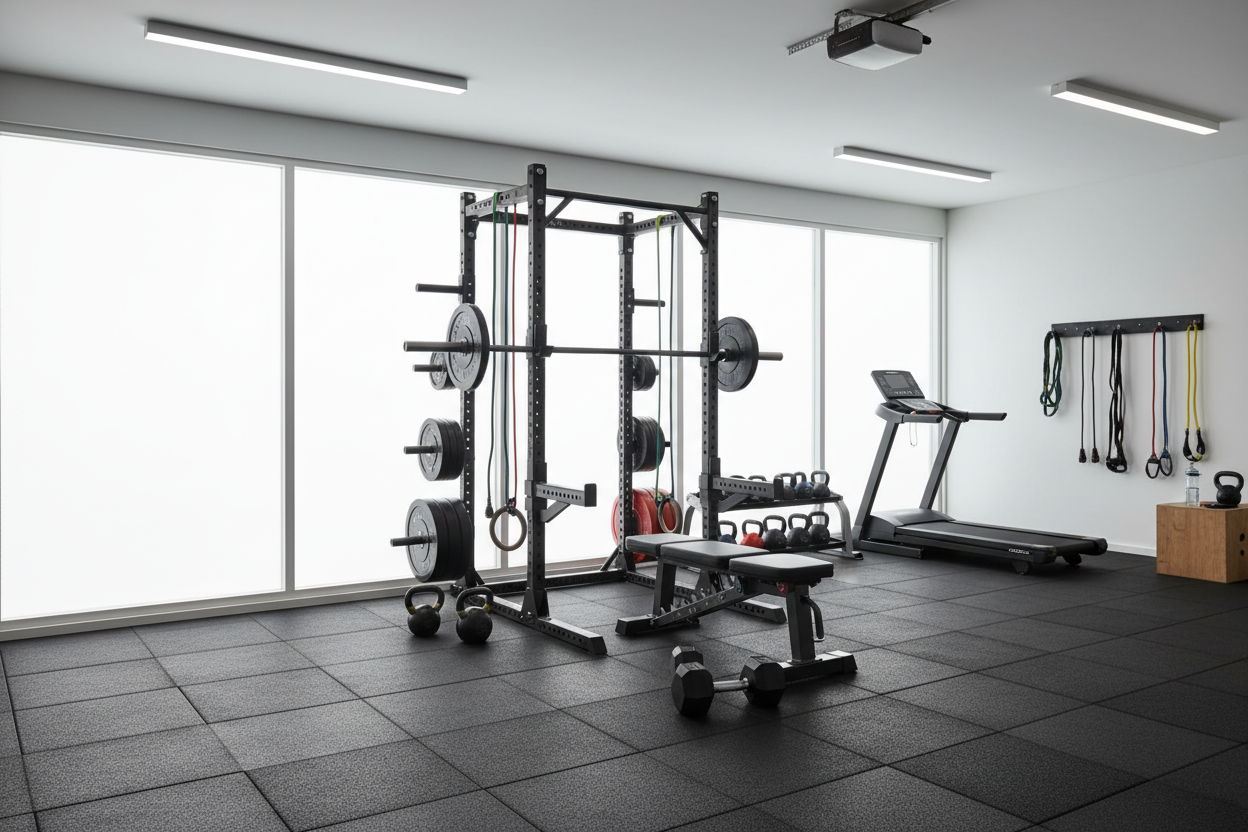
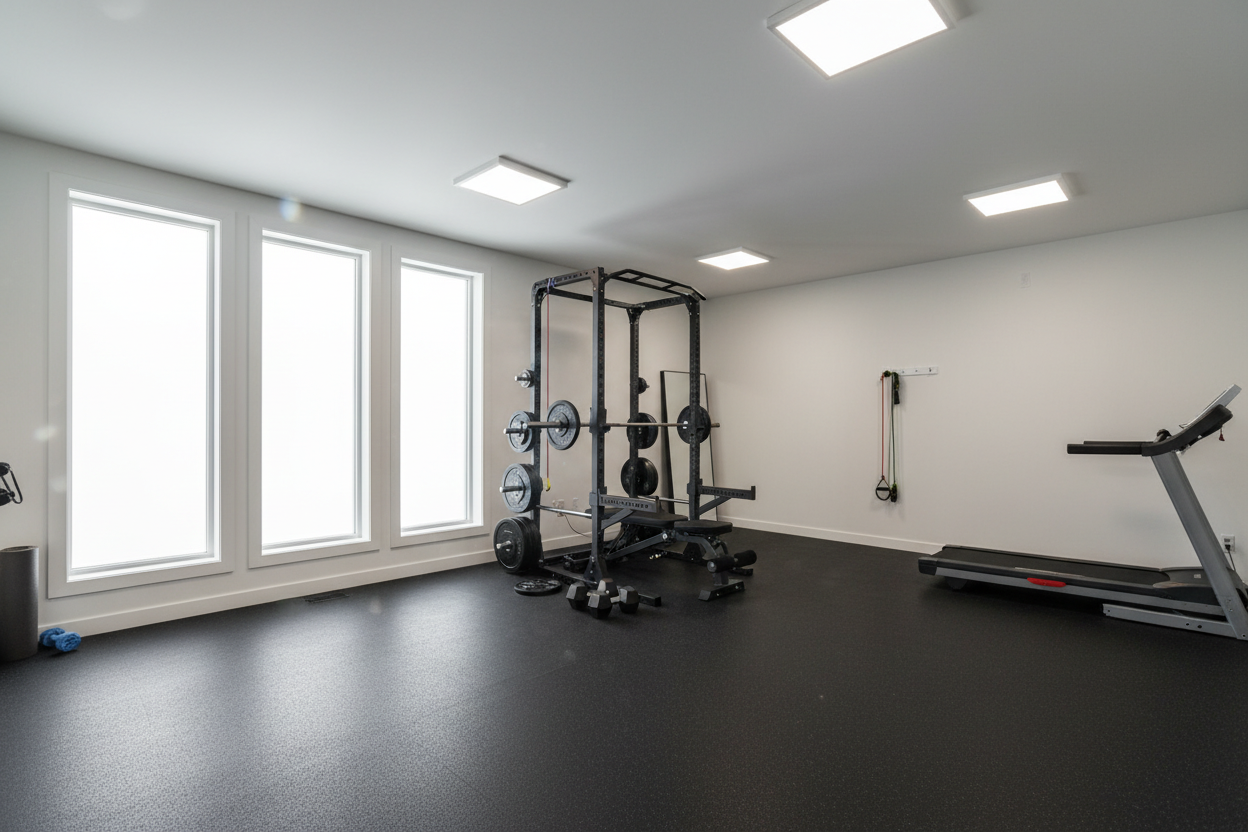
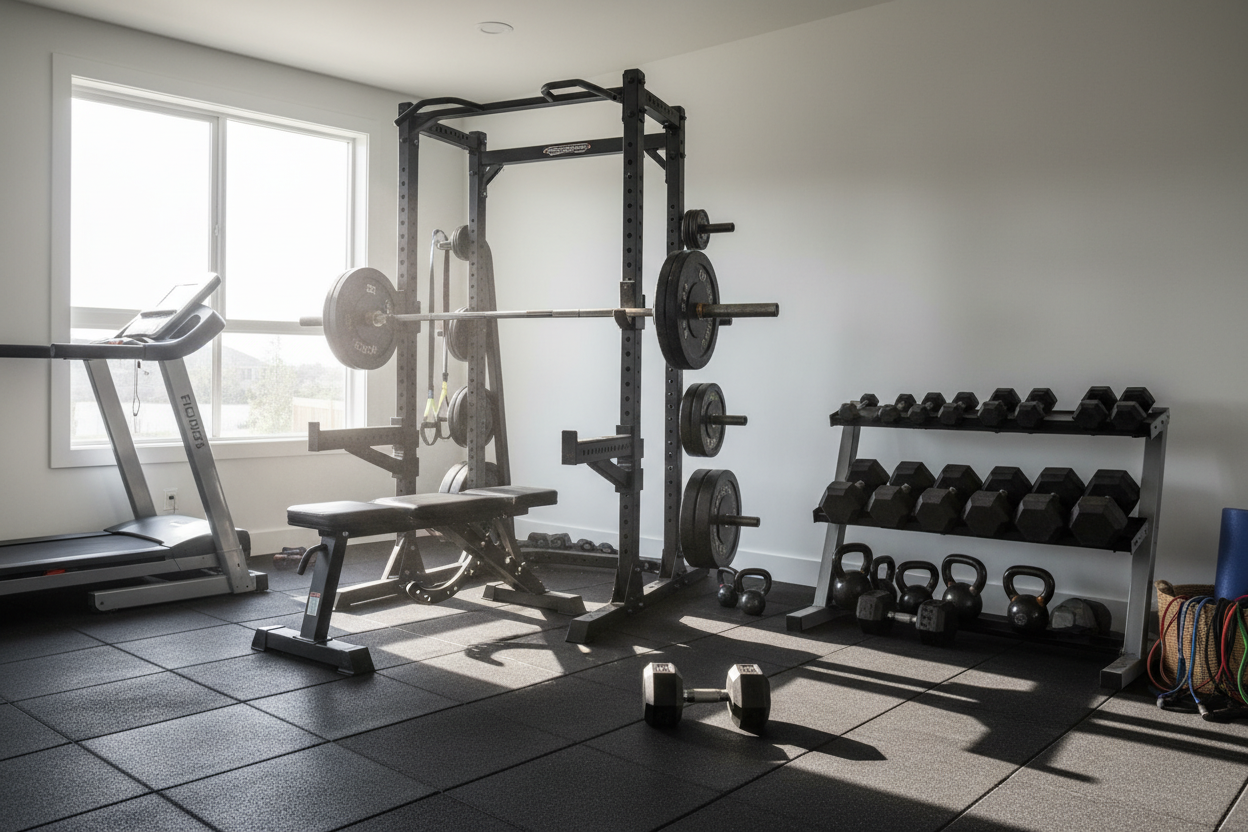
When you commit to training near failure, things get messy. You might need to bail on a squat or drop a heavy dumbbell after a grueling set of RDLs. If you're training on bare concrete or cheap foam tiles, you're going to regret it. I've seen enough cracked foundations and shattered dumbbell endcaps to know that a solid base is non-negotiable for serious workouts for gaining muscle mass.
A high-density Large Exercise Mat For Home Gym is essential here. You need something that absorbs the shock of a 50-lb dumbbell drop without bouncing it through your drywall. It also saves your joints during those high-rep lunges or Bulgarian split squats that will inevitably become a staple of your high-rep routine. Don't let the fear of damaging your floor keep you from pushing to true muscular failure.
My Honest Take on High-Rep Grinding
I once spent an entire summer training in a garage with nothing but a 45-lb bar and two 25-lb plates. I thought I’d lose all my size. Instead, I started doing sets of 30-40 reps on lunges and overhead presses. I’ll be honest: it sucked. The cardiovascular demand of high-rep sets is way higher than heavy triples. I puked twice in the first week. But by the end of that summer, my shoulders were capped and my quads were thicker than they’d ever been. The mistake I made was not eating enough to keep up with the extra metabolic demand. If you're going to do 20+ reps, you better be fueling for it.
FAQ
Is high-rep training better for fat loss or muscle?
It's for muscle. While it burns more calories because the sets last longer, the primary goal of taking any rep range to failure is hypertrophy. Don't call it 'toning'—you're building tissue.
What is the maximum number of reps I should do?
Most research suggests the 'hypertrophy ceiling' is around 30 reps. If you can do more than 30 reps without reaching failure, the weight is too light to effectively recruit the big muscle fibers you need for growth.
How long should I rest between high-rep sets?
Since high-rep sets are more taxing on your lungs and nervous system, give yourself 2-3 minutes. If you go back in too soon, your breathing will fail before your muscles do, which defeats the purpose.