How a 2-Inch Grip Shift Unlocks the best upper body workouts
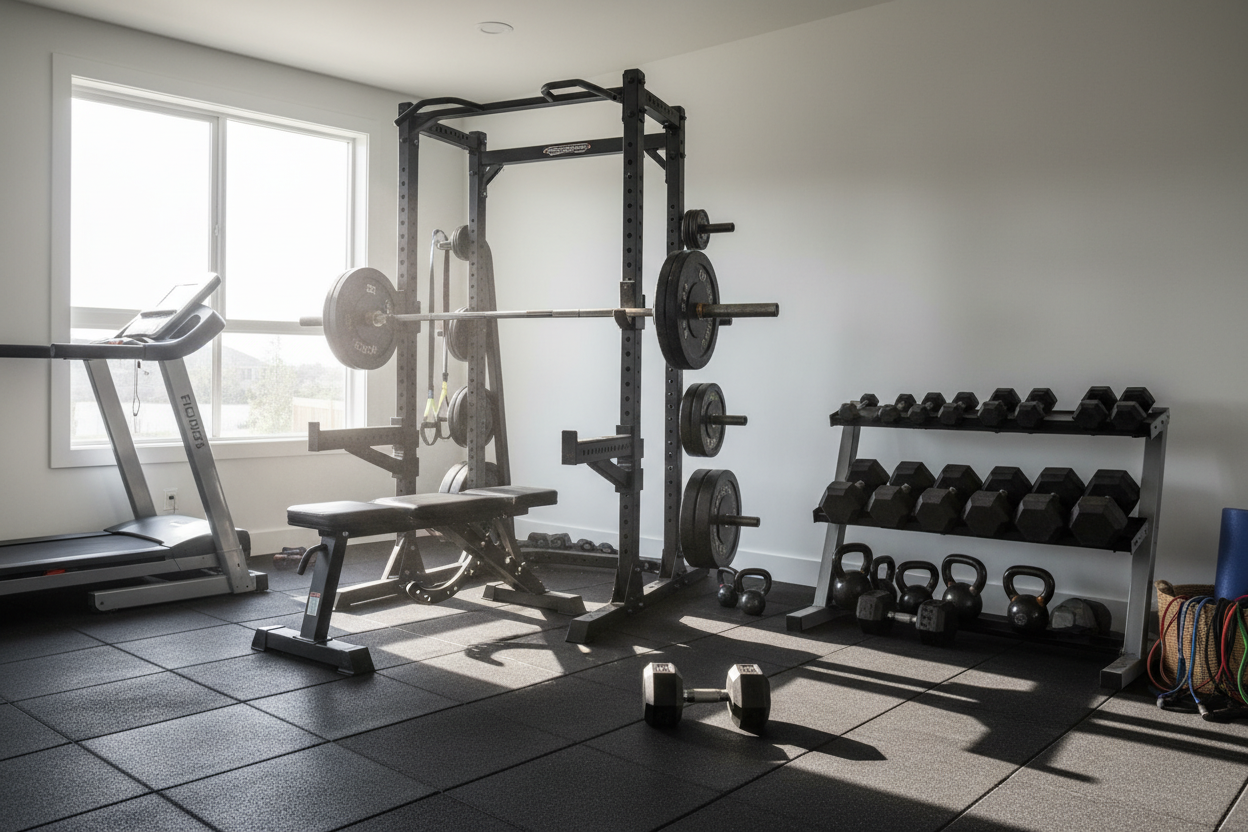
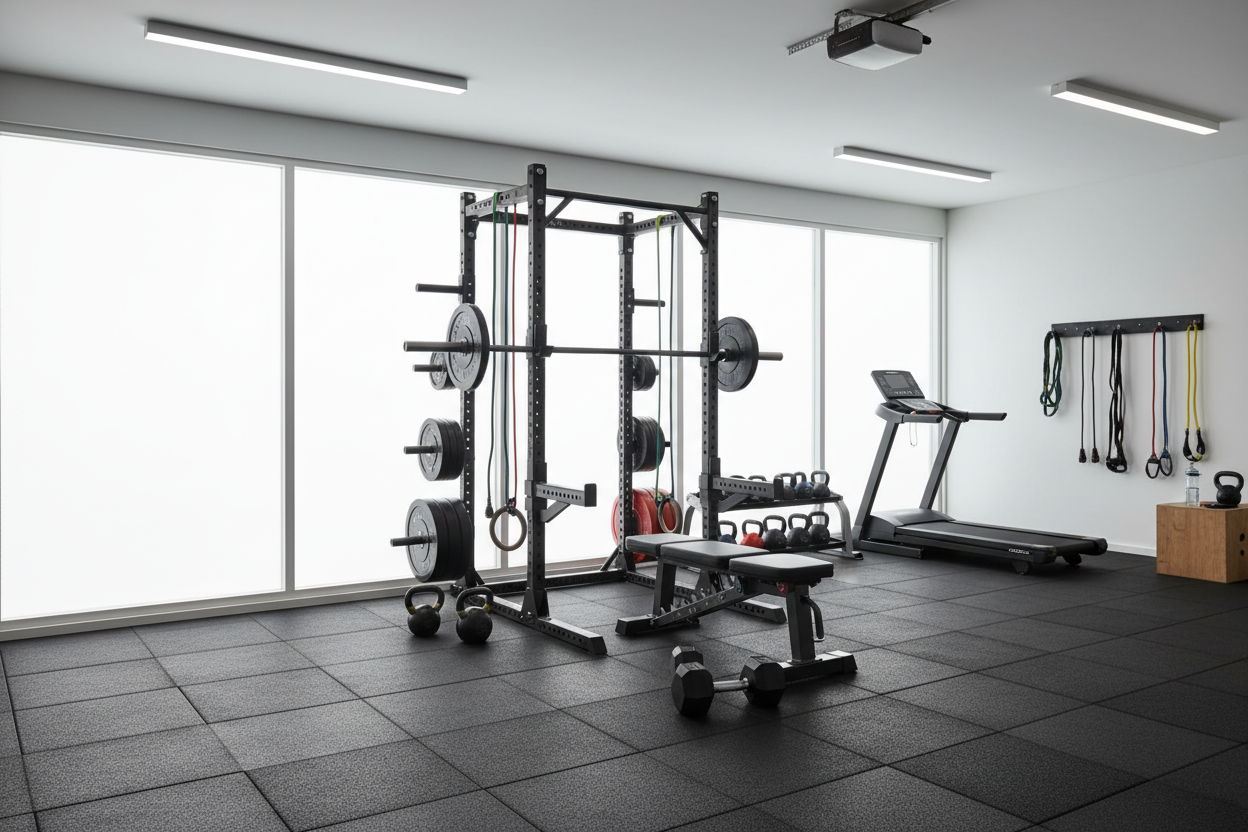
I remember staring at my power rack in a cramped 10x10 garage, feeling like I was missing out because I did not have a 12-station cable jungle. I wasted weeks scrolling through used equipment ads for a pec deck I did not have space for. The truth? I was just ignoring the physics of the barbell already in my hands. Finding the best upper body workouts is not about adding more steel to your floor; it is about mastering the steel you already own.
Quick Takeaways
- Minor grip adjustments (2-3 inches) change the primary muscle being recruited.
- Narrower grips generally increase joint range of motion and triceps activation.
- Wider grips emphasize the chest and rear delts but increase shoulder stress.
- Stability is the foundation; if your feet slip, your grip shift is wasted.
The Commercial Gym Illusion vs. Garage Gym Reality
Commercial gyms want you to believe complexity equals results. They want you to think you need a converging chest press, three different cable attachments, and a dedicated pec fly machine to see growth. That is a lie designed to justify a $100 monthly membership. In reality, effective upper body workouts are built on heavy iron and the intelligence to move it through different angles.
When you are training at home, you do not have the luxury of a 50-machine circuit. You have a barbell, maybe some dumbbells, and a bench. But here is the secret: changing your hand placement by just two inches on a 28mm bar creates a completely different stimulus. You can turn a standard press into a triceps builder or a lat-focused row into a trap-crushing movement without spending a dime on new gear.
The Physics of Your Hand Placement
Your body is a system of levers. When you widen your grip on a bench press, you shorten the distance the bar has to travel, but you also put the pectorals in a more stretched, vulnerable position. When you bring your hands in, the elbows tuck, and the triceps take over the heavy lifting. This simple shift is how you instantly upgrade a basic gym routine for upper body.
The problem is that most lifters treat their grip like a fixed constant. They find one comfortable spot—usually marked by the rings on the bar—and never move. This leads to plateaus and overuse injuries. Why You're Rushing the best exercise for the upper body is often a matter of technical laziness; you grab the bar the same way every time and wonder why your progress has stalled. A two-inch shift inward or outward forces your nervous system to adapt to new joint angles.
3 Grip Tweaks for a Complete upper torso workout
If you want a comprehensive upper torso workout, you need to stop thinking about exercises and start thinking about hand positions. Here are three tweaks I use every week.
First, the close-grip floor press. By moving your hands inside shoulder width and laying on the floor, you limit the range of motion to protect your shoulders while absolutely torching the triceps. Second, try the ultra-wide barbell row. Grip the bar near the sleeves and pull to your mid-chest; it turns a back exercise into a rear-delt and upper-trap builder. Finally, the neutral-grip overhead press. If you have a multi-grip bar or dumbbells, facing your palms toward each other opens up the shoulder joint, allowing for heavy loading even if your rotators are cranky. These are essential upper body exercises because they cover the angles most people miss.
Re-Engineering the best overall upper body exercise
The bent-over row is arguably the best overall upper body exercise, but most people only do it one way. If you use a pronated (palms down) grip, you are hitting the rhomboids and lats. But flip those hands into a supinated (palms up) grip, and you suddenly involve the biceps and lower lats much more heavily. It is a subtle change that requires you to drop the weight by maybe 10% to maintain form, but the hypertrophy benefits are massive. Do not just pull the weight; feel how the rotation of your wrist changes where the tension lands.
Why Ground Feedback Matters for Heavy Shifts
When you start playing with leverage and wider grips, your center of gravity shifts. You cannot produce maximum force if you are worried about your feet sliding on a dusty concrete floor. I learned this the hard way when my left foot slipped during a wide-grip set, nearly dumping 225 pounds on my neck. You need a dense, high-traction foundation like a Large Exercise Mat For Home Gym to ensure your power is directed into the bar, not wasted on stabilizing your stance.
A good mat provides the "bite" your lifting shoes need. Whether you are driving your heels in for a bench press or bracing for a heavy row, that ground feedback tells your brain it is safe to exert 100% effort. Without it, your nervous system will subconsciously throttle your strength to keep you from falling.
Building Your upper body workout plan gym Style
You can build a professional-grade upper body workout plan gym style with nothing but a rack and a bar. Here is a simple way to structure it: start with your heaviest lift using your strongest grip (usually moderate width). Then, follow it up with a variation using a 2-inch shift. For example: Flat Bench (Standard Grip) for 3x5, followed by Incline Bench (Close Grip) for 3x10. Finish with rows using both pronated and supinated grips.
This approach ensures you hit every muscle fiber from multiple angles without needing a room full of machines. It is efficient, it is brutal, and it actually works for those of us training in garages and basements.
Personal Experience: The 32-Inch Mistake
Early in my training, I thought wider was always better for a big chest. I moved my hands out until my index fingers were on the rings of a cheap, 28mm bar with passive knurling. My hands felt like they were sliding toward the plates the whole time. I ended up with a nasty case of bicep tendonitis because I was trying to use a grip my equipment and my mobility could not support. I learned that "wide" is relative. Now, I never move more than two inches from my "power" grip at a time. It is enough to change the stimulus without wrecking the joints.
FAQ
Does grip width really change muscle growth?
Yes. Changing your grip alters the moment arm of the lift. A narrow grip increases the work the triceps must do to extend the elbow, while a wider grip increases the demand on the chest to adduct the humerus.
Is a wider grip always harder on the shoulders?
Generally, yes. It puts the shoulder in a position of more extreme horizontal abduction. If you have a history of labrum issues, sticking to a shoulder-width or neutral grip is usually a smarter play.
Can I use these grip shifts with dumbbells?
Absolutely. Dumbbells actually allow for more freedom because you can rotate your wrists mid-rep. Try starting a press with a neutral grip and rotating to a pronated grip at the top for a massive chest contraction.