Stop Looking for a Magic Exercise to Increase Muscular Strength
I spent three hours last Tuesday scrolling through 'optimal' biomechanics reels on Instagram instead of actually lifting. I was looking for that one weird hack, the specific exercise to increase muscular strength that would finally fix my plateau. Spoiler: it doesn't exist.
Your garage gym doesn't care about 'secret' exercises. It cares about whether you can put more weight on the bar than you did last month. If you're constantly swapping movements because some guru said a sissy squat is better than a back squat, you're just spinning your wheels in a puddle of sweat.
Quick Takeaways
- Stop chasing variety; chase weight on the bar.
- Focus on movements that are easily loadable and safe to do solo.
- Your equipment dictates your exercise selection, not the other way around.
- Master the Big Four movement patterns: Squat, Hinge, Push, and Pull.
The Lie We Tell Ourselves About Getting Strong
The fitness industry is designed to sell you novelty. If they told you that getting strong just requires five years of heavy squats and rows, they'd go out of business. So they invent 'new' movements that are supposedly more 'optimal' for your muscle fibers. They want you to believe that the reason you're not strong is because you haven't found the right 'hack' yet.
In a home gym, novelty is the enemy of progress. Every time you switch from a barbell bench to a floor press with chains just because you saw a pro do it, you reset your learning curve. You aren't getting stronger; you're just getting better at a new trick. Stick to the basics until they stop working, then do them some more.
How to Filter the Types of Exercises for Muscular Strength
When you're training alone in a garage, your criteria for types of exercises for muscular strength have to be strict. First, is it loadable? A movement you can only do with a 20-lb dumbbell isn't a strength builder. You need things you can add plates to for years without hitting a ceiling.
Second, is it safe to execute alone? If you don't have a spotter, a heavy bench press without a rack and safety pins is a bad idea. Third, can you push it to the limit? Sometimes your grip fails before your back does on heavy deadlifts. This is where strength training accessories like lifting straps or a solid belt become mandatory. They let you focus on the target muscle without your hands being the weak link.
The 'Big Four' Movement Patterns
Instead of memorizing a thousand different lifts, think in patterns. You need a Squat (quad-dominant), a Hinge (posterior chain), a Push (chest/shoulders/tris), and a Pull (back/bis). Everything else is just a variation of these foundational moves.
If your knees hate back squats, do front squats or heavy lunges. If your lower back is cranky, swap traditional deadlifts for trap bar pulls. As long as you are hitting those four patterns with intensity, you are checking the boxes for strength. This framework allows you to swap lifts based on your joints without losing the strength stimulus.
A Real-World Muscular Strengthening Exercises Example
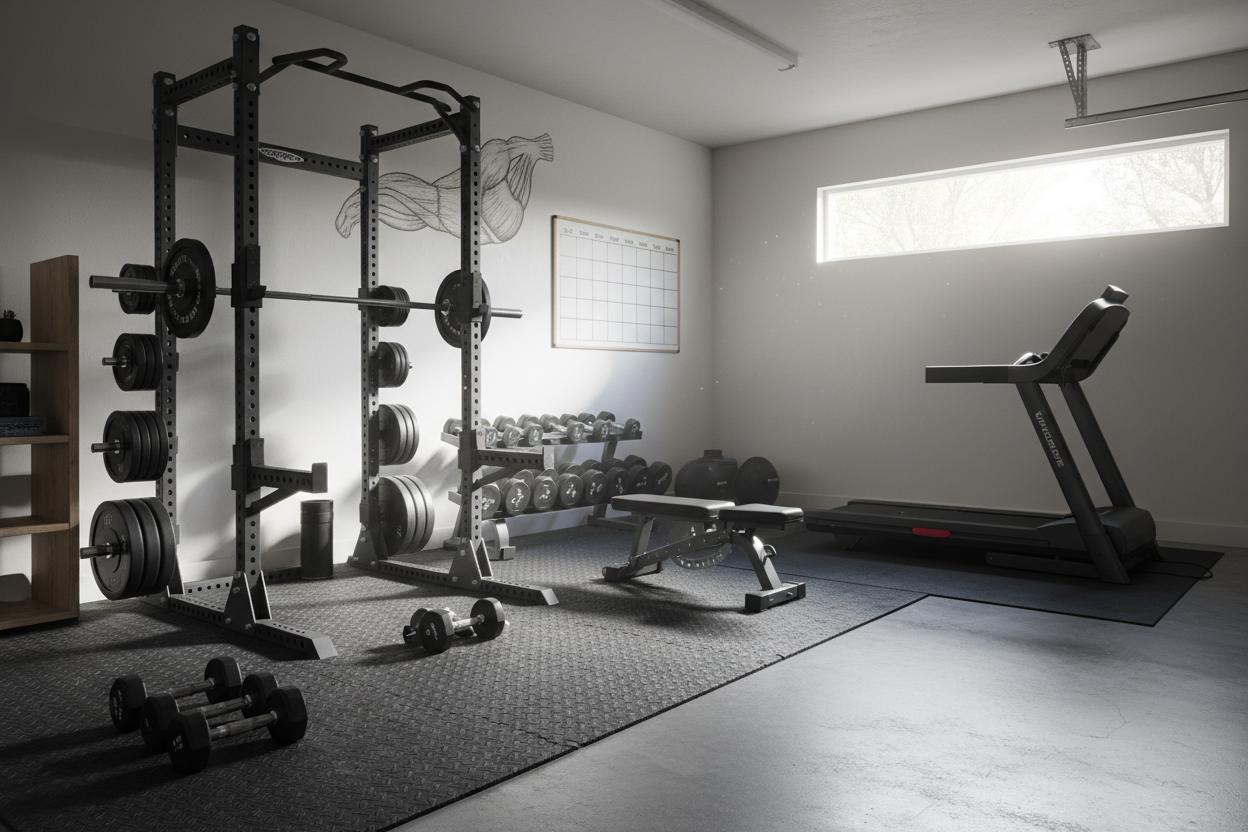
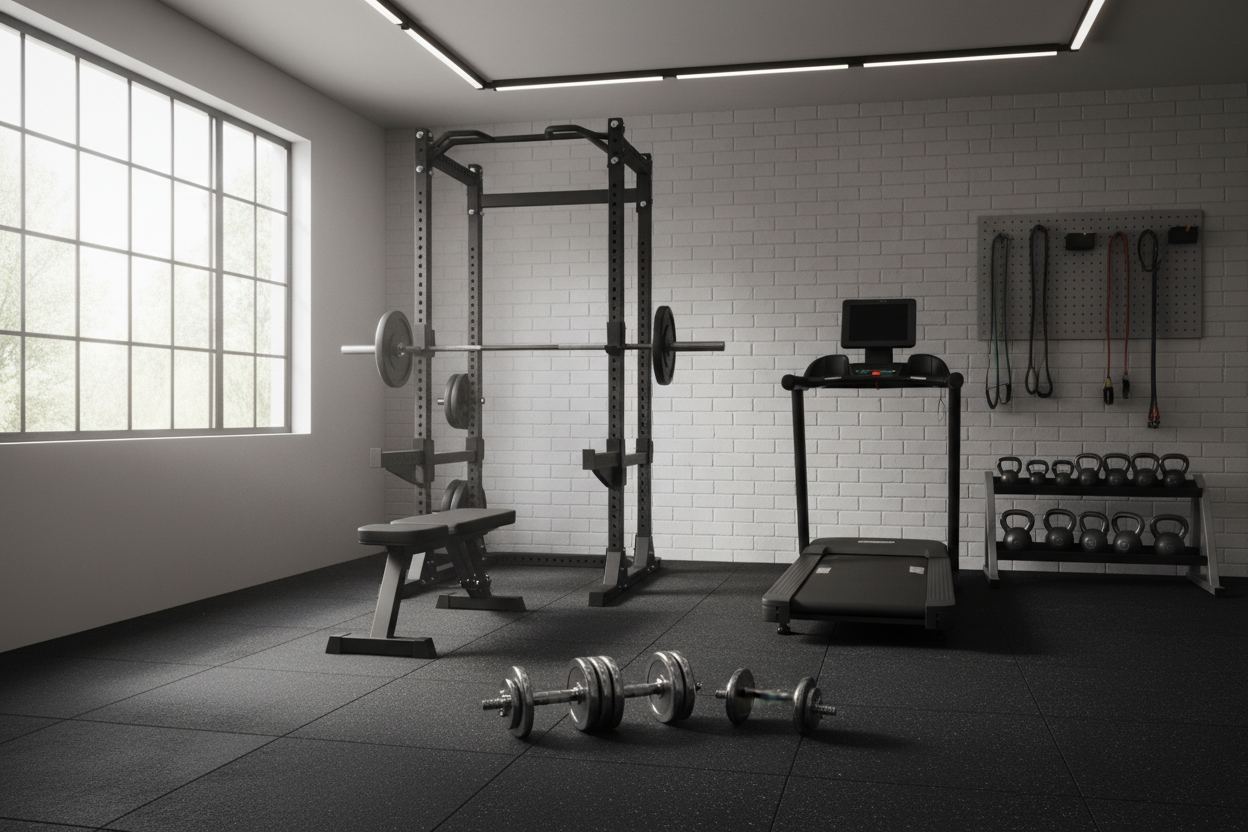
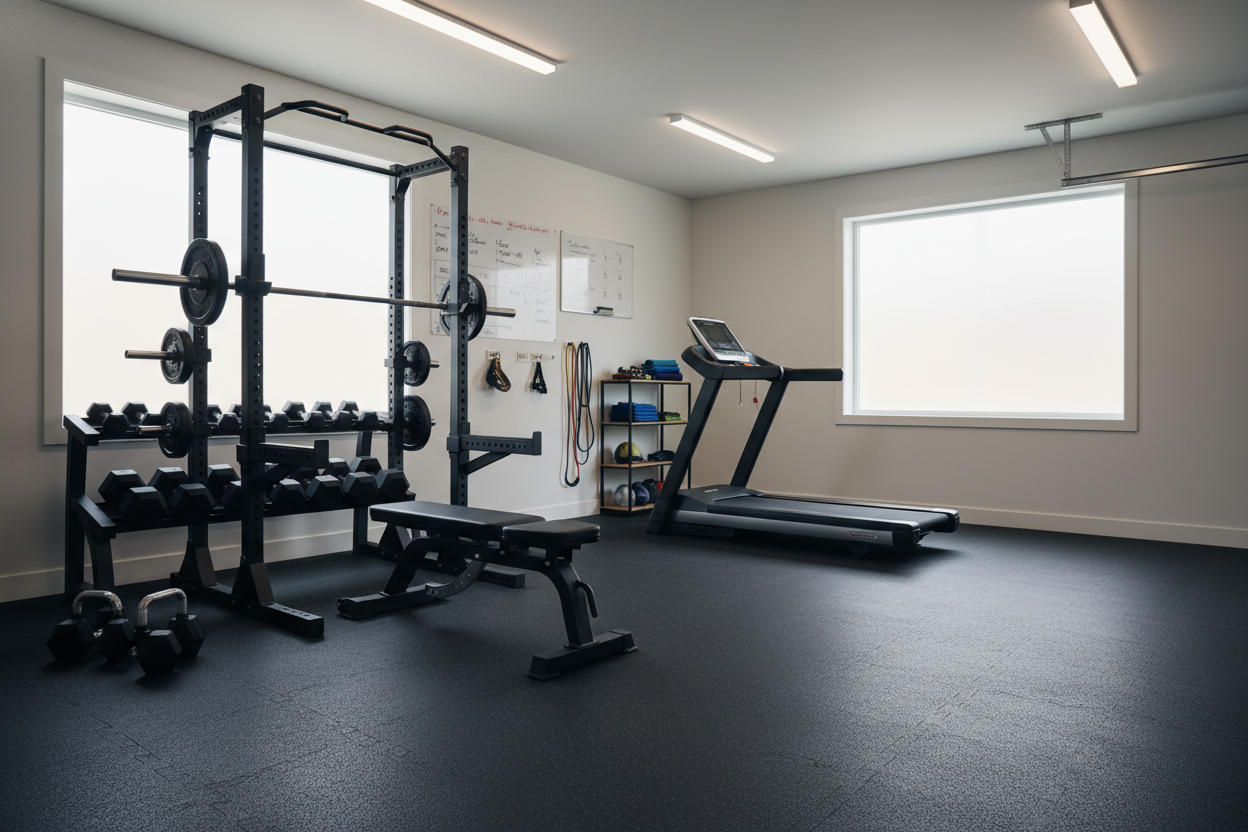
Let's look at a practical muscular strengthening exercises example for a standard 10x10 garage setup. You don't need a $5,000 leg press machine. You need a barbell, a rack, and a flat surface that won't crack when you drop a plate. If you're looking for a real list of muscular strength exercises, focus on the ones that let you move the most total weight.
You want to feel stable, which is why I always tell people to invest in decent gym flooring for home workout. If your feet are sliding during a heavy squat, you won't produce maximum force. Stability equals strength. Whether you're doing heavy dumbbell rows or goblet squats, if your foundation is shaky, your nervous system will put the brakes on your power output. Get your floor right, get your stance right, then add the weight.
Why Your Home Setup Dictates Your Lifts
I see guys with a single pair of 50-lb dumbbells trying to follow a powerlifting program meant for a fully equipped commercial gym. It doesn't work. Your strength equipment defines what you can realistically do. If you have a limited rack height, you're doing seated presses instead of standing. If you don't have a pull-up bar, you're doing heavy rows.
Don't fight your space. If you're working with a minimal setup, audit your strength equipment and pick the hardest variations of the Big Four that your gear allows. If you only have dumbbells, you're doing Bulgarian split squats and heavy floor presses. It’s not 'lesser' training; it’s just adapting to the tools you actually own.
Time to Audit Your Program
Most people are doing way too much junk volume. If your workout has 12 different exercises, you aren't training for strength; you're just exercising. You should be able to count your primary lifts on one hand. If you realize your list of muscular strength exercises is way too long, it’s time to cut the fluff.
Pick one heavy push, one heavy pull, and one heavy leg movement per session. Do them with violent intent. Add five pounds next week. That is how you actually get strong.
Personal Experience: The 'Optimal' Trap
Two years ago, I got obsessed with 'perfect' muscle activation. I swapped my heavy barbell rows for a complicated cable setup that involved three different handles and a specific bench angle. My back felt a 'pump,' but my actual strength plummeted. When I went back to the barbell, I had lost 30 lbs off my max. I learned the hard way that feeling a muscle burn isn't the same as making it stronger. Now, I keep it simple: if I can't load it heavy, it's not a priority.
FAQ
Can I get strong with just dumbbells?
Yes, but you'll eventually run out of weight. For pure strength, you need a way to reach high intensities (80% of your max or higher), which is easier with a barbell or very heavy adjustable dumbbells.
How many days a week should I train for strength?
Three to four days is the sweet spot for most home gym owners. Recovery is just as important as the lift itself; if you're always sore, you aren't getting stronger.
Do I need a weight belt?
You don't need one to start, but it helps you create more intra-abdominal pressure, which protects your spine and lets you move more weight on squats and deadlifts once the weights get serious.