Stop Ignoring Your Lower Half: The Real Way to Build Powerful Legs
Most people walk into the gym and immediately head for the bench press or the dumbbell rack to curl. It is an understandable impulse; we want to improve the muscles we see in the mirror every day. However, neglecting the lower body creates a physique that is not only aesthetically unbalanced but also functionally weak. Building a strong foundation requires a dedicated approach to training your quads, hamstrings, glutes, and calves. A comprehensive body workout legs routine does more than fill out your jeans—it boosts your metabolism, improves athletic performance, and reduces the risk of injury in daily life.
Many trainees overcomplicate leg training. You do not need distinct machines for every muscle fiber. The most effective leg development comes from mastering fundamental movement patterns and applying progressive overload. Whether you are using a barbell, dumbbells, or just your own body weight, the principles remain the same. You need to squat, hinge, and lunge.
My Wake-Up Call on Leg Training
I spent the first two years of my fitness journey treating leg day as an optional accessory. I would throw in a few half-hearted sets of leg extensions at the end of a chest workout and call it a day. I thought I was getting away with it until I joined a recreational basketball league. During the second game, I realized I had zero explosiveness. I was getting boxed out by guys smaller than me, and my knees ached for three days afterward. It was a humbling realization that upper body strength means very little if your foundation is shaky. I shifted my focus, prioritizing squat mechanics and unilateral movements. Within six months, the knee pain vanished, and my overall stability improved drastically. That experience taught me that a proper body leg workout is non-negotiable for anyone who wants to move well.
The Anatomy of a Solid Leg Session
To construct a workout that actually yields results, you have to understand what you are trying to stimulate. The legs are comprised of the largest muscle groups in the human body. Because of this, training them requires significant energy expenditure. This is why you often feel more exhausted after a heavy leg session than an arm workout. The primary movers are the quadriceps (front of the thigh), the hamstrings (back of the thigh), the glutes (hips/buttocks), and the calves.
A well-rounded routine balances knee-dominant exercises with hip-dominant exercises. If you only do squats and lunges, you are neglecting your posterior chain (hamstrings and glutes), which can lead to posture issues and lower back pain. Conversely, focusing solely on deadlifts leaves the quads under-stimulated.
The King of Movements: The Squat
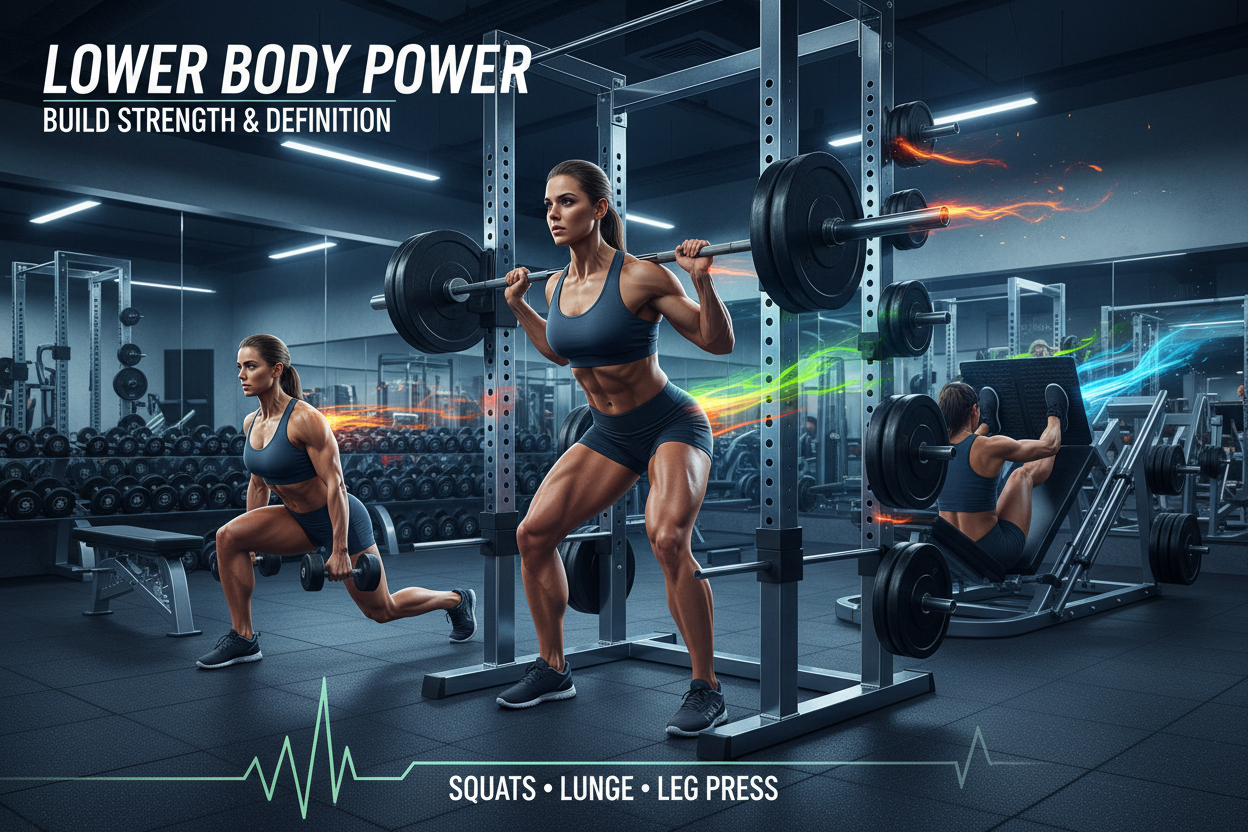
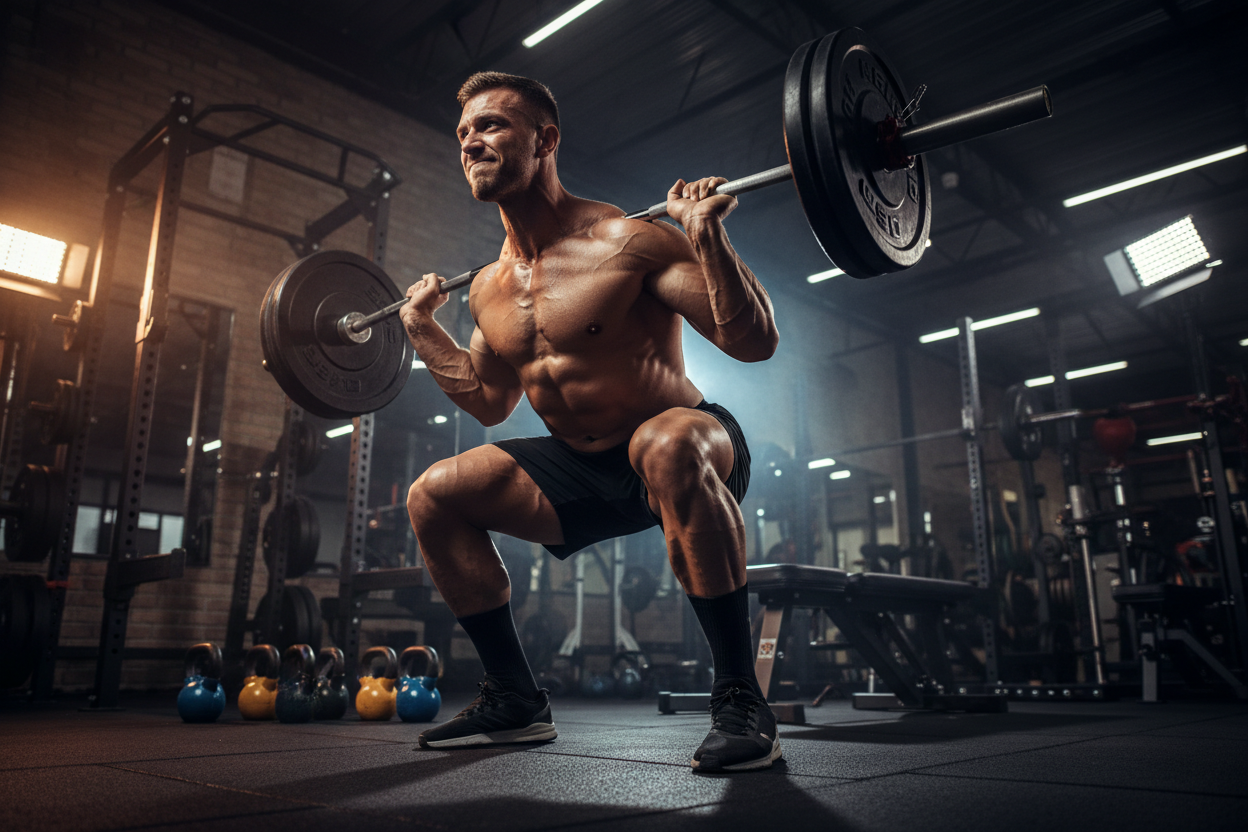
Squatting is a fundamental human movement. Whether you choose back squats, front squats, goblet squats, or bodyweight air squats, the mechanics are vital. The movement recruits almost every muscle in the lower body. For beginners, the goblet squat is often the safest entry point. Holding a weight at chest height forces your core to engage and keeps your torso upright, allowing you to hit proper depth without compromising your lower back.
When performing these body leg exercises, depth matters more than ego. Descending until your thighs are at least parallel to the floor ensures you are activating the glutes and not just putting shearing force on your knees. If you cannot hit depth, work on your ankle mobility before adding more load.
The Hip Hinge
While squats handle the front of the legs, the hinge handles the back. The Romanian Deadlift (RDL) is perhaps the best developer for the hamstrings. Unlike a conventional deadlift where you bend your knees significantly, the RDL focuses on pushing the hips back as far as possible while keeping a slight bend in the knee. You should feel a deep stretch in the hamstrings. This movement pattern is crucial for counteracting the effects of sitting at a desk all day, which tends to tighten the hips and weaken the posterior chain.
Unilateral Training: The Missing Link
Bilateral movements (using both legs at once) are great for building raw strength, but they can hide imbalances. Most people have a dominant leg. When you squat heavy, your strong side often takes over 55% or 60% of the load without you realizing it. This is where single-leg work becomes essential.
Split squats, lunges, and step-ups force each leg to work independently. This not only builds muscle but significantly improves balance and stabilizer strength. If you are looking for a challenging body leg workout that doesn't require heavy weights, try Bulgarian Split Squats. They are notoriously difficult but incredibly effective at isolating the quads and glutes while stretching the hip flexors of the trailing leg.
Structuring Your Routine
You don't need to live in the gym to build impressive legs. Frequency often trumps volume in a single session. Training legs twice a week with moderate volume usually yields better hypertrophy results than obliterating them once a week and being unable to walk for five days. A sample structure might look like this:
- Compound Knee Movement: Squat variation (3-4 sets)
- Compound Hinge Movement: RDL or Deadlift variation (3-4 sets)
- Unilateral Movement: Walking lunges or split squats (3 sets per leg)
- Isolation/Accessory: Calf raises or leg curls (3 sets)
This structure ensures you hit all the major functions of the lower body. If you are training at home without equipment, you can still perform a brutal body workout legs session by increasing the reps, slowing down the tempo, and minimizing rest times. High-repetition bodyweight squats and lunges can create significant metabolic stress, which drives muscle growth.
The Role of Mobility and Recovery
You cannot train hard if you cannot move properly. Tight ankles will ruin your squat depth. Tight hip flexors will inhibit your glutes from firing during deadlifts. Incorporating mobility work into your warm-up is essential. Dynamic stretching—moving through a range of motion rather than holding a static stretch—prepares the joints for the load they are about to bear.
Recovery is equally critical. Leg training causes significant muscle damage. Adequate protein intake and sleep are the only ways your body can repair that damage and build stronger tissue. If you are consistently sore to the point where it affects your daily life, look at your nutrition and sleep quality before you blame the workout program.
Building legs takes patience. The gains are often slower to appear than in the arms or shoulders, but they are more rewarding. There is a different level of respect given to a physique that is balanced from top to bottom. It shows you didn't skip the hard work. Commit to the heavy lifting, perfect your form on your body leg exercises, and the results will follow.
Frequently Asked Questions
How often should I train my legs for maximum growth?
For most natural lifters, training legs twice a week is the sweet spot. This allows you to split the volume, ensuring high-quality sets without excessive fatigue, and lets you hit the muscles again just as protein synthesis from the previous session is tapering off.
Can I build big legs with just bodyweight exercises?
Yes, you can build significant size and definition, though pure strength gains may plateau eventually without external load. To continue progressing with a bodyweight-only body leg workout, you must utilize single-leg variations (like pistol squats), increase time under tension, and decrease rest periods to keep the intensity high.
Why do my knees hurt when I squat?
Knee pain during squats is often caused by poor mobility in the ankles or hips, causing the knees to cave inward (valgus collapse) or travel too far forward without support. Check your form to ensure your knees track in line with your toes, and consider warming up with glute activation exercises to stabilize the joint.