Stop Guessing: The Complete Guide to Leg Anatomy and Effective Workouts
Most people walk into the gym on leg day with a simple plan: squat heavy, maybe use the leg press, and limp home. While compound movements are fantastic, building a truly balanced, athletic lower body requires understanding the anatomy under the skin. If you don't know what you are targeting, you are likely leaving gains on the table or, worse, creating muscular imbalances that lead to injury.
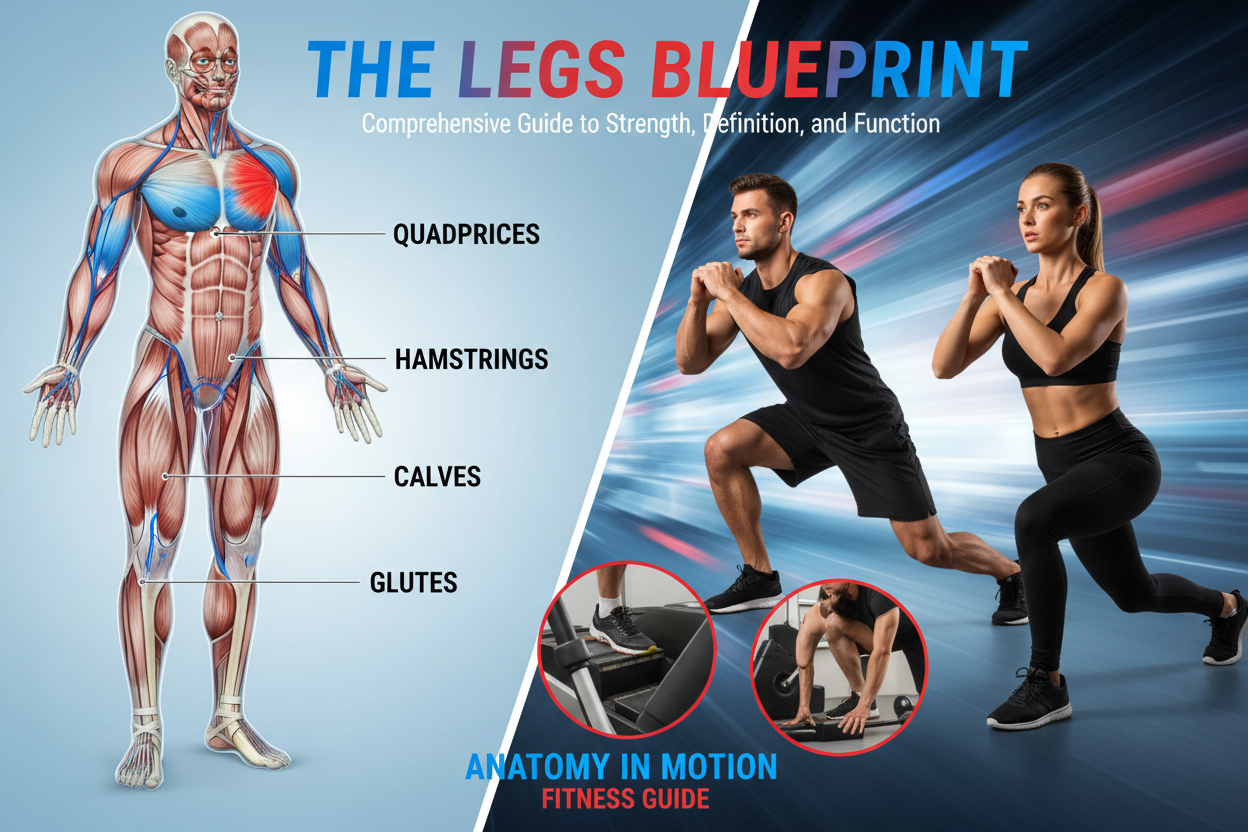
To get the most out of your training, you need to break down your lower body into its primary movers: the quadriceps, hamstrings, glutes, and calves. Understanding how these muscles function allows you to select movements that actually stimulate growth rather than just making you tired. This guide breaks down the anatomy and pairs it with the most effective movements for complete lower body development.
The Quadriceps: The Kings of Extension
The quadriceps femoris is a group of four muscles located on the front of the thigh. Their primary job is knee extension—straightening your leg. One of these muscles, the rectus femoris, also crosses the hip joint, assisting in hip flexion. When you think of leg muscle group exercises, movements that involve squatting, lunging, or stepping upward are usually quad-dominant.
To effectively target the quads, you need exercises that demand significant knee flexion. If your knees aren't traveling forward (within a safe range of motion), your hips take over, and the quads do less work. Here are the staples for anterior thigh development:
High-Bar Back Squat
By placing the barbell higher on your traps, you keep your torso more upright. This vertical angle forces the knees to track forward more than the hips sit back, placing the majority of the load directly on the quadriceps.
Front Squat
This variation shifts the center of gravity forward even more than the high-bar squat. It is arguably the best compound movement for pure quad isolation because it is almost impossible to cheat by using your lower back. If you lean forward too much, you drop the bar.
Leg Extensions
While squats are great, the rectus femoris often doesn't get fully stimulated because it shortens at the hip while lengthening at the knee. Leg extensions are the only movement where you can isolate the quads in a fully shortened position, making them essential for aesthetic definition.
The Hamstrings: The Posterior Powerhouse
Located on the back of the thigh, the hamstrings are responsible for two main actions: bending the knee (knee flexion) and extending the hip (driving your hips forward). Many lifters neglect this area, leading to knee instability. A comprehensive approach to leg muscle groups and exercises must include movements for both functions of the hamstring.
If you only do leg curls, you are missing half the muscle's potential. If you only do deadlifts, you are missing the other half. You need both.
Romanian Deadlifts (RDLs)
The RDL is the king of hip extension. By keeping a slight bend in the knee and pushing your hips back as far as possible, you place a massive stretch on the hamstrings. The soreness from these is unique because it targets the muscle in its lengthened state, which is a powerful trigger for hypertrophy.
Seated or Lying Leg Curls
These exercises target the knee flexion function. The seated leg curl is often superior to the lying version because flexing the hip (sitting up) stretches the hamstrings at the origin, allowing for a stronger contraction. This is pure isolation work and necessary for structural balance.
The Glutes: The Engine of the Body
The gluteus maximus is the largest muscle in the human body. It works in tandem with the hamstrings to extend the hip but also handles hip abduction (moving the leg away from the center line) and external rotation. Understanding leg workouts muscle groups means realizing that the glutes often require heavy loads and high tension to grow.
Many people struggle to feel their glutes working during compound lifts. This is often due to tight hip flexors or quad dominance. Selecting specific exercises can wake this muscle group up.
Hip Thrusts
The hip thrust provides the highest level of glute activation of almost any exercise because the tension is highest when the muscle is fully shortened (at the top of the movement). Unlike a squat, where tension drops at the top, the hip thrust forces the glutes to contract maximally against gravity at the peak.
Bulgarian Split Squats
While this exercise torches the quads, adjusting your stance can make it a glute destroyer. By taking a longer stride and leaning your torso forward slightly, you increase the stretch on the glute of the working leg. It also challenges stability, recruiting the smaller gluteus medius muscle.
Personal Experience: The Importance of Balance
Early in my lifting career, I was obsessed with heavy back squats. I thought that if I could squat 400 pounds, my legs would look great and perform perfectly. I neglected direct hamstring work almost entirely. Two years in, I developed nagging patellar tendonitis (knee pain). My quads were overpowering my knees, and my hamstrings were too weak to stabilize the joint.
I had to drop the ego lifting and restructure my training. I started prioritizing RDLs and heavy leg curls before I even touched a squat rack. It took about six months to correct the imbalance, but not only did my knee pain vanish, my squat numbers actually went up. The posterior chain is the base of support; without it, your main lifts will eventually stall.
Calves and Adductors: The Forgotten Details
When discussing leg workouts and what they target, the inner thighs (adductors) and lower legs (calves) are frequently treated as afterthoughts. This is a mistake for both aesthetics and injury prevention.
The adductors are massive contributors to squat strength out of the hole (the bottom position). The calves, comprised of the gastrocnemius and soleus, stabilize the ankle and knee. For the calves, you need straight-leg raises (for the gastrocnemius) and bent-knee raises (for the soleus).
Structuring Your Routine
Now that we have covered the anatomy, how do you put this into a week of training? You generally have two options: a full leg day or splitting the muscles up. Designing leg exercises by muscle group allows for better recovery if you are training frequently.
If you prefer a single leg day, you should structure it by starting with your heaviest compound movement, followed by a secondary compound for the opposing muscle group, and finishing with isolation work. For example:
- Squat variation (Quads/Glutes)
- RDL variation (Hamstrings/Glutes)
- Leg Press (Quads)
- Leg Curl (Hamstrings)
- Calf Raises
However, many advanced lifters prefer organizing leg workouts by muscle group across different days. You might have a "Quad and Calves" day focused on squats and extensions, and a separate "Posterior Chain" day focused on deadlifts, curls, and hip thrusts. This split allows you to attack each area with maximum intensity without being too exhausted to perform the later exercises.
The key is intention. Don't just move the weight from point A to point B. Visualize the specific muscle fibers contracting. If you are doing a lunge, think about which muscle is driving you back up. If you are doing a curl, focus on pulling with your hamstrings, not jerking the weight with your lower back. Anatomy is the map; your focus is the driver.
Frequently Asked Questions
How many times a week should I train legs?
For most natural lifters, training legs twice a week is the sweet spot for hypertrophy. This frequency allows you to split the volume between a quad-focused day and a hamstring/glute-focused day, ensuring high quality of work and sufficient recovery time between sessions.
Can I build big legs with just bodyweight exercises?
You can build muscular endurance and tone with bodyweight, but significant muscle size usually requires progressive overload with external resistance. However, advanced bodyweight movements like pistol squats and Nordic hamstring curls can provide enough stimulus to build considerable strength and size if performed correctly.
Why do I feel my lower back during leg exercises?
This usually indicates a weak core or poor hip mobility, forcing your lower back to compensate for your glutes and hamstrings. Focus on bracing your abs properly and reducing the weight until you can maintain a neutral spine throughout the movement.