Stop Guessing: Here Is Exactly How Much That Barbell Weighs
You have loaded the plates, chalked your hands, and tightened your belt. You are ready to pull for a new personal record. But as you tally up the total load in your head, a nagging question might surface: are you counting the bar correctly? For most gym-goers, the math seems simple enough, yet the actual weight of lifting bar variations can differ largely depending on where you train and what equipment you are holding.
If you want the quick answer: the vast majority of long bars you encounter in a commercial gym are Olympic barbells, and they weigh 45 pounds (20.4 kg). However, assuming every piece of metal is identical is a mistake that can throw off your programming. From "standard" home gym bars to specialized powerlifting equipment, the numbers fluctuate. Knowing the specific barbell weight standard helps you track progressive overload accurately and prevents you from accidentally crushing yourself with a weight you thought was lighter.
My Encounter with the "Fake" 45
I learned the importance of checking equipment specs the hard way. A few years ago, I was traveling and found a small, somewhat outdated hotel gym. It had a rack and what looked like a regular barbell weight setup. I loaded up 225 lbs for a squat warm-up—or what I thought was 225. The moment I un-racked it, something felt off. It was too light. I finished the set feeling like Superman, only to realize upon closer inspection that the bar was a thinner, shorter economy bar. It weighed closer to 25 pounds. My ego took a hit, but it was a valuable lesson: visual estimation isn't enough. If I had been meticulously tracking a program, that session would have been useless data. Knowing your equipment is just as vital as lifting it.
The Olympic Barbell: The Gym Standard
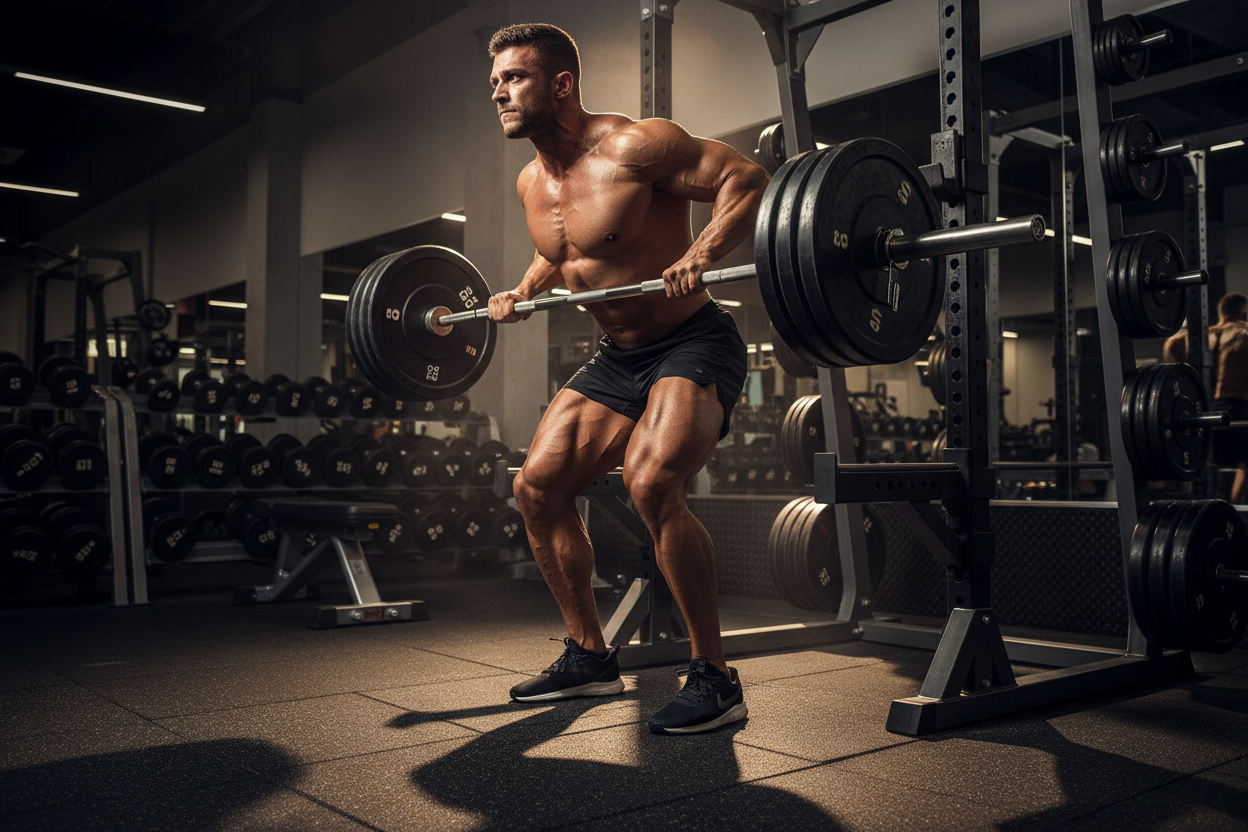
When you walk into a Gold's Gym, a CrossFit box, or a university weight room, you are almost exclusively dealing with Olympic bars. These are the gold standard for competitive lifting. The typical men's Olympic bar is 7.2 feet (2.2 meters) long and has a shaft diameter of 28mm to 29mm. The weight is precisely calibrated to 20 kilograms, which translates to 44.1 pounds, though most gym math rounds this up to 45 pounds.
These bars are designed to handle heavy loads. They feature rotating sleeves (the thick ends where you slide the plates on) which reduce torque on your wrists during movements like the clean and jerk or the snatch. If you are training for powerlifting or weightlifting, this standard bar weight is the baseline for every calculation you make.
Women's Olympic Bars
You might also encounter a slightly shorter, thinner bar often referred to as a women's bar. These are not "easier" bars; they are designed for athletes with smaller hands to maintain a secure hook grip. These bars weigh 15 kilograms (33 pounds) and have a slightly smaller shaft diameter of 25mm. They lack the center knurling (the rough texture) found on men's bars to prevent scraping the neck during cleans. If you grab a bar that feels slightly easier to grip but looks like a normal Olympic bar, double-check that you aren't using the 35-pound version before you start your set.
The "Standard" Bar vs. The Olympic Bar
Here is where the terminology gets murky and confuses beginners. In the fitness retail world, there is a distinction between "Olympic" equipment and "Standard" equipment. While an Olympic bar has 2-inch thick sleeves for plates, a standard weight barbell usually refers to bars designed for home use with 1-inch diameter ends. These are the bars you often see in department store weight sets.
The weight of standard barbell setups is rarely 45 pounds. Because they are thinner and often shorter (5 to 6 feet), they hold less steel. A 5-foot standard bar might weigh as little as 12 pounds, while a 6-foot version might come in around 18 to 20 pounds. If you are training at home with this gear, you cannot apply the commercial gym math. You must weigh the bar on a scale to know your true starting point. The standard weight bar weight in this context is inconsistent and varies by manufacturer.
Specialty Bars and Their Weights
Once you venture past the straight bars, the standard weight of bar logic goes out the window. Specialty bars are designed to change the leverage or mechanics of a lift, and their weights reflect their heavy-duty construction.
- The Trap (Hex) Bar: This hexagon-shaped bar allows you to stand inside the frame for deadlifts. Because there is so much extra metal involved in the frame, these are heavy. A typical commercial trap bar weighs 45 pounds, but heavy-duty versions can weigh 60 or even 75 pounds. Always ask the gym staff or check the manufacturer label.
- The Safety Squat Bar (SSB): Known for the padded yoke that sits around your neck, the SSB is a beast. While some cheaper versions are 45 pounds, a high-quality SSB usually weighs between 60 and 65 pounds. Assuming it is 45 pounds is a quick way to get stapled to the floor on a heavy squat attempt.
- The EZ Curl Bar: Used mostly for bicep curls and tricep extensions, these zig-zag bars are shorter. The Olympic version (with thick rotating sleeves) usually weighs between 15 and 25 pounds. It is rarely 45 pounds, despite having thick ends.
The Smith Machine Mystery
The Smith machine is the source of the most confusion regarding lifting weight. The bar travels on guide rails, and often, the mechanism includes a counterbalance system. This system uses pulleys and weights hidden inside the machine's frame to make the bar easier to move effectively neutralizing some of the bar's actual weight.
Because of this, a Smith machine bar can have a "felt weight" of anywhere from 15 pounds to 45 pounds. Some machines will have a sticker on the side indicating the starting resistance. If there is no sticker, do not assume it is 45 pounds. It is likely much lighter. If you are tracking progress, treat Smith machine numbers as separate data points from your free weight numbers. A 200-pound bench press on a Smith machine is not physically the same load as a 200-pound bench press with a free barbell.
Why Precision Matters
You might wonder if five or ten pounds really makes a difference. In the grand scheme of health, perhaps not. But for strength training, consistency is the primary driver of results. Progressive overload requires you to add small increments of weight over time. If you switch between a 45-pound bar and a 35-pound bar without realizing it, you corrupt your data. You might think you have gotten weaker, leading to frustration, or you might attempt a jump in weight that is too aggressive, leading to injury.
Knowing the standard weight barbell specifications of your gym allows you to train with intent. Next time you grab a bar, take ten seconds to look at the end cap. High-quality manufacturers usually print the weight right there. If it’s blank and feels light, put it on a scale. Your gains depend on the truth, not a guess.
Frequently Asked Questions
How can I tell the difference between a 15kg and 20kg Olympic bar?
The easiest visual cue is the thickness of the shaft. A 15kg (women's) bar is noticeably thinner (25mm) compared to the 20kg (28-29mm) bar. Additionally, the 15kg bar usually lacks the center knurling—the rough grip section in the very middle of the bar—whereas most 20kg bars will have it.
Do the clips or collars count toward the total weight?
Yes, if you want to be precise. Standard spring clips weigh practically nothing (about 0.5 lbs per pair), so most people ignore them. However, heavy-duty competition collars can weigh 2.5kg (5.5 lbs) each. If you are using heavy collars, you are lifting 11 pounds more than you think.
Does the material of the bar affect its weight?
Generally, no. Whether the bar is made of bare steel, zinc-coated, or stainless steel, manufacturers calibrate them to hit the specific target weight (20kg or 45lbs). However, cheaper bars made with lower-density alloys or hollow construction will be significantly lighter and are not suitable for heavy lifting.