Stop Forcing Commercial Gym Exercises Into Your Living Room
I remember the first time I tried to do walking lunges in my cramped one-bedroom apartment. I made it exactly three steps before my trailing knee collided with the sharp corner of a steel bed frame. It was a painful, purple reminder that your environment dictates your training more than any influencer's YouTube routine ever will.
Most people fail at home training because they try to force-feed a 20,000-square-foot commercial gym mentality into a 100-square-foot spare room. Trying to perform high-velocity exercises in a space shared with a coffee table isn't just frustrating—it's a fast track to a physical therapy appointment and a security deposit deduction.
Quick Takeaways
- Stop moving horizontally; start moving vertically to save space.
- Your floor space is a hard boundary, not a suggestion.
- Static variations are superior to 'traveling' movements for small rooms.
- Define your 'island' with a mat to protect your furniture and your joints.
The 'Shrinking Room' Fallacy
We’ve all seen the videos: a pro athlete in a massive warehouse-style gym doing explosive lateral bounds or heavy barbell snatches. It looks cool. But when you try that in a room with an 8-foot ceiling and a ceiling fan, the room starts to feel very small, very fast. I've seen more drywall damage from 'good exercise moves' gone wrong than from actual equipment failure.
The 'Shrinking Room' fallacy is the belief that you can just 'be careful' while doing space-intensive movements. You can't. When the weight gets heavy or the heart rate climbs, your spatial awareness tanks. Heavy barbell snatches are a masterpiece of movement, but in a living room, they are a liability. You need a setup that allows for maximum intensity within a fixed, tiny footprint without the constant fear of putting a 45-lb plate through your TV.
Foundation First: Claiming Your Footprint
Before you pick up a single weight, you need to draw a line in the sand. If you don't define where the 'gym' ends and the 'living room' begins, you will inevitably drift into the furniture. I recommend clearing a dedicated zone and laying down the best large exercise mat you can afford. This isn't just about cushioning your joints; it's about psychological safety and spatial boundaries.
If your feet leave that mat, you're in the 'danger zone.' By forcing yourself to stay within a 6-foot or 8-foot square, you naturally filter out the movements that don't belong in a home setting. It forces you to choose the best fitness workouts that prioritize stability and control over sheer distance traveled. If you can't do the move on your mat, you don't do the move at home. It's that simple.
The Best Exercise Moves for Tight Spaces
If you want to get strong without moving across the room, you have to embrace the 'static-travel' philosophy. Swap walking lunges for Bulgarian split squats. Instead of broad jumps, do max-effort vertical jumps or heavy kettlebell swings. These are the best workout exercises for someone who values their shins and their furniture. You get all the mechanical tension and metabolic stress without the need for a 40-foot runway.
I personally do 90% of my training on a 6x8ft exercise mat. This specific footprint is the 'sweet spot' for home training. It’s wide enough for a standard 7-foot Olympic bar but compact enough to fit in a corner. Within this space, you can execute best exercise moves like tempo push-ups, goblet squats, and overhead presses without ever taking a step. These good workout moves build just as much muscle as their space-hungry counterparts but keep you safely anchored. If you're looking for the best exercise for gym results at home, look for movements that require zero forward or lateral travel.
When to Finally Upgrade to Hardware
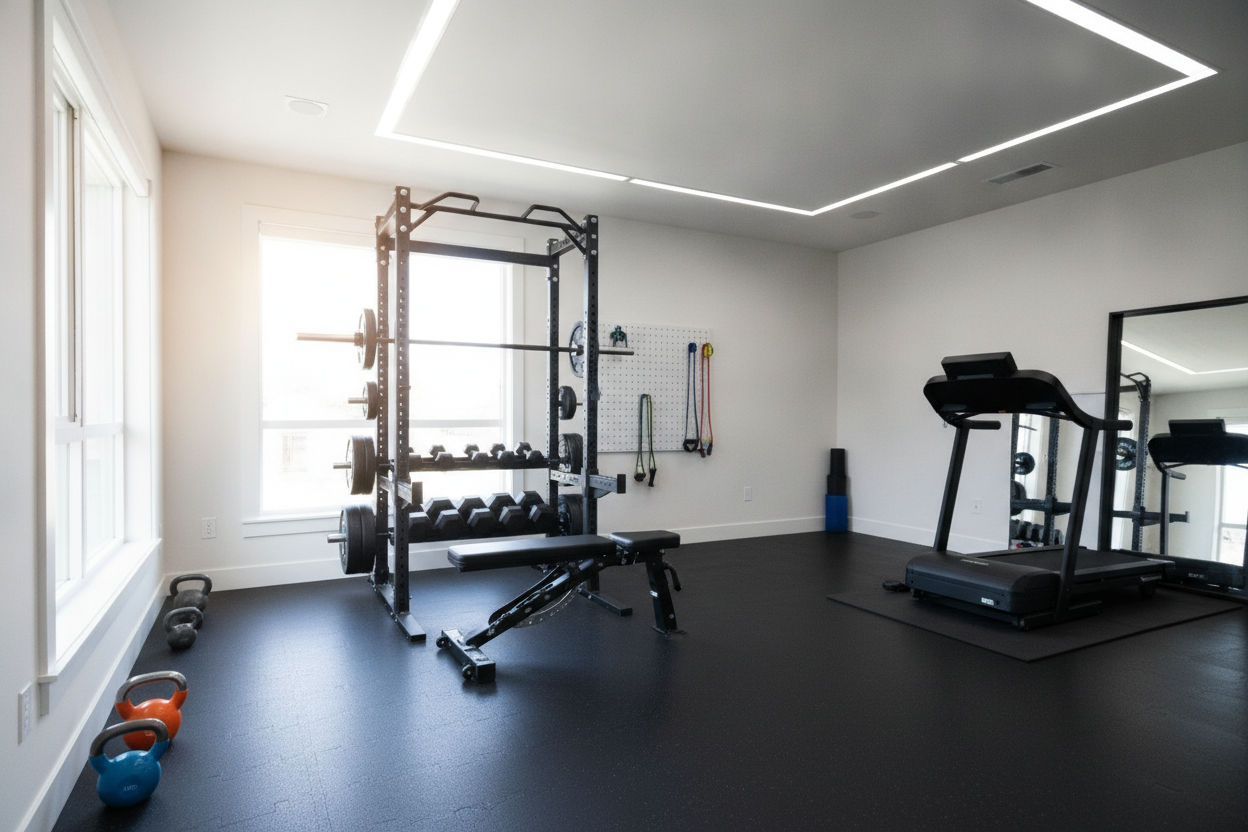
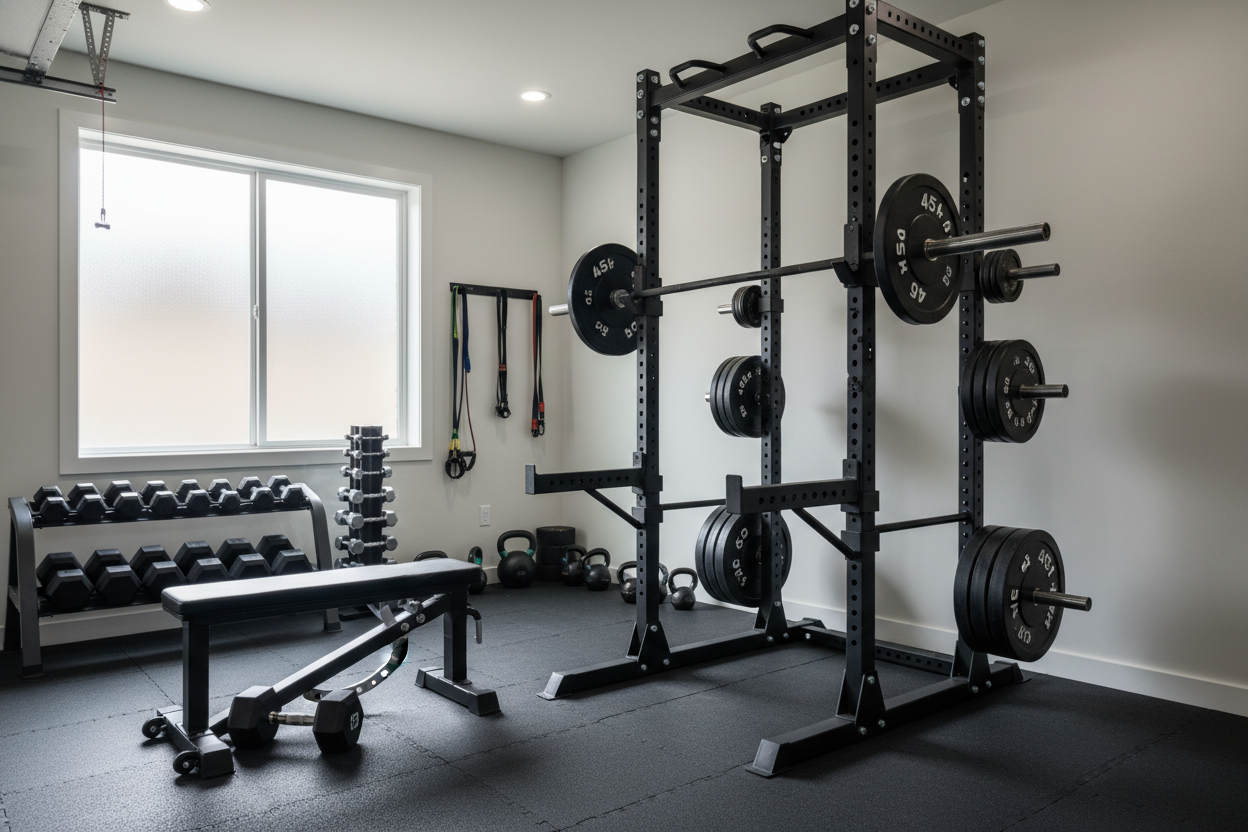
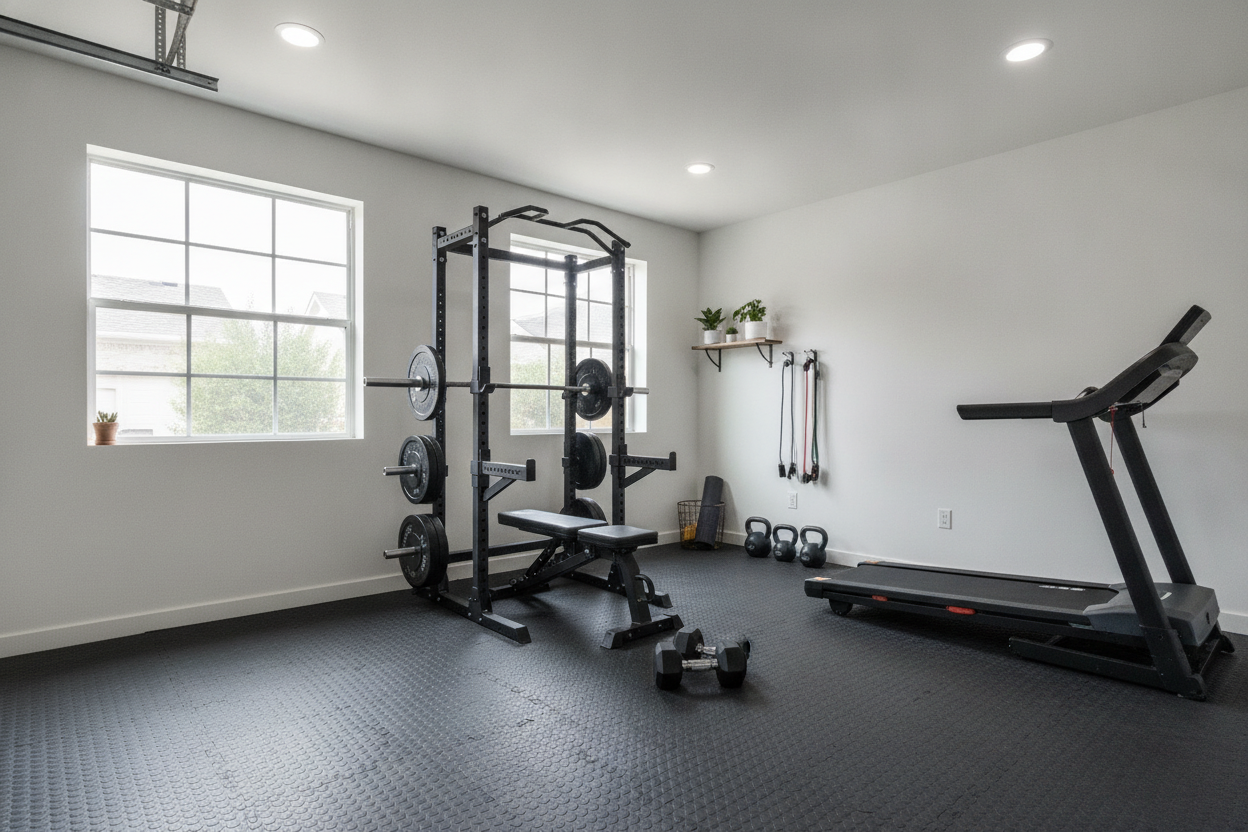
Eventually, your bodyweight and a single pair of dumbbells won't be enough to drive progress. You’ll know you're ready to upgrade when you can perform a full session without once bumping into a wall or feeling limited by your floor space. That's when you look for the best exercise machines for home and gym that maximize vertical space—think power racks with small footprints or wall-mounted cable systems.
I've tested plenty of 'compact' gear that was actually just flimsy junk. If you're buying hardware, look for 11-gauge steel and a footprint that doesn't exceed 48 inches in width. If it’s wider than that, it’s probably meant for a commercial facility, not your spare bedroom. Stick to gear that builds on your established 'island' rather than consuming the entire room. A good squat stand or a set of adjustable dumbbells will always beat a massive, multi-station machine in a home setting.
A Sample 'Zero-Travel' Routine
Here is how I structure a high-intensity session when I'm stuck in a tiny garage corner. No walking, no jumping across the room—just good workout moves that burn. These best fitness workouts are designed to be done entirely on your mat.
- Bulgarian Split Squats: 3 sets of 10 per leg (Hold a dumbbell or just use bodyweight).
- Tempo Push-ups: 3 sets to failure (3 seconds down, 1 second pause at the bottom).
- Single-Leg RDLs: 3 sets of 12 (Focus on balance and hamstring tension).
- Pike Push-ups: 3 sets of 8 (Great for shoulder development without a rack).
- Plank with Shoulder Taps: 3 sets of 45 seconds (Core stability within a 3-foot width).
Personal Experience
Early in my home gym journey, I tried to do 'suicide sprints' in a 20-foot driveway. I slipped on a patch of oil, slid into my trash cans, and spent the next week picking plastic shards out of my palm. It was a stupid mistake. Now, if a movement requires me to move more than two steps in any direction, I don't do it at home. Period. My training has actually improved because I'm focused on muscle tension, not how much floor I can cover.
FAQ
Can I do burpees in a small space?
Yes, but watch your hands. If you have low ceilings, skip the jump at the top and focus on a fast 'snap' back into the plank position. It keeps the heart rate up without the risk of punching a light fixture.
What if my floor is carpeted?
Carpet is a recipe for a rolled ankle during lateral moves. Get a firm, high-density mat to lay over it. It provides the stability you need for heavy lifts and prevents the 'squishy' feeling that ruins your balance.
Are adjustable dumbbells worth the space?
Absolutely. One pair of 50lb adjustables replaces a whole rack of fixed bells. It’s the single best space-saving investment you can make for a home setup, fitting easily in the corner of your 6x8 mat.