Stop Exercising on a Rowing Machine Like This (Save Your Back)
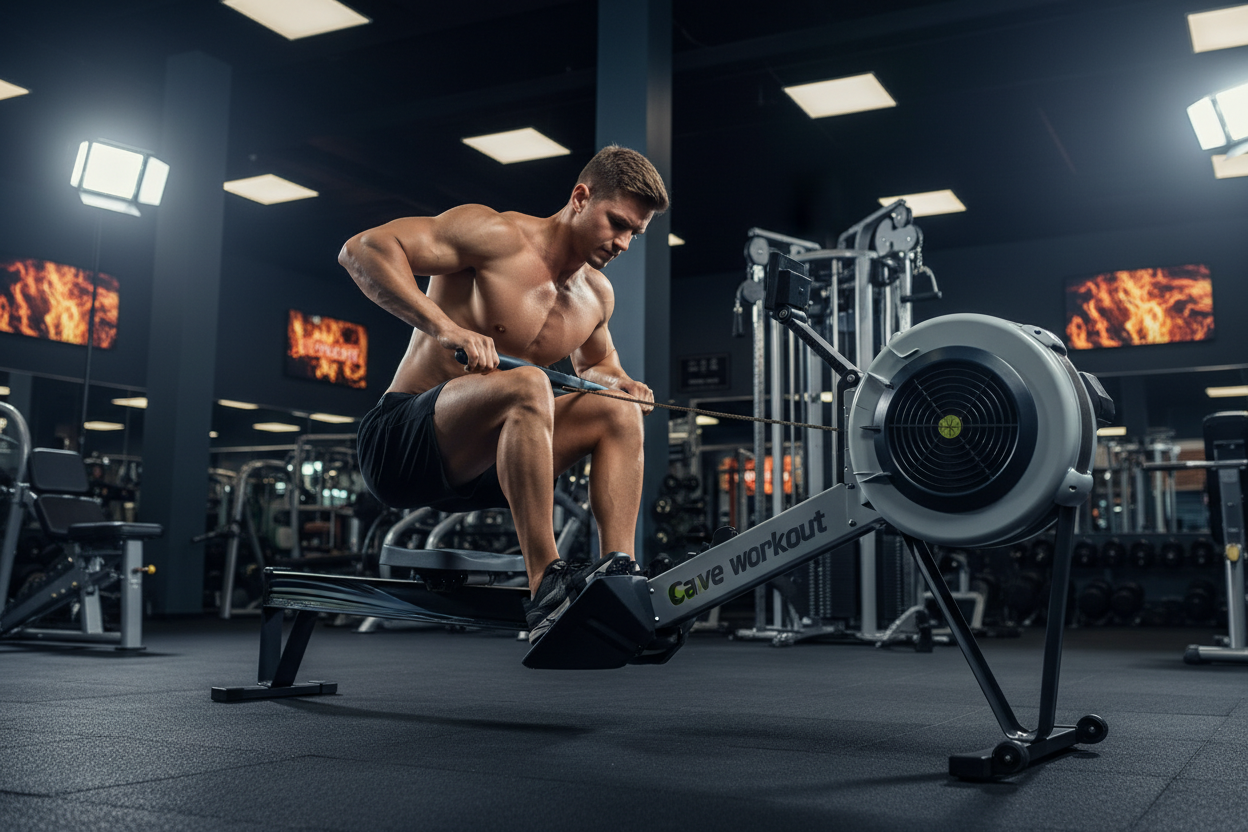
Walk into any fitness center, and you will likely see a familiar sight: the treadmills are packed, the weights are occupied, but the rower in gym corners sits empty. Or worse, someone is on it, frantically yanking the handle up to their chin with a rounded back.
The ergometer (or "erg") is arguably the most efficient piece of equipment for metabolic conditioning, yet it is the most misused. Exercising on a rowing machine isn't just about pulling hard; it is about physics, leverage, and timing. If you treat it like a generic cable machine, you are leaving gains on the table and inviting lumbar injury.
This guide cuts through the noise to teach you the mechanics of the stroke, ensuring every meter you pull translates to real-world strength.
Key Takeaways: The Rowing cheat Sheet
- Legs, Body, Arms: This is the non-negotiable sequence of the drive. Do not pull with your arms until your legs are fully extended.
- Power Distribution: 60% of the power comes from the legs, 30% from the body swing, and only 10% from the arms.
- Damper Setting: Setting the fan to 10 does not mean "harder workout." It mimics a heavy boat. For conditioning, aim for a setting between 3 and 5.
- Ratio: The drive should be explosive (1 count), while the recovery should be patient and controlled (2 counts).
The Mechanics of the Perfect Stroke
When you see a row machine at gym setups, it looks simple. You sit and pull. However, the stroke is actually a closed-chain kinetic movement composed of four distinct phases. Mastering these phases is how you generate wattage without burnout.
1. The Catch
This is the starting position. Your shins should be vertical, shins perpendicular to the floor. A common error when doing rowing at the gym is over-compressing, where your seat hits your heels. This puts unnecessary strain on the knees. Keep your chest up and arms straight. You should feel tension in your hamstrings and lats, ready to explode.
2. The Drive
This is where the work happens. Drive through your heels, not your toes. Think of this less like "rowing" and more like a leg press. If you are working out on a rowing machine effectively, your arms remain straight hanging on the handle until your legs are almost locked out. Only then do you swing the torso back and finally pull the handle to the sternum.
3. The Finish
At the back of the stroke, you shouldn't be laying flat. Lean back slightly (about 11 o'clock position). The handle touches just below the chest. Keep your elbows tucked in, not flared out like a chicken. This engages the lats rather than the weaker upper traps.
4. The Recovery
This is the rest phase. Do the drive in reverse: extend arms, swing body forward, then bend the knees to slide back to the catch. Many people rush this. If you are rowing in gym environments and slamming back and forth rapidly, you aren't rowing; you're flailing. Control the slide.
The Damper Setting Myth
Walk up to any rower at gym peak hours, and the damper lever is likely jammed up to level 10. There is a misconception that 10 equals "heavy weight" and 1 equals "light weight."
The damper controls airflow, which simulates water drag. A setting of 10 feels like rowing a heavy wooden barge; a setting of 3 feels like a sleek racing shell. If you set it to 10, your muscles will fatigue before your cardiovascular system gets a chance to work. For high-intensity interval training (HIIT) or steady-state cardio, keep the damper between 3 and 5. This allows for a quicker catch and better sustainment of power.
Metrics That Actually Matter
Don't just stare at the calories. When considering the use of rowing machine monitors, focus on "Split per 500m" or "Watts."
The split time tells you how fast you would cover 500 meters at your current pace. It provides instant feedback on your efficiency. If you pull harder but your split time doesn't drop, your technique is leaking energy. Consistency is key here; a pro rower can hit the exact same split time for 200 strokes in a row.
My Training Log: Real Talk
I want to be transparent about my history with the erg. I spent years avoiding rowing at gym sessions because I thought it was boring. When I finally committed to a 2,000-meter time trial, reality hit me hard.
It wasn't the muscle fatigue that surprised me; it was the specific "erg cough" that developed about five minutes after I finished—a metallic taste in the back of the throat caused by drying out the airways during intense exertion. I also learned the hard way about grip. I didn't wear gloves (and you shouldn't either), but the specific placement of the handle matters. If you grip too tight, you don't just get calluses; you get blisters exactly where the fingers meet the palm, which tear open the next day. I remember having to tape my fingers with climbing tape just to wash my hair in the shower. That stinging sensation is the mark of initiation. Once I learned to hook the handle with my fingers rather than strangling it with my palm, my endurance doubled.
Conclusion
Exercising on a rowing machine is the ultimate truth-teller. It does not allow you to cheat using momentum in the same way a treadmill or elliptical might. By focusing on the sequence of legs-body-arms and respecting the recovery phase, you transform this machine from a back-breaker into a full-body builder. Next time you see that empty rower, sit down, strap in, and focus on the flow.
Frequently Asked Questions
Is rowing good for losing belly fat?
Yes. Because it recruits 86% of the body's muscle mass (legs, core, back, and arms), it burns calories at a higher rate than isolation exercises. Combined with a caloric deficit, the metabolic demand of rowing is excellent for fat loss.
How long should I row for a good workout?
It depends on intensity. For high-intensity intervals (sprints), 15 to 20 minutes is often enough to exhaust you. For steady-state endurance (Zone 2 training), aim for 30 to 45 minutes at a conversational pace.
Can I do a rowing workout every day?
Technically yes, as it is low impact on the joints compared to running. However, because it is highly repetitive, form degradation can lead to lower back issues. It is best to alternate rowing days with other movements or rest days, especially when you are learning the technique.