Stop Eating Clean if You Want to Know How to Bulk Up in a Month
I remember sitting in my garage last November, staring at a Tupperware container of cold, dry chicken breast and plain white rice. I was trying to figure out how to bulk up in a month without losing my visible abs, and frankly, I was failing. My weight hadn't budged in three weeks, my lifts were stalling, and I was miserable. If you are trying to pack on noticeable size in a 30-day window, you need to realize right now that 'clean eating' is your biggest enemy.
The reality of a 30-day mass phase is that biology doesn't care about your aesthetic preferences. To force your body to lay down new tissue—muscle, glycogen, and yes, some fat—you have to create an environment of extreme abundance. You cannot do that on 2,500 calories of kale and tilapia. You need to eat like it is your job, lift like you are trying to break the floor, and stop obsessing over the mirror for four weeks.
Quick Takeaways
- Ditch the 'clean' labels; focus on caloric density to hit your daily surplus.
- Use liquid calories to bypass your body's natural satiety signals.
- Limit your training to heavy, compound movements: Squats, Presses, and Deadlifts.
- Expect to lose some definition in exchange for actual scale weight and strength.
Why 'Lean Bulking' in 30 Days Is a Fantasy
Everyone wants the Hollywood transformation where they gain ten pounds of pure muscle and somehow end up leaner. That does not happen in a month. When you have a 30-day deadline, you are fighting against the brutal math behind building muscle. To see a change that people will actually notice, you need to be in a massive caloric surplus—somewhere in the neighborhood of 500 to 1,000 calories above your maintenance level every single day.
The problem is volume. If you try to hit 4,000 calories using only 'clean' foods, you will be eating six or seven massive meals a day. Your digestion will wreck you, you will feel bloated constantly, and eventually, you will start skipping meals because the thought of another sweet potato makes you want to quit. This is why most guys fail when they ask how to bulk in a month. They underestimate the sheer physical effort required to chew that much food.
In a short-term bulk, you need calorie-dense options. I am talking about whole eggs instead of whites, chicken thighs instead of breasts, and adding fats like olive oil or grass-fed butter to everything. You need to make every bite count for double. If you are not seeing the scale move by at least a pound or two a week, you aren't eating enough. Period.
Liquid Calories: The Old-School Secret Weapon
If you find yourself struggling to finish your meals, stop eating them and start drinking them. This is the old-school bodybuilding secret that guys have used for decades to bypass their appetite. Your brain doesn't register liquid calories the same way it does solid food. You can slam a 1,000-calorie shake and be ready for a real meal two hours later. If you ate those same 1,000 calories in steak and potatoes, you'd be sidelined for the afternoon.
My go-to mass shake is simple: two scoops of whey, a cup of oats (blended into powder first), two tablespoons of natural peanut butter, and whole milk. That is an easy 800-900 calories that goes down in thirty seconds. If you are serious about how to bulk up in a month, you should be having at least one of these between your main meals. It is the only way to ensure you don't fall short on your macros when life gets busy or your appetite disappears.
Don't be afraid of chocolate milk post-workout either. It has the perfect ratio of simple sugars to replenish glycogen and protein to kickstart recovery. When you're on a 30-day clock, you don't have time for slow-digesting 'optimal' meals after the gym. You need nutrients in your system immediately so you can recover and do it all again tomorrow.
The Only 3 Heavy Lifts That Matter Right Now
When you are eating this much, you have to give that energy a reason to become muscle rather than just belly fat. This is not the time for bicep curls, lateral raises, or cable crossovers. You need to focus on the movements that recruit the most muscle fibers and create the largest hormonal response. I am talking about the 'Big Three': the Back Squat, the Overhead Press, and the Deadlift.
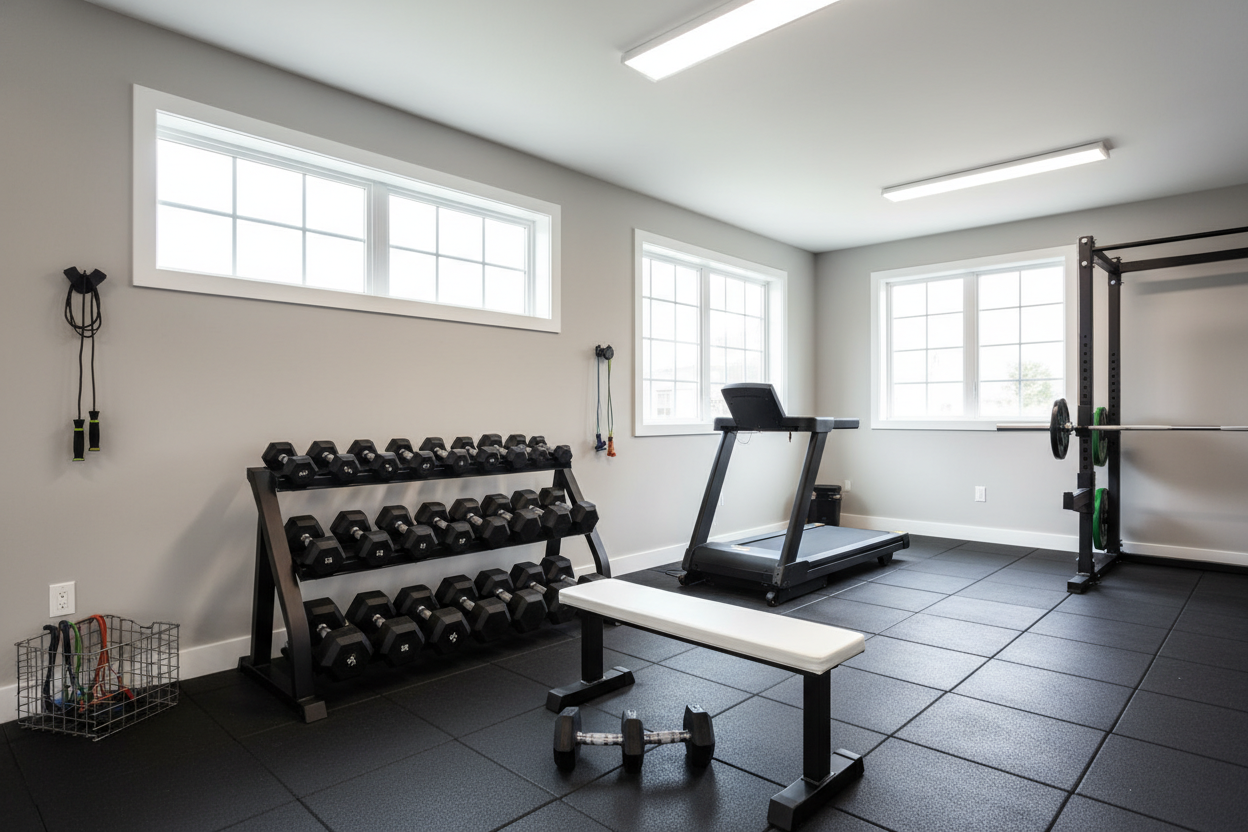
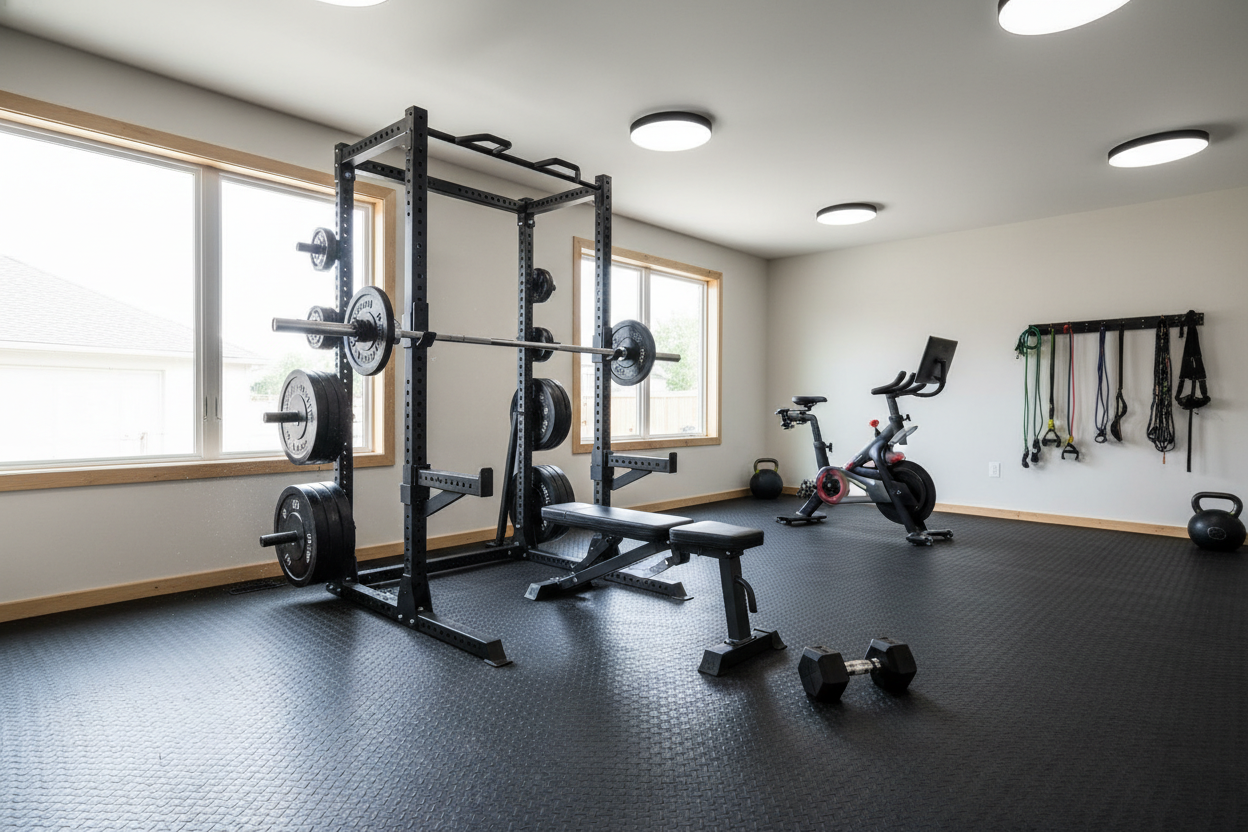
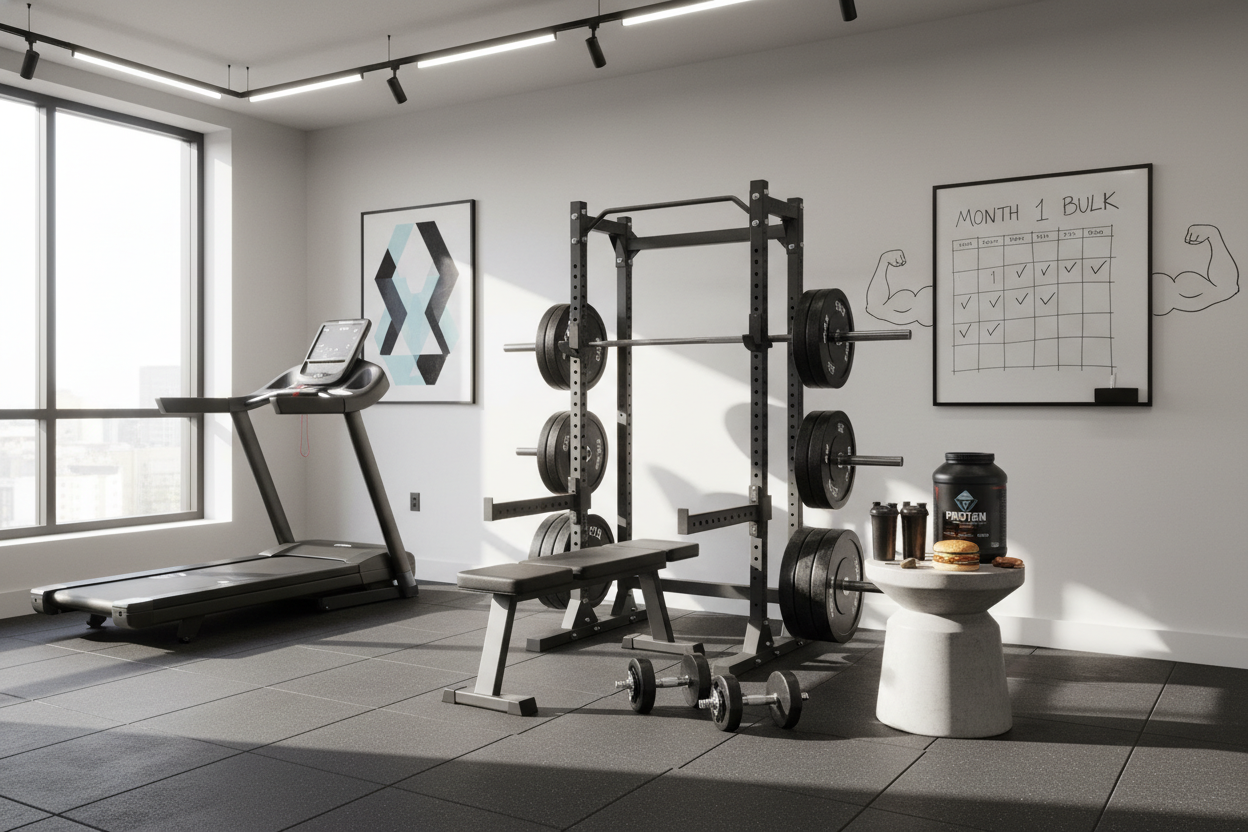
I keep my garage gym setup simple for these phases. I’ve got a solid rack and a barbell that can handle the abuse. If you're doing this at home, make sure you have a durable exercise mat under your feet. When you start pulling heavy deadlifts to stimulate full-body growth, you don't want to be worrying about cracking your concrete or sliding around on a cheap yoga mat. I use a 7x10 mat that gives me enough room to drop weights without waking up the neighbors.
Train three to four days a week. That’s it. You need the other days for recovery and growth. Every session should start with one of those big lifts. Go heavy—sets of 5 to 8 reps. If you are putting on weight but your strength isn't increasing, you are just getting fat. The goal is to move more weight every single week. If you added 10 pounds to your squat and 5 pounds to your body weight by the end of the month, you’ve succeeded.
Accepting the Fluff (And Why It Means It's Working)
This is the hardest part for most guys: the mirror. About two weeks into an aggressive bulk, your abs will start to fade. You might look a little 'puffy' in the face. This is where most people panic, cut their calories, and ruin the whole process. You have to be honest about getting bigger—it involves a certain amount of water retention and glycogen storage.
That 'fluff' is actually a good sign. It means your muscles are saturated with fuel. It means your joints are lubricated for those heavy squats. It means your body is in an anabolic state. You aren't 'getting fat' in the traditional sense; you are building a foundation. Once the 30 days are up, you can easily trim back the calories and the water weight will fall off, leaving behind the new muscle you fought for.
Focus on how your clothes fit and how the bar feels on your back. If your t-shirt sleeves are getting tight and your deadlift is feeling lighter, the program is working. Don't let a blurry four-pack talk you out of your gains. Stay the course for the full four weeks.
My Experience With The 'Dirty' Bulk
A few years ago, I tried to do a 'clean' bulk in January. I was eating nothing but brown rice, steamed broccoli, and lean ground turkey. By day 15, I was so tired of eating that I actually started losing weight because I couldn't stomach the volume of food required. I switched gears, started adding whole milk and peanut butter sandwiches to my diet, and ended the month 8 pounds heavier with a new PR on my bench press. I felt like a tank. Yes, I lost some definition, but I gained more strength in that month than I had in the previous six months of 'clean' living.
FAQ
Do I need to do cardio while bulking?
Keep it to a minimum. A 10-minute walk after meals can help with digestion, but this is not the time for HIIT or long runs. You want every calorie going toward recovery and growth, not being burned off on a treadmill.
What if I start feeling sluggish?
That is usually a sign of poor digestion or too much processed sugar. Stick to 'dirty' whole foods—steaks, whole milk, potatoes, nut butters—rather than just eating donuts and pizza. There is a difference between high-calorie nutrition and literal junk.
How much protein do I actually need?
Aim for 1 gram per pound of body weight. Going higher than that usually just crowds out the carbohydrates and fats you need for energy. If you weigh 180 lbs, hit 180g of protein and fill the rest of your 3,500+ calories with carbs and fats.