Stop Doing 'Shoulder Day'—Try This Deltoid Workout Routine
I remember my old Tuesday nights: a 90-minute 'Shoulder Day' that left my rotator cuffs screaming and my actual muscle growth stagnant. I’d spend 45 minutes grinding through heavy overhead presses, only to have zero energy left for the lateral raises that actually build width. Most people think a deltoid workout routine needs its own dedicated day to be effective, but for most of us training in a garage, that’s just a recipe for joint pain and junk volume.
Quick Takeaways
- Shoulder days often lead to 'junk volume' where form breaks down and injury risk spikes.
- Front delts are heavily recruited during chest pressing and rarely need dedicated 'heavy' days.
- Side delts respond better to high frequency and fresh execution than once-a-week marathons.
- Rear delts function as pulling muscles and belong with your back training.
Why Your 60-Minute Shoulder Day is Actually Junk Volume
Bodybuilding magazines from the 90s sold us on the idea of 'annihilating' a muscle group for two hours once a week. The reality? By the time you get to your fourth or fifth shoulder exercise in a single session, your nervous system is fried. Your form gets sloppy, you start using momentum to swing the weights, and your smaller stabilizer muscles—like the supraspinatus—take the brunt of the load. This isn't productive; it's just fatigue for the sake of fatigue.
For natural lifters, the sweet spot for growth isn't total destruction; it's frequent stimulation. When you blast your shoulders for 60 minutes, the first 20 minutes are great, but the last 40 are usually 'junk volume.' You aren't triggering more growth; you're just extending your recovery time and wearing down your labrum. I’ve found that my shoulders actually look better now that I've stopped giving them their own day entirely.
The 'Micro-Dose' Approach to Shoulder Growth
The deltoid isn't one big blob of muscle; it has three distinct heads: the anterior (front), lateral (side), and posterior (rear). They have different functions and different attachment points. When you try to hit all three while exhausted, you inevitably neglect one. Usually, it's the side and rear heads that suffer because everyone starts with heavy presses that fry the front delts.
By 'micro-dosing' your shoulder work, you hit each head when it is fresh. I moved my shoulder work to our workout hub philosophy where we prioritize frequency over intensity. This allows you to put 100% effort into your lateral raises on a day when you haven't already done five sets of bench press. It keeps the joints feeling 'greased' rather than ground down.
My Real-World Deltoid Workout Routine
This is the delt workout routine I’ve settled on after a decade of trial and error in my garage. It doesn't require a fancy cable crossover or a dedicated shoulder press machine. It’s built around the idea that your shoulders should be an accessory to your main lifts, not a standalone beatdown. I spread the volume across three different sessions to ensure every rep is high-quality.
Tacking Front Delts Onto Your Push Sessions
If you are following a complete guide to building a strong chest workout routine, your front delts are already getting hammered. Every time you bench, dip, or do push-ups, the anterior deltoid is a primary mover. Adding four variations of front raises on top of that is overkill. I usually finish my chest day with just two sets of strict overhead pressing or high-rep front raises to finish them off. Your rotator cuffs will thank you for not overworking an area that's already doing the heavy lifting.
Giving Side Delts Their Own Spotlight
The lateral head is what gives you that 'capped' look, but it’s a small muscle that doesn't need 80-lb dumbbells. It needs tension. I moved my lateral raises to my leg day. Why? Because my upper body is completely fresh. I can grab a pair of 15s or 20s and focus on the mind-muscle connection without my traps taking over because I'm tired from pressing. Two or three sets of 15-20 reps, twice a week, will do more for your width than any 'shoulder day' ever could.
Why Rear Delts Belong With Your Back Work
Rear delts are functionally pullers. They assist in shoulder extension and external rotation, which is exactly what happens during rows and pull-downs. I treat the posterior deltoid as part of my back. At the end of a pull session, I’ll throw in face pulls or rear delt flies. Supersetting these with your heavy rows saves time and ensures your posture stays upright, preventing that 'hunched' look that comes from too much chest pressing.
The Bare Minimum Gear You Need to Make This Work
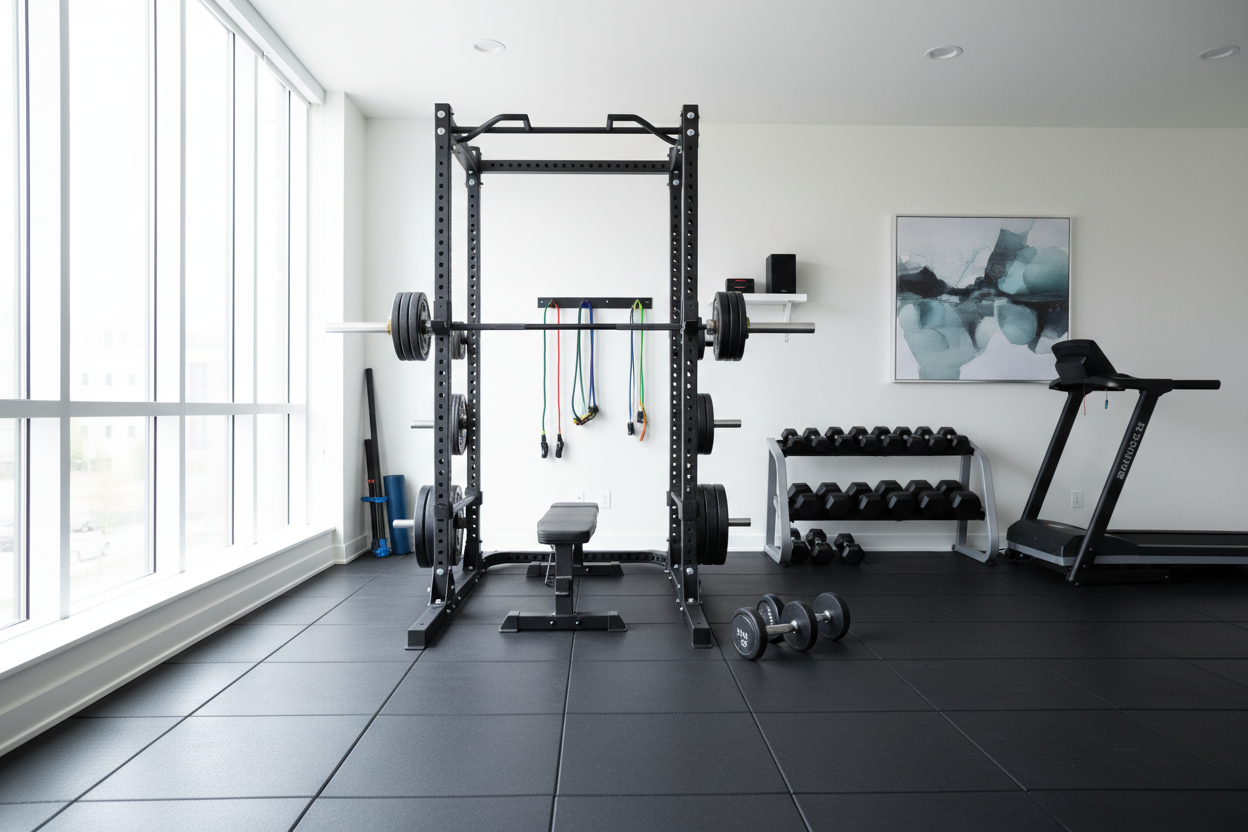
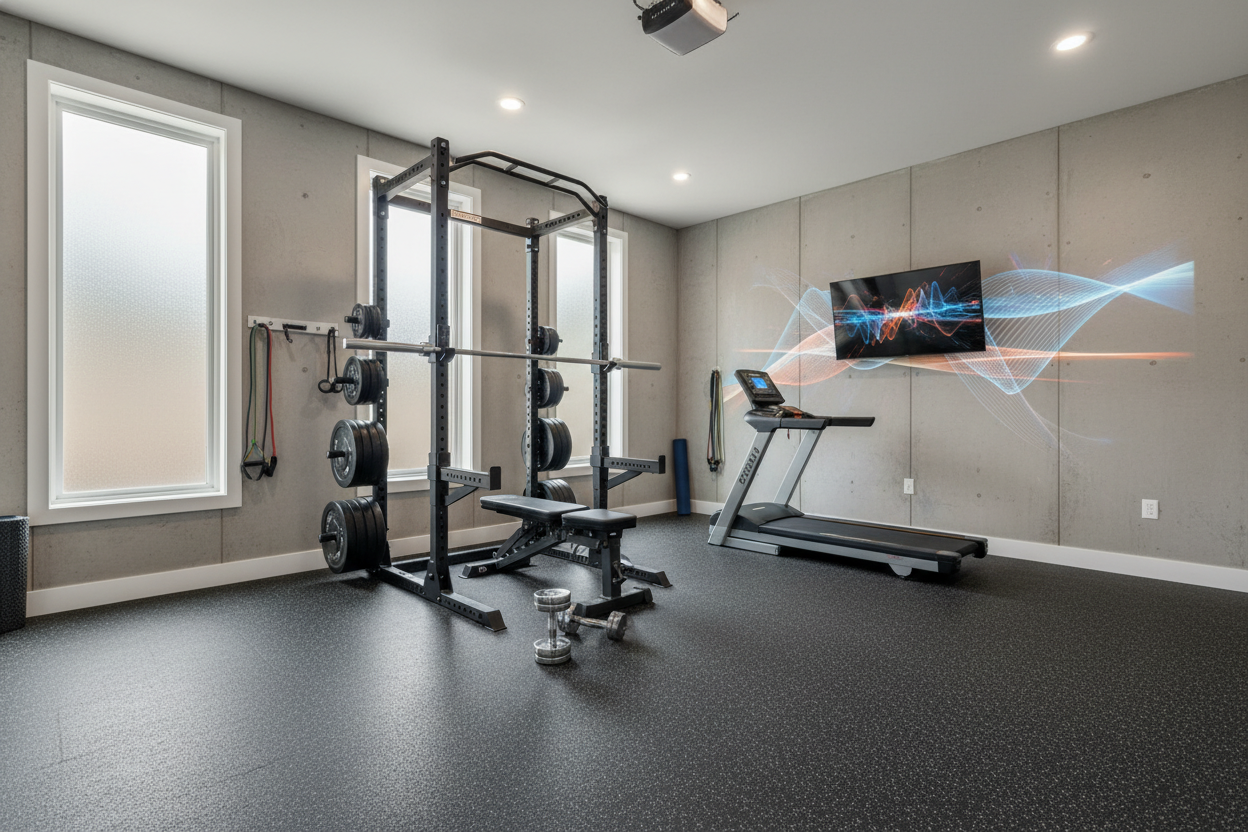
The beauty of this split is that it’s incredibly home-gym friendly. You don't need a 12-station jungle gym. A solid pair of adjustable dumbbells and a flat bench are 90% of the battle. However, stability is key when you're trying to isolate these smaller muscles. I do most of my raises seated or kneeling to take my legs out of the movement and prevent cheating.
I use a 6x8ft exercise mat as the foundation for my lifting area. It provides the grip I need for my feet during heavy presses and the cushion I need for my knees during half-kneeling lateral raises. Once you have a stable base, you can look into top equipment to enhance your at-home workout routine, but don't overcomplicate it. Shoulders respond to consistency and form, not fancy machines.
Personal Experience
I spent years trying to 'out-heavy' my shoulder genetics. I’d load up 225 lbs on the overhead press and wonder why my side delts still looked flat. It took a nagging injury to realize I was just using my traps and ego to move the weight. When I switched to this micro-dose style—hitting lateral raises on leg days and rear delts on back days—my shoulders finally started to 'pop.' The biggest mistake I made was thinking more volume in one day was the answer. It wasn't.
FAQ
Can I still do heavy overhead presses?
Absolutely. Just treat them as your primary 'Push' movement for the day. Do them first, then move on to your chest work. Don't try to do them after you've already fried your chest with heavy incline bench.
How many sets per week do I need?
Most lifters thrive on 6-10 sets per head, per week. By splitting this up, you can do 3 sets of side raises on Tuesday and 3 sets on Friday. You'll be much stronger in those sets than if you tried to do all 6 at once.
Do I need cables for side delts?
Cables are great for constant tension, but you can get 95% of the results with dumbbells or even resistance bands. The key is controlling the eccentric (the way down) rather than just letting the weight drop.