Stop Doing Leg Growth Exercises Like This (Read This First)
You hit the squat rack every Monday. You load up the leg press until the plates run out. Yet, your jeans fit exactly the same way they did six months ago. It is frustrating, but it is also a common physiological plateau.
The problem usually isn't a lack of effort; it is a lack of mechanical tension and proper exercise selection. To trigger hypertrophy in the lower body, you need more than just sweat. You need a strategic approach to leg growth exercises that forces your body to adapt.
Key Takeaways: The Hierarchy of Leg Growth
If you want to skip the fluff and get straight to the iron, here is the core strategy for lower body hypertrophy:
- Prioritize Knee Flexion: High-bar squats and hack squats are superior for quad development compared to hip-dominant movements.
- Unilateral Training is Non-Negotiable: Bulgarian Split Squats fix imbalances that stall your main lifts.
- Volume Drivers: Use the Leg Press for safe metabolic stress (high reps) without taxing your lower back.
- Posterior Chain: Romanian Deadlifts (RDLs) are essential for hamstring thickness.
- Progressive Overload: You must add weight, reps, or improve technique every single session.
The Anatomy of the Best Workout to Grow Legs
Legs are stubborn. Because we use them to walk around all day, they possess a high endurance threshold. To make them grow, we have to shock them with high mechanical tension.
1. The King: High-Bar Back Squat
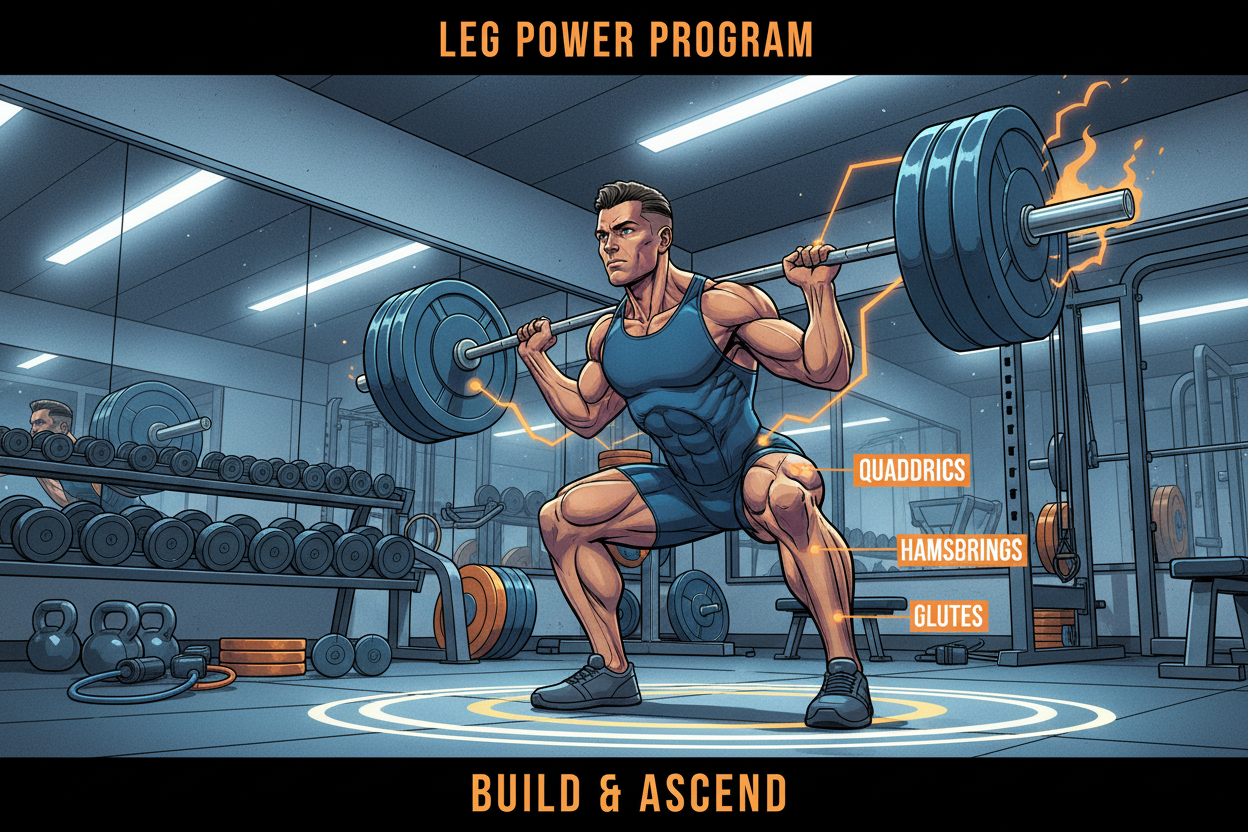
While low-bar squats allow you to move more weight, the high-bar variation is the best exercise for leg growth when specifically targeting the quadriceps. By keeping your torso upright, you force a greater degree of knee flexion.
This stretches the quad muscles under load, creating the micro-tears necessary for hypertrophy. If you can't squat with a barbell due to back issues, the Hack Squat machine is a perfectly acceptable—and sometimes superior—alternative for isolation.
2. The Hamstring Builder: Romanian Deadlift (RDL)
Many lifters neglect the back of their legs. This is a mistake. The best workout for leg growth must include a hip-hinge movement. The RDL isolates the hamstrings and glutes by taking the knees out of the equation.
Focus on pushing your hips back until you feel a deep stretch in the hamstrings. Do not just drop the bar to the floor; control the eccentric (lowering) phase. That stretch is where the growth happens.
3. The "Widowmaker": Bulgarian Split Squats
This is arguably the best leg workout for muscle growth if you have limited equipment or lower back pain. It places the entire load on one leg, doubling the intensity without doubling the spinal compression.
It creates immense metabolic stress. The pump you get from these is painful, but that accumulation of metabolites (lactate) signals the body to release growth hormone.
Common Mistakes Killing Your Gains
Even with the best workout for leg growth, you will fail if your execution is sloppy. The most frequent error is "ego lifting"—using a range of motion so short it barely engages the muscle.
Half-reps on the leg press might impress the gym floor, but they do nothing for your vastus lateralis. Drop the weight, control the descent for 3 seconds, and explode up. Tension, not just weight, builds muscle.
My Training Log: Real Talk
I want to be honest about what effective leg training actually feels like. It isn't just "hard"; it is visceral.
I remember specifically when I finally broke through my own plateau. I had swapped standard squats for slow-tempo Hack Squats. During my third set, I wasn't just tired—I felt a specific, nauseating wobble in my quads that made it hard to stand still between reps. It wasn't joint pain; it was the accumulation of blood in the muscle.
The real reality check? The Bulgarian Split Squats. It's not just the burn; it's the balance struggle. I recall vividly the frustration of my back foot slipping off the bench because my sweat had made the vinyl slick, and the mental battle of knowing I still had to do the left leg after my right leg was already shaking. That specific moment—where you want to quit but do two more reps anyway—is the only place where actual growth happens. If you leave the gym walking normally, you probably didn't do enough.
Conclusion
Building legs requires a masochistic level of dedication. You need to combine the heavy mechanical tension of squats with the gut-wrenching volume of split squats and leg presses. Stop looking for shortcuts and start embracing the discomfort. The growth is in the grind.
Frequently Asked Questions
How often should I train legs for maximum growth?
For most natural lifters, training legs twice a week is optimal. This frequency allows you to hit the best exercise for leg growth with high intensity while offering enough recovery time (48-72 hours) for protein synthesis to occur.
Is the leg press as good as the squat?
They serve different purposes. The squat is a systemic builder that improves total body strength and coordination. However, for pure hypertrophy (muscle size), the leg press can be superior because it removes the stability factor, allowing you to push your muscles to absolute failure safely.
Why are my legs getting stronger but not bigger?
This is usually a volume issue. Strength is neural adaptation (low reps, heavy weight), while size requires metabolic stress and volume. If you are only doing sets of 3-5 reps, try increasing your rep range to 8-15 or even 20 reps for certain movements to stimulate hypertrophy.