Stop Doing Leg Ext Like This: The Knee-Saving Guide
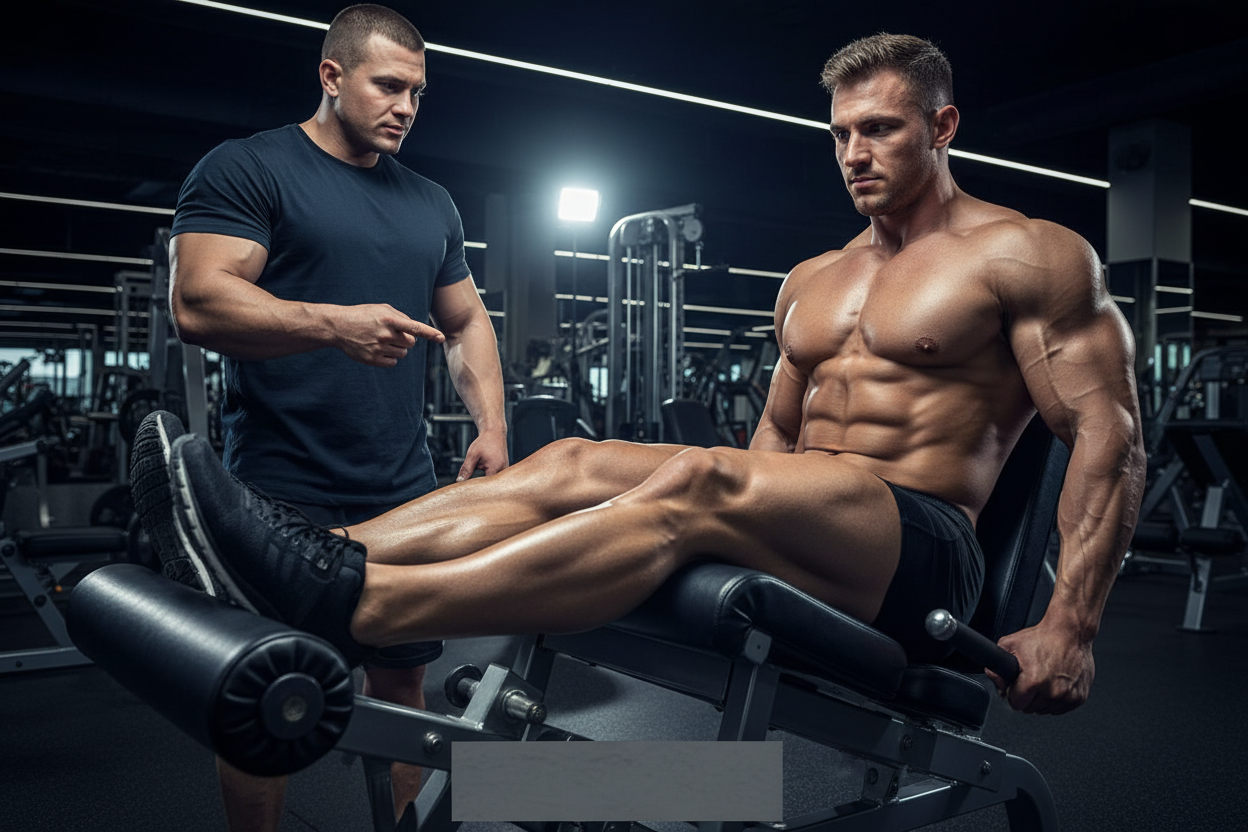
Walk into any commercial gym, and you will see the leg extension machine occupied. It is the gold standard for isolating the quadriceps. However, despite its popularity, the **leg ext** is arguably the most botched movement on the gym floor.
Many lifters treat this machine like a recliner chair, kicking their legs mindlessly while scrolling on their phones. Others avoid it entirely, fearing the rumors that it destroys knee joints. The truth lies in the middle: it is an exceptional tool for hypertrophy, but only if you respect the biomechanics.
Key Takeaways: Quick Form Checklist
If you want to skip the fluff and get right to the mechanics, here is the summary of proper execution:
- Align the Pivot Point: Your knee joint must line up perfectly with the machine's axis of rotation (the cam).
- Pad Placement: Set the lower pad just above your ankles, not on your feet or halfway up your shins.
- Lock Your Hips: Grip the handles tightly to pull your butt down into the seat; do not let your hips rise.
- Control the Negative: Never let the weight stack crash. Take 2-3 seconds to lower the weight.
- Full Extension: Squeeze at the top for a full second to engage the rectus femoris.
What Is a Leg Extension?
Technically speaking, this is an open-chain kinetic exercise. Unlike the squat (closed-chain), where your feet are fixed against the floor, the leg extension allows your feet to move freely. This distinct leg extension movement isolates the quadriceps muscles without involving the glutes or hamstrings.
While compound movements are king for total mass, quadriceps machine exercises are superior for targeting the Rectus Femoris—the only quad muscle that crosses the hip joint. If you want that detailed "sweep" on the front of your thigh, you cannot ignore this movement.
How to Use Leg Extension Machine Properly
Most knee pain stems from a poor leg extension set up. Before you even touch the pin to select your weight, you need to adjust the machine to your body.
1. The Axis of Rotation
This is the most critical step. Look at the machine; there is a pivot point where the arm swings. Sit down and adjust the backrest so that your knee joint is directly in line with that pivot point. If your knees are too far back or too far forward, you place massive shearing force on the knee cap (patella).
2. The Lower Pad
Adjust the shin pad so it rests on the lower leg extension area, right above the ankle joint. If it is on your foot, you will use your ankles to lift (bad leverage). If it is too high on the shin, you lose range of motion.
3. The Start Position
Set the starting angle so your legs are bent past 90 degrees if your knee health permits. This ensures you are working the muscle through a full range of motion. This is how to properly do leg extensions for maximum growth.
Execution: The Perfect Leg Extension Form
Once you are locked in, the execution is about tension, not moving weight from A to B.
Step 1: Grasp the handles on the side of the seat. Pull yourself down. This acts as a brace. If you don't do this, your hips will lift as you extend, turning the move into a weird, ineffective hip thrust.
Step 2: Extend leg smoothly. Do not kick. Explosive kicking creates momentum, which robs your quads of tension and shocks your tendons.
Step 3: The Peak Contraction. At the top, lock your knees out (unless you have pre-existing injury concerns) and flex your quads hard. This is the leg extension and squeeze component that builds detail.
Step 4: Lower the weight slowly. Fight the resistance on the way down.
Common Mistakes and Variations
The "Ego Lifter" Kick
If you have to throw your upper body backward to get the weight up, the load is too heavy. You are using momentum, not muscle. Drop the weight and focus on the extension of leg muscles strictly.
Toes In, Out, or Neutral?You may hear advice to turn your toes in or out to target different quad heads (teardrop vs. sweep). While there is some electromyography (EMG) evidence for this, it often places torque on the knee. For 90% of lifters, a neutral foot position is the best way to do leg extensions safely.
Single Leg Extension
If you have a muscle imbalance, use the single-leg variation. This prevents your dominant leg from taking over the leg extension workout.
My Training Log: Real Talk
I have a love-hate relationship with this machine. I remember specifically training for a photoshoot years ago and relying heavily on squats. My legs were big, but they lacked detail. I added high-volume leg extensions, and that's when things changed.
But here is the "unpolished" reality no textbook tells you: The moment you start truly failing on a leg extension, your butt wants to shoot off the seat. It’s a survival reflex. I have to consciously visualize gluing my glutes to the pad. Also, the shin pad? If you are sweating and wearing shorts, that cheap vinyl gets slippery. I’ve had sets ruined because the pad slid up my sweaty shin mid-rep. Now, I always wipe the pad down or wear high socks on leg day. It’s a small detail, but it changes the stability of the lift entirely.
Conclusion
The gym leg extension is not a villain; it is a tool. When performed with a controlled tempo and proper alignment, it is the best finisher for a quad workout. Stop kicking, start squeezing, and respect the setup. Your knees will stay healthy, and your quads will finally grow.
Frequently Asked Questions
Are leg extensions bad for your knees?
Not inherently. They become dangerous when the user fails to align their knee with the machine's pivot point or uses excessive momentum (kicking). However, those with existing ACL injuries should consult a physio, as the shear force is higher here than in squats.
What is the best rep range for leg extensions?
Since this is an isolation exercise, it responds best to metabolic stress rather than low-rep strength work. Aim for 12 to 20 reps. Going too heavy (1-5 reps) increases injury risk without significant hypertrophy benefits.
Can I do leg extensions at home without a machine?
Yes, you can mimic the movement. A popular leg extension variation is to sit on a high chair or bench with a dumbbell held between your feet. Alternatively, you can perform "Nordic leaning extensions" using just your body weight on a mat.