Exercise Equipment Types: The Definitive Guide for Your Goals
Walking onto a commercial gym floor for the first time—or even the fiftieth—can feel like entering a cockpit without a flight manual. You are surrounded by pulleys, levers, iron plates, and digital screens. If you don't know what you are looking at, you end up sticking to the treadmill or doing bicep curls in the squat rack.
Understanding the specific functions of different **exercise equipment types** is not just about gym etiquette; it is about efficiency. Whether you want to rehabilitate an injury, build max strength, or improve cardiovascular health, the tool you choose dictates the result. Let’s break down the mechanics, the science, and the practical applications of the gear you will encounter.
Key Takeaways: The Equipment Hierarchy
If you are looking for a quick breakdown of the gym floor, here is how the equipment is categorized based on biomechanics and intent:
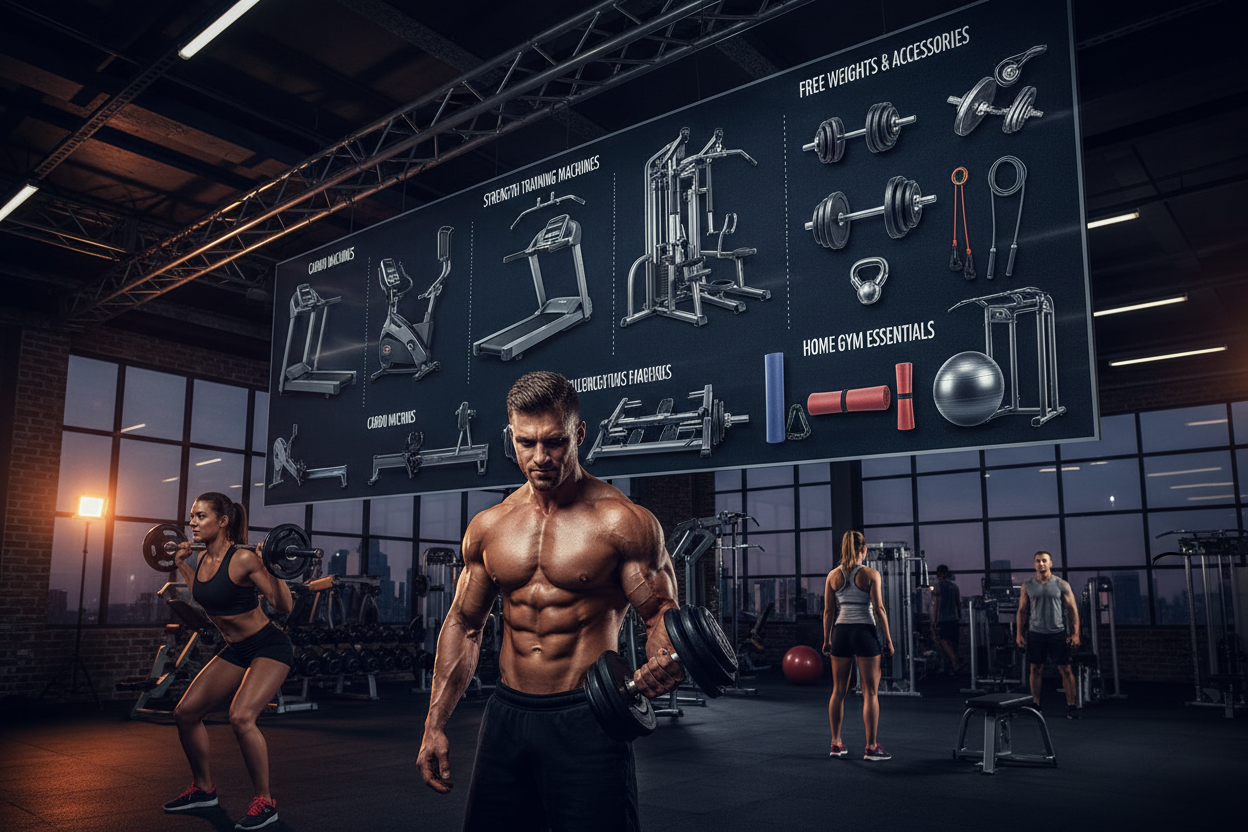
- Cardiovascular Machines: Equipment designed to elevate heart rate and improve aerobic capacity (e.g., Treadmills, Rowers, Ellipticals).
- Free Weights: Gravity-based resistance tools that require user stabilization (e.g., Barbells, Dumbbells, Kettlebells).
- Selectorized Machines: Pin-loaded devices that isolate specific muscle groups with a fixed range of motion.
- Plate-Loaded Machines: Hybrids that move on a fixed path but require manual loading of weight plates (e.g., Leg Press, Hack Squat).
- Functional Gear: Tools for mobility, stability, and plyometrics (e.g., Medicine balls, TRX, Resistance bands).
Cardio Machines: Beyond Just Running
Most people view these as calorie burners, but different types of exercise machines in the cardio section serve different physiological purposes.
The Treadmill and Stair Mill
These are high-impact machines. They are excellent for bone density due to the load-bearing nature of the movement. However, the science suggests that if you have joint issues, the repetitive impact might be counterproductive. Use these for steady-state endurance or incline walking to target the posterior chain without the pounding of running.
Rowers and Air Bikes
These are often classified as "conditioning" tools rather than just cardio. Because they require upper and lower body coordination, they spike your heart rate faster than a treadmill. They are non-impact, making them ideal for high-intensity interval training (HIIT) without destroying your knees.
Strength Training: Machines vs. Free Weights
This is where the debate usually heats up. The truth is, you need both, but for different reasons.
Selectorized and Plate-Loaded Machines
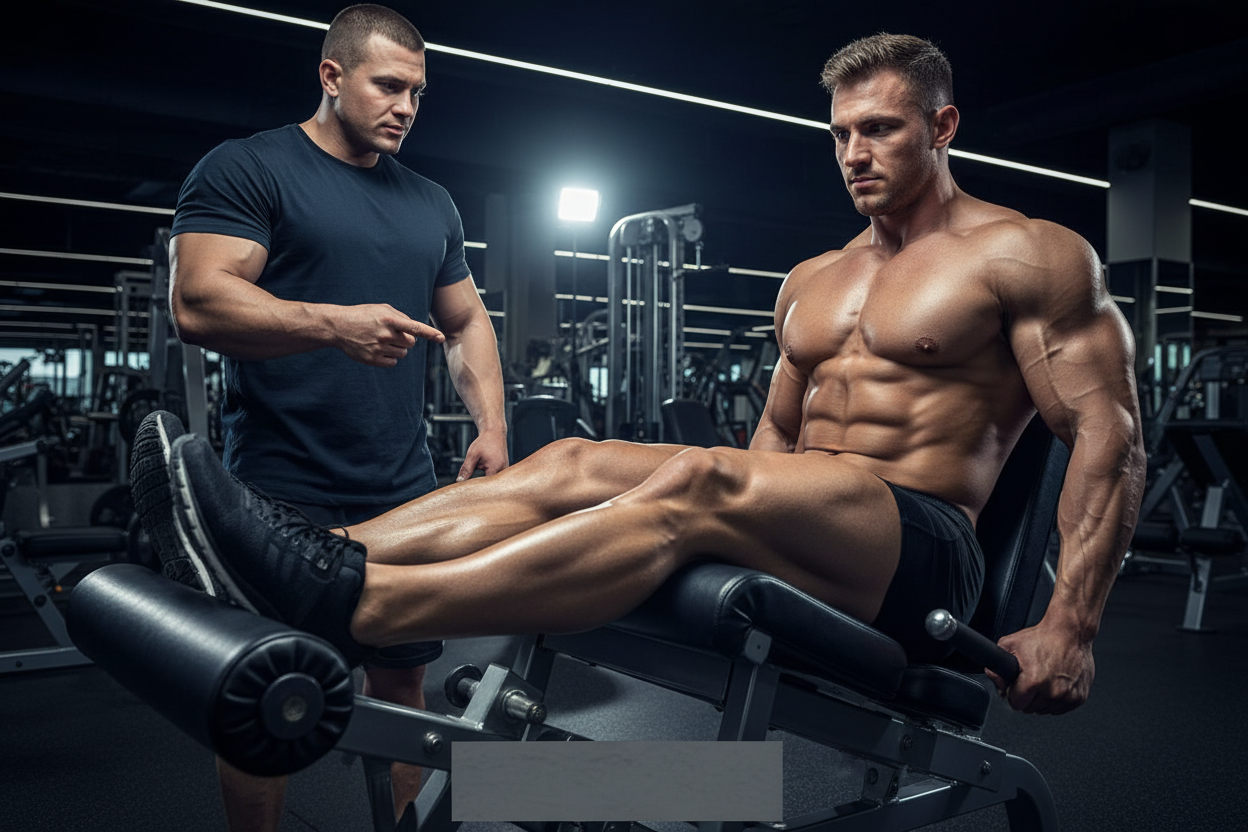
Machines provide stability. When you sit on a chest press machine, you don't have to worry about balancing the weight; you just push. This allows you to take a muscle to absolute failure safely.
These are the best types of exercise equipment for hypertrophy (muscle growth) when you are fatigued. If your stabilizers are shot from a heavy compound lift, switching to a machine allows you to keep working the target muscle without risking injury due to a breakdown in form.
Free Weights: The King of Stabilization
When discussing types of weightlifting equipment, free weights are the gold standard for athletic performance. Barbells, dumbbells, and kettlebells force your central nervous system (CNS) to recruit stabilizing muscles to control the load.
For example, a machine shoulder press works the deltoids. A standing barbell overhead press works the deltoids, triceps, upper chest, core, and glutes. The metabolic demand is higher with free weights, meaning you burn more energy and build more functional strength.
Functional and Cable Equipment
Do not ignore the cable stack. Cables provide "constant tension." Unlike a dumbbell, where gravity dictates the resistance curve (making it easy at the top of a curl), a cable keeps the tension on the muscle throughout the entire range of motion.
Functional tools like medicine balls and suspension trainers (TRX) are less about raw strength and more about proprioception—your body's ability to sense movement within joints and joint position.
My Personal Experience with Exercise Equipment Types
I want to step away from the technical definitions and talk about the actual "feel" of this gear, which manufacturers rarely mention.
A few years ago, I was training in a budget hotel gym versus my usual commercial box. I learned the hard way that not all equipment is created equal. I hopped on a cheap cable crossover machine, and the friction was terrible. The weight stack didn't glide; it stuttered. Every time I pulled, I felt a gritty "catch" in the cable that took the tension off my chest and put it all into my rotator cuff.
Conversely, when discussing types of weightlifting equipment, the knurling (the rough texture) on a barbell matters immensely. I've used cheap chrome bars where the knurling was so passive it felt like holding a soapy pipe—my grip failed long before my back muscles did. On the flip side, a competition-grade power bar has knurling so aggressive it feels like it's velcroed to your calluses. When you are looking at gear, don't just look at the weight rating. Touch it. If the machine wobbles when you sit, or the cable drags, it’s going to kill your mind-muscle connection.
Conclusion
There is no single "best" piece of equipment. The best tool is the one that aligns with your current goal and injury history. Use machines to build muscle safely, free weights to build total-body strength, and cardio tools to condition your engine. The magic happens when you learn to mix these tools into a cohesive program.
Frequently Asked Questions
What are the best types of exercise equipment for weight loss?
While cardio machines burn calories during the session, free weights and resistance machines build muscle. Muscle tissue burns more calories at rest than fat tissue. A combination of rowing (for high calorie burn) and compound weightlifting (for metabolic rate increase) is usually superior to just running.
Are machines safer than free weights?
Generally, yes. Machines restrict your path of motion, making it difficult to get into a "bad" position. However, relying solely on machines can lead to weak stabilizer muscles, which might increase injury risk in real-life scenarios. A balanced approach is best.
What is the most versatile piece of equipment for a home gym?
If you can only choose one, adjustable dumbbells or a high-quality kettlebell offer the most versatility. They allow you to perform hundreds of movements covering every body part, taking up less than two square feet of floor space.