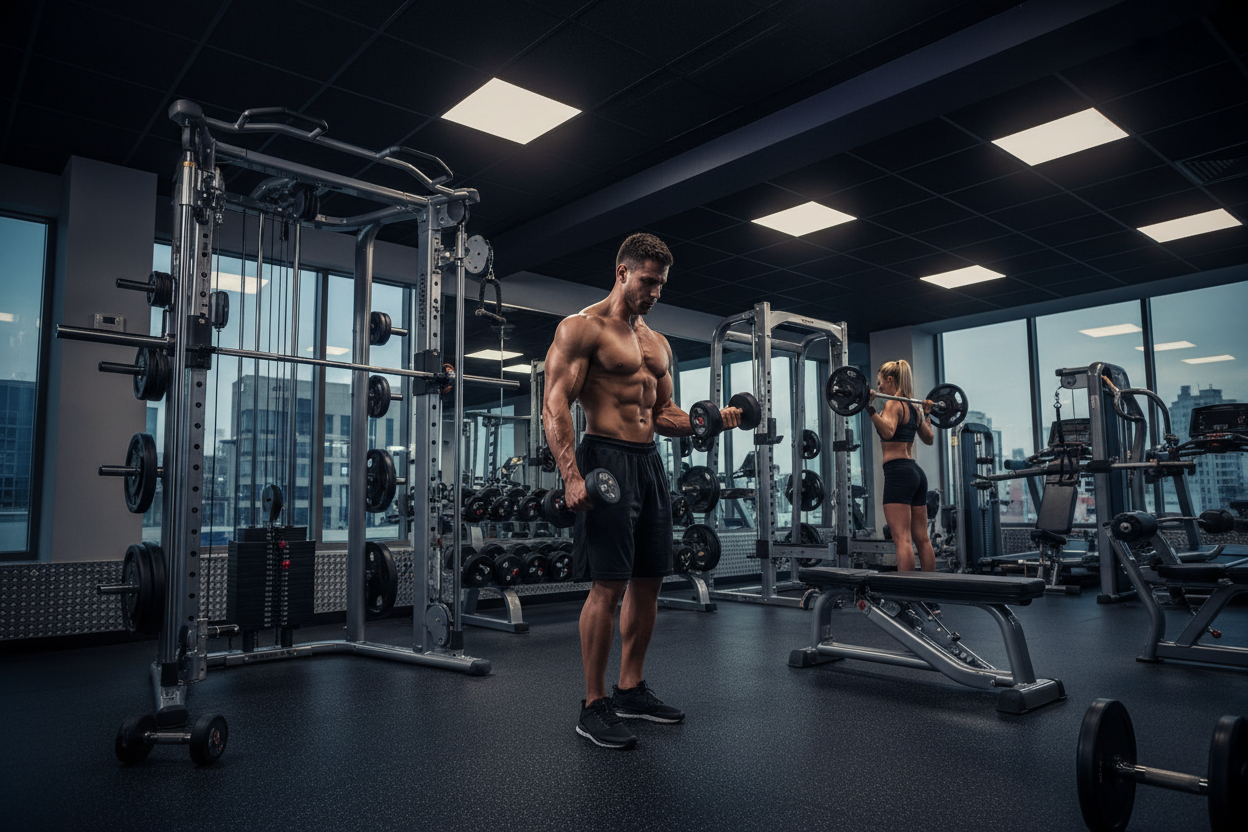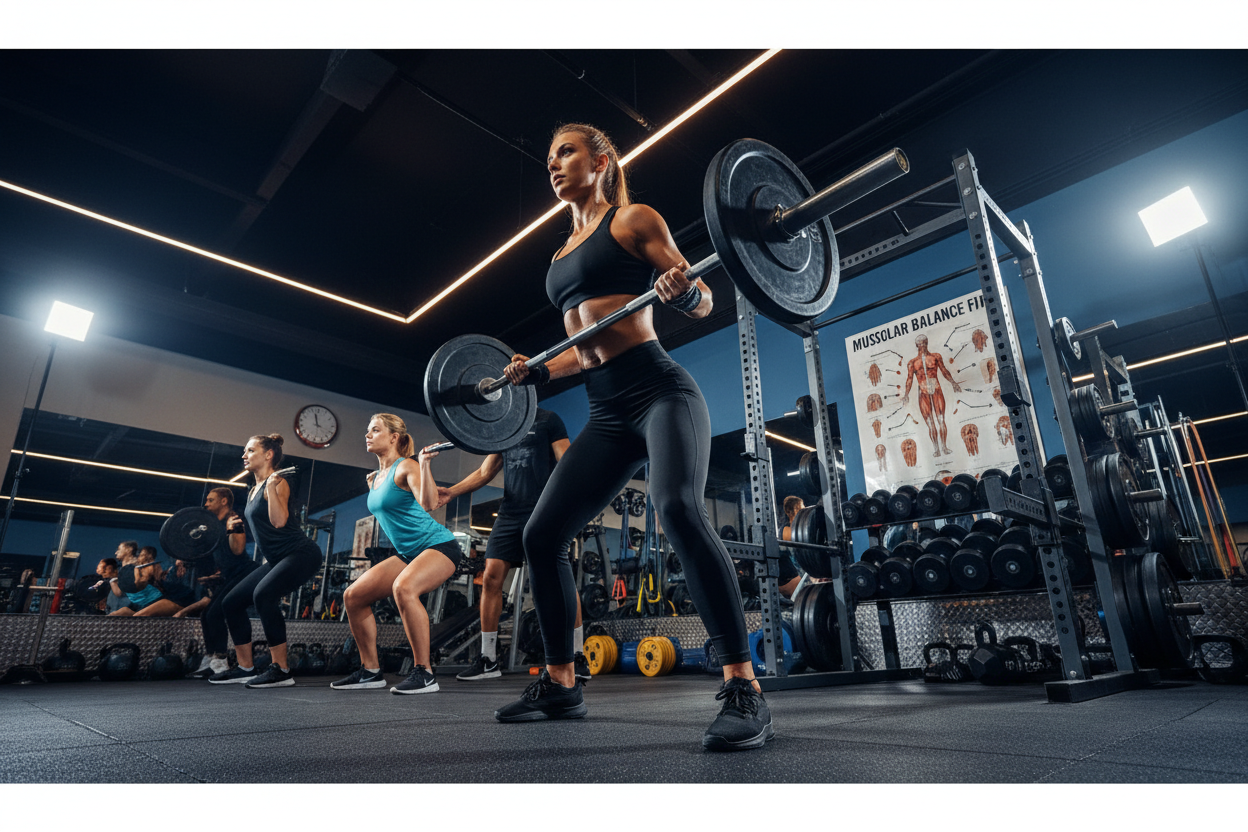
Stop Doing Exercises for Good Thighs Wrong: The Muscular Balance Fix
You have probably seen the endless stream of influencers doing kickbacks with ankle weights, promising they are the secret to powerful legs. But if you want actual structural change and functional strength, those isolation movements are merely the icing on a very small cake. To build a lower body that performs as well as it looks, you need to understand biomechanics, not just follow trends.
Finding the right exercises for good thighs isn't about confusion or muscle shock; it is about mechanical tension and progressive overload applied to the correct muscle groups.
Key Takeaways: The Thigh Blueprint
- Compound Over Isolation: Multi-joint movements like squats and hinges recruit more muscle fibers than machines like leg extensions.
- Unilateral Importance: Single-leg work (lunges, split squats) is non-negotiable for fixing imbalances and strengthening thigh exercises.
- Posterior Chain Focus: Good thighs require balanced hamstrings to counteract quad dominance and prevent knee injury.
- Progressive Overload: You must increase weight, reps, or tension over time to force adaptation.
The Anatomy of a Great Thigh Workout
Before we touch a barbell, you need to know what you are targeting. A comprehensive muscle thigh workout hits three distinct areas. If you neglect one, you lose both aesthetics and stability.
1. The Quadriceps (The Front)
These are the extensors. They straighten your knee. While they are the showpiece muscles, overtraining them while neglecting the back of the leg is a recipe for ACL tears.
2. The Hamstrings (The Back)
Responsible for knee flexion and hip extension. Exercises for thigh muscles often ignore these, leading to "quad dominance." Weak hamstrings result in a flat side profile and unstable knees.
3. The Adductors (The Inner Thigh)
These stabilize the pelvis. If your knees cave inward during a squat, weak adductors (and glutes) are usually the culprit.
The "Big Three" Mechanics for Leg Development
Forget doing twenty different movements. You only need variations of three movement patterns to construct a muscle thigh exercises routine that actually works.
The Squat Pattern
Whether it is a Goblet Squat, Front Squat, or High-Bar Back Squat, deeply flexing the knee and hip simultaneously is the king of great thigh workouts. The goal here is depth. Partial reps yield partial results. Deep squats stretch the fascia and recruit the adductors significantly more than shallow ones.
The Hinge Pattern
This targets the posterior chain. Romanian Deadlifts (RDLs) are superior here. Unlike a standard deadlift where you push the floor away, the RDL is about pushing your hips back until you feel a deep stretch in the hamstrings. This is the ultimate strong thighs exercise for the back of the legs.
The Unilateral Pattern
This is where the ego dies. Bulgarian Split Squats or Reverse Lunges force each leg to carry its own load. This exposes imbalances immediately. If your left leg shakes while your right leg is stable, you have found your weak link.
Volume and Frequency: The Sweet Spot
Legs are large muscle groups requiring significant recovery. For most natural lifters, hitting these strengthening thigh exercises twice a week is optimal. This allows for 48 to 72 hours of recovery. Aim for 10 to 15 hard sets per week for quads and hamstrings respectively. If you can walk perfectly fine immediately after your session, you likely didn't push close enough to failure.
My Training Log: Real Talk
I want to be honest about what effective leg training actually feels like because the Instagram highlight reels rarely show the ugly side. When I finally committed to deep, high-bar squats for my exercises for good thighs routine, the first thing I noticed wasn't muscle growth—it was the nausea.
There is a specific, metallic taste you get in the back of your throat after a set of 12 reps on the Bulgarian Split Squat. I remember vividly the wobble I felt walking down the gym stairs—specifically that terrifying moment your knee just decides to "give out" on the second step. I stopped caring about the weight on the bar and started obsessing over that deep, uncomfortable stretch at the bottom of the movement. That is when the size actually came. It wasn't the heavy singles; it was the grinding, shaking reps in the 8-12 range where my waistband felt like it was cutting off circulation and my lungs were burning. That is the cost of entry.
Conclusion
Building strong, capable legs doesn't require a complex matrix of machinery. It requires mastering the squat, the hinge, and the lunge, and then applying enough intensity to force your body to adapt. Stick to the basics, embrace the discomfort of unilateral training, and the results will follow.
Frequently Asked Questions
Can I build big thighs without heavy weights?
Yes, to a degree. You can build muscle with lighter weights if you take the sets close to failure (high reps). However, for maximum muscle thigh workout efficiency, mechanical tension through moderate-to-heavy weights usually yields faster strength gains.
How often should I train legs?
For most people, training legs twice a week allows for sufficient volume without compromising recovery. A "lower/upper" split is often better for strengthening thigh exercises than a once-a-week "bro split."
Why do my knees hurt during thigh exercises?
Knee pain is often a result of poor ankle mobility or weak hips, not the exercise itself. If your heels lift off the ground during exercises for thigh muscles like squats, you are putting shear force on the knees. Work on ankle dorsiflexion and glute activation.