Stop Doing Endless Squats: The Real Blueprint for Building Stronger Glutes
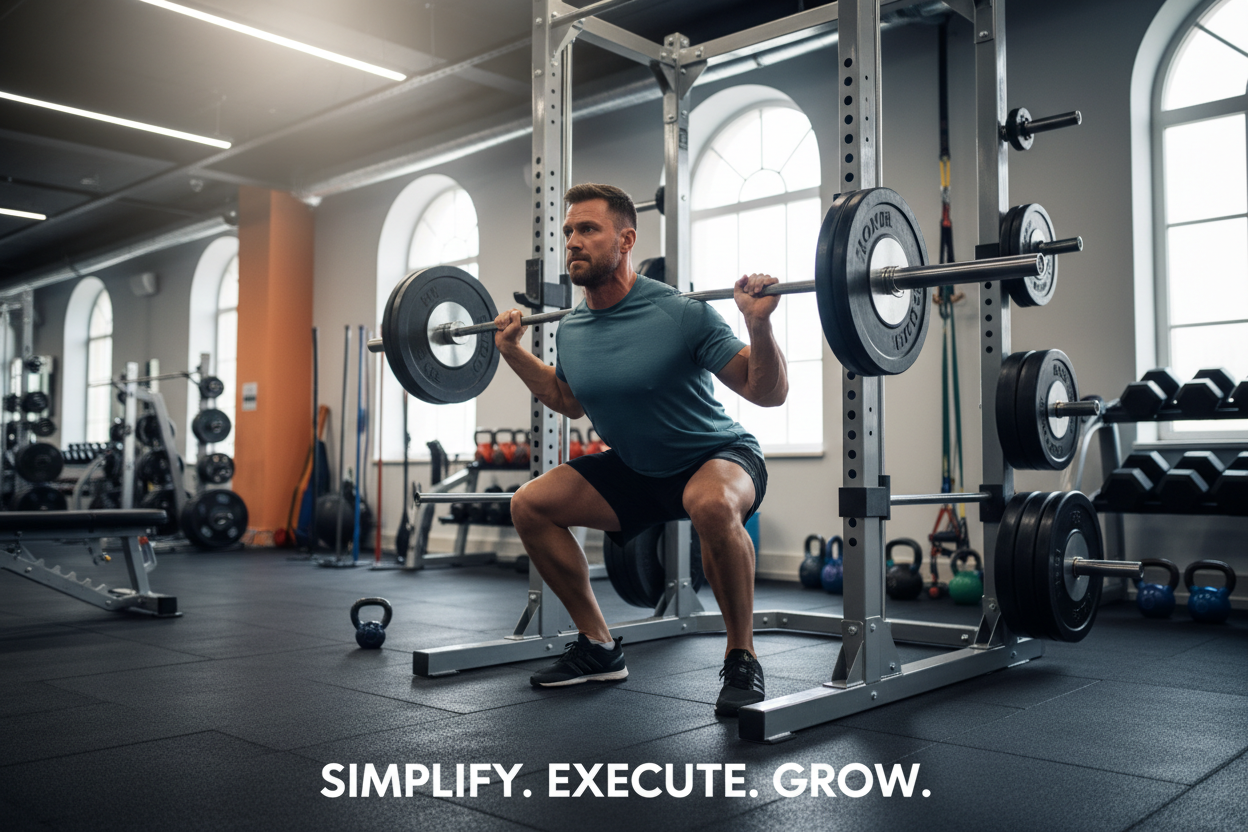
Most people assume that if they want a better backside, they need to live in the squat rack. While squats are a fundamental movement, they are primarily a knee-dominant exercise that targets the quadriceps. If your goal is specifically to develop size, strength, and shape in your posterior, you need to prioritize hip extension and abduction over knee flexion. To truly wake up these dormant fibers, you have to move beyond basic up-and-down movements and start training the hips through their full range of motion with targeted intensity.
Understanding the Anatomy of Your Powerhouse
Before lifting heavy iron, you need to understand what you are actually trying to build. The posterior of the hip isn't just one big slab of meat. It is a complex architecture of three distinct movers. The glute muscles consist of the Maximus, Medius, and Minimus. The Maximus is the main attraction—it's the largest muscle in the human body and is responsible for the shape of your rear and the power in your stride.
Underneath and to the sides, you have the Medius and Minimus. These are often neglected, yet they are critical for hip stability and pelvic alignment. When these smaller stabilizers are weak, your knees might cave inward during a lift, or you might experience lower back pain. Thinking of them merely as bum muscles simplifies their role too much; they are the structural foundation of your entire lower body chain. If they fail, the load shifts to the lumbar spine, leading to injury rather than gains.
The Silent Epidemic: Gluteal Amnesia
Modern life is the enemy of a strong posterior. We spend hours sitting in chairs, cars, and on couches. This constant compression and lack of use leads to a phenomenon often called "gluteal amnesia." Essentially, your brain forgets how to properly activate the tissue. You might be going through the motions of a deadlift, but your hamstrings and lower back are doing all the heavy lifting while the glute stays soft and unengaged.
I learned this the hard way a few years ago. I was deadlifting respectable numbers, but my lower back was constantly tight, bordering on painful. I assumed it was just part of training heavy. During a session with a physical therapist, he asked me to perform a simple single-leg bridge. I couldn't keep my hips level. My hamstrings cramped instantly. It turned out that despite my heavy lifting, my glutes were essentially asleep. I had to strip the weight off the bar and spend two months doing activation drills just to relearn how to squeeze my own butt. It was humbling, but once I fixed that firing pattern, my back pain vanished and my lift numbers skyrocketed.
Activation Before Loading
You shouldn't walk into the gym and immediately load up a barbell. A proper warm-up requires priming the neural connection. Spend five minutes doing banded lateral walks, clam shells, or bodyweight hip thrusts. Focus entirely on the squeeze. If you can't feel the muscle contracting without weight, you certainly won't feel it with 200 pounds on your back.
The Top Exercises for Posterior Development
Once you are activated, you need to choose movements that provide the highest level of tension. Whether you see them written in workout logs as glutes or gluts, the mechanics for growing them remain the same: mechanical tension, metabolic stress, and muscle damage.
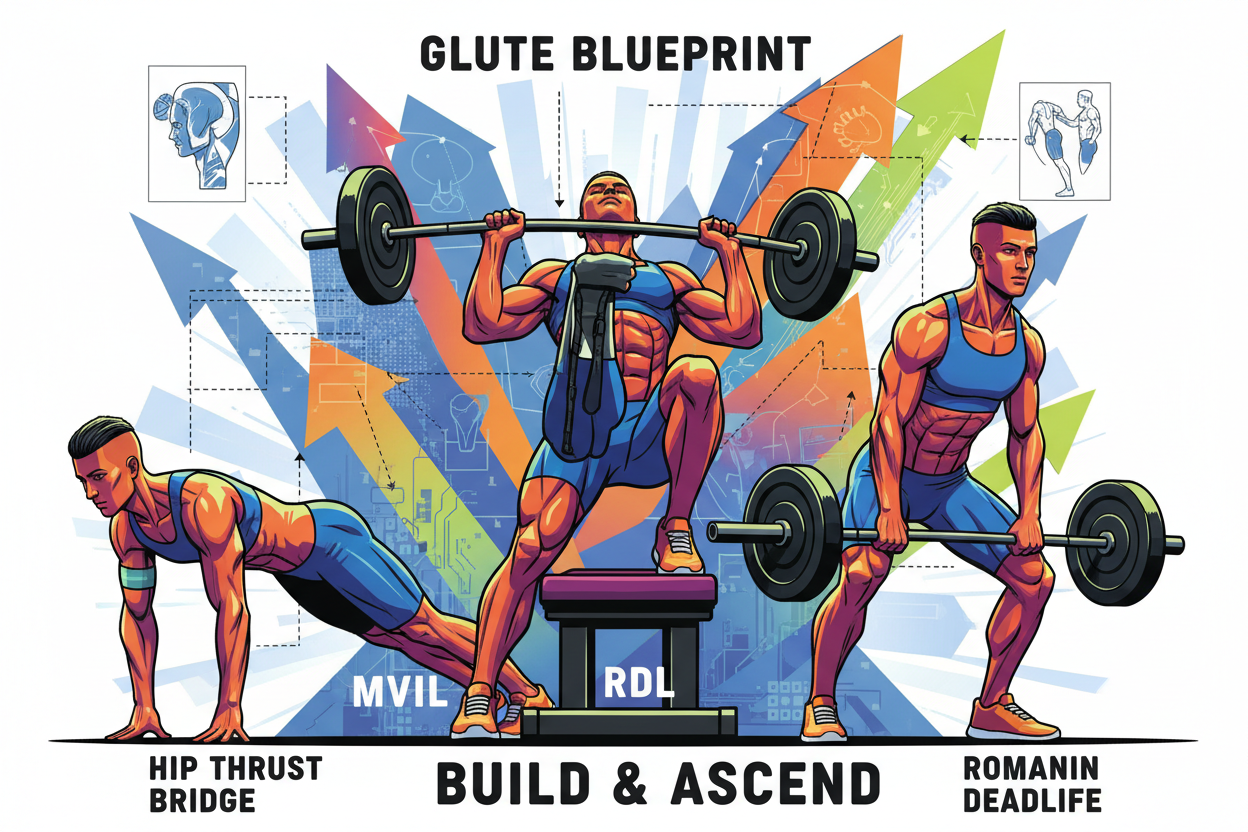
The Hip Thrust is widely considered the king of booty building exercises. Unlike the squat, where tension on the hips decreases at the top of the movement, the hip thrust places maximum tension on the glutes at full contraction (the top of the lift). This creates a unique stimulus that forces growth. Keep your chin tucked, your ribs down, and drive through your heels.
Romanian Deadlifts (RDLs) are essential for the eccentric portion of the movement. This exercise stretches the muscle fibers under load. Push your hips back as if you are trying to close a car door with your rear end, keeping a slight bend in the knees. You should feel a deep stretch in the hamstrings and glutes before snapping the hips forward to return to standing.
Bulgarian Split Squats are the exercise everyone loves to hate, but their efficacy is undeniable. By isolating one leg, you remove the ability of the dominant side to take over. This creates significant balance demands which force the Gluteus Medius to fire aggressively to keep you upright. Lean your torso slightly forward to shift the emphasis from the quads to the hips.
Frequency and Volume
A common question involves how often to train this area. Because these muscles are large and resilient, they can handle a higher frequency than smaller muscle groups like biceps. However, recovery is still dictated by intensity. If you are lifting heavy with compound movements, training them 2 to 3 times a week is optimal. This allows for roughly 48 hours of recovery between sessions.
Vary your rep ranges. Among all your skeletal muscles glutes contain a mix of slow-twitch and fast-twitch fibers. This means they respond well to heavy, low-rep work (sets of 5-8) for strength, as well as lighter, high-rep work (sets of 15-20) for metabolic stress and the "pump." A good program will mix heavy hip thrusts with high-rep abduction work to hit every fiber type.
Nutrition and Recovery
No amount of hip thrusting will change your physique if you aren't fueling the growth. Muscle tissue requires protein to repair and carbohydrates to fuel the intense contractions needed for hypertrophy. Ensure you are eating in a slight caloric surplus if your goal is to add size. Sleep is equally vital; growth hormone is released during deep sleep cycles, which is when the actual muscle building occurs.
Consistency is the final piece of the puzzle. You cannot reshape your body in a week. It takes months of progressive overload—adding a little more weight or doing one more rep than you did last time—to see significant changes. Trust the process, focus on the sensation of the muscle working rather than just moving weight from A to B, and the results will follow.
Frequently Asked Questions
Can I build glutes without using heavy weights?
Yes, but only to a certain point. Beginners can see results with bodyweight and resistance bands, but progressive overload is necessary for continued growth. Eventually, you will need to add external resistance (dumbbells, barbells, or machines) to continue challenging the muscles.
Why do I feel leg exercises in my lower back instead of my glutes?
This usually indicates poor core bracing or a lack of hip mobility, causing you to compensate by arching your lumbar spine. Focus on "tucking" your pelvis slightly (posterior pelvic tilt) and reducing the weight until you can maintain a neutral spine and feel the correct muscles working.
Is it better to train glutes on their own day or with legs?
It depends on your schedule and recovery capacity. Many people find success pairing glutes with hamstrings on one day and quads on another. However, a dedicated "glute day" allows you to focus entirely on that area without fatigue from other heavy compound lifts limiting your performance.