Stop Doing Chest Exercises on Gym Machines Wrong (Read This)
Walk into any commercial fitness center, and you will see a divide. On one side, the bench press crowd fighting under heavy barbells. On the other, rows of sleek equipment often dismissed as "too easy." Here is the reality: ignoring the potential of a chest exercises gym machine routine is a massive mistake for hypertrophy.
Machines provide stability that allows you to take muscles to absolute failure safely. They offer constant tension that gravity-dependent free weights simply cannot match. If your goal is pure muscle growth rather than powerlifting specificity, machines are not just an alternative; they are a primary tool.
Quick Summary: The Essentials
- Stability is King: Machines remove the need to balance the weight, allowing 100% of your output to go toward pushing and contracting the pecs.
- The "Big Three" Machines: The Converging Chest Press, the Pec Deck (Machine Fly), and Cable Crossovers form the holy trinity of a machine chest workout.
- Constant Tension: unlike dumbbells, cables and machines provide resistance throughout the entire range of motion.
- Safety Factor: You can train to failure without a spotter, making high-intensity techniques like drop sets much safer.
Why Your Machine Chest Workout Fails
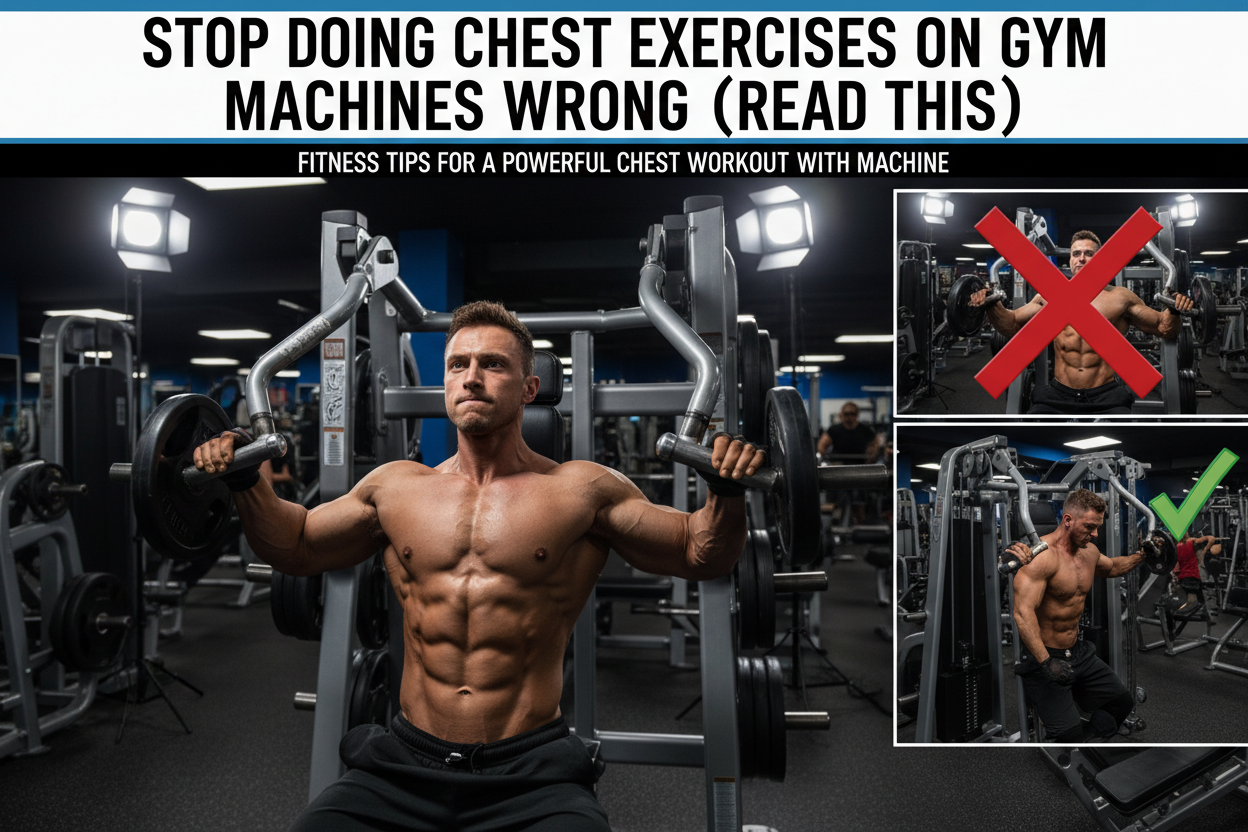
Many lifters hop on a chest press, push the handles, and assume the work is done. This is why they don't see growth. A machine guides the path, but it does not guarantee tension.
When performing chest exercises using machines, you must manually retract your scapula (shoulder blades). If your shoulders roll forward, the front deltoids take over, stealing the stimulus from the pecs. This is the most common error in any gym machine chest workout. You need to drive your back into the pad, not just push the weight away.
The Best Machines for Pecs (Ranked)
Not all equipment is created equal. If you have access to a fully stocked gym, prioritize these specific pieces of hardware.
1. The Converging Chest Press
This is arguably the best chest press machine for overall mass. Unlike standard press machines that push straight out, a converging machine brings your hands together at the top of the movement. This mimics the natural function of the pectorals (adduction). It provides a peak contraction that a standard barbell bench press physically cannot offer.
2. The Pec Deck (Machine Fly)
When looking for the best exercise machine for chest isolation, the Pec Deck wins. It removes the triceps from the equation entirely. The key here is to keep a slight bend in the elbows and focus on squeezing the elbows together, rather than just the hands. This mental cue shifts the load deeper into the muscle fibers.
3. Cable Crossover Station
While technically a "station," this is the best exercise equipment for chest shaping and angular variety. You can adjust the pulleys high to target the lower pecs or low to target the upper clavicular head. It is the ultimate tool for a machine chest exercises finisher.
Structuring the Best Chest Machine Workout
You don't need free weights to get a complete pump. Here is how to structure a session using only the best chest gym machines.
- Warm-up: 5 minutes of dynamic stretching.
- Compound Movement: Plate-Loaded or Selectorized Chest Press – 4 sets of 8-12 reps. (Focus on heavy load).
- Upper Chest Focus: Incline Machine Press (Smith Machine or Hammer Strength) – 3 sets of 10-12 reps.
- Isolation/Stretch: Pec Deck or Machine Fly – 3 sets of 15 reps. (Focus on the stretch).
- Finisher: Cable Crossovers – 2 sets to failure.
My Training Log: Real Talk
Let's be honest about the "feel" of these machines. I remember the first time I switched from a barbell-only program to a machine-heavy split due to a rotator cuff tweak. I used an older model Cybex chest press. The friction in the pulley system was gritty—I could literally feel the cable dragging over the wheel.
But that friction actually helped. It forced me to slow down my eccentric (lowering) phase because if I went too fast, the weight stack would slam. The most annoying part? The seat adjustment. On most Hammer Strength machines, I fall exactly between notch 3 and 4. Notch 3 puts the handles too high (shoulder impingement territory), and notch 4 feels like a decline press. I learned that bringing a small folded towel to sit on gave me that extra half-inch of height needed to align the handles perfectly with my mid-chest. If you don't adjust the machine to your specific biomechanics, you're just moving metal, not building muscle.
Conclusion
Building a standout chest doesn't require a spotter or a risky heavy bench press. By utilizing the best gym machines for chest, you can isolate the muscle, minimize injury risk, and maintain constant tension. Focus on your scapular retraction, control the negative, and don't be afraid to grind out those last few safe reps.
Frequently Asked Questions
Can you build a big chest with just machines?
Absolutely. Your muscles do not know the difference between a metal plate and a dumbbell; they only understand tension. As long as you apply progressive overload (increasing weight or reps over time) and maintain proper form, machine chest exercises are highly effective for hypertrophy.
What is the best machine for the upper chest?
The Incline Hammer Strength press or a low-to-high cable crossover are generally considered the best machines for pecs when targeting the upper clavicular head. These allow you to press or fly at an upward angle without the stability issues of dumbbells.
How often should I do a machine chest workout?
For most lifters, training chest twice a week is optimal. This frequency allows for sufficient recovery while maximizing protein synthesis signals. A gap of 48 to 72 hours between sessions is recommended.