How to Build Bulletproof Mobility With ATG Shoulder Exercises
If you have spent any time in a weight room, you likely know the nagging sensation of a pinch in the front of your deltoid or a stiffness that prevents a straight overhead lockout. Traditional rehab often prescribes endless band pull-aparts, but often, the issue returns the moment you load the joint. This is where the Knees Over Toes philosophy—originally popularized for lower body durability—shifts the paradigm for the upper body. By implementing specific atg shoulder exercises, you aren't just pumping blood into the muscle; you are restructuring the joint's ability to handle load through a full range of motion.
Key Takeaways
- Structural Balance First: ATG prioritizes the muscles behind the shoulder (rotator cuff, lower traps) before loading the front delts heavy.
- Long vs. Short Range: Exercises are categorized by strengthening the muscle in a stretched position versus a contracted position.
- Regression is Mandatory: Pain-free ability is the goal; using light weights (even 2-5 lbs) is standard protocol to start.
- External Rotation is King: The primary focus is often restoring external rotation to unlock overhead mobility.
The Philosophy: Why Knees Over Toes for Shoulders?
The core concept behind the Knees Over Toes guy shoulder approach is simple: you are only as strong as your weakest link. For most modern lifters and desk workers, that weak link is external rotation and scapular retraction.
When we sit at computers or bench press heavily, our shoulders roll forward. This creates an imbalance where the internal rotators (pecs, lats) overpower the external rotators. To build bulletproof shoulders knees over toes style, we have to reverse this. We don't avoid the vulnerable positions; we gradually expose the joint to them to build tolerance.
The Role of Long-Range Strength
Most gym movements work the mid-range of a muscle. ATG shoulders training emphasizes the "long range"—the point where the muscle is fully stretched. Strengthening a muscle while it is lengthened is the most effective way to improve flexibility and prevent injury simultaneously. This is why you see deep stretches under load in this system.
Essential ATG Shoulder Exercises
1. The Powell Raise
This is a staple for anyone dealing with knees over toes guy shoulder pain. It targets the scapular retractors and the rear delt in a way that standard flyes cannot.
The Execution: You lie on your side on a bench. With a straight arm, you lower a dumbbell across your body until it touches the floor (or as deep as you can go without pain), then raise it back up to vertical. The magic happens at the bottom. That deep stretch under load bulletproofs the rear of the shoulder capsule.
2. The ATG Shoulder Press
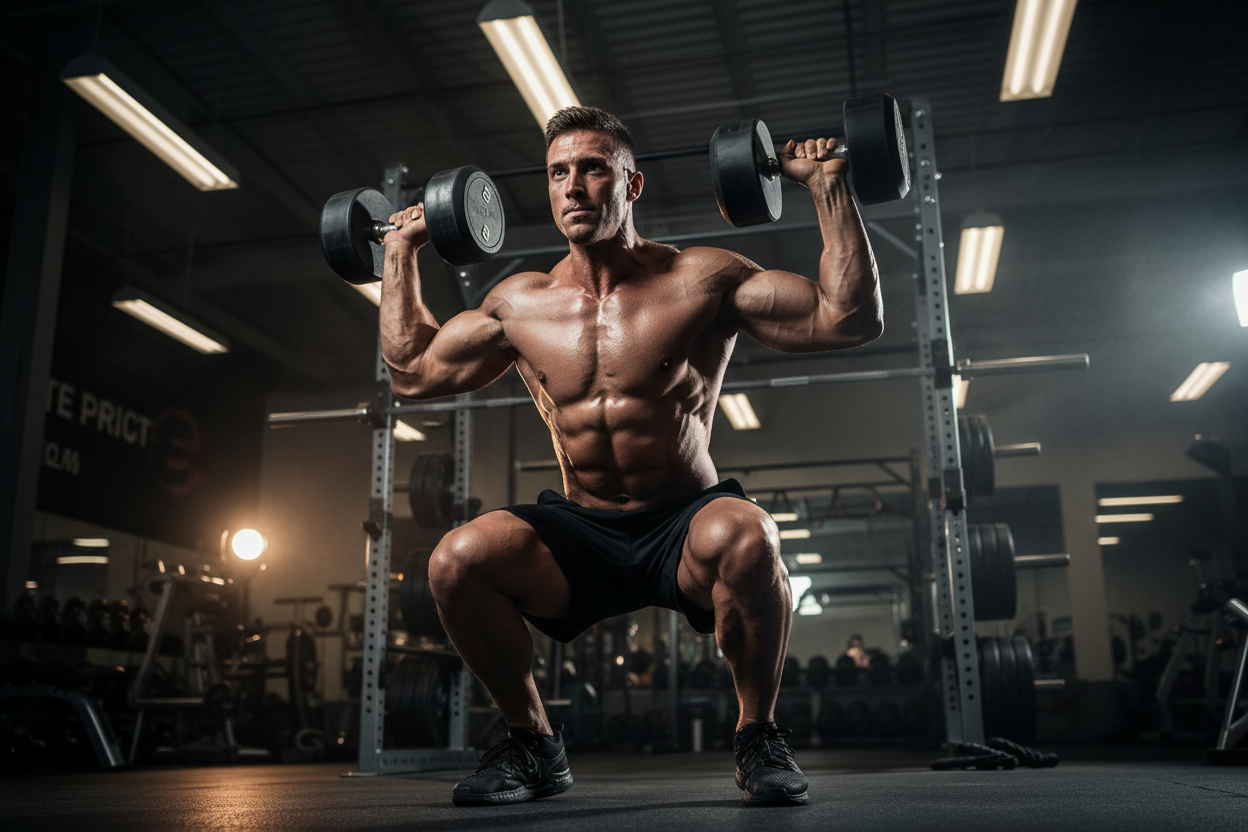
While many coaches demonize behind-the-neck pressing, the atg shoulder press embraces it—if you earn the mobility first. Pressing from behind the neck requires extreme external rotation.
The Science: By pressing from a position of retraction, you ensure that the scapula is moving properly. If you cannot do this without pain, the system regresses you to high-incline dumbbell presses with a focus on dropping the elbows as low as physically possible to maximize the stretch.
3. External Rotation (The Stick Drill or DB)
Knees over toes shoulder mobility relies heavily on rotation. This is often done seated with the knee supported, rotating a dumbbell up and down. This specifically targets the rotator cuff muscles (infraspinatus and teres minor). Strengthening these small stabilizers is often the "missing link" that cures chronic pressing pain.
Common Mistakes to Avoid
The biggest error I see athletes make with knees over toes shoulder exercises is ego lifting. Because the leverage is disadvantageous (long lever arms), a 10lb dumbbell feels like 50lbs.
If you arch your back or use momentum to swing the weight up during a Powell Raise or Trap-3 raise, you are negating the benefit. The load must be moved strictly by the target muscle. If you feel pain, you must regress. This might mean using no weight at all, or reducing the range of motion until the joint adapts.
My Training Log: Real Talk
I want to be transparent about my first month integrating these movements. I consider myself fairly strong, but the first time I tried the Powell Raise, I had to use a 5lb pink dumbbell. And honestly? It still humbled me.
There is a very specific, uncomfortable sensation when you do the Trap-3 raise correctly. It’s not the "pump" you get from bicep curls. It feels like a cramp deep in your mid-back, right next to the spine. I also noticed that when doing the seated external rotations, the knurling on the dumbbell handle would dig into my wrist bone awkwardly because I had to grip it so hard to maintain form.
The most surprising part wasn't the strength gain, but the "passive" feeling. After about three weeks, I noticed that when I stood relaxed, my thumbs naturally pointed forward instead of inward. I hadn't stretched my pecs once; the structural balance work just pulled my shoulders back into the socket where they belonged.
Conclusion
Adopting the atg shoulder approach requires patience. You have to be willing to look silly lifting tiny weights while the guy next to you is benching plates. But if you stick to the progression, the payoff is massive: pain-free overhead mobility and shoulders that can handle real-world athletic demands. Start light, respect the range of motion, and build your foundation.
Frequently Asked Questions
Can I do ATG shoulder exercises if I currently have pain?
Generally, yes, but you must find a pain-free entry point. This is a core tenet of the system. If an exercise hurts, reduce the weight (even to zero) or reduce the range of motion. Never push through sharp pain; work right up to the edge of discomfort to stimulate adaptation.
How often should I train these movements?
Because these exercises target smaller stabilizers and postural muscles, they recover relatively quickly. Most athletes see great results incorporating them 2 to 3 times per week, usually at the start of an upper-body session as a warm-up or at the end as structural hygiene.
Do I need special equipment for knees over toes shoulder training?
No. While having a slant board is crucial for the knee stuff, for the shoulders, you mostly need dumbbells and an adjustable bench. A cable machine can be helpful for external rotation work, but free weights are sufficient for the core movements.