Stop Crunches: The best exercise for torso strength is a loaded walk
I remember spending twenty minutes at the end of every session doing bicycle crunches until my neck hurt and my abs burned. I thought I was building a 'strong core,' but the second I tried to deadlift 405, my midsection folded like a cheap lawn chair. If you want a trunk that can actually move weight and look thick from the side, you need the best exercise for torso strength, and it isn't happening on a floor mat.
We have been lied to by decades of 'ab blaster' infomercials. Real-world strength requires your midsection to act as a bridge between your lower and upper body. If that bridge is made of wet noodles, your squats, deadlifts, and overhead presses will always stall. I found out the hard way that a six-pack doesn't mean you have a strong back.
- Crunches focus on flexion; carries focus on stabilization.
- Loaded carries build 'bracing' power that protects your spine under heavy bars.
- Unilateral (one-sided) carries target the obliques better than side-crunches ever could.
- Heavy implements like sandbags or kettlebells are the gold standard for this work.
Your Torso Is More Than Just Your Six-Pack
When most people talk about their 'core,' they are thinking about the rectus abdominis—the six-pack muscles. That is a tiny piece of the puzzle. Your torso is a 360-degree cylinder. It includes your obliques, your spinal erectors, your lats, and those deep-seated muscles like the transverse abdominis that keep your guts from spilling out during a heavy lift.
Treating your trunk like a glamour muscle is a fast track to a plateau. If you only train the front, you create an imbalance that leads to that 'hunched' lifter look. A truly strong torso is thick from front to back, providing a rigid column that can transfer force from the ground to the weight in your hands. You want a trunk like a tree, not a piece of bamboo.
Why I Stopped Doing Crunches in My Home Gym
I used to be the guy doing 100 sit-ups a night. All I got for my trouble was a nagging ache in my L5-S1 vertebrae and posture that made me look like I was permanently looking for a lost contact lens on the floor. High-rep flexion movements put a massive amount of shear force on your spinal discs. For a lot of us, our spines only have so many 'flexion cycles' in them before something gives.
In a home gym environment, your time is limited. Why spend 15 minutes doing an exercise that has zero carryover to your squat? Crunches teach your body to collapse forward. In the real world—and in the rack—you need to learn how to resist collapsing. Stability is the name of the game, and flexion is the enemy of stability when you have a barbell on your back.
The Undeniable Best Exercise For Torso Density: The Loaded Carry
If you want to build a midsection that can handle anything, you need to pick up something heavy and walk with it. The farmer's walk is the king here. When you hold 100-plus pounds in each hand and take a step, every muscle in your trunk has to fire at maximum capacity just to keep you upright. It is a brutal, full-body bracing session that builds local muscular endurance and massive grip strength simultaneously.
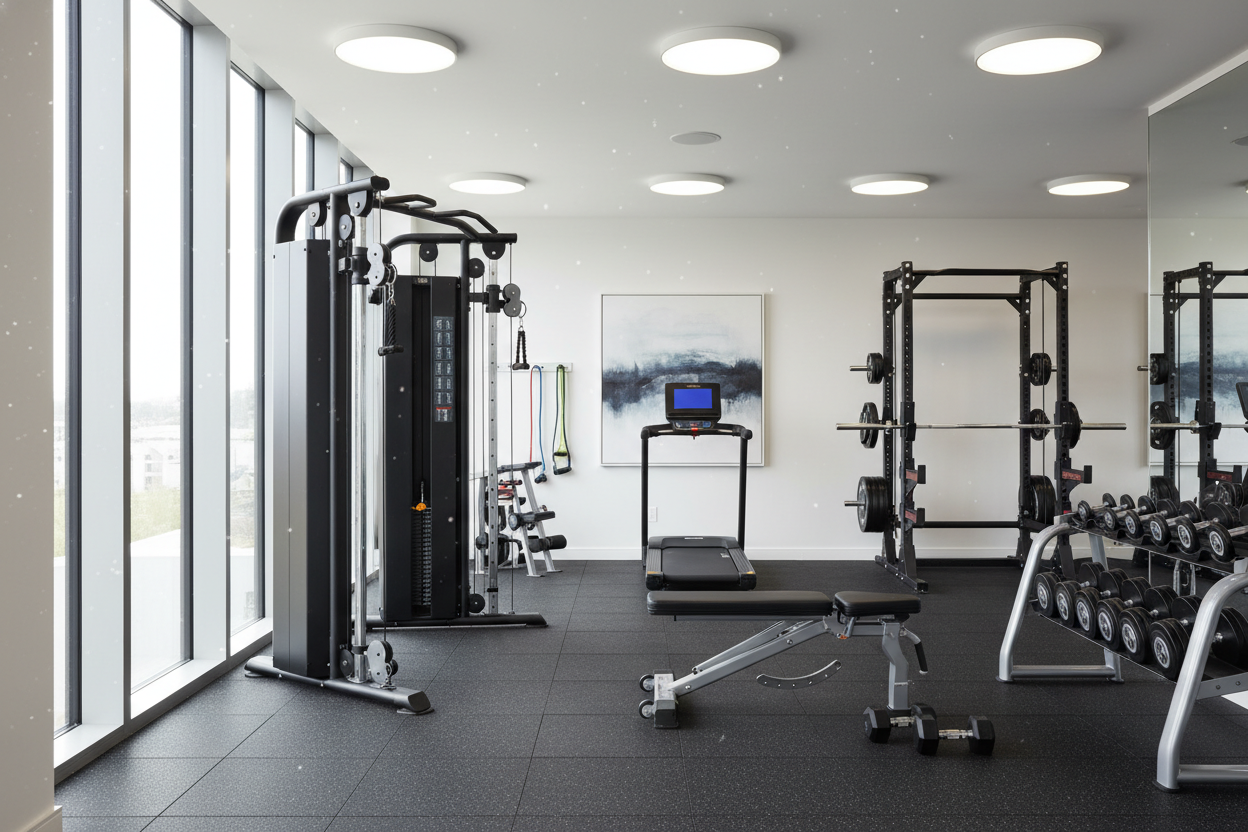
I usually recommend starting with heavy kettlebells or dumbbells. These are arguably the best exercise equipment for full body workout foundations anyway, so they serve double duty. If you want to get really nasty, try a suitcase carry—holding a heavy weight in only one hand. Your opposite-side obliques will have to work overtime to prevent you from tipping over. That is how you build real, functional torso density.
Building the Best Workout For Torso Power
You don't need a separate 'ab day.' You need to weave these movements into your existing routine to create the best workout for torso power. I like to finish my lower-body days with three rounds of carries. It forces you to maintain structural integrity even when you are already fatigued from squats or pulls.
Try this: 40 yards of a double-kettlebell farmer's walk, followed immediately by 20 yards of a single-arm suitcase carry per side. Rest 90 seconds and repeat. If you have a sandbag, bear-hug that thing and walk until your lungs burn. Mixing these unilateral carries with anti-rotation movements like the Pallof press creates a midsection that is bulletproof from every angle. No crunch can compete with the sheer tension of a 150-lb sandbag trying to pull you forward.
Setting Up Your Space for Heavy Trunk Work
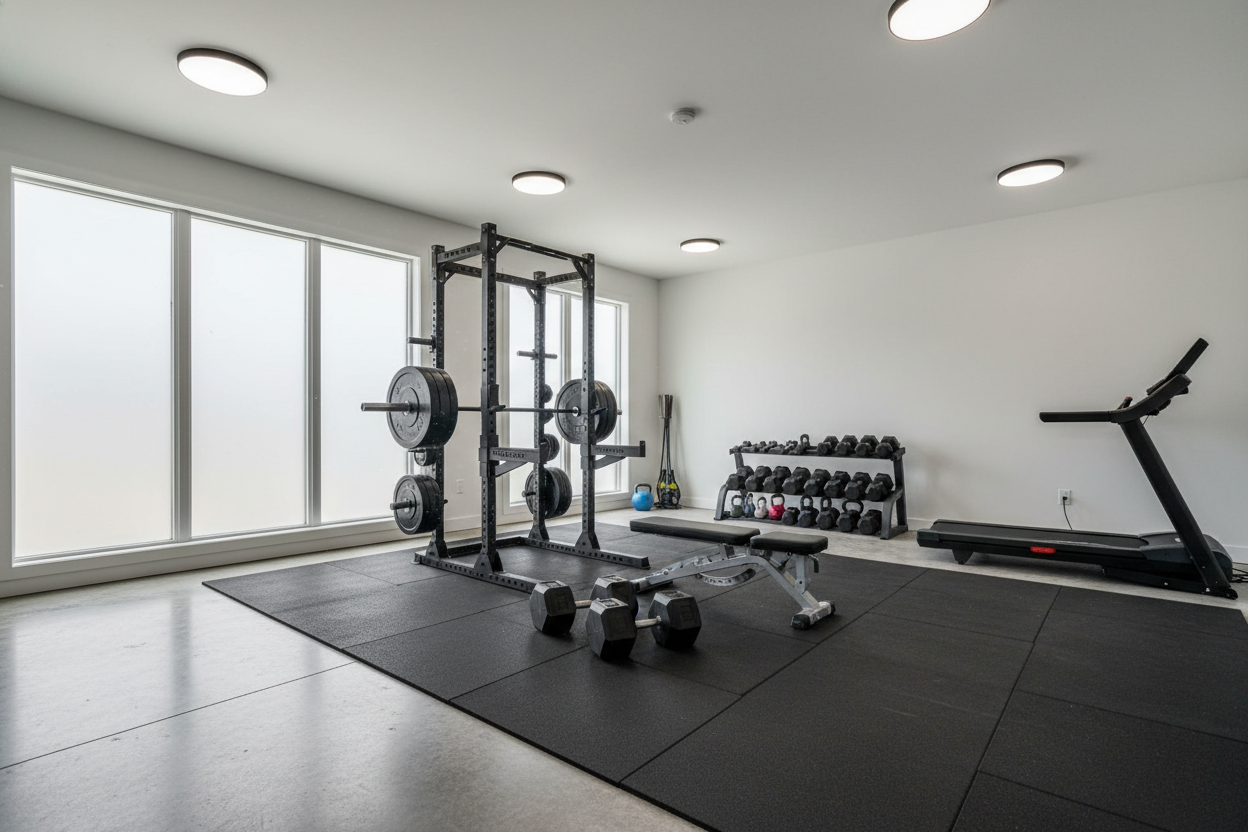
The biggest hurdle for loaded carries in a garage gym is space. I only have a 20-foot strip of concrete to work with. The solution? Pacing. You don't need a football field; you just need to be able to turn around without clipping your power rack. Just be mindful of your floor. When you hit failure on a heavy carry, you aren't going to gently place those weights down; you're going to drop them.
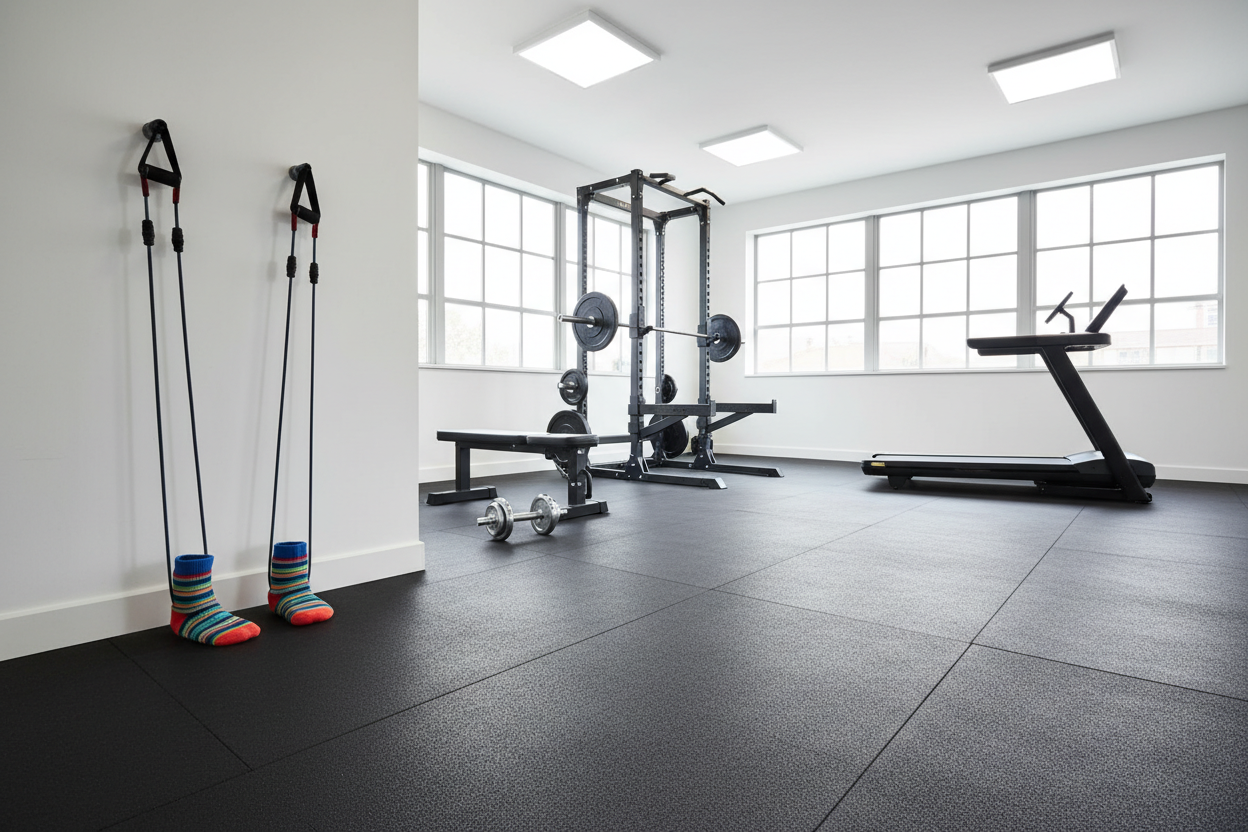
I learned this the hard way when I cracked a section of my garage floor dropping a 90-lb bell. Now, I make sure I'm working over a large exercise mat for home gym setups. You need high-density rubber that can take the impact. It dampens the noise so you don't wake the neighbors and saves your foundation from looking like a construction site. If you're going heavy, protect your floor first.
How often should I do loaded carries?
Treat them like a primary lift. Two to three times a week at the end of your session is plenty. If you can't walk straight the next day, back off the distance, not the weight.
Do I need specialized farmer's walk handles?
They are nice because they allow for more weight, but heavy dumbbells or kettlebells work just fine for most people. If you're moving over 250 lbs total, then look into dedicated handles.
Will this give me a six-pack?
Loaded carries build the muscle thickness. The six-pack visibility comes down to your body fat percentage. However, a 'thick' core looks much more impressive at 12% body fat than a 'thin' core does at 8%.