Stop Choosing Between Size and Power: The Mass Strength Workout
I remember the first time I walked into a commercial gym and saw the divide. On one side, the powerlifters were grunting over a single rep, resting for ten minutes, and looking like absolute tanks. On the other, the bodybuilders were chasing a pump with endless sets of lateral raises, looking shredded but often struggling to move a three-plate squat. I spent years thinking I had to pick a side. I bought into the idea that you either train for the stage or the platform, but never both. It was a lie that kept my progress stagnant and my garage gym sessions feeling incomplete.
The truth is, you don’t have to choose. A properly designed mass strength workout bridges the gap between raw force and aesthetic volume. I’ve spent the last decade testing this in my own garage, moving from a flimsy 300-lb capacity rack to a setup that actually handles heavy iron. If you want to be as strong as you look, you need a hybrid approach that respects your central nervous system while still hammering your muscle fibers into growth.
Quick Takeaways
- The 80/20 rule: Spend 20% of your time on heavy compounds and 80% on high-volume hypertrophy.
- Manage your RPE (Rate of Perceived Exertion) on heavy lifts to save energy for accessory work.
- A 4-day upper/lower split is the gold standard for recovery and frequency.
- You don't need machines; a solid rack, barbell, and some basic accessories are the foundation.
The 'Power vs. Size' Myth Needs to Die
We’ve been conditioned to believe that 'strength' and 'size' are two different destinations on a map. In reality, they’re more like two lanes on the same highway. The 'Power vs. Size' myth suggests that low reps (1-5) only build strength through neural adaptation, while high reps (8-12) only build muscle through sarcoplasmic hypertrophy. While there is some truth to how the body prioritizes adaptation, the overlap is massive. You can't bench 405 with the chest of a teenager, and you can't build massive quads by only squatting the bar.
A successful strength and mass program recognizes that muscle cross-sectional area is a primary driver of strength potential. By incorporating a hybrid model—often called powerbuilding—you’re essentially widening the base of your pyramid. The heavy work increases the recruitment of high-threshold motor units, making your muscles more 'efficient' at firing. The subsequent high-volume work then takes those fatigued fibers and subjects them to the metabolic stress required for actual tissue growth. It’s a one-two punch that builds a physique that is both functional and formidable.
The 80/20 Rule of a Hybrid Training Session
The biggest mistake people make when trying a workout for strength and mass is trying to go heavy on everything. If you try to pull a 1-rep max deadlift and then follow it up with heavy weighted pull-ups and heavy rows, you’ll be horizontal on your gym floor within twenty minutes. The 80/20 rule is your safeguard. You spend the first 20% of your session—usually your first big lift—moving heavy loads in the 3-5 rep range. This is where you need heavy-duty strength equipment that won't wobble when you're re-racking a heavy set of squats.
The remaining 80% of the session is dedicated to the 'pump.' This is where the magic happens for size. After your heavy triples or fives, you move into the 8-15 rep range for your secondary and tertiary movements. This volume provides the mechanical tension and metabolic stress necessary for muscle growth without the crushing systemic fatigue of maximum-effort singles. For example, if you start with heavy back squats (the 20%), you follow it up with Bulgarian split squats, leg extensions, and hamstring curls (the 80%). This pacing allows you to stay in the gym for 60-75 minutes without feeling like you’ve been hit by a freight train.
Dialing in the Volume Without Frying Your Central Nervous System
Fatigue management is the 'secret sauce' of a long-term strength and mass workout. Your central nervous system (CNS) is like a battery. Heavy, compound movements at high intensities (RPE 9 or 10) drain that battery significantly faster than isolation moves. If you redline your heavy bench press every Monday, you won’t have the 'juice' left for the incline DB presses and flyes that actually fill out your pecs. I’ve learned this the hard way by failing lifts I should have easily made because I was overreaching on my accessories.
To fix this, you have to be disciplined with your RPE. If your heavy compound lift is an RPE 8 or 9 (meaning you have 1-2 reps left in the tank), your accessory work should focus more on the mind-muscle connection and less on moving the heaviest weight possible. A great way to see this in action is by looking at an effective chest program workout for strength and size. You hit the heavy barbell work with intensity, but you dial back the ego on the cable crossovers. You want to feel the muscle working, not just survive the set. This balance ensures you can train consistently week after week without the dreaded 'gym burnout' or nagging joint pain.
The 4-Day Garage Gym Blueprint
For most lifters training at home, a 4-day upper/lower split is the sweet spot. It allows for enough frequency to trigger growth but enough rest to keep your joints from feeling like they’re filled with sand. Here is how you can structure your week:
- Day 1: Upper Power. Start with a heavy Bench Press (3x5). Transition into a pro-level chest workout guide style hypertrophy block featuring incline DB presses, weighted dips, and face pulls.
- Day 2: Lower Power. Heavy Back Squats (3x5). Follow up with RDLs, walking lunges, and calf raises.
- Day 3: Rest or Active Recovery.
- Day 4: Upper Hypertrophy. Overhead Press (moderate weight, 3x8-10). Follow with pull-ups, rows, lateral raises, and tricep extensions.
- Day 5: Lower Hypertrophy. Deadlifts (1x5 heavy or 3x8 moderate). Follow with goblet squats, leg curls, and core work.
This blueprint ensures that every major muscle group is hit twice a week. On the 'Power' days, your focus is on the logbook—adding 2.5 to 5 lbs to the bar. On the 'Hypertrophy' days, focus on shortening rest periods, increasing reps, and perfecting your form. This variety keeps the training from getting stale and forces your body to adapt to multiple types of stress.
Gear Check: What You Actually Need to Pull This Off
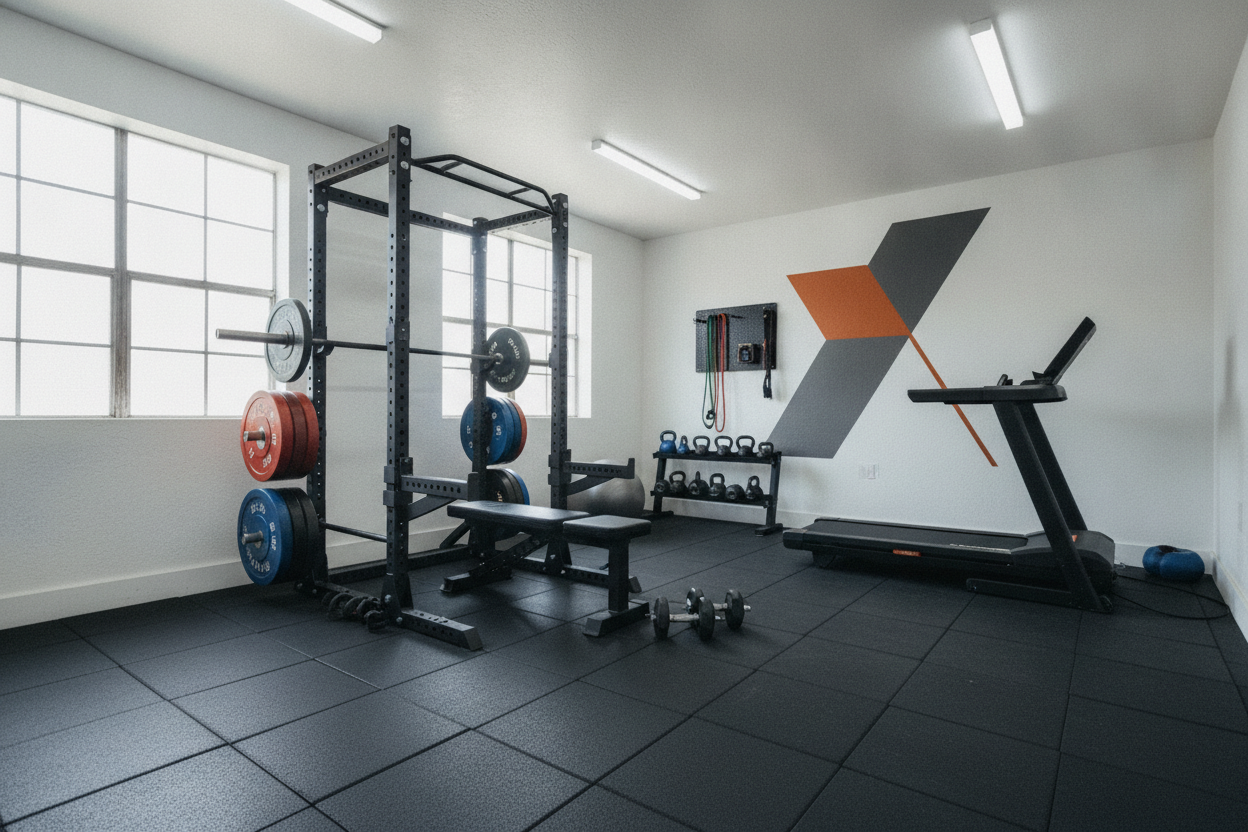
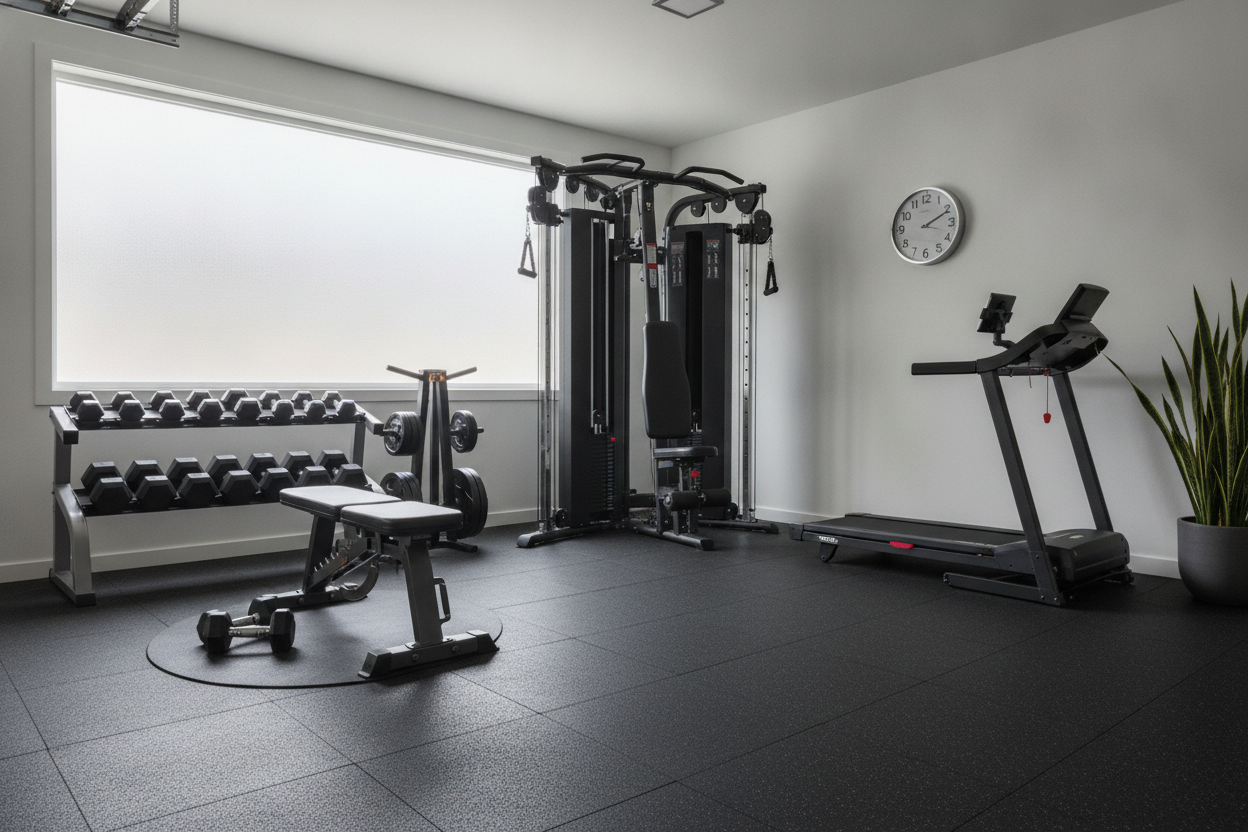
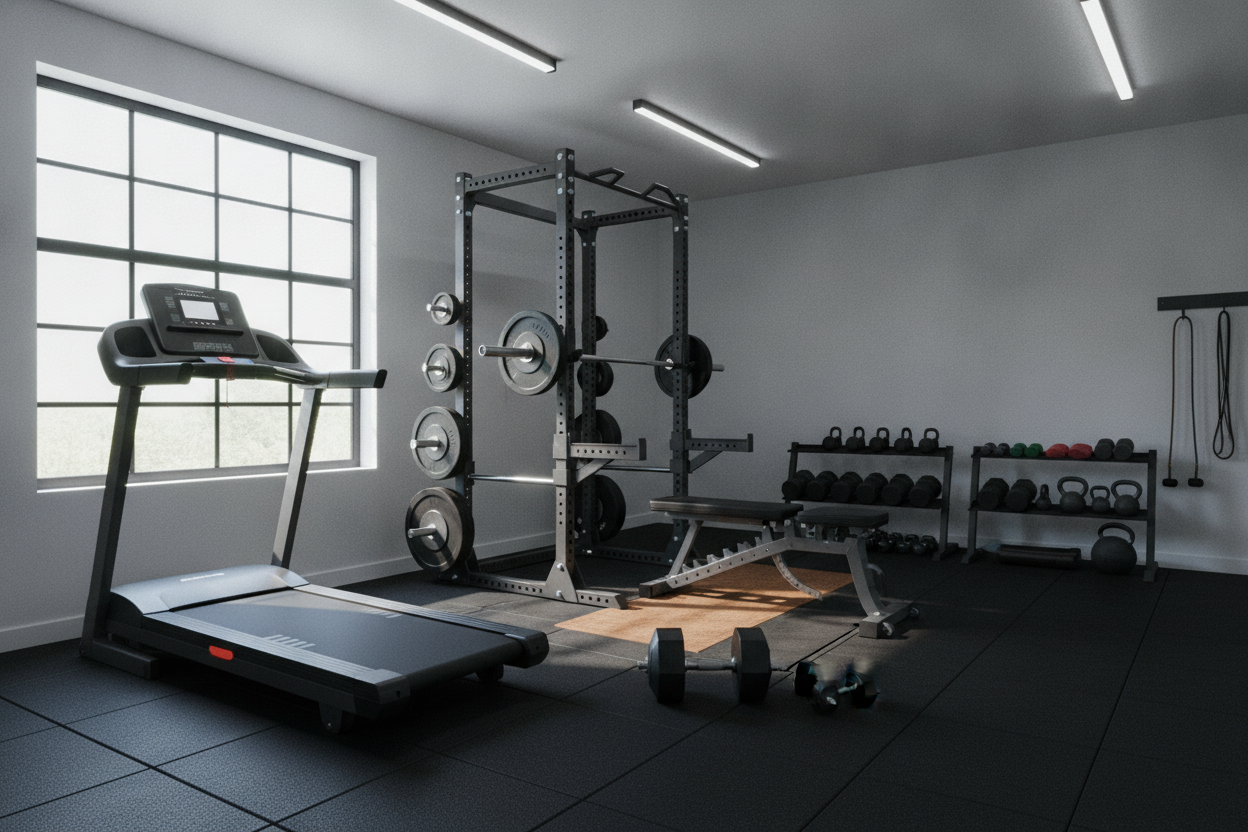
You don't need a $10,000 commercial setup to run a mass strength workout. In fact, most of my best gains came when I only had a rack, a bar, and a flat bench. However, safety is non-negotiable when you're moving heavy loads alone. You need a power rack with reliable spotter arms or pin-pipes. If you're squatting 400 lbs and your legs give out, you need to know that rack is going to catch the bar, not collapse under it. I also highly recommend investing in essential strength training accessories like a 10mm or 13mm lever belt and some liquid chalk. These aren't crutches; they're tools that allow you to push your muscles to failure without your grip or core being the bottleneck.
Finally, consider your floor. Dropping a heavy deadlift on bare concrete is a quick way to crack your foundation and annoy your neighbors. I use a thick exercise mat gym flooring setup to dampen the noise and protect my plates. It makes a massive difference in the 'vibe' of the gym. When you aren't worried about breaking your house, you can actually focus on the lift. Keep your space clean, keep your bar loaded, and stop overthinking the 'perfect' machine. The basics have worked for decades for a reason.
My Honest Experience
A few years back, I got greedy. I was running a hybrid program and decided to try and set a PR on deadlifts every single week while also doing high-volume leg presses. By week four, my sleep was trashed, my appetite vanished, and I was getting 'brain fog' during my warm-ups. I had completely ignored my CNS recovery. I had to take a full deload week and re-evaluate my RPE. The lesson? You can train hard, and you can train long, but you can't do both at 100% intensity every day. Now, I cap my 'heavy' work at two top sets and save the rest of my energy for the hypertrophy work. My joints feel better, and ironically, I’m bigger than I was when I was 'maxing out' all the time.
Frequently Asked Questions
Can I do this workout if I only have dumbbells?
You can, but it’s harder to hit the 'Power' portion of the 80/20 rule. Dumbbells usually top out at a certain weight in home gyms, making it difficult to stay in the 3-5 rep range for legs or chest. If you're DB-only, focus on 'mechanical disadvantage' (like slowing down the tempo) to make the weights feel heavier.
How long should I rest between sets?
For the heavy 20% (the compounds), rest 3-5 minutes. You need your ATP stores to recover so you can move the weight safely. For the 80% (accessory work), keep it to 60-90 seconds to maximize metabolic stress and the pump.
Is this program okay for cutting?
Yes, but you have to watch your volume. When you're in a calorie deficit, your recovery capacity drops. You might need to drop the accessory sets from 4 down to 2 or 3 to avoid overtraining while maintaining your strength on the main lifts.