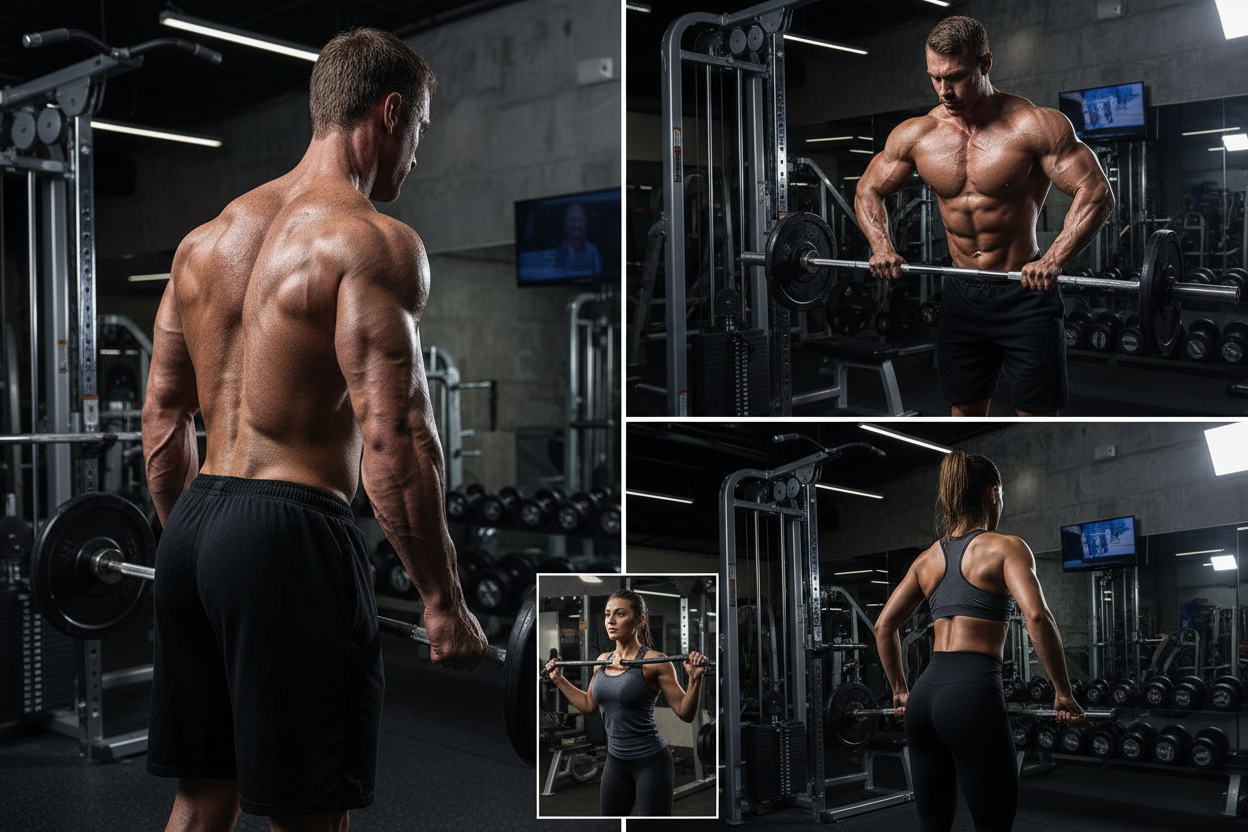
Stop Cheating Your Upper Body Back Exercises: A Form Guide
Out of sight, out of mind. That is the unfortunate reality for most lifters when it comes to their posterior chain. We naturally obsess over the muscles we see in the mirror—the chest, abs, and biceps—while treating the back as an afterthought. But a thick, wide back is the true sign of a dedicated athlete. To build that coveted V-taper, you must execute **upper body back exercises** with surgical precision, rather than simply heaving weight from point A to point B.
Key Takeaways for Back Growth
- Prioritize Angles: A complete back requires both vertical pulling (for width) and horizontal rowing (for thickness).
- Scapular Movement: Initiate every rep by moving your shoulder blades, not bending your elbows.
- Grip Selection: Use straps if your grip fails before your back muscles do; the goal is hypertrophy, not forearm endurance.
- Control the Eccentric: The lowering phase is where the most muscle damage and subsequent growth occur.
The Anatomy of the Pull
Before grabbing a barbell, you need to understand what you are actually trying to contract. The back is a complex web of muscles with different fiber orientations. The Latissimus Dorsi (lats) generally respond best to vertical pulling motions, giving you width. The Trapezius (traps) and Rhomboids create that dense, 3D look in the middle of your back and respond heavily to horizontal rowing.
If you treat every pulling movement the same, you will likely default to using your biceps and rear delts, missing the primary target entirely.
Vertical Pulling: Building the Sweep
The pull-up and the lat pulldown are staples, but most people butcher them by leaning too far back or pulling with their arms. To effectively target the lats, imagine your hands are merely hooks. Do not think about pulling the bar down; think about driving your elbows into your back pockets.
This mental cue shifts the tension from the biceps to the lats. Keep your chest high, but avoid swinging your torso to generate momentum. If you cannot pause for a split second at the bottom of the movement, the weight is too heavy.
Horizontal Rowing: Creating Density
A comprehensive upper body back workout must include a heavy row. Whether you choose a barbell row, dumbbell row, or seated cable row, the mechanic remains the same: retraction.
Many lifters round their shoulders forward at the end of a row, thinking that getting the weight to touch their chest counts as a rep. It doesn't. If your shoulder rolls forward, you have disengaged the back and put your shoulder joint at risk. Stop the rep the moment your elbow passes your torso. That is the peak contraction range for the rhomboids and mid-traps.
The Overlooked Component: Face Pulls
If you want healthy shoulders and better posture, you cannot ignore the rear deltoids and rotator cuff. Face pulls are arguably the most underrated movement for upper body health. They counteract the slouching posture many of us adopt from sitting at desks.
Perform these with lighter weight and higher reps. The focus here is on external rotation—pulling the rope towards your forehead while trying to "rip" the rope apart.
My Training Log: Real Talk
I distinctly remember the frustration of my early lifting years. I was doing heavy barbell rows, but my back remained flat, and my biceps were constantly sore. The turning point for me wasn't a new supplement or a magic program; it was a pair of cheap cotton lifting straps and a thumbless grip.
The first time I used straps on a dumbbell row, the sensation was completely different. I recall the gritty texture of the strap digging into my wrist, which felt uncomfortable at first, but it allowed me to completely relax my hand. For the first time, I didn't feel the pump in my forearm. Instead, I felt a deep, almost cramping sensation right under my armpit and into my spine—a muscle connection I didn't know existed. That specific ache, where the lat feels like it's about to spasm at the peak of the row, is now the only metric I trust. If I don't feel that specific cramp, I know I'm just moving weight, not building muscle.
Conclusion
Building an impressive back takes patience and a willingness to drop the ego. No one cares how much you can row if your form breaks down and your spine looks like a question mark. Focus on the squeeze, control the negative, and visualize the muscle fibers contracting. Treat your back training with the same intensity as your chest days, and the width will follow.
Frequently Asked Questions
How often should I train my upper back?
The back is a large muscle group that can handle significant volume. generally, training it twice a week allows for sufficient intensity and recovery. You might dedicate one day to heavy thickness (rows) and another to width (vertical pulls).
Can I build a big back with just bodyweight?
Yes, but it requires creativity. Pull-ups are the king of back exercises, but you will need to utilize inverted rows (using a low bar or rings) to target the mid-back thickness. Progressive overload can be achieved by adding weight vests or changing leverage.
Why do I feel my biceps taking over during back exercises?
This usually happens because you are gripping the bar too tight and initiating the pull with your elbows bending rather than your shoulders retracting. Try using a "thumbless" grip (wrapping the thumb over the bar with your fingers) or using lifting straps to take the forearms out of the equation.