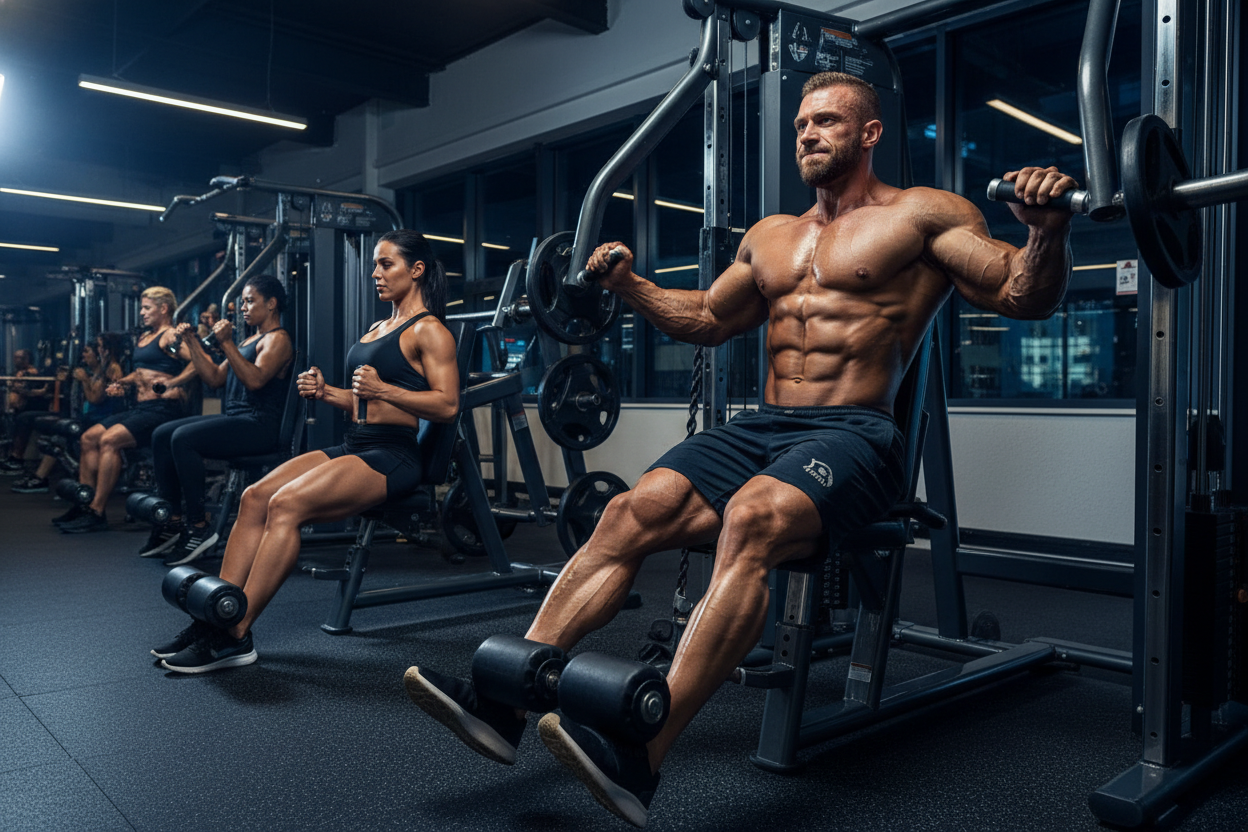
Stop Buying Home Gym Machine Equipment Until You Read This
You have cleared a corner of the garage or the spare bedroom. You have the budget ready. But staring at the endless catalog pages of cables, levers, and stacks is enough to make anyone’s head spin. Buying the wrong home gym machine equipment isn't just a financial mistake; it results in a clothes rack that gathers dust instead of muscle.
We are moving past the glossy marketing photos to talk about what actually matters: biomechanics, footprint, and the longevity of the steel. Before you drop thousands on a setup, let's look at the logistics of bringing the commercial gym experience into your house.
Key Takeaways
- Prioritize Biomechanics over Features: A machine with 50 attachments is useless if the movement path doesn't align with your natural joint structure.
- Understand Pulley Ratios: For functional trainers, a 2:1 ratio offers smoother travel for dynamic movements, while a 1:1 ratio is better for heavy static lifts.
- Check the Footprint: Always measure the "working area," not just the machine's dimensions. You need clearance for weight stack pins and elbow room.
- Verify the Gauge: Look for 11-gauge steel frames for stability; anything higher (thinner) may wobble under heavy loads.
The Reality of Home Gym Machines vs. Commercial Gear
There is a massive difference between the heavy-duty machine for gym use you find at a local health club and what is typically sold for residential use. Commercial units are welded solid to withstand 24/7 abuse. Residential gear often relies on bolts and lighter materials to make shipping easier.
However, the gap is closing. High-end home gym manufacturers are now producing "light commercial" grade equipment. The trick is identifying which pieces replicate the gym feel and which ones are flimsy imitations.
The All-in-One vs. Specialized Stations
When trying to fit gym equipment all into one room, you generally have two paths: the multi-station (all-in-one) or specialized pieces.
All Workout Machine (Multi-Gyms): These are space savers. They combine a chest press, lat pulldown, and leg developer. The downside? You are locked into a fixed path of motion. If the seat doesn't adjust enough, or the pivot point is off for your height, the exercise will feel awkward and could lead to injury.
Functional Trainers: This is arguably the most versatile machine gym piece you can own. It uses cables and pulleys, allowing you to define the path of motion. It mimics free weights but adds constant tension. If you have limited space, a functional trainer often offers a better ROI than a fixed-path multi-gym.
Evaluating Build Quality and "The Wobble"
Nothing kills a workout faster than a machine that shakes when you rack the weight. Stability comes down to two things: the gauge of the steel and the total weight of the unit.
When researching home gym machines, look for 11-gauge or 12-gauge steel. If a manufacturer hides this spec, it is usually because they are using thinner, cheaper metal (14-gauge or higher). Heavy machines are annoying to assemble, but that weight keeps them planted during a heavy row or press.
My Personal Experience with home gym machine equipment
I need to be real about the assembly and the "feel" because specs don't tell the whole story. A few years ago, I bought a mid-range cable crossover machine for my basement. On paper, it was perfect.
However, the first time I loaded the stack for a tricep pushdown, I felt it. It wasn't the weight; it was the friction. There was a gritty, sand-like sensation in the pull because the guide rods were chrome-plated poorly, and the plastic bushings were too tight. It didn't matter how much silicone spray I used; that "stutter" at the top of the rep killed the mind-muscle connection.
Also, nobody tells you about the smell of off-gassing rubber. For the first three weeks, my home gym smelled like a tire factory. And the assembly? I spent four hours just sorting washers. The lesson I learned the hard way: spending an extra $300 for aluminum pulleys and better bearings isn't a luxury; it's the difference between a machine you love using and one you fight against.
Conclusion
Building a home setup is an investment in your health, but it requires due diligence. Don't get distracted by flashy add-ons. Focus on the frame, the pulley smoothness, and the biomechanics. The right equipment disappears during the workout, letting you focus entirely on the effort. Choose wisely, and your home gym will serve you for decades.
Frequently Asked Questions
Are home gym machines safer than free weights?
Generally, yes. Machines provide a fixed path of motion and often have built-in safety stops, making them ideal for training alone without a spotter. However, poor form on a machine can still cause repetitive strain injuries.
How much space do I really need for a multi-gym?
While the footprint might be 4x6 feet, you typically need a 2-foot clearance on all sides. You need room to load plates, extend your limbs during cable exercises, and perform maintenance. A 10x10 foot area is usually the minimum for a comfortable setup.
Do cable machines require maintenance?
Yes. To keep the movement smooth, you must wipe down the guide rods regularly and apply silicone lubricant (not WD-40). You should also inspect the cables for fraying every few months to prevent snapping under load.