Stop Buying Clutter: Real Fitness Equipment Ideas for a Spare Room
I remember staring at my spare bedroom—a graveyard for cardboard boxes and a dusty treadmill—thinking there had to be a better way to train. Most fitness equipment ideas you see online are either designed for 1,000-square-foot garages or involve some plastic 'total body' gadget that belongs in a late-night infomercial. I wanted a place where I could actually pull heavy deadlifts and press without putting a hole through the drywall or the subfloor.
Quick Takeaways
- Prioritize floor protection with high-density mats to save your subfloor.
- Choose a half rack or squat stands over a full power cage for 10x10 rooms.
- Adjustable dumbbells are the only sane way to save space in a bedroom.
- Avoid single-use machines; they are the fastest way to turn a gym back into a storage unit.
Stop Treating Your Spare Room Like a Storage Unit
The biggest mistake people make when looking for gym equipment ideas is buying for the person they hope to be in six months, rather than the space they actually have today. We’ve all seen it: a massive elliptical machine that eventually becomes a very expensive rack for wet laundry. If you have a standard 10x10 or 12x12 spare room, every square inch is premium real estate.
Stop thinking about 'machines' and start thinking about 'stations.' A machine does one thing. A barbell and a bench do fifty things. When you crowd a small room with mismatched cardio gear, you lose the floor space required for actual movement. If you can't do a burpee or a lunging stretch without hitting a pedal, your gym layout has failed.
The Floor Comes First (Before You Buy Any Iron)
You cannot drop a 50-pound dumbbell on residential carpet and expect the floor to survive. Even if you have a thick rug, the constant pressure of a weight rack will permanently crush the fibers and eventually crack the wooden subfloor underneath. I learned this the hard way after moving a rack and finding deep, permanent divots in my hardwood.
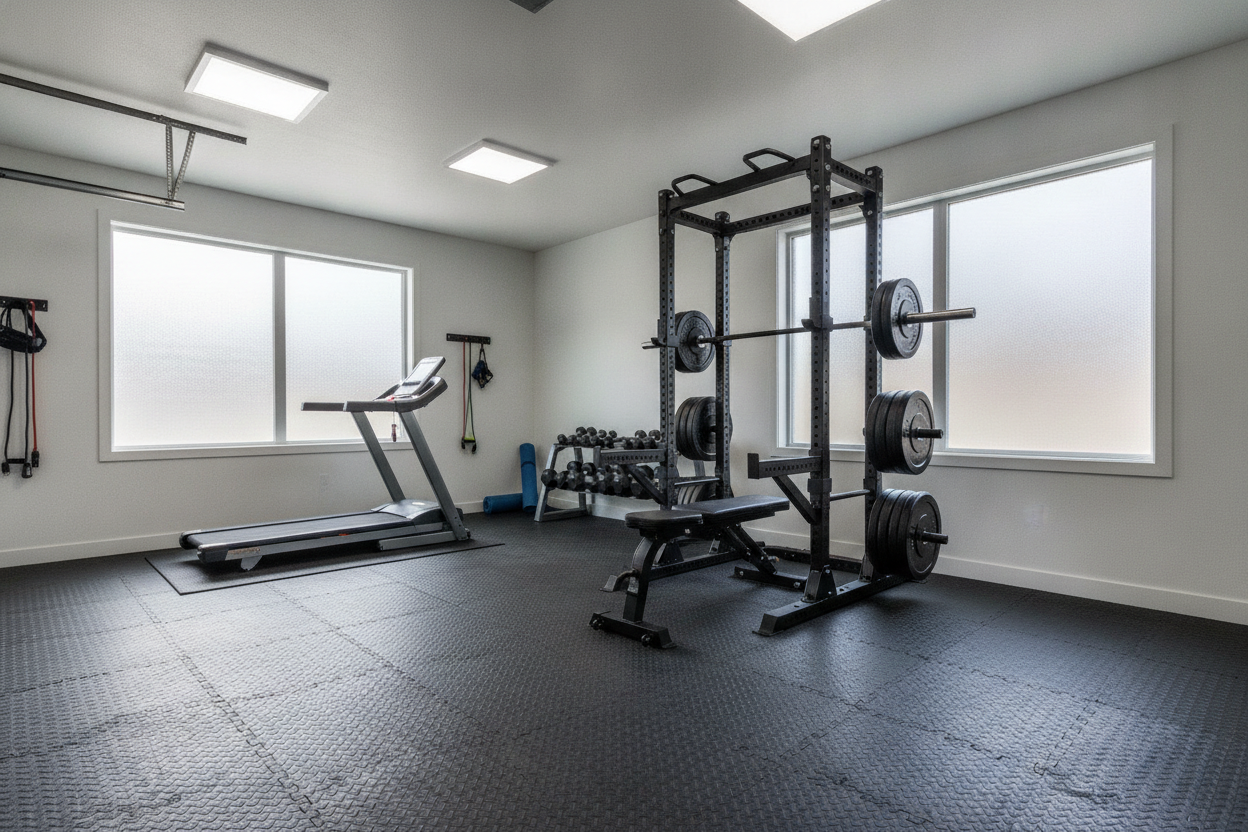
Before you bring in the heavy metal, you need a foundation. I’m not talking about those flimsy foam puzzle tiles that pull apart when you pivot your foot. You need high-density gym flooring for home workout setups. Real rubber mats—ideally 3/4-inch thick—distribute the load and dampen the vibration. This isn't just about protecting the house; it's about noise. If you're training while someone else is watching TV in the next room, proper flooring is the difference between a quiet session and a domestic dispute.
My Top Gym Equipment Ideas for Max Gains in Min Space
When you transition from the 'cardio corner' mindset to building a real sanctuary, you have to be picky about your gym equipment ideas. In a spare room, you are fighting two enemies: ceiling height and footprint. Most bedrooms have 8-foot ceilings, which makes standard 90-inch power racks a non-starter.
I recommend shifting your focus to heavy-duty strength equipment that is specifically designed for compact spaces. Look for 'shorty' bars or racks with a smaller footprint. You don't need a 6-post monster cage that requires a concrete anchor. A solid 2-post squat stand with spotter arms can handle 500+ lbs, which is more than enough for 99% of us, and it leaves you enough room to actually breathe.
The Right Rack for a 10x10 Box
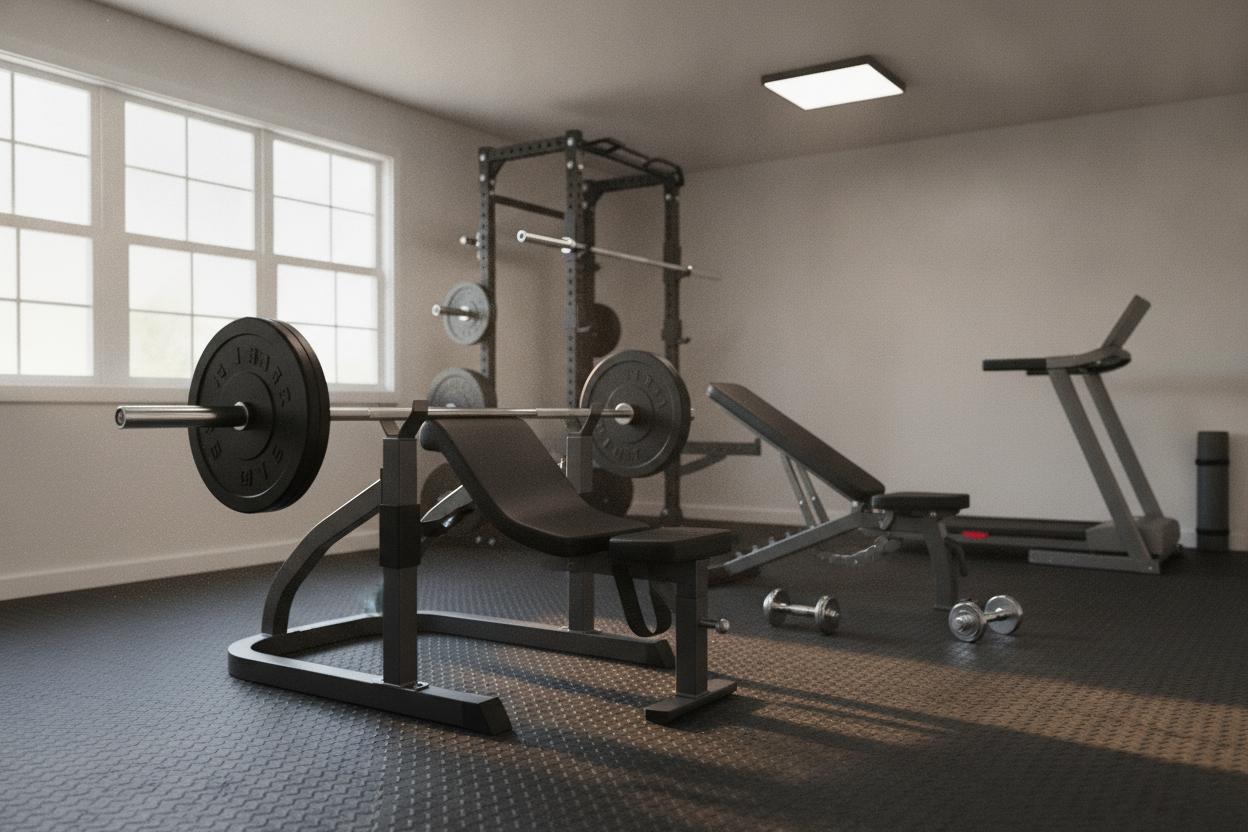
If you have a 10x10 room, a full power cage is going to feel like a cage. You won't have room to load the bar comfortably. A high-quality half rack or a set of independent squat stands is usually the smarter play. They provide the safety of spotter arms without swallowing the entire room. Plus, they are much easier to move if you ever decide to reclaim the room as a guest bedroom.
Adjustable vs. Fixed Weights (The Brutal Truth)
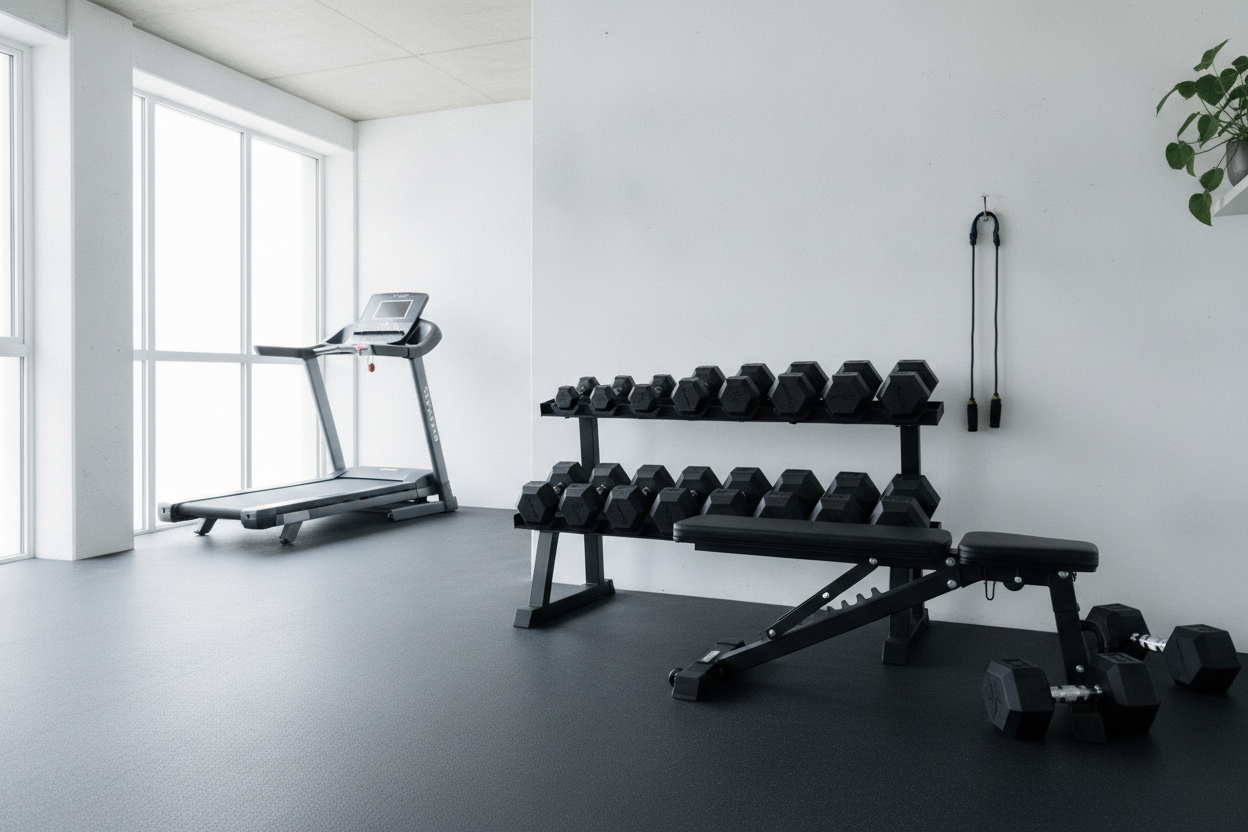
A full rack of fixed dumbbells from 5 to 50 lbs takes up about six to eight feet of wall space. In a spare room, that is your entire 'useful' wall gone. Adjustable dumbbells are the only logical choice. Yes, the upfront cost is higher, but the space saved is priceless. I prefer the ones that feel like real dumbbells—metal handles and plates—rather than the bulky plastic ones that feel like toys when you're trying to do heavy presses.
Where Most People Waste Their Budget
Don't get distracted by the shiny new tech. Most people waste thousands on 'smart' mirrors or connected cable machines that require a monthly subscription just to turn on. Instead, keep an eye out for home gym equipment deals on the fundamentals: a barbell with decent knurling, a flat bench that doesn't wobble, and iron or bumper plates.
I’ve seen people spend $3,000 on a single machine that only works their quads. For that same price, you could buy a world-class barbell, 300 lbs of plates, a rack, and a bench. The latter allows you to train every muscle group for the rest of your life. The former becomes a dusty monument to a phase you went through.
How to Build a Complete Setup Without Crowding the Room
Layout is everything. I like to keep my rack against one wall and my 'open' floor space in the center. This allows for stretching, yoga, or kettlebell work without feeling claustrophobic. Remember, building a complete physique doesn't require a commercial-sized warehouse. It requires consistency and gear that doesn't frustrate you every time you step into the room.
Personal Experience: The Wobbly Bench Mistake
Early in my home gym days, I bought a cheap, folding bench because it saved $100 and tucked under the bed. The first time I tried to bench press 225 lbs, the whole thing shimmied to the left. It was terrifying. I realized then that 'space-saving' shouldn't mean 'structural compromise.' I sold that bench for $20 and bought a heavy-duty bolt-together version. It takes up more space, but I’m not worried about it collapsing on my chest.
FAQ
Can I put a squat rack on the second floor of my house?
Yes, most modern residential floors are rated for the weight. However, don't go dropping 400 lbs from overhead. Use thick mats and stick to controlled eccentrics to keep the vibrations from rattling the whole house.
What is the minimum height needed for a home gym?
Standard 8-foot ceilings are fine for most things, but you might hit the ceiling during overhead presses if you're tall. If that's the case, do your presses seated or look for a 'shorty' rack specifically made for low basements and bedrooms.
How do I stop my gym from smelling like a locker room?
Airflow is the biggest issue in spare rooms. A high-velocity floor fan is mandatory. Also, wipe down your gear after every session. Rubber mats can have a 'new tire' smell for a few weeks, but it eventually fades if you keep the window cracked.